 |
 |
About us I Information I Brochure I Events I A.i.R. I Workshops I Gallery I Featured Artist I Accommodation I Location I News I Contact I Links | > Français | |
|
 |
| << Return to A.i.R. |
|
July / August 2024
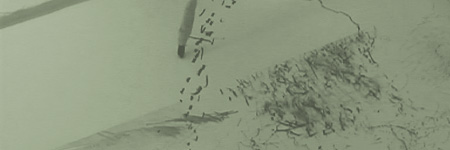
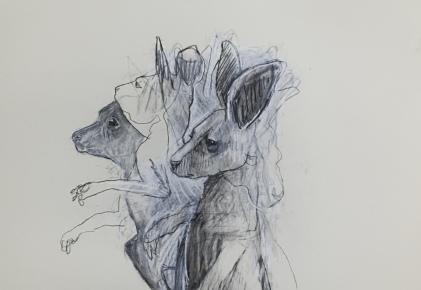
ARTIST IN RESIDENCE - TODD FULLER (AUS) Analog-style, hand-drawn animations possess a distinct charm and authenticity, making visible the creative process while allowing time itself to become a tangible quality in the work. The durational qualities embedded within hand-drawn animations establish a unique temporal dimension. As viewers witness the animation unfold, they become acutely aware of the passage of time and the meticulous labor invested in each frame. In my practice, an accumulate of traces from previous drawings and the remnants of erasures become intricate layers of meaning, allowing viewers to discern the temporal progression of the animation while being compelled by metaphor and human based narratives. Previously, I have used this visual language to focus on loss, vulnerability, power, commonality and difference, as well as a tool to make visible ephemeral acts.
Now I would like to focus on unique aspects of hand drawn animations, such as trace and remnant as the driver of meaning rather than an incidental outcome. Drawing on imagery and subject from Caylus and its surrounds, I will to analyse the unique visual language which has been established through my hand drawn animations to date before undertaking explorations of line quality, frame rates, fluidity, motion and stillness, movement and gesture, erasure and removal, to deepen my understanding of formal choices and find new conceptual outcomes within the artistic language of my animations.
|
|
|
|
August/September 2024
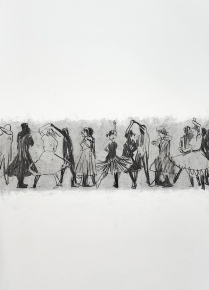
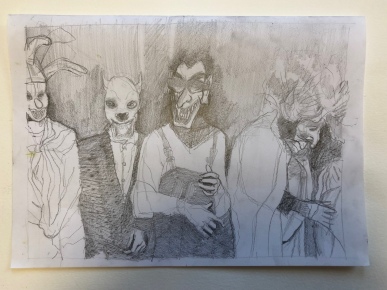
ARTIST IN RESIDENCE - ISABELLA AURORA (BR) My art practice revolves around the discerning of the act of embodiment/incorporation within drawing and painting in a Latin American animist framework.
I seek to manifest a spectral lining that inhabits an internal cosmogony by using drawing as technology to delve into the invisible.
I intend to research the phenomena of incorporation through exploring the dichotomy between depth/flatness, informed by a will to craft breathing, living image-entities: all and the same human and nonhuman.
|
|
|
|
June / July 2024
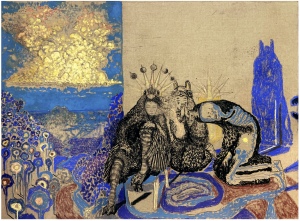
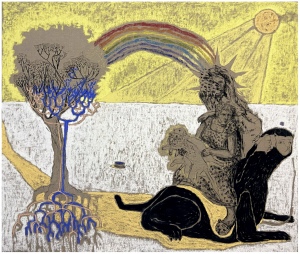
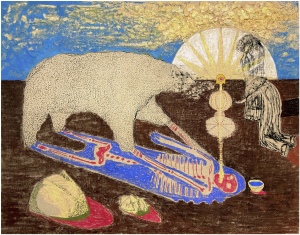
ARTIST IN RESIDENCE - DANIEL GABRIELLI (BR) My research aims to connect the etymologies of the words spell (feiço) and fetish (fetiche); with the concept of neofeudalism that opens with the restructuring of services and goods in late capitalism.
"clouds", mutilnationals that have true virtual feuds, responsible for much of the functioning of human life processes today) and it would be of great value to understand how a city with a history that goes through feudalism and runs through capitalism, flows into a possibility of resignification.
hair's breadth sllll resist capitalist fetishism.
Moschen Rickes
|
|
|
|
February / March 2024
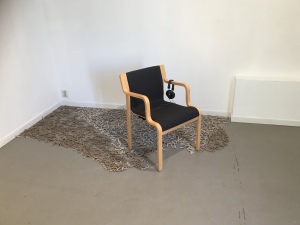
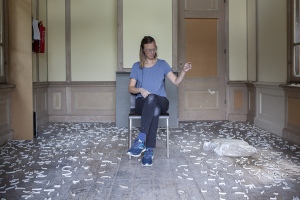
ARTIST IN RESIDENCE - CECILIA BENGTSSON (NL) I need a moment of continuous and undisturbed exploration and production for a drawing project that was birthed in the midst of covid lock down. During that period I started drawing again, not as a sketch for an installation or performative event, but on its own right. The pen guided me and I stumbled on a pattern that caught hold of me and that I continued to develop during the period to come – it is a pattern that takes time to draw; where the activity, the repeated motion, the sound of it and the body that is partaking and aging, cellchanging in the meantime, is as important as the outcome. White noise or grey cloud formations on pieces of paper, that can be combined in unlimited ways next to each other, each drawn sheet being a part of a larger and split up puzzle. Somewhere in that expansion of a split vastness, that I am exploring through drawing, I found words and poetry describing the moment of a sudden short holding of an inbreath – a limbo – a threatening falling that is frozen midway.
In my work I explore the falling movement, both the outer aspects of it, the physicality and gravity , but also the inner facet – the emotional responses, the inner activity of letting go. The drawing and writing in combination with it is yet another step in this (re)search. I am looking for the core of the activity and looking for ways to share and let it come across to others.
The pattern that I have found, and the written words, in the shape of poetry, is something I wish to explore more in order to let this project grow literally and figuratively. I wish to engage with it both embodied and intellectually – to have open and long conversations with others on what is happening in and through the drawing and the texts, where they might tangent thinkers’ and writers’ rich knowledge. And I long for this pattern to expand in space like a fungi that is spreading, that is taking hold of space and time. For this to happen I need concentration for a longer period, which your residency offers, as well as space; a studio space for focused working, but also an exhibition space; to install the works and to take them seriously and play with the
possibilities and share the outcomes immediately.
|
|
|
|
September/October/November 2023
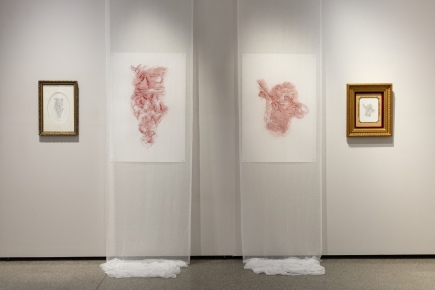
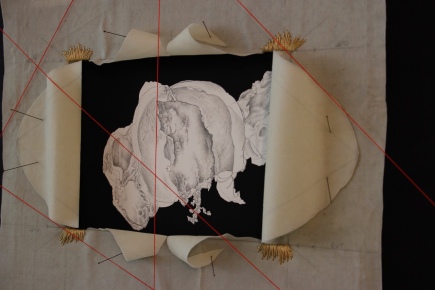
ARTIST IN RESIDENCE - LAUREN BLACK (AUS) Artists and scientist have a long history of working together; my arts practice continues this tradition engaging new audiences with sensitive and little understood scientific collections primarily through contemporary and observational drawing.
With a dedicated career of developing and exhibiting work focused on botanical collections, my practice has extended to work with human remains held in pathology and anatomy museums. By combining both traditional and experimental drawing techniques I have developed several new bodies of work for major exhibition. These have been multilayered, intimate experiences that draw closely on the physicality of the internal body, as well as the narrative and history of collected human remains and disease.
In 2016 I was awarded a Churchill Fellowship to investigate how contemporary arts practice is able to reveal scientific collections. This allowed me to visit significant medical and botanical sites as well as institutions in Europe to experience artworks, manuscripts, objects and human remains. The fellowship enabled me to consider how both historical and contemporary artists have worked with and interpreted scientific and museum material in order to bring about understanding and renewed meaning. Collections that were difficult to access because of their contents, i.e. preserved human remains, or fragile restricted historical material, were a major focus. Lauren Black
|
|
|
|
July / August /September 2023
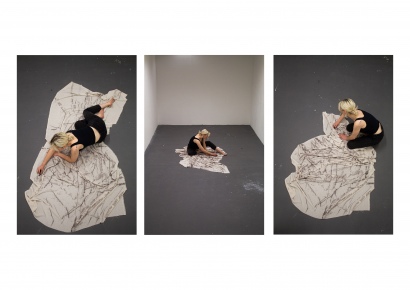
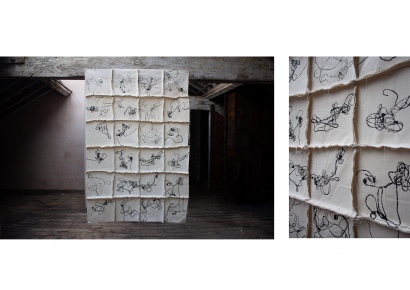
ARTIST IN RESIDENCE - MIA MAI SYMONDS (UK) My current body of research is concerned with both cloth and body as relational materials, forms of matter susceptible to and in a perpetual state of change. Whilst further exploring the architectural and spatial qualities within woven structures, my work is engaging with the emotional, social, and political responses between material and subject and investigating cloth at the intersection between body and lived experience.
Cloth is receptive. It carries fragments of us, of our history, and in one way or another it informs how we live in the present. It is a material that can be understood as a ‘silent witness to the routines of our everyday lives’; a material that takes on all that we do and all that we feel. I noticed the ways in which my methods of weaving were inherently linked to those of drawing. As my visual methodologies of making continue to expand and new ways of materialising my theoretical research evolve, I found drawing begin to occupy much larger and interconnected spaces within my practice. When I trace and mark the lines of movement on cloth, the places in which it has responded to my body, where it performs to its material language of creasing, folding, fraying, or gathering, I begin to see the cloth in a new way. I begin to see its material language come to life. By responding to the qualities of its performativity, I can better understand how my body has affected its condition and how in return, its materiality effects my state of being. “Human life is lived in this tension between what we have prepared, what we have mastered, and the unknown – the eventualities of things that haven’t yet happened and not knowing where they are going to go” (...the difference between imagination and perception). (Tim Ingold, on ‘The Life of Lines’) This residency would allow me the opportunity to further interrogate the importance of drawing within my own practice as well as within the context of contemporary society. It would allow me the dedicated time, space, and freedom to push the boundaries of my current approach to research through drawing. I want to use this time to further explore the connectives between the body, cloth, and the intangible and emotive space between these materials, in evoking and impacting social narratives. I am interested to research in greater depth, the relationships between human experience and our everyday materials, analysing their ontological effects and imperatives through visual and tactile discourse. Mia Mai Symonds
|
|
|
|
June / July 2023
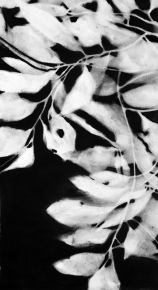
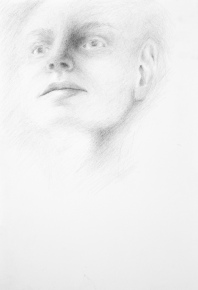
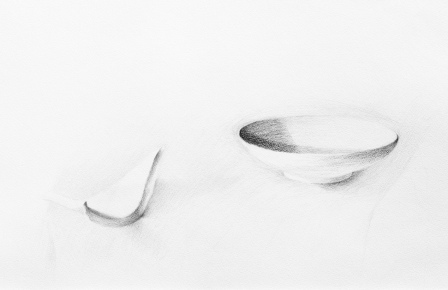
ARTIST IN RESIDENCE - GENEVIEVE SWIFTE (AUS) “We are not usually aware that an unconscious experience of touch is unavoidably concealed in vision. As we look, the eye touches, and before we see an object, we have already touched it and judged its weight, temperature and surface texture. The eye and the hand constantly collaborate; the eye carries the hand to great distances, and the hand informs the eye at the intimate scale. Touch is the unconsciousness of vision, and this hidden tactile experience determines the sensuous qualities of the perceived object. It is the hidden element in touching and the activation of tactile judgement and memory that is involved in drawing.”
At DRAWinternational, I hope to explore as artist in residence, the tension between abstraction and representation in my work; the sensations of gestural mark-making and processes of observational drawing and perspective. I plan to take three distinct approaches to drawing that explore gesture and verisimilitude as triggers for what architectural theorist Juhani Pallasmaa describes as the “unconsciousness of vision”. As a point of difference to the more immediate and gestural nature of the drawings listed above, observational drawings referencing traditions of self portraiture and still life will be made to evoke illusions of three dimensional space and emotion in the viewer, and will thus explore the “unconsciousness of vision” via the use of perspective and verisimilitude rather than through gesture communicated through visible traces of the hand.
Genevieve Swifte
|
|
|
|
June / July 2024
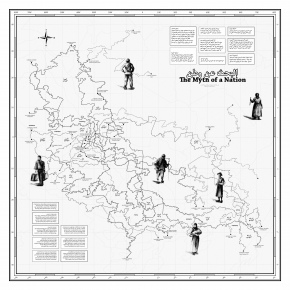
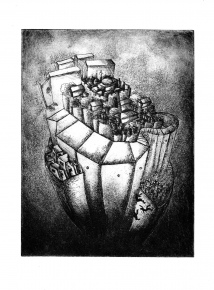
ARTIST IN RESIDENCE - YOSRA EL GAZZAR (EG) I’m a visual artist, graphic designer, and filmmaker based in Cairo, Egypt.
In his book, Les Corps vils. Expérimenter sur les êtres humains aux XVIIIe et XIXe siècles (Vile Bodies: Experimenting on Human Beings in the 18th and 19th Centuries) written by Grégoire Chamayou, he ventures into the history of experiments on human beings, and attempts to show that modern science, although apparently neutral, has
This project is above all else a celebration of those vulnerable bodies, focusing on their fragility and beauty, and freeing them from the social stigma that was built around their difference. Through artistic reinterpretation of the drawings that Nickola Strekalowsky drew in the first half of the 20th century, my aim is to create large scale drawings that responds to my research questions: what is the relation between body and pain? Is pain a necessary factor of being human? And could art be our only chance to preserve our humanity as we enter this post-human era?
|
|
|
|
October/November 2022
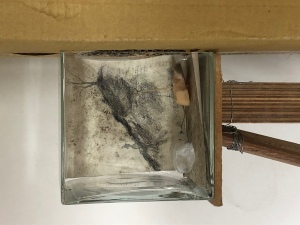
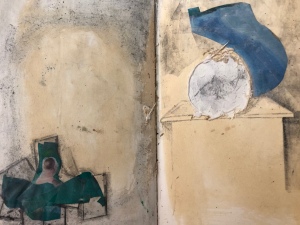
ARTIST IN RESIDENCE - ROBIN VALSTER (NL) I work in a way that everything is connected, I create different islands and then find a way to connect them. Also my way of working could be seen as different islands; I draw, paint, sculpt, perform, write, make music, illustrations and I make use of found objects. But finding a way to connect them all is something I'm working on. I was searching for a residency to continue my practice but mostly; trying something different, DRAWinternational seems like a very good place to explore. As an artist in residence, I want to include performance in my drawings, to find ways to open up as well the practice as the studio for public. When there are musicians around I would like to work together but mostly I would like to approach drawing as it is an instrument to make sound/music with. I have no experience with the technical bit of this idea but I would focus on this and the performative as a research of my practice.
Robin Valster
|
|
|
|
September/October/November 2022
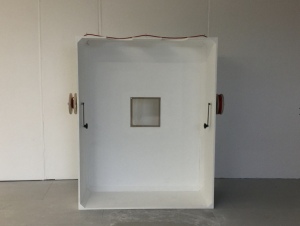
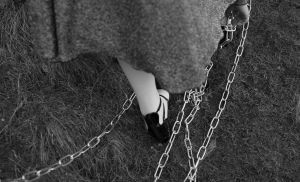
ARTIST IN RESIDENCE - WENXIN ZHANG “L’enfer, c'est les autres! (No Exit, 1944)” thus spoke Sartre. My installation practice in painting and performance reflects detachment, empathy, trauma, oblivion and ‘mauvaise foi’ (bad faith). In my work I aim to create tension to evoke a mutual experience through movement, imbalance discomfort and even pain. This approach considers space in terms of its past, as it fades, reflecting too those choices we to have tomake and which make us. Courage, is a major concern for me.When I returned home to China, I struggled with the limiting censorship which was affecting cultural development. Therefore, I am always seeking opportunities to explore ideas in more depth and beyond control. This residency is an opportunity for an exploration to discover new forms and concepts in contemporary art with artists from around the world. After two years of pandemic and isolation, I want to utilize this sentiment in my artistic practice. I wish to carry out large scale works as I have never had the confidence or opportunity to do so before. Finally, I believe there is a responsibility for artist, including myself, to present and to push the boundaries beyond the norm. I have faith in art as it gives me the courage to continue my practice as a female artist. Wenxin Zhang
|
|
|
|
September / October 2022
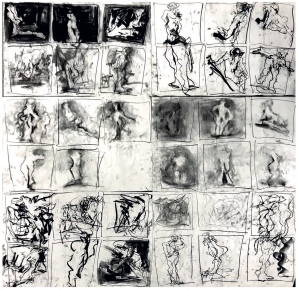
ARTIST IN RESIDENCE - YIJIA TANG (CHINA) When people move their body in a different direction, it is like the landscape of the image unfolds in time. All change is a performative action, including dancing and drawing, which equally exist in artistic movements. They can drive people together and pursue the freedom of the inner world. When people draw, they use their body and mind to make marks. The whole environment is the container for the body to move. Dancing can be just as any body movement in time and space. There is no definition of what is modern dance. Everything can be called dancing, and every human being can play with it just as anyone can draw because they can move.
I want to make work that explores a connection between action drawing with the dance itself. Shifting the quality of dancing and drawing, transforming the invisibility into a communicable notation.
Yijia Tang
|
|
|
|
February/March/April 2019
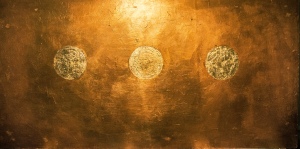
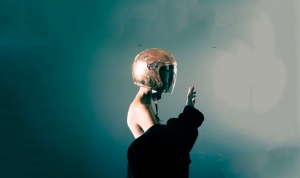
ARTIST IN RESIDENCE - ANASTASIA VENKOVA (RU) Drawing Research Residency 'THE INVISIBLE REALM OF POSSIBILITY'
The project will focus upon notions of intention and the physical act of drawing as it arrives as a vectorial force on a material surface. One could say, an infrastructure from where other possibilities collide, from common habitual behaviours toward the realm of the unknown.
This residency programme is in partnership with l’AiR ARTS and FIAP, PARIS ANASTASIA VENKOVA (Russia)
I explore visual perception and mechanisms of taking choices.
The project I am working on now is based on the iconostasis by Pavel Florensky and on reasoning about the reverse perspective, in particular, about the ability of consciousness to construct a coherent idea of the past based on what it perceives in the present. I was moved by curiosity about the theory that if, for any reason, consciousness would be subject to aberrations in the process of perception, or incorrectly (that is, not the way it was in objective reality) would build logical chains based on currently available data, it can construct a past that does not correspond to so-called objective facts.Working on this project, I, in particular, try to answer the question about the legality of replacing the real biography of a person, especially an artist, with an imaginary one, and whether this new, imaginary biography can also fit tightly into reality and also change it how it does the real one. I am intrigued by the question of the power of myth-making.
Being firstly educated as an illustrator I faced the question of what illustration actually is. So, passing through number of researches and thinking I found that it is nothing but embodiment of something, that does not have a body. I turned from illustrator to artist and I am working with construction and deconstruction of visual image in the human mind. I have been exploring ways of grotesque as the process of making choices between important and unimportant.
|
|
|
|
October/November 2018
ARTIST IN RESIDENCE - DAWN PRESCOTT (UK) “Do I make art to remember or to forget?” Marlene Dumas
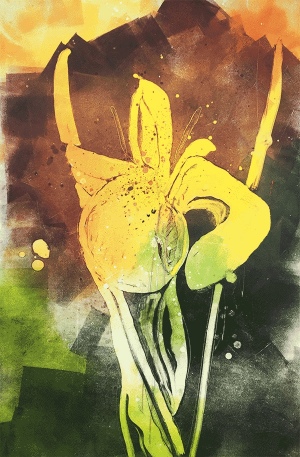
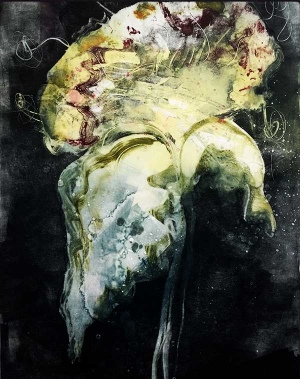
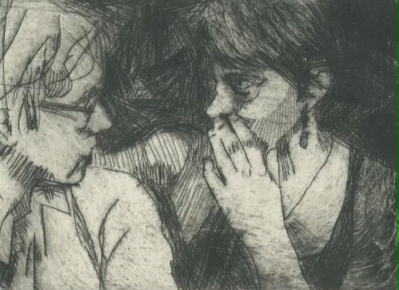
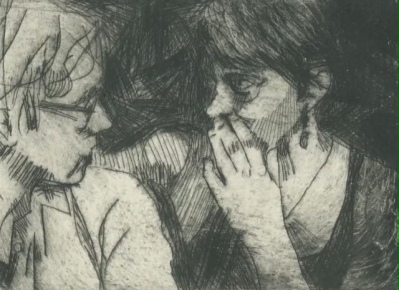
During the residency I would like to consider how drawing can heal a wounded psyche? How and why does art nourish our heart and soul? I am the daughter of a dairy farmer. As a little girl, growing up on a farm was wonderfully visceral and deeply traumatic. From a very early age I was acquainted with the joy and horror of life and death. I had to seek salvation as a child growing up in the chaotic farming environment. My escape, alone and immersed in the beauty of the rural landscape, was drawing. Today, I work as an art project coordinator and lead artist in hospitals. Evidence proves how enabling access to the arts significantly impacts on one’s physical and spiritual experience within the hospital environment. As a child and to this day, I use drawing for freedom and drawing for health. I draw from life, from memory and from imagination. My work often represents an emotional reaction to past, present or imagined experience. Often blurring the imagined with reality, the work regurgitates and reinterprets lived experiences and explores how they impact on interactions with others. The process of drawing is fundamental to the development of my work enabling, quick and free flowing sketches from direct observations in real life. My current work explores the drawn line extending its possibilities through different processes such as monoprint and etching. Monoprint specifically, bridges drawing with printmaking allowing expressive free flowing painterly marks. It allows the irresponsible freedom to change ones mind and the unexpected to emerge. Responding to the surprises of the reveal means that the work is in constant flux and encourages the process of creating the image to become fluid. The discipline within the practice is directed by a will to capture the very essence of the emotions contained within the memory. The rural setting of the DRAWinternational residency offers an environment which I can associate with the familiar farming landscape of my childhood. I hope to assume parallels with the setting of Caylus and the landscape of my childhood to trigger emotional response and enable the discovery of new possibilities within my drawing and printmaking practice.
Dawn Prescott
|
|
|
|
July 2018
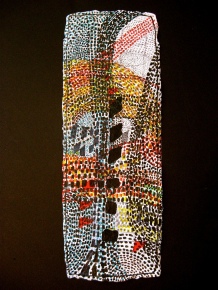
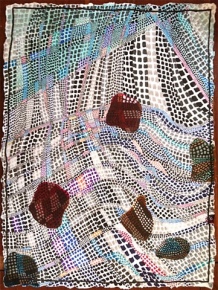
ARTIST IN RESIDENCE -REENIE CHARRIERE (USA) Drawing is the beginning of something new and the continuation of something old. When I am drawing, I feel quietness, calm, and the urge to keep on going. My way of navigating is through drawing. It enables me to bring ideas into space. I become a choreographer working with rhythm, lines and textures.
During the residency, I would like to expand my drawing experiments on a larger scale. I would like to begin by working with my current focus on arches and architectural structures, windows, doorways, and liminal spaces. I have been obsessed with arches, as form, and a symbol. To me an arch is a place of contemplation, and framing.
I am both interested in 2-D investigations as well as 3-D sculptural drawings. My works take on forms of tapestries and meandering cascades and waves in space.
Beginning with chance, and one mark, systems unfold into dreamlike environments.
|
|
|
|
June 2018
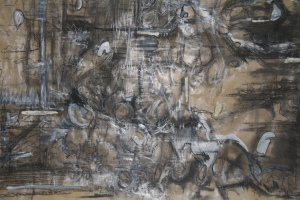
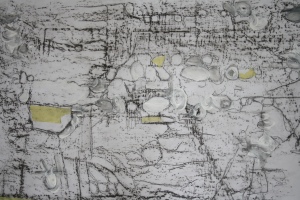
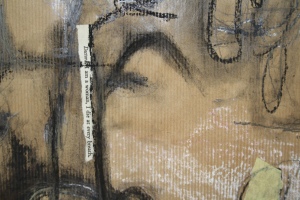
ARTIST IN RESIDENCE - Therese Murphy (IRE) I am interested by the immediacy of drawing and my work explores drawing as a place, or even from a place of direct connection with something other. Drawing is a direct, physical capturing of processes in the subconscious and records the immediate response to the landscape we inhabit and any one time. These responses, as recorded through the act of automatic drawing somehow capture a reaction or a process which is more immediate than that of verbal language.
To me, the visceral nature of a drawn line can capture a sensory experience most effectively because the act of drawing is an embodied act.
Drawing in and from a new environment allows me to creatively respond to some idea of the unknown which is a recurrent theme in my paintings. My work is always interested by how we process change and what happens within us as a result of change. The Act of drawing becomes a way of recording those emotional, subconscious responses to the very physical, geographical change of environment. My own movement in and through a landscape or a space, to and from a canvas is an extension of that drawing process and one which brings both myself and the work immediately into the present moment of the now.
For me drawing is an integral thread through an immersive painting practise and my drawings often lead into and through an in depth body of paintings. Extended drawings exploring the musicality of line coupled with vocal recordings are made in an effort to synthesise or somehow record creative process as it happens, almost drawing with or on the frequency of creative process, like musical notation.
The Residency would allow me to reconnect with this expansive practise of making work having spent twelve months in a socially engaged role researching and educating on pollinator decline and biodiversity through creative workshops, exhibitions and school projects. In bringing my practise right back to the basic act of immersive drawing in a focused environment for a set period of time, I hope to allow my work the direction, time and space it really needs at this point.
Therese Murphy
|
|
|
|
October 2017
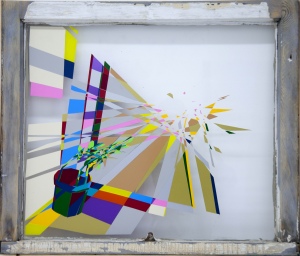
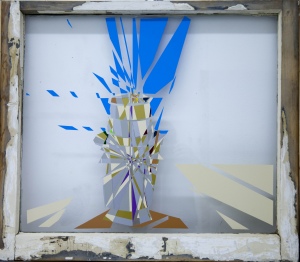
ARTIST IN RESIDENCE - REBECCA NORTON (USA) I study the movements of an immovable velocity - ie, affine projection- as it maintains its identity in space-time. My personal encounters with a place, person(s), or an environment are used to frame a situation for charting affine projection in colourful 2-D compositions. By coupling affine geometry with elements of light, space and horizons I am able to map diagrams of active “irrational” figures moving through a world of sensation, giving expression to obscure possibilities for figural perspectives and projections. The studio work produced at DRAWinternational will serve as studies for a series of works about light and relativity. These pieces will be installed with other works expressing sensible landscapes from multiple global locations. “Panlux” I would like to extend the relative horizons of my affine works by producing a series of paintings, essays and works on glass illustrating sensible qualities of various landscapes. The feeling of the environment surrounding the artist residences and studios will be expressed in (2D) artworks. In these works, elements, namely light and velocity, will be “captured” as coloured gestures (gouache on Mylar and vinyl on glass). The source of these studies will be the natural and architectural surroundings. Graphite diagrams accompanying the “captures” will interpret the positions of my body as I feel myself in a space-time relative to various vanishing points (horizontal coordinations). An intersubjective experience of the residential space will be a lens through which the work is produced, and through this work I will be aiming to understand the coupling of identity as it becomes entangled with the spaces it is occupying. Research for this work will incorporate the following areas of study: diagraming of a point on a sphere and the mapping of time on a celestial sphere; sun angle, duration, and insolation with respect to the place of residence; cataloging an identity’s position based on horizontal coordinate systems (a relative set of visual mappings); perceived colour of daylight at various times of day; a record of the daily day lengths during the course of the residency; orientation entanglement; affine perspective. Visual studies will be rendered with graphite on paper, gouache on Mylar, and vinyl on glass. During the residency I will continue my studies in contemporary mathematics, cartography and projective perspective. The writings of Gilles Chatelet and Giuseppe Longo will contextualise a theoretical discussion about identity, space-time and natural systems. To gain a broader understanding of the surrounding landscapes, I will research the history of cartography, as it relates specifically to the location, and the solar position during my stay the the residency. Information gathered from research will be incorporated in the visual studies and/or essays. Rebecca Norton www.rebeccajnorton.com
|
|
|
|
September/October/November 2017
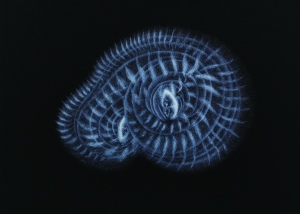
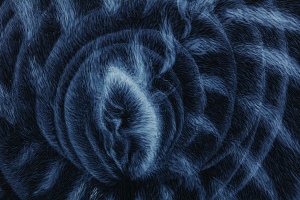
ARTIST IN RESIDENCE - SEOLA KIM (SOUTH KOREA) The process of creating for me is almost like a metaphor for confronting memories that I hold from my own personal past and private history. Recalled experiences are like a shroud of fog that hold the unexpectedness of fear, trying to trace things that I have perhaps known, seen, smelt or touched; but which still contain layers of meaning to be deciphered. My two-dimensional painted surfaces are akin to an infinite void where I have never been before, and which is where I want to examine my reality through a multi layered mosaic of memories. The experience of my burnt house holds the potency of recollections of memories, and which makes me observe the ashes that exist as twisted shapes that float away by the slight wind; fragmented further into molecules of nothingness. These occurrences put me within a space of vulnerability where I constantly desire to know why the ashes cannot be whatever they ‘were’, ‘are’ and ‘will be’, as they exist. My enquiry has been with translating private memories into communicated forms with visual tactility and how to bring the memories to the surface within a certain pictorial sensibility. My mind is filled with an undefined imagination, not held by shape or form alone; but informed by experiencing, observing, and communicating with the complexity of existence through the subtle shade of meaning of my surroundings. Minute movements lead my thoughts to assimilate traces of forgotten spaces. I see insects trade their patterns as imprints, where the flutter of a wing carries the constant fluctuation of life. I see things covered with a mold and a cloud of dust which obscures and makes them often appear ambiguous and not easy to define. I look at shredded cloth used over time, like a women’s placenta that lies discarded by the womb. The breast of a woman, which holds or their own weight is against the gravity of their aging like a drop of water… Multiple variations within concealed spaces (connotated/nuanced insinuations) pattern my thoughts and fill my philosophical landscape. These provide me a space of learning which sensitizes me to find my pictorial sensibility to formulate the scope of my aesthetic experiences and frame the subject of contemplation.
Seola Kim
|
|
|
|
July/August 2017
ARTIST IN RESIDENCE - LUCAS JACARUSO Musician (USA). I began my music career as a classical pianist and had the chance to perform in youth concerts at Carnegie Hall and Lincoln Center in New York. Later, I developed an interest in Jazz and studied with luminary Marshall Hawkins, former member of Miles Davis' trio.
I currently compose music and have a great interest in writing music for films and collaborative multimedia projects. My latest teachers include Russell Ferrante and Bob Mintzer of the Yellowjackets (at USC Thornton.)
During a two month stay, one of my project interests would be composing music that integrates modern-Jazz and atmospheric harmony with traditional French instruments including Accordion and old-fashioned guitars. I believe in modern times, there is a big division between "traditional, roots/folk music" and "modern/contemporary" music. In fact, all music is roots music and can be traced to all parts of the world. That is what I hope to set out to explore. As a current Jazz student, I would also like to take the time to expand upon my portfolio of compositions. I am also very interested in collaborating with other artists in residence.
Lucas Jacaruso
|
|
|
|
July 2017
ARTIST IN RESIDENCE - ESTELLE LEBRUN (BELGIUM) Alors que le paysage conjugue simultanément plusieurs temporalités au sein du même espace, la lenteur du processus de réalisation des dessins s’oppose à l’instantanéité de la prise de vue photographique. Cette dernière, ce processus infini qui permet la combinaison d’espaces multiples et de temps différents, donne lieu à un type de phénomène insaisissable à l’oeil humain par la capture du mouvement. Sa reproduction en dessin m’amène à explorer l’ensemble des dispositifs de projection qui puisse permettre la manifestation de la structure latente de l’image via l’emprunt de techniques de transfert – l’ensemble au graphite et par conséquent quasi exclusivement en noir et blanc. L’usage du crayon gris, de ses nuances jusqu’aux contrastes les plus intenses, permet au pis aller de considérer l’essai comme seul exercice – objet d’expérience. Une exploration de la problématique du devenir de notre perception des paysages en milieu urbain et à l’ère des technologies nouvelles. L'idée première est d'établir des liens entre les territoires et questionner ainsi les limites ou frontières qui à elles seules font sens. Il s’agit concrètement de collecter un maximum de clichés photographiques (numérique, drone, etc.) – premiers vecteurs des dessins partagés in fine. L’ensemble sera complété – dans le cas où les terrains ciblés seraient inaccessibles - par des cartes et clichés desdits territoires extraits des fonds d’archives de l’Institut géographique national. Ces fonds permettraient de faire émerger des dessins et des peintures sur verre suivant la manière dont les territoires cartographiés sont aujourd’hui conservés. Le deuxième axe - dans la continuité des travaux précédents -, concerne la réalisation d’une fresque à l’Encre de Chine. L’image sera choisie en fonction des photographies réalisées sur place et suivra le principe de l’avant-projet ci-dessous : Le troisième axe prendrait la forme d’une microédition qui réunirait la documentation et les apports multiples issus de la participation des personnes impliquées dans le projet. Cela peut idéalement donner lieu à des coproductions. Estelle Lebrun
|
|
|
|
March/April 2017
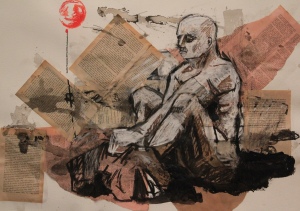
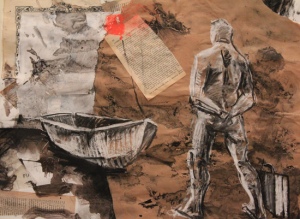
ARTIST IN RESIDENCE - TODD FULLER (AUS) If drawing is what happens when you take a line for a walk, animation is what happens when we dare to watch. To date my practice has explored a range ideas and narratives, but at the core of all my work is an unadulterated addiction to drawing. Whether entertaining audiences through performance, collaborating with dancers for interdisciplinary outcomes, storytelling through moving image artworks or tinkering with mechanical flipbooks - my process always returns to the logic and language of drawing. Creating animations is a laborious task in which process is integral. As you pace between the picture and camera you are constantly evaluating, not just your subject and image but also the ritual and routine through which you create. Chopping, erasing and changing, there is a fierce confrontation as you wrestle your materials; all the while trying to balance the logic of your subject in motion and an intuitive perception of the situation unfurling. Of course, the greatest tool in this struggle is gesture. Throughout my time at DRAWinternational I aim to focus entirely on an analysis of gesture both inside and outside the context of animation. In doing so I hope to consolidate the various streams of my practice into one cohesive body of work. Areas I will investigate include: • The generation of gestural marks by mechanical and mediated human movement. • The qualities of gesture in relation to storytelling. • An interaction between surface and ground in the construction of an image. • The role of gesture as a transformative quality within the medium of animation. In order to examine the above interests, my time at DRAWinternational will be divided into two distinct research phases: 1. Gestural experimentation - For the first month at DRAWinternational, I will experiment with alternative means of markmaking. This includes hijacking musical instruments in order to make drawing machines, the creation of wearable art objects to create unorthodox drawing implements, rubbings, dance, durational activities and collage. This will take place both in my studio and in the local surrounds. I will also look for other unexpected ways of generating gestural marks potentially through engagement with the local community and environs. These processes of untraditional mark and ground making will result in a library of resources and references to take into phase 2. 2. An animated gesture Using a drawing machine and its imaginary owner as the subject, I will draw 5-12 short animated sequences. I will focus intensely on the relationship between the subject and the means of depicting him. As the protagonists struggle with his machine the quality of line describing him wavers. As he gains confidence, so to does the marks the conjure him. Utilising the previously created textures and images as both subject and background to these animations, I anticipate that themes of transience, fragility, power, dominance, transformation and loss will surface in the work. Developing an abstract narrative, I will seek to find a harmony between figure and ground, abstract and literal, controlled and accidental within the animation and images created. The process will be one of observation, research and intuition. Todd Fuller www.toddfuller.com.au
|
|
|
|
October/November 2016
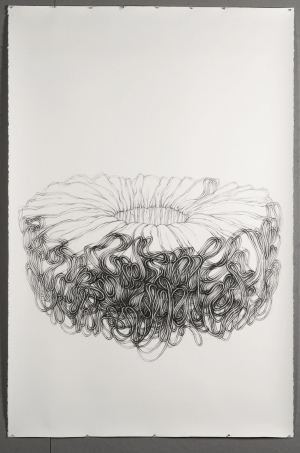
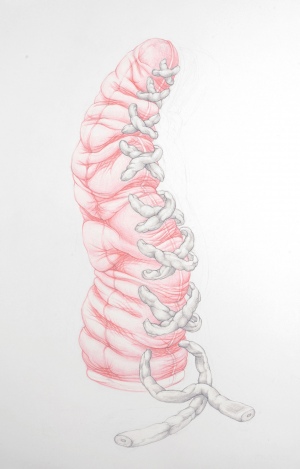
ARTIST IN RESIDENCE - HEIDI JENSEN (USA) “Always a fold within the fold, like a cavern within the cavern. The unit of matter, the smallest element of the labyrinth is the fold, not the point, which is never a part, but only an extremity of the line.” Gilles Deleuze The subjects of my drawings have, at their root, a suggestion of utility. The forms are designed to be used by or on the body, or amplify the body’s form and function. The Confection drawings depict impossible objects of desire, based on a 17th century linen millstone ruff. The opening echoes the form of the neck, passageway for the intake of breath. Shifting contour lines are employed to suggest interior life and fluttering movement. Influenced by Buddhist thought, these drawings are, in part, meditations on the elusive nature of desire, an acknowledgement of its potential to transfix and delude. These forms interest me because of their contradictory qualities. The exterior constantly turns into the interior, they appear volumetric but are empty and comprised only of line. The linear edge races and plunges, feeds back into itself and circulates endlessly. The unrepentant, impudent decadence of the Baroque influences these drawings. A thread running throughout my work is confusion of the animate and inanimate. Political theorist Jane Bennett defines materiality as “a rubric that tends to horizontalize the relations between humans, biota and abiota”. I am interested in this unstacking of hierarchies, and in Bennett’s observation that what we view as inert, lifeless matter has agency that needs to be recognized. If we view bodies as porous and matter as an active agent, the physical world becomes less fixed and more fluid, categories are destabilized. With drawings and soft sculpture from my Equipment and Brush series, I am proposing objects of an unruly nature that inhabit this zone. I think of the Dummies as a stuffed or slipped skin, a tangible, solid object packed full of substance, designed to be handled and played with. The references to athleticism in the Dummies offer a contrast to the decorative nature of the Confection drawings. When exhibited, studies of sports equipment such as baseball mitts and boxing gloves accompany these drawings. The leather surfaces of these subjects, a borrowed and tougher skin, inform the more detailed Dummies. I initially thought of the Dummies and Confections as slightly different bodies of work, but I am finding ways to pull them closer together. At this residency, I would continue to explore and develop the links between these projects. I would plan on making many rough sketches and would start several detailed and surface-oriented works. I hope to continue working between the speculative possibility of drawing and the concrete reality of sculpture. I would like to make sculptural versions of the Confection drawings, potentially with Tyvek, which could be wadded up and shipped easily. Sewing is a natural sculptural extension of my drawing process. It begins with a flat shape, which is stitched together with a line, and eventually gains form. The drawings develop in a similar manner. My proposal is also motivated by the opportunity to explore the cultural and natural features of the Midi-Pyrenees region of France. I know that my work will be influenced, subtly or overtly, by what I will encounter there. Heidi Jensen www.heidijensen.com
|
|
|
|
September/October 2016
ARTIST IN RESIDENCE - LIUDMILA PANENKOVA (RUSSIA) A series of works will be devoted to the terrestrial and spiritual love, without any dividing of male and female types of love, we are just Human beings awarded with the great sense. Why the troubadours and the knights in medieval ages refused from the terrestrial love creating the unique cult of the beautiful lady ? They developed their minds, they tested their senses, they turned to the greatest romantic artists. The terrestrial love and the freedom of hippies was another cult. But they also value spiritual love more than carnal and created their "peaceful love idols"..whatever people do before, they devoted their lives to love; the love forced their spirit to come stronger and their steps to be worthy, they all had their ideas and their own faces. Because we all are individuals and don't hide our faces when we our hearts are full of love. "for is strong as death, that is love; fierce as hell, that is jealousy; her arrows - arrows of the fire; she's a very strong flame. Many water flows cannot quench love; the rivers cannot wash it away. If a man would give all the substance of his house for love, it would be utterly scorned." (Song 8:6-7) Liudmila Panenkova
|
 
|
|
|
September 2016
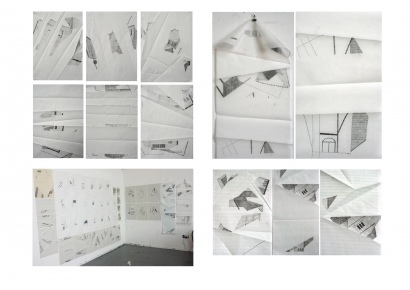
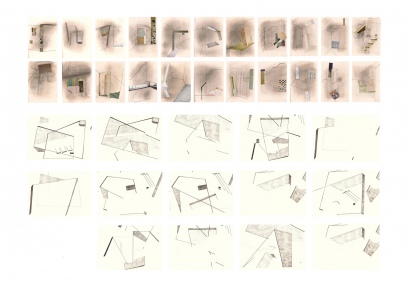
ARTIST IN RESIDENCE - MEGAN TAYLOR (UK) I intend to respond to the themes of imagined territories and potential futures loosely translated as picture lands of film space narrative, which will see the convergence of objects and images that together build up fragments of a fantastical vision of a misremembered world. I aim to unfold the narratives of film landscapes through the act of delaying cinema. Through drawing and assemblage, this project will explore spatial delineation using a language of two dimensional and three dimensional linear elements which reference both organic and geometric systems and structures within film space. This project will invite the viewer to experience fragile and temporal experiences of visuospatial perception. This project is informed by Laura Mulvey's 'Death 24x a Second: Stillness and the moving image' where she addresses how new media technologies such as video and DVD have transformed the way we experience film. By slowing down, freezing or repeating images, key moments and meanings become visible that could not have been perceived when hidden under the linear format and movement of the film. I am interested in how delaying the image of film time, extracting it from its narrative surroundings, also allows it to return to its context and to contribute something extra and unexpected, a deferred meaning to the story's narration. I am also inspired by Plato’s ‘Theory of forms', Yve Lomax’s 'Sounding The Event' and Georges Perec 'Species of Spaces and Other Pieces'. These works have influenced my investigation of systems and conditions of spatiality such as: separability, bridging, singularities and multiplicities, openings, shaping, murmuring events, repetition, herding, boundaries, and interiority and exteriority. This residency will allow me to consider how to reconstruct my drawings into small scale three dimensional experiential 'spaces', allowing me to orchestrate routes through spatial interiors of my narrative constructions, and offer sensual experiences of possible or impossible narratives created through the drawings. I wish to draw environments in a way which allows spectators to interact with the space so to personalise it for themselves and create new narratives. I want the viewer to feel a sudden charge when they enter a room, to feel a physical connection to the spaces and to feel concerned with the dynamics of looking and experiencing. Whilst exploring levels and qualities of visibility floating between the material and immaterial, I endeavour to create sculptural spaces that allow your attention to rest within them, creating an experience of fluid connection or presentness within the viewer. I am keen to explore other art forms in my work and push the boundaries of drawing through film, technology and digital research.
|
|
|
|
August/September/October 2016
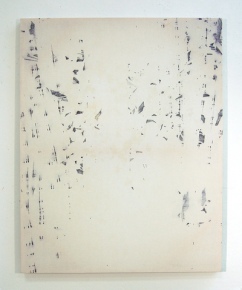
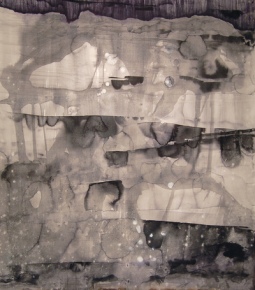
ARTIST IN RESIDENCE - ASTRI SNODGRASS (USA) My work lies somewhere between traditional notions of drawing and painting. I draw from memory, experience, and imagination to create works on paper that relate to the physical world as experienced through all the senses. My process emphasises the tactile and physical nature of the act of drawing by tearing, embossing, staining, and sanding paper surfaces to create marks that do not sit on top of the paper but rather become part of it. Researching the Supports/Surfaces artists in the 1960s and 70s has shaped my thinking about my own work in which an image is not on top of but inside of and part of a surface. I hope to explore the works of the Supports/Surfaces artists in person while in France. I propose to investigate ideas of translation and transformation through the physical process of drawing. My interest in languages has shaped my thinking about translation as a form of transformation, considering both the translation from visual to verbal information and invisible to visible sensation. I want to explore text and language as a part of my visual vocabulary within my drawings, rather than apart from it as titles or descriptions. Astri Snodgrass www.astrisnodgrass.com
|
|
|
|
November 2015
ARTIST IN RESIDENCE - ANU RAINA (KASHMIR/ CANADA) I would like to spend some uninterrupted time figuring out details to complete my autobiographical series of art work titled “Chapter 2, Page 1” This series is an attempt to recreate earlier chapters of my childhood spent with my mother at my family home in trouble torn Kashmir where I was born. The untimely death of my mother to breast cancer followed by the forced mass exodus of the family from our homeland due to ethnic cleansing of our minority community, left a deep impact on my young mind. Although scattered - we all did manage to find new lives away from home after a long and arduous journey, but the grief of loss of my mother, my home and identity never quite left me.....a loss that I still find myself struggling with. “Chapter 2, Page 1” is the first artwork in this autobiographical series of five. It is a 50” X 60” portrait of my mother. In creating this piece I have worked in many layers, visual and conceptual, by playing with a hand stitched patchwork of opaque and translucent materials like Mylar and discarded embroidery punch cards. I have hand painted the background with colours and pigments and a hand embroidered poem in French that I once wrote about her to create these layers of memories. The verses of poem speak of her motherly love and how I woke up every morning in her arms and pretended to be asleep still. The use of paisley motifs in the background of the artwork is a response to a special memory of going to the fabric looms with my mother, where she would buy fine Cashmere shawls as part of the wedding gifts for me and my sister. She knew she had very little time. I have managed to find some old pictures of my mother and my home from family friends and would like to complete this series of artworks as a final adieu to a happy home that once was. Anu Raina
|
|
|
|
September/October 2015
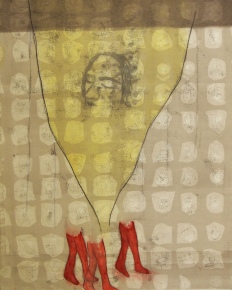
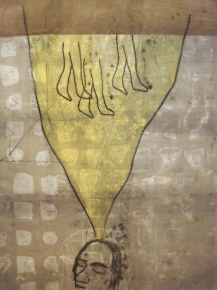
ARTIST IN RESIDENCE - JENNIFER BELAIR (USA) My work is a cathartic and experiential and revolves around existential thinking. Currently, my studio research and practice concentrates around a collection of relational opposites that can contradict one another but also work together to define what essentially is. Similar to the idea of understanding who you are by understanding what you are not. Some of the relationships that I tend to explore include feminine and masculine, reality and imagination, memory and truth, and verbal and non-verbal communication. SAD FACES : focuses on investigations of the self and memory.- the work initially obsesses over a particular memory and then recalls the emotion that epitomizes that memory. From there I let the stream of conscious flow—adhering other ideas, people, places and memories that correlate to the originating thought. There are attributes of realism and abstraction in my work—usually the originating thought is rendered more realistic. Many of the accompanying images, colors and shapes through placement and rendition take on abstract qualities which are sometimes whimsical and meant to be bizarre and funny. The figure is a central element of my works. The figures are sometimes actual people that I have met while others are imagined. Often the figures peer out of the picture plane with a blank apathetic stare that leans more toward sad faces—hence the title of this growing body of work . The continuation of SAD FACES highlights the introspective quality that we all inhabit—regardless of any variables. www.jenniferbelair.com
|
|
|
|
August 2015
ARTISTS IN RESIDENCE - CANDICE IVY /ANTONIO MARTINEZ (USA)
Candice Ivy & Antonio Nevada Martinez: A collaboration
|
|
|
|
July 2015
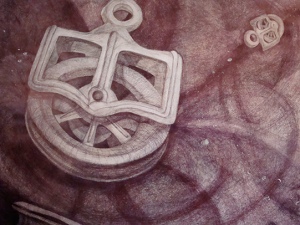
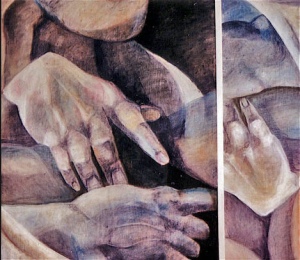
ARTIST IN RESIDENCE - WENDY CURTIS (USA) ”The things we now esteem fixed, shall, one by one, detach themselves, like ripe fruit, from our experience, and fall.” - Ralph Waldo Emerson “Love is reciprocity and so is art.” – Jeanette Winterson “See heroes as every day people” – Chuck Close Littering my studio space with dried flowers, fruits, found objects, and gifts I seek to investigate how things fall or change from a seemingly fixed state into something else altogether. I am interested in the relation between all stages of life passing, which is not the same as life ending. I have always gravitated towards figurative elements, which is reflected in these works both in scale and modeling. Although some of these works are a personal meditation for me, I hope that they, along with the more politically/socially-involved work, create a space for interaction with the viewer. Wendy Curtis
|
|
|
|
May 2015
ARTIST IN RESIDENCE - DIANE HENSHAW (IRE) draw pull, drag, haul, tow, tug, heave PUSH attract, allure, entice, invite, tempt, induce, persuade, influence, elicit, call forth, evoke REPEL sketch, delineate, map out, outline, trace, depict, portray, represent. inhale, breathe in, inspire, suck, drain, siphon, draw off move, go, come, proceed, advance, approach, deduce, infer, conclude, derive, glean, get, take, pick, choose, select. draw back recoil, shrink, retreat, withdraw, retract. draw out protract, extend, prolong, drag out, spin out, stretch, lengthen. draw up draft, compose, formulate, prepare,. halt, stop, pull up. attraction, pull, lure, influence, magnetism, charisma. tie, stalemate, dead heat. raffle, lottery, sweepstake. draw back disadvantage, snag, hitch, hindrance, impediment, obstacle, flaw, fault, imperfection, defect, difficulty, problem, detriment, shortcoming, deficiency ADVANTAGE drawing sketch, picture, delineation, outline, diagram, plan, illustration, cartoon, representation, portrait. My work deals with the abstract and has an obsession with searching for the perfect line - from paired down lines and formulated composition to a new entourage of blasting hues and tones using a plethora of line, print, collage & form. My work uses gestured line and process - I work blind - detraining the eye - and I focus on the apparent, the banal and diary stylised method of dealing methodically with the abstract. DRAWinternational is of particular interest, I can see a direct correlation to your organisations work from the web archive and ethos of your organisation. I will make large scale drawings and small works focusing on daily events, conversations, memories of daily events, visual and audio stimuli and concepts relative to sense of place - journeys drawing blind focusing on gestural, economic and contour line as a direct response to DI: AIR programme. Diane Henshaw
|
 
|
|
|
April 2015
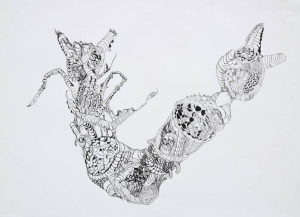
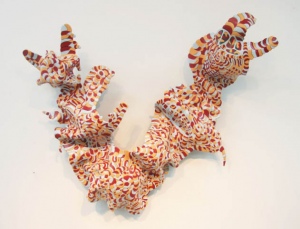
ARTIST IN RESIDENCE - TAE YEUN KIM (S. KOREA) I am interested in motility in living things which can be shown in our body and in broad context in the society. The living things have mobility specifically subdued, unobserved, repetitive, jittery, unconscious movements. Those movements are comparably neglected but a small but nevertheless important in our life and in the society. Seem to be meaningless movements are filled with our daily activities. The accumulated insignificants become the significant acts or the major events. The negligibility would have systems while accumulating. In the process of accumulation the interactions might occur in between a minor and another minor. In my paintings, I create a new creatures. These creatures become a medium to show the processing not to reproduce a specific object or events. When the new things emerge we tend to feel bizarre and abnormal but soon to be accustomed to the new. The wriggling movement of living things are expressed by repetitive small planes. The assemblage of planes are seen like a surface of planarian, skin of earthworm, insect’s joints. The small planes are infinitely unite and divide. The creatures are free deformations and there are no limits in transformation. The creatures themselves cannot be said what they are but clearly exist. Some things cannot defined but definitely exist in our world. The simultaneity of life and death coexist in our body and in our society. But life and death are not only exist but also betweenness. Furthermore in betweenness the phenomenon exists. My artistic practice is to find these minor movements to reveal action of movements and express through visual images. www.taeyeunkim.com
|
|
|
|
October 2014
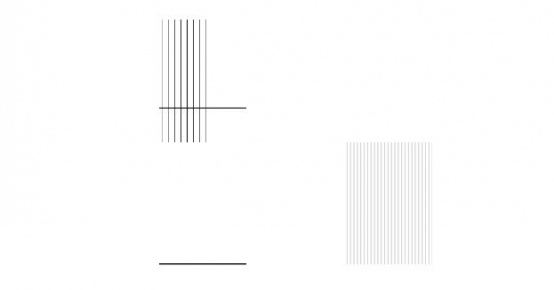
ARTIST IN RESIDENCE - LENKA ILIC (SERBIA/USA) Nature has crafted a sense of simplicity in my work. Being in love with mathematics and geometry I have developed a strong inclination towards deducting, segmenting and analysing thoughts. While studying at the University of Architecture in Belgrade I worked for a local architectural firm and noticed the first scants of an immense creative world. Simultaneously, I had my world, exploring psychology and human relationships. In consequence, the idea for the residency at DRAWinternational will be based upon: a persons’ isolation; communication within a group; external influences and traces of thought and its association. My method of working is based upon form which explores interaction and chance operation. On the one hand I draw and on the other I experiment with HTML coding, i-phone photographs, still shots from i-phone videos, 3dsmax visualization, autocad drawings, and literature. I intend to concentrate on dissolving, segmenting, rethinking and creating new forms of hand drawings, focusing on segments reconstructed through HTML code, GIF format, installation, light effects, space effects, and scale. This process is stopped at the various stages of intervention as an open experiment and outcomes which may surprise myself and others. www.lenkailic.com
|
|
|
|
October 2014
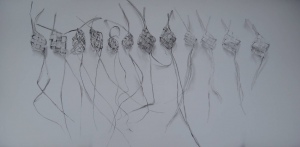
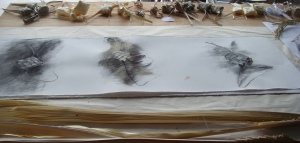
ARTIST IN RESIDENCE - MARGARET BROOKS (AUS) Inspiration for my art making comes from an engagement with an issue of local interest. Then, through a dialogic engagement with materials, people, and drawing, I unpack some of the ideas, meanings and understandings behind that issue using studio processes. The focus for this residency will be the Machiya of Kyoto, where I will be undertaking some research and learning how to make washi paper prior to the DrawInternational residency. In Machiya I experience a connection between art, life, local traditions and nature. Kyomachiya are aesthetic and functional spaces; places where artisans live and work. They lend themselves to an exploration of the body in space and provide multiple possibilities for structures and surfaces on which to draw and record movement and space through drawing. Traditional materials, like washi paper and bamboo, that are used in the construction of the Machiya lend themselves to be reinterpreted through drawing and installation. Paper doors and screens filter light in aesthetic and interesting ways. I will work with the washi paper to explore the aesthetics of light and space in the Machiya. For me washi paper embodies both the sense of fragility and the strength of Machiya. Dr Margaret Brooks
|
|
|
|
September/October 2014
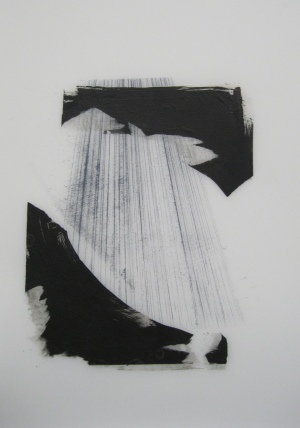
ARTIST IN RESIDENCE - EMILEE LORD (USA) All aspects of my work are firmly rooted in the process, material nature and theory of drawing. Either in performance, through an installation or with ink on paper and silk, I use lines, gestures, prints and materials to explore the fleeting, physical, immediate and sensory nature of drawing. The mark is an action, instructions for action, and a trace of an action. There is information about the body in these things. My work over the last couple of years has begun to truly merge my areas of interest. I have been making installations that use both drawn and material line, I have used repetition to engage community involvement in drawing and composition, and I have begun to generate a series of graphic and instructional scores for performance, some of which are abstract drawings with deconstructed dance notation symbols that can stand on their own as a drawing as well as be read or performed. The questions I have in my current studio practice and those I would like to answer while at DRAWinternational are: How can a drawing communicate to the body or communicate something about the body? How can the body communicate/generate a linear two dimensional composition in space? How long can you repeat something before it wears down? Can a physical action generate a drawing that can then be read back into a physical action? www.emileelord.com
|
|
|
|
August/September 2014
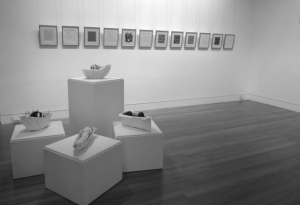
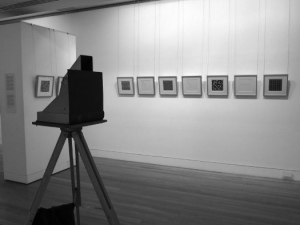
ARTIST IN RESIDENCE - NATHALIE HARTOG-GAUTIER (AUSTRALIA) Over recent years, my art has focused on an exploration of the different meanings associated with the idea of the voyage: the voyage in the sense of personal/autobiographical journeying; and the voyage in terms of geographical voyaging. This project will continue essentially within this thematic terrain. During my residency at Caylus I would like to explore its closeness to the Aveyron River. I am conceiving the river as emblematic of the very notion of a journey. I propose following the passage of the river as it encounters cities and negotiates its way through levees, embankments, and bridges. I propose to travel along or on the river and develop artworks which will explore the river’s character and its mood, and the nature of its penetration of the landscape. In summary, I am proposing to: Develop a set of frottages of the bridges, recording their different surfaces Draw the bridges, recording their shapes and formal characteristics, and their tonalities. Create an Herbarium of plants growing near the bridges (when permitted) Draw the river and its riverbanks, with particular reference to the rhythmic relationships between these two motifs Make sound recording and interview one person from each bridge. The river is the “in between” place of what I can see and what I can feel. The frottage is a subjective memory of the tactile: it is objective because the bridge is physically there but subjective as the touch can be applied differently. The bridges represent a link between the right and left bank and become a symbol of the journey, the passage between two landscapes. The water patterns and riverbanks metaphorically represent a form of emotional writing, anger, frustration, and happiness. Ultimately, the project will represent a romantic and sensorial interpretation of the riverscape. www.nathaliehartog.com.au
|
|
|
|
July 2014
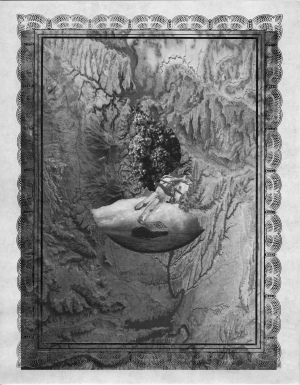
ARTIST IN RESIDENCE - JANE NELSON MEYER (USA) To the kind people at DRAWinternational: I have read that you are looking for an artist to “fill some shoes” this summer. Let me just say that with size eleven feet, filling shoes is one of my many specialties. But before I stick my large foot in your residency door, I want to tell you about the recent adventure that revealed to me my own artistic language. Competition For The Sun It was a late October day last year and the world was covered in fog. We paddled down the river in our aluminum canoe, awestruck like explorers wordlessly discovering ancient caves frosted with bioluminescent creatures. Only the ghostly riches of nature can so thoroughly reduce a human to a fugue state of wonder and voyeurism. As we softly dipped our paddles and glided down the glossed river, the mountain island approached—an enormous sleeping beast shrouded in fog. We let our vessel list shoreway as we ventured under its basswood canopy. Though the island was deserted, the air was thick with the words: “You don’t belong here.” The behemoth landmass loomed 130-meters high into the eerie atmosphere; however, an intense drive to finish our expedition overrode our better judgment. We simply had to climb. There were no manmade paths on this side of the island. Ankle-biting brush laced a quickly steepening mountainside. The trees thickened. Covered in slippery mud, we saw that we were halfway up to the peak. To turn back promised broken bones; so, with young, blind hope for a safer way down we journeyed along in silence. Eyes heavily focused, we steadily ascended the beast. Grappling with rotten tree limbs and eroding sandstone covered in wet leaves—like spinach lying rotten in the mountain island’s teeth—we carefully gauged each upward step to prevent slippage. Bruises and scrapes: proof that we were not always successful. But we ignored these injuries, because each of us thirsted to reach up and touch that matte-gray sky hiding like a prize above hazy tree limbs. The prospect of reaching the impossible invigorated us. And there it was—the physical barrier between the journey and the final realization of some thing magically important to oneself. We rose above the fog. The moment I finish a piece of art—the moment when it all clicks and I have only to scrawl my signature—is the moment I rise above the fog. In the exploration of my work, I first succumb to this same “fugue state of wonder and voyeurism.” Nearly out-of- body, I watch my hands lovingly labor over paper and canvas. The way I float on instincts to inform my mark-making parallels my journey up the mountain island: I have to make and I have to climb. In the residency, I plan to create a new drawing series to show in a gallery. I propose to make visual comparisons between the human psyche and the natural world; I imagine those concepts evolving and strengthening as I contribute and experiment at DRAWinternational. The key to success for me is to passionately fall for an idea and commit to it. Honing my focus in on mark-making while part of a trans-continental community will be another life-changing adventure. I hope that your travels through my résumé and portfolio leave you above the fog as well. Thank you. Sincerely, Jane Nelson Meyer (The best pair of feet for the job).
|
|
|
|
February 2014
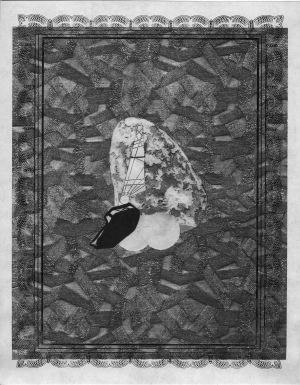
ARTIST IN RESIDENCE - ELSA LEFEBVRE (FRANCE) L’expérience est un fait vécu Vivre une aventure humaine et artistique, voilà ce qui m’intéresse. Je suis constamment à la recherche d’un lieu qui m’aide à développer la connaissance des êtres et des choses par une rencontre. Ces expériences uniques me permettent d’approfondir mon thème de prédilection : la narration. Mon travail s’inspire directement de ma vie et de mon rapport au monde. Je transforme l’expérience vécue en une expérience poétique. La résidence DRAWinternational m’intéresse fortement par le programme AIR qu’elle propose aux jeunes artistes. Peu de résidences ouvrent leurs portes aux nouveaux plasticiens avec un espace de recherche et d’expérimentation permettant élargir leur univers grâce à des échanges culturels, artistiques et pédagogiques, le tout dans un contexte professionnel et contemporain. Je vois la création comme plusieurs temps qui s’imbriquent : l’expérimentation, la construction et la présentation. Ces différents temps se transforment pour moi en un processus créatif : le temps de la narration, le temps du récit et le temps de la fiction. Ces différentes étapes me permettent de transformer la narration en une émotion plastique. L’approche de la création ne se définit pas en ce qui me concerne comme un schéma ou une préparation en amont mais plutôt comme un bricolage constant. L’échange créatif est le liant constant entre ces trois temps. DRAWinternational met en avant l’importance du dialogue, comme outil de recherche. Cette vision du travail créatif est primordiale pour moi et c’est pour cela que j’aimerais rejoindre DRAWinternational pour une session de travail d’un mois. Dans mes travaux je ne me contente pas de faire appel à un unique medium. En effet, je travaille aussi bien le dessin, la sculpture, ou encore la photo. Cependant, le dessin est mon medium de prédilection, il me permet de faire naître mon paysage mental. Les formes hybrides, les espaces poétiques sont l’expression de mes émotions premières ressenties lors de mon processus créatif. Ces formes naissantes dans ces dessins sont souvent les prémices de mes sculptures. Durant ce séjour mon but serait de développer un projet de dessin - sculpture composé en deux temps. Le premier temps serait d’établir sur des grands formats, une cartographie de l’émotion fondée sur mon expérience quotidienne au sein de DRAWinternational. Le deuxième temps serait propice à la transformation de ces dessin cartographies en sculptures. Comment travailler le papier une fois rempli comme un volume ? C’est un projet qui me tient à cœur et que j’aimerais réellement concrétiser au sein de DRAWinternational. Elsa Lefebvre
|
|
|
|
September/October 2013
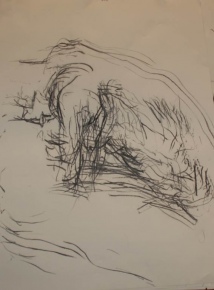
ARTIST IN RESIDENCE - ELINA AHO (FINLAND) I have a passion for researching drawing and painting as a medium in relation to other media, and exploring intersections with performance and dance. My work explores the human image, especially the body image. My work is intertwined with themes of corporeality, embodiment, physicality, viscerality, movement, sensation, and perception. My work also draws from psychoanalytic and psychological thinking, for which my scientific background in psychology gives depth. I’m fascinated by empirical, experimental, practice-‐ led research, fuelled by intuitive knowledge combined with conceptual, analytical thinking. Most recently I have been researching the gestures, the action, and the traces of the mark-‐making, by developing self-‐designed multiple-‐charcoal/multiple-‐brush tools/ “machines” for life drawing and painting. For the residency, I want to explore the proposed theme Gesture, Action, Trace : for example by setting up different conditions for the action, developing tools for drawing, and thinking of the body as a tool... Elina Aho
|
|
|
|
June/July 2012
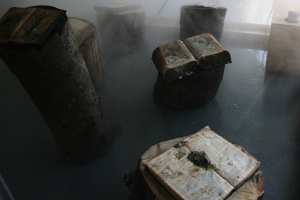
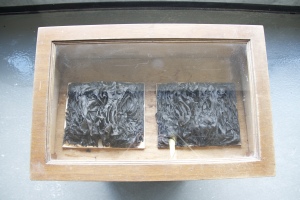
ARTIST IN RESIDENCE - MIO HANAOKA (JAPAN) One of the biggest subjects of my works is how to grip relationships in durational time. I want spectators to feel that everything changes all the time, even now. All the objects, including myself, are transforming in order to adjust ourselves to every present moment. We tend to look for a place to stay to make us comfortable, but there is nowhere to stay same. So, I’d like to show the variable present which contains trace of past and also smell of future. I’m mainly working on variable material such as rotten stuff, growing/withered plants, floating objects on the water, burnt objects, etc. Since I’m working with these kinds of materials, I cannot control a situation perfectly. I just arrange a situation as a conductor would, then materials start playing with their “will”. When I feel I cannot control a situation perfectly, paradoxically I feel I’m a part of nature, or an environment surrounding me. The materials make me feel each individual cannot divide itself from the world. That’s why I’m working with materials that are changing unpredictably. And I believe that people who appreciate my works feel the same way. During this residency period, I would like to develop these ideas in a specific environment. I’m interested in the natural environment around the residency. My choice of material is usually the combination of what you are used to seeing in daily life and unusual situations in these circumstances, so I would like to propose a parallel project in two places, one is in nature, and the other the gallery space. I’d like to think about the relationship within these two places and make unpredictable variable installations.
|
|
|
|
May/June 2012
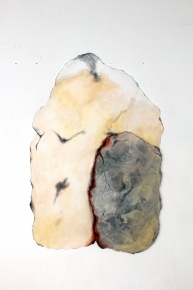
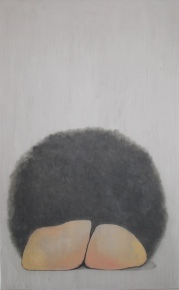
ARTIST IN RESIDENCE - ANDREA POR (CANADA) The underlying theme of my work is informed by the human condition, i.e., the will to power and its subsequent effects of fear, doubt, anxiety and isolation. I am interested in these emotions and how they contend and relate to the enormity of the world and the ephemerality of life itself. What happens to my achievements and will to power after I die? Who will remember me? To what purpose does my individual will to meaning serve on a grand scale? In my current work I am addressing these questions through an understanding of the self in a body. I am depicting what it is to be in a body, and in many ways I am painting what it is to be in my body. These bodies are in a state of flux or change. For me they are captured in a process of deterioration where there is no one to maintain them and no one to give the body a meaning. In my mind this is representative of the ephemeral quality of being human. I hope to use this current exploration as a launch pad for the work that I intend to develop during my residency. I intend to create a body of work that is conceptually informed by the human experience, but to draw upon my experience in France and the influence of working and living in a foreign country. In terms of material and media, I have worked largely in two- dimensional mediums: painting and drawing. More recently I have experimented with installation work, trying to push my painting and drawing practices into a more contemporary and experimental process. During my residency I hope to be able to continue to work in an interdisciplinary fashion, exploring the different forms that can be used to convey my ideas. I would like to continue my practice painting and drawing in addition to working with sculptural elements (found objects, clay and casting). By the end of my residency it is my goal to have a group of work that is both conceptually and materially expressive of my experience in France as an artist and as an individual searching the world for the path to self-meaning.
|
|
|
|
April/May/June 2012
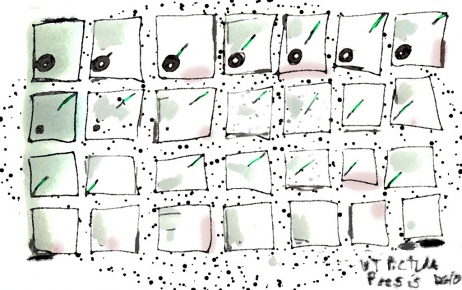
ARTIST IN RESIDENCE - DAVID GRIFFIN (CANADA) In scientific visualisation practices, node-links have become important thinking tools, allowing views on relationships that are otherwise very difficult to grasp. Their simple graphic displays represent information and processes in the physical-metaphoric terms of sequence and proximity, becoming a kind of interface of intention, intuition and interpretation. The work I will undertake in residence will interrogate these properties of node-links by directly engaging with things which may not be made easier to understand through their use. What are the upper limits of the denotational logic of such diagrams? Is there a space that disallows the mapping of relations by node-link graphics? Is connectivity always a knowable state? In brief, using the coherent light of LASER as a 'pure' line applied to the geometry of space, the output will be a semantic network inscribed between our planet and the others in our local space. Each line will simultaneously link us directly to our neighbours, and the "finished" graphic will thus have the absurd property of ~10 billion kilometres of length. It will be a node-link diagram in Euler's sense, but here placed in a context where its pragmatic utility is met by senselessness in what it traces, and what it represents. Drawn from a ground of technical questions related to orientation, distance, and other matters, this enormous graphic will give us a view on the inconceivable, pushing our understanding of drawing as a thinking tool to an extreme. While there will be lines made on surfaces, just as in any drawing, the sum and substance of those lines and surfaces will be decisively uncertain; it will be a graph writ large, and an object-lesson about irresolvable scales, encouraging multi-disciplinary interactions in support of a gesture whose existence is equally a matter of time and space. David Griffin
|
|
|
|
February/ March 2012
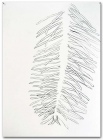
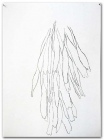
ARTIST IN RESIDENCE - ANOOK CLEONE (HOLLAND) The theme ‘trust’ is a recurrent theme in Anook Cléonne’s drawing. Recently she has worked for over 7 months in several banks as an artist in residence investigating and exploring what is possibly needed in today's current financial turmoil to relocate the trust banks once held in the public’s mind. Anook often works with the idea of landscape as a metaphor for the social landscape with its ever changing social organisation. She examines in her drawing the consequences of not completing form in any immediate sense but rather to allow time and reflection to influence other possibilities toward an arrival of a concrete idea. During her stay at DRAWinternational it is Anook’s intention to construct a series of visual notes which will contribute to a set of drawings entitled: Fallow Land & Root Causes.
|
|
|
|
September/October 2011
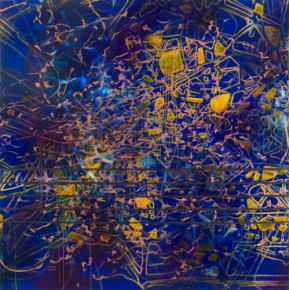
ARTIST IN RESIDENCE - DEBORAH BOUCHETTE (USA) The highs and lows of life are similar to the ebb and flow of the tide. We call these periods “cyclical,” but they are not circular: if one drew a line depicting calamity followed by tranquility, it would look more like a simple sound wave. My work appears abstract, but it incorporates sound, beat, wave, and reverberation as metaphors for life itself. Using line and repetition, I attempt to extract the conceptual energy peaks from maps, photographs, and diagrams of sound. The negative spaces left are the calm, restful, in-between moments that I call “mezzanines.” When I layer sets of lines, I create a visual density reminiscent of a cacophony of noise, “white noise,” or the kind of din that we suppress as we try to listen only for that which we deem important. Sometimes I use silk gauze loosely layered over paper to build drawings that appear differently depending on one’s point of view, alluding to how each of our differing perspectives colors our perception of the same sound, sight, or event. A residency at DRAWinternational would provide a new well-spring of energies from which to work: new sounds, sights, maps, and topography to explore. I plan to walk the area, taking photographs, mapping my routes, recording sounds, and writing in a journal. Then I will respond to my research and create a series of drawings specific to the energies I gather through my stay.
|
|
|
|
August 2011
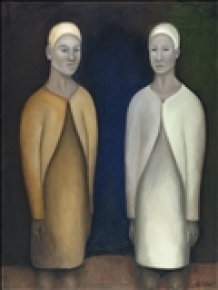
ARTIST IN RESIDENCE - DIETMAR FLORENCE RITTNER (HAWAII) I want to create a breakthrough, furthering contemporary expression in my visual art, letting go of form, uprooting conceptions and challenging the mind; through immersion in a new space within the specific regional culture of Southwest France, and through exchange and collaboration with other professional artists. Architectural formations and lines inspire me, Caylus' cobble ways and house entrances, the gothic arches of its marketplace, as well as the natural surrounding landscape of the Pyrenees mountain lines. The light of Southern France and the contrasts it generates, inspires me. Unique people and their expressions inspire me, and I look forward to interactions with the local population of the village. My purpose is to create visual art that is emotionally challenging, expressing harmony and disorder simultaneously. During the one-month residency at DRAWinternational, I want to research the effect of surrounding space on emotional expression. I plan to walk the village and take photos of 3-dimensional formations and lines; then overlay and transpose the outer images into the abstract; improvising with lines, form and color in the framework of 2-dimensional visual art.
|
|
|
|
2011/2012 - dates pending.
ARTIST IN RESIDENCE - MANOHAR CHILUVERU (INDIA) I have been involved in international live art events since 2002 during these events I experienced a different approach to the canvas that began with drawings and ended with painting. The whole process and approach is different from art production in one's own studio. I am currently initiating a project to explore and give a more interactive context & occasion to the idea of live art & drawing in action. During my residency I want to develop a series of drawings related to my early live art events, and also related to my ongoing project "Global Gracious " (women as earth and beauty) The works will be a series of study drawings of sculptural ideas and larger than life size drawings. Action, performance and spontaneousness are key elements, as is drawing sourced from within the local environment and life drawing. Manohar Chiluveru
|
|
|
|
June/July 2011
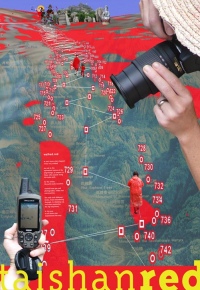
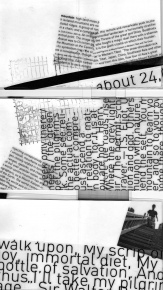
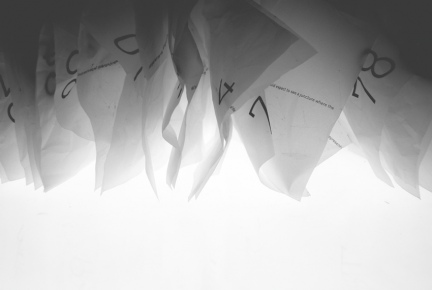
ARTIST IN RESIDENCE - ASTRID ALMKHLAAFY (USA/SINGAPORE) As a designer I sift through my life bringing the personal into my practice and finding visual solutions to express where i am. My practice includes historical research, site specific performance, GPS writing, photography and video. I use the data generated to create artist books and mixed-media exhibitions. For the last three years my works have revolved around the mountain as metaphor, which recently culminated in a three floor three room installation on the nature of the pilgrimage in relation to two of the five sacred Taoist mountains in China. The location of Caylus and DRAWinternational is essential in the piece I hope to create. For the last few months I’ve been working around circles; sacred and poetic, magical and natural. Somehow I’d like to fuse the circle possibly with the Frost poem and ideally the location of Caylus. The history and location of DRAWinternational does intrigue my curiosity in regards to courtly love, the Troubadours, the Cathars and inspires a desire to create an image text performance statement on actual historical ground that addresses my roll as woman and mother and artist. I will use GPS (in writing, drawing and/or marking location) and react on site to create a live art piece documented with video and photography. The footage and data will be translated into a mixed media installation to be shown internationally. 'A SATURATED meadow, Sun-shaped and jewel-small, A circle scarcely wider Than the trees around were tall; Where winds were quite excluded, And the air was stifling sweet With the breath of many flowers — A temple of the heat.' Robert Frost A Boy’s Will. 1915 Rose Pogonias Astrid Almkhlaafy is currently assistant professor of art design & media at Nanyang technological university, Singapore.
|
|
|
|
September/October 2010
ARTIST IN RESIDENCE - BARBARA KENDRICK (USA) My recent works on paper move in two directions: collages and paintings in watercolor and ink. The process of collage liberates me, opening up opportunities for surprise, for visual puns and analogies, and for giving me new ways to think about illusion, deception and representation. I am interested in that moment in which we identify a thing precisely and with the slipping away of that moment. In the watercolors I blur boundaries, dissolve edges, erase, layer and veil. The collages and watercolors are similar in the way they assemble disparate parts into a whole. My sources for collage material currently consist of: Sotheby’s and Christies’ catalogs of objects for sale, an atlas of human anatomy, books on astronomy , architecture and coral reefs, fashion and design magazines, images of insects, fossils, reptiles and jewelry. My system for filing the images breaks down and categories leak into each other, leading me to unexpected juxtapositions. While in residence I want to expand my ideas about combining drawing and collage, utilizing source material from Caylus and surrounding towns. I am intrigued by the opportunity to draw and photograph both plant forms and architecture unique to the region. It will be a particular pleasure to seek out collage material that will add to a sense of place. www.barbarafkendrick.com
|
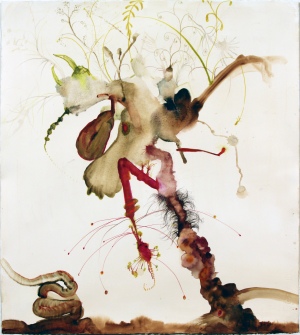
|
|
|
September/November 2010
ARTIST IN RESIDENCE - POLLYXENIA JOANNOU (AUS) Initially, I will gather visual material/drawings for a body of work that will lead to a fresh perspective and direction. This body of work will be based on the interior and exterior of the Institute du Monde Arabe. My intentions are to concentrate on the repetitious, grid-like squares that face onto the courtyard and from the interior view: How these squares are then broken down into further shapes emitting filtered light within the building of the Institute. I am particularly interested in the contrast between the lights and darks that are reflected against her interior walls and stairwells etc. My work revolves around a subdued palette in contrast with sharp shafts of light and dark tones and, the distortion of angles & shapes. I also deal in a variety of materials that can result in the work being neither a conventional painting nor, a conventional view of a 3D object. The finished or what may be perceived as a finished work is a hybrid of the two. My art practice has evolved from works that originally dealt with pure gesture and immediacy to a broader and considered language of ascetics. I have chosen the Institute du Monde Arabe as a springboard for the simple reason that it is a marriage…a hybrid of Moorish elements behind a stark modernist façade.
|
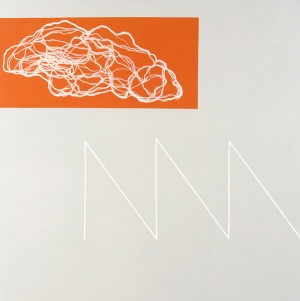
See gallery >> |
|
|
July 2010
ARTIST IN RESIDENCE - ELIZABETH FORREST (CAN) When at DRAWinternational I would like to explore my environment and bring elements of it to my work. As a printmaker, one of the main conceptual preoccupations of my work has been the metaphorical dimensions of the matrix itself. My medium is mokuhanga or Japanese woodblock. Currently, the ideas I'm exploring have to do with concentricity and what happens when one creates imagined interruptions to concentric formations.This has every sign of being a very absorbing and rich theme. What elements hold things to a centre? What effects does this have on the objects/creatures that hold to that centre. Some academics believe that the concentric model of social organization is crumbling - I would like to explore this in my work - perhaps by cutting up a circular matrix and playing with it as an object that leaves traces (printings) of being other things. I would also really value the freedom to just explore. www.elizabethforrest.com
|
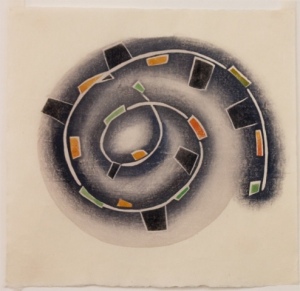
|
|
|
July 2010
ARTIST IN RESIDENCE - MEGAN EHRHART (USA) I am an animation. I am a caricature of myself. Breathing a distinctive life into this organic shell in which I currently reside, I consciously create a vibrant personality and endless stages of emotion through the mechanics of live daily human animation. I advise my stop-motion puppets to follow my lead, but they often prove too obstinate to be trained properly. They have a life of their own. I have only myself to blame for that – I created them that way. Embracing surreal imagery that haunted me in my youth, the work I create searches for peace within the nightmare, where beauty and humor exist in the grotesque and the extraordinary. In worlds where a two-headed circus monkey can merrily parade around on a rusted bicycle and dead animals consume their own flesh, these animated environments grant physical presence to disturbing, almost sinister material. By creating charming diminutive monsters and scenes of violence masked by humor, I reduce elements born of childhood fears into manageable portions. Grounded – Media Installation Grounded is an interactive sensory environment enhanced by five intertwined chapters of stop-motion media. My proposal for a summer residency is to make and complete the second film of this series. While working in sync with the final installation as a whole, each chapter is designed to stand alone as a film for individual screenings. The inspiration for this installation stems from an animation that was literally unearthed as I roamed around the French countryside for eight weeks and reflected on life. Working in a remote village without mechanical transportation forced me to slow down and adapt, and turn inconvenience into an opportunity for innovation and self-reflection. Everything is transient. People come and go, emotions and personal attachments whirlwind around in a tornado of intimate international social interaction. My work has thrived in these conditions, surrounded by artists with such diverse backgrounds, cultures and talents, nurtured by a strong community built from cooperation and creation all within an old stone house. This experience has changed me, how I think and reflect on the world, on art, and on the value of living in the moment and allowing my work to follow suit. The film relies heavily on immersing myself in another very specific regional culture, developing the narrative as I absorb the world around me though personal experience and interaction with the local population. I will only use materials native to the region for the creation of this animation. The theme will be relevant and crucial as the second chapter to the final Grounded installation. Megan is currently Assistant Professor – Cleveland Institute of Art, Cleveland, OH T.I.M.E. Department of Digital Arts www.tuscarstudiofilms.com
|
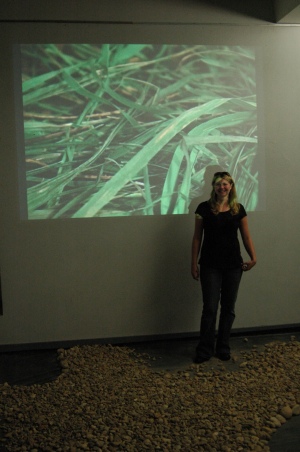
See gallery >> |
|
|
July 2010
ARTIST IN RESIDENCE - CHRISTINE MCMILLAN (AUS) My practice encompasses drawing, construction, performance, animation, and collaboration with other artists and the community. Devising structures within which to improvise is at the heart of this practice. At DRAWinternational I plan on having an initial focus on drawing as a means of gaining a deeper understanding of the concepts I am exploring in my work. I want to move from installation and the creation of objects to interpreting my work, concepts and ideas through making marks.
|
|
|
|
July 2010
ARTIST IN RESIDENCE - MARGARET BROOKS (AUS) Drawing has a certain flexible responsiveness that records the traces of my responses and thoughts across time and leads me to new ideas and ways of seeing the world. While I have explored the notions of space, time and relation, I still have much to understand about the body in drawing. In my time at DRAWinternational I am keen to explore all aspects of the body/drawing relationship in the drawing process. What is the experience of the body in drawing and how can we represent this? I am hoping to link this studio work with my academic research work on young childrens drawing. I have noticed that when young children draw, kinesthetic and theatrical movements are often an integral part the process. Just as our ‘self talk’ goes underground as adults, so too do we learn to ignore our body. Body awareness, like thoughts, can become fossilized. I would like to explore what happens if we dig them out? ‘Fingers have a memory, to read the familiar braille of another’s skin. The body has a memory: the children we make, places we’ve hurt ourselves, sieves of our skeletons in the fat soil. No words mean as much as a life. Only the body pronounces perfectly the name of another.’ (from, ‘Words For The Body’, Anne Michaels)
|
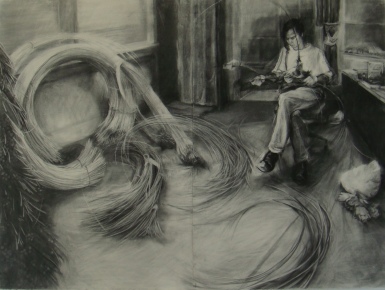
|
|
|
June 2010
ARTIST IN RESIDENCE - ALEX O'NEAL (USA) “The idiosyncratic community depicted in my work has been focusing on a fictional town, Delta City, where isolation gives greater opportunity for local superstars and homegrown fashion. It refers to my native Mississippi Delta, but has nothing to do with any existing Delta City found on a map. Visually, Delta City is kind of a dumping ground of - for lack of a better term- high and low styles and refers to self-taught aesthetics (as far as that is possible). It has taken me awhile to naturally arrive at making what are essentially “portraits” of the characters of my work. Visually, each subject’s style has a shrine mentality or aesthetic. In Delta City, nature is always present - even in one’s personal style- keeping old mythology and superstitions alive. There is so little interest in what’s happening in the world that the town’s Donut Day is overpowering. Candy-striped donuts are talismans. Also, jail is just another aspect of community like school or church. 24-hour, unlimited phone calls are included. The Delta Citizens dress up for jail and whatever else is happening in town. I think the shedding of tears and other falling drops that occur in recent work are influenced by the mourning theme imagery that is prevalent in earlier 19th Century American needleworks and watercolors.” “I have been invited to make an installation at "Festival d’Art Singulier" in Aubagne, France (Provence), 31 July- 29 August, 2010. The festival is a bi-annual event, founded by Rocquevaire artist Danielle Jacqui, that displays art singulier, (art brut, Outsider Art and self-taught art). I am invited to participate this year as an artist who is influenced by art singulier. I have been given the large gallery space that was formerly the Chapel of the Black Penitents (Chapelle des penitents noirs). I am going to develop a site-specific piece and will have several weeks before the festival’s opening to work in the chapel space and better combine my ideas with the environment. During my month at DRAWinternational, I will develop works on paper that will be elements/points of departure for the larger installation in Aubagne. The wonderful thing about working in an artists residency program in Europe is that I usually tap into greater essence and unfamiliar treasure that does not happen the same way in my usual studio space.” www.alexoneal.com
|
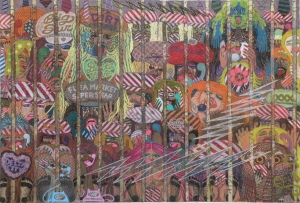 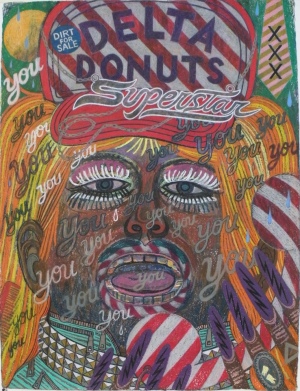
|
|
|
June 2010
ARTIST IN RESIDENCE - RUTH TROTTER (USA) Inspired by the intersection of art and psychology, my work builds on early twentieth century art movements, particularly Surrealism and Abstract Expressionism. Artists in both of these movements, heavily influenced by the psychoanalytic theories of Freud and others, used access to the subconscious as an important working method. References such as a Rorschach inkblot or the autonomous gesture of the Abstract Expressionists, become icons of modernism with an almost primitive association. Indeed, the intuitive brushstrokes of Abstract Expressionism, once full of the promise of truth and authenticity, now appear antiquated in the digital age. I am investigating these forms with an archaeological curiosity, taking a stratigraphic approach and forming new representational strategies. For this residency, I propose to further develop these ideas in a series of drawings and small paintings that will explore these investigations and their aesthetic possibilities. Currently, my drawings consist of carefully articulated systems of pattern and repetition based on otherwise chance-driven images, such as the inkblot or an iconic shape from a famous painting. As works of art in their own right, drawings serve as the creative and intellectual underpinnings for paintings. I anticipate the work that I make while at the centre will evolve out of a more spontaneous and emotive impulse nurtured by the landscape of the region. Ruth is Professor of Art, at The University of La Verne, CA. www.ruthtrotter.com
|
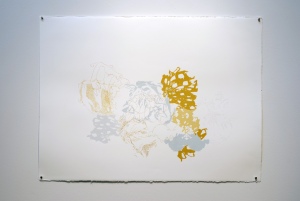 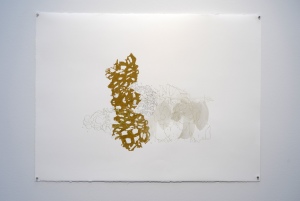
|
|
|
May/June 2010
ARTIST IN RESIDENCE - KATHERINE BOLAND (AUS) Walls, with their peeling, layered history and urgent covert messages represent a fascinating and tangible record of the passage of time. Beyond their functional familiarity walls provide an emotional palette which resonate with the complexities of communication and memory. In a recent series of paintings, “Writing On The Wall’, I have responded to the bold visuals of street language and it’s contrastingly obscure messages by building-up layers of paint on blow-torched and inscribed timber panels and then stripping them back to reveal hidden layers beneath. New ‘tags’ replace the old and so it continues as the primal urge of human beings to ‘make their mark’ persists as it has since pre-history. Now more than ever we are becoming increasingly aware of changes in the natural world. The earth’s crust is constantly converging, diverging and transforming, affecting the climate and all living species. What was once submerged under water is now desert. What was an open plain is now a mountain range. Continents where glaciers prevailed are now sub-tropical. Earthquakes, volcanic activity, mountain building and oceanic trench formation relentlessly shape and form the planet and remind us, as Buddhist philosophy teaches, that not just geographically, change and impermanence are natural processes in every aspect of our lives. In a previous body of work “The Shape Of Things To Come’, I have explored, in an almost geological manner, the potent forces which shape the earth. Again I gouged and burned timber panels to form fissures which allow paint to flow, settle and find its own level. I have built up layers, often scraping them back to reveal what lies beneath, exposing the timeless layering of the earths crust. Slabs of impasto represent land mass. Different media react like a primordial broth fabricating a kind of alchemy as when a volcanic eruption mixes many elements to produce unusual geological effects. Large areas of paint butt against each other to 'create' continents which slip and slide like massive tectonic plates. The grain and texture of the timber emphasizes the organic nature of the subject matter. As I enter the second half-century of my life I perceive a heightened awareness of time passing and want to develop a body of work that encapsulates this evolving and universal sensibility Katherine has recently been awarded the Heysen Prize for Painting 2009.
|
|
|
|
April/May 2010
ARTIST IN RESIDENCE - JEANINE VAN DEN BOOM (NL) In 2 weeks I want to be able to work in a focussed and concentrated way to get connected again. For me painting has everything to do with senses and skin. It is a very physical process. By skin I refer to the border between the inside and the outside world with an exchange between them. Where do I begin and where do I end? Maybe I will find out.
|
|
|
|
April/Juin 2010
ARTIST IN RESIDENCE - KARINA KNIGHT SPENCER (UK/FRANCE) I work on a number of paintings at once to allow the excitement to settle and prevent the stress of trying to get something right, create panic and cause me to fall into old patterns. I find it hard to sit and reflect on a canvas and not keep working at it, changing it without thinking. I am learning to look at the painting as much as the subject (usually I look at the subject more, still learning to look). I am still working out what my individual statement/voice is. For this reason I am extending my time at DRAWinternational while I can. I am learning to place subjects and compositions with more consideration, hang on to the original concept, try and let my feelings dictate the expression and not reproduction of the actual. Being a painter I am inspired by the light, ever changing and bringing to life. I am still fascinated by the geometry in a subject and the effect of colour. John says he doesn't give 'tips for painters' but he shares his knowledge freely. A theme that is developing is the day - dreaming, security of inside and fear of outside, physical ease and man at ease in his space. Perhaps there is a progression towards looking at cyberspace where people feel they can be anything and anyone and heaven is there. Alone and together at the same time. However at the moment there is so much inspiration in the real world.
|
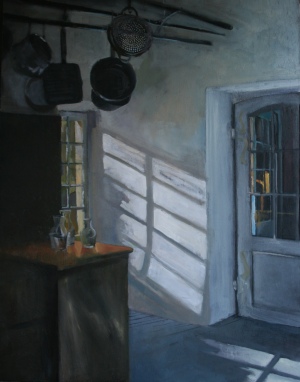
|
|
|
February 2010
ARTIST IN RESIDENCE - ANOOK CLEONNE (NL) When movement is seen as continuous and not merely as additive a world will rise with a continuous stream of meeting movements which from there on will lead to new movements and new lines. Every meeting has an influence on the already existence. Conscious or unconscious. Movement is a continuous process which is the result of all kind of interactions between movements which sometime stiffen in shape, as well stay translucent and fluid. In my way of drawing I merely draw by this believe. Underlying most of my drawings is the idea of landscape as a frame of mind. I fuse both the romantic idea of a landscape, merely as depicted in art history and the landscape as literally seen in the real outside my window in my work. Anook is currently Professeur of Drawing at ARTEZZ, Arnhem, Holland
|
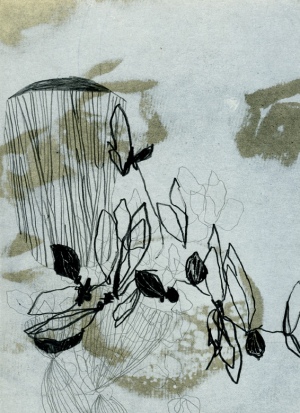
See gallery >> |
|
|
January - March 2010
ARTIST IN RESIDENCE - KARINA KNIGHT-SPENCER (UK) I am inspired by so many things, but particularly excited by interiors and people within them. So the inspiration of the physical space of ‘ArtHouseCaylus’, which includes the textures, hand hewn finishes, volumes, detailing, light and an historical trace is to be my starting point. I aim to produce a series of works based primarily on the interiors of this medieval house to include the figure as everyday living and working. Although I am quite new to painting I have always made drawings in a career that has lead to being an actress, interior designer and ‘perspective artist’. Now these directions present too many diverse styles, too influenced by historical information. While I do not reject the past, as it is a source of inspiration to us all, I want to be clearer about my direction. Therefore, I want to focus, at least for a while, on something beyond my habitual learnt experience (as can be seen on the right). I am and probably always will be drawn to live and work in the milieu of medieval villages and rural environments and want to continue to create with traditional materials. My challenge is to present its beauty and relevance in the contemporary and ever changing world.
|
|
|
|
January 2010
ARTIST IN RESIDENCE - BAHARADDIN ADAM (SUDAN) “Al Nushoug” (journey home) The Bagara people are an Arab, nomadic tribe who travel at the end of every autumn in search of good grass and water for their cattle. They originate in Darfur and Kordofan (Western Sudan) and travel in small groups with hundreds of cows south to neighbouring centre Africa and Chad, onward to the Central African Republic and then southern Sudan, before returning home for the summer. They are walking, and living, away from their home for eight months in every year. My work is an exploration into this journey, al nushoug. I want to record, to trace these moments of a community passing through time and space through different art techniques like colour, sound and by my personal vision. I want to create this atmosphere and to find answers from my personal perspective to questions of changing spirit and artistic methods. Baharaddin Adam
|
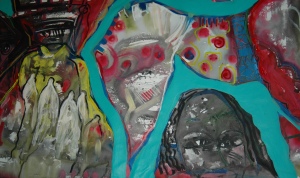
See gallery >> |
|
|
July 2009
ARTIST IN RESIDENCE - ALLEGRA DENTON (USA) Grete, John, and Aloise, After leaving Caylus and returning to Minneapolis, I've learned how strange it can be re- "acclimatize" so quickly; it seems like I blinked and when I opened my eyes I was back in school. Getting back in the rhythm of a very structured work and school schedule has allowed me to further appreciate (and in turn reflect on) my time in Caylus. I've come to recognize a couple aspects of my stay at Draw International that proved to be important to my experience. The first is the uprooting and temporary relocation of art-making, and the second is the opportunity to look at the program I'm currently immersed in as a student from an outside perspective. I'll start with the former. It is my belief that, as a student in a very structured and super-specialized art college, outside influence is extremely important. Our schedules generally start at 9am and end at 9pm, (and we certainly don't have the luxury of a semi-enforced two hour lunch!) which leaves us little time to attend to anything but our studies. Our campus is small, and even if we live a ways away, we find ourselves spending all our time at school or thinking about school. By the time we reach our third year, our major of specialization has brought us to a point where it is often hard to communicate with "non-art" people about what we're spending all our time studying. For me, coming to Caylus was a breath of fresh air. Having the opportunity to be removed from the environment I've spent almost every second of my time in for the past three years added an immeasurable influence to the way I see my own work. Looking at one's own work in the context of where it is made is one thing, but taking it to a foreign country is quite another. Just by being there, I gained perspective on the connections between what I had made before arriving in Caylus, and that helped me to define what I wanted to start when I got there. What I did make when I got there surprised me. I came into it having no plans, and immediately felt inspired by the community and the experiences I found upon my arrival. Looking at the work I produced in Caylus, now that I'm back in the city, introduces another layer to the process of environmental removal; I'm still figuring out what the collages I made mean now because looking at them here in Minneapolis, is different that seeing them in the light of France. I feel very lucky to, as a student, be able to have continued the development of my practice in an utterly different environment, with the simultaneous influence of very different, very wonderful people. In a similar way that relocation has helped me look at my work differently, it has also helped my view of the program I'm a part of shift in a positive way. As alluded to before, three years in a program with little distraction (good or bad) can leave one feeling tired; I was only able to see my experience of my college through the classes I've taken up until my visit to France. Being able to make work in a place that was not set up in the same institutional way was helpful in allowing me something to compare to my own experience at school. Also, working for myself in an open environment helped me formulate how to better work in a more institutional environment. I was inspired by the fact that I stayed with the family. Eating meals and going on day trips, or just down to the bar for a drink added so much to my experience, and to the dynamic that was created between those times and the times in my studio. Similarly, the overlap of my last week with the Oxford student's first week was also appreciated. I enjoyed hearing them speak about their practice and how it has evolved through their program, allowing me to reflect on my own program and having an alternative model to compare it to. Overall, it is hard to put into words the amount of inspiration and insight I gained from my short three weeks in Caylus. I've attempted to outline the basic ideas I am still just beginning to work out, but ultimately, my experience there was far more than what I can describe with language, and perhaps that is the most important thing I've come back with. Thanks again for everything, Allegra Allegra is completing her final year BA Fine Arts studio practice, at the College of Art and Design, Minneapolis, she is also Fine Arts Curriculum Assistant for the faculty.
|
See gallery >> |
|
|
April - June 2009
ARTIST IN RESIDENCE - WILL ZAJAC (USA) I’ve had a few weeks to reflect on my 3 month residency and have come up with several examples of why your residency program is/was critical to my development as an architect. Structure: The structure of your residency program fosters exchange. For me, the residency is about making contact between the studio and surroundings. My old working habits were altered to accommodate new routines that allowed a more open thought process. With your guidance, we created a realistic set of goals and accomplished them with a range of tools. We didn’t throw a bunch of money & technologies into the equation. Rather, you introduced simple printmaking and drawing techniques into my design thinking; thus, allowing me to re-define my practice and develop new ways of communicating my perceptions of the built environment. Outreach: As an architect, I am always looking for new ways to improve and enhance our built environment. With your help, I was able to meet and do things outside of the studio. For example, I really enjoyed doing stonewalls with APICQ. It was a weekend of hard work, but I was immediately accepted by the people and had a wonderful time learning the art of Pierre Seche. Another interesting and inspiring part of the residency is watching how involved you are in the community; radio programs, tourist office, the Marie, etc. Sometimes I learn by watching how others conduct their lives…and I am truly inspired at the amount of effort the two of you put into making Caylus a better place. I hope to do the same wherever I live. Accommodations: Your house is an architectural gem. A four-story medieval building situated in the heart of the village, containing all the craft and materials from a bygone era. It reconditioned my body toward sustainable living. Yes, it gets a little cold in the winter…but that’s easily fixed with a warm wood fire. And yes, in the summer it may get a little warm, but the cool stone underbelly and summer breeze keeps the house comfortable. My room was spacious, quiet, clean and my bed…very comfortable! Having the room attached to the studio was great. It was way more than I ever imagined!!! Caylus: I am so intrigued about the future of Caylus. I was there for 3 months, and was able to get a glimpse of a village that is full of potential and on the cusp of change, [good or bad]. There aren’t many places/residencies in the world where you can witness such things unfold, but your residency is in the mix of it. For artists looking to get involved in a "real place"…it doesn’t get any better! “En Famille”: Being a part of the family household was probably the highlight of my experience! My trip wouldn’t have been the same without the daily interactions provided at your residence. I really enjoyed having meals together, taking the dog for a walk, talking about horses with Aloise, going to a dance recital, preparing magre, listening to the owls, and laughing… Thank you. Sincerely, wilz Since completing his residency at DRAWinternational Wilz has gained a PhD research position in Architecture at McGill University, Montreal. He begins the programme in September 2009 and completes in 2012. We wish him every success.
|
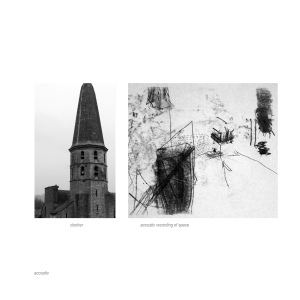 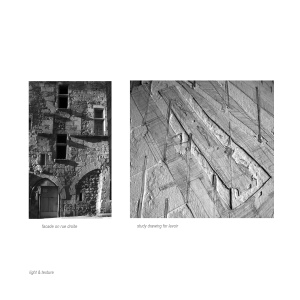 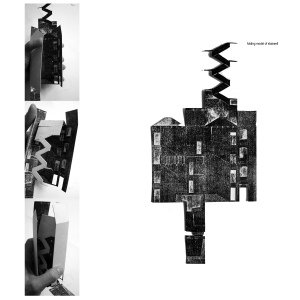
See gallery >> |
|