 |
 |
About us I Information I Brochure I Events I A.i.R. I Workshops I Gallery I Featured Artist I Accommodation I Location I News I Contact I Links | > Français | |
|
 |
| Archived A.i.R. >> |
| A.i.R. Images / Comments >> |
|
July / August 2026
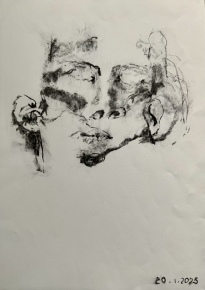
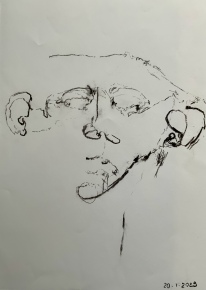
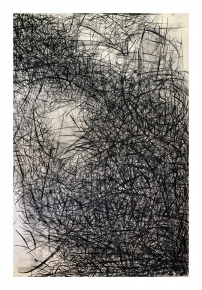
ARTISTE IN RESIDENCE - JULES BRADBURY, UK I intend to undertake a body of exploratory work: ‘The Skin has Eyes’, consisting of a series of self-portraits made through the technique of haptic drawing.
In coming to DRAWinternational, I'm looking for focussed time to take my work in a new direction. I'm hoping to be challenged around my ideas as the drawing evolves in order to interrogate what my work is uncovering and perhaps locate where there might be links within existing research. I want to be fully available to what I find.
In a quiet concentrated atmosphere, I want to work further into my nascent project: 'The Skin has Eyes'––this began to form whilst on my residency in the Sahara, January 2025. I undertook some initial drawings there but am now positioned to undertake this as a project in depth. The work involves a lot of uncertainty––I am literally working in the dark, drawing with my eyes closed. My hand becomes a sensing drawing tool. It requires I use all my sensitivities to allow my skin to 'see', akin to being able to:
'Walk so silently that the bottoms of your feet become ears.'
Pauline Oliveros
My enquiry will be framed through the making of a daily charcoal drawing––a haptic self portrait of my face (see: outline of drawing process)––and working with what emerges. The conversations that arise in response will help give insight. Through this project, I try to approach my ‘self’ in a different way; to search for an embodiment of something less apparent in relation to how I am in this body.
Additionally, I wish to be able to reach a point of confidently articulating my exploration in written form and consider ways in which I can share this research in terms of workshops/writing.
|
|
|
|
June /July / August 2026
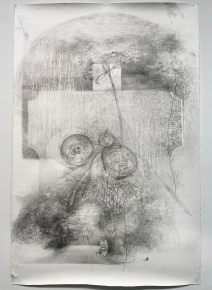
ARTIST IN RESIDENCE - MICHELLE LA PERRIERE As drawing is at the heart of my creative work, to be a resident with others focusing on “drawing” writ large, will not only be a remarkable experience, but it will enable what I feel to be a leap in my personal journey as a drawing practitioner, artist, and person in the world.
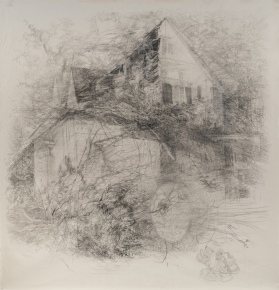
I intend to ground myself in the surroundings, “drawing” through the space through walking explorations, creating notational drawings in the immediate and nearby areas. I will allow myself to be led by what speaks to me regarding the particular time and place, and will return to the studio to contemplate and develop large-scale drawings from my memories and sketches that will likely move into installation and performance.
I plan to begin with using graphite and ink on paper and fabric, and am energized about the prospect of working with materials and ways of drawing that suggest themselves as I grow my practice. Touch is paramount, its fullness celebrated. In addition to rendering with intimate focus - the mercurial mark is welcome, scrawls of energetic bursts allowed. Physical contact, in combination with image and space enables the interwoven existence of past, present, and future, dream and despair, grief and healing.
BEING in France, BEING in the particular place of Caylus, with its history and present, and BEING with and developing my work in the particular community of AiR is my elemental starting place, a type of mapping process. I seek to open spaces where body, mind, and spirit are all welcome - spaces that invite reflection and connection. In this way, drawing not only encompasses mark-making for me; it becomes a shared act of awareness, an opportunity to experience presence together. Importantly, I am excited by the residency’s emphasis not only on one’s individual endeavors during the program, but also on what I deem to be such an interactive and generous environment fostering dialogue and synergistic energies.
As both a person and an artist, I am guided by awareness, presence, and responsiveness. My practice grows out of mindfulness – listening inwardly while also attending to the world around me, animate and inanimate.
|
|
|
|
August/September/October 2025
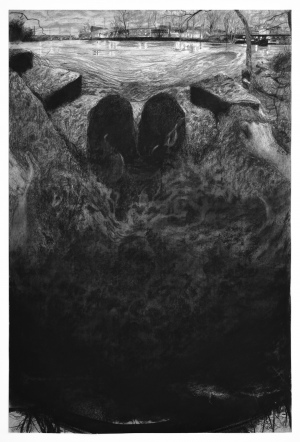
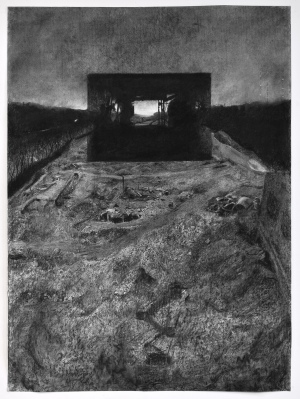
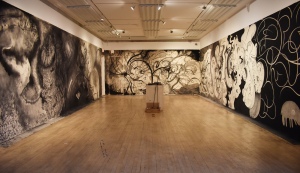
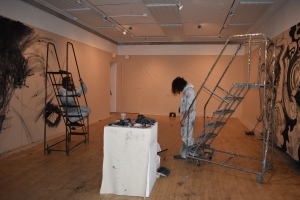
ARTIST IN RESIDENCVE - OLIVER STERN (USA) Since my last exhibition ‘Cave Painting 2’, where my collaborator and I lived in a gallery and spent 6 days straight drawing on an 80 square meter canvas, I have continued to use drawing to explore psychological landscapes inspired by marginal urban spaces like highway undersides, underground tunnels, and abandoned factories. I will use my time at this residency to visually articulate my emotional relationship to these spaces. I will consider how my diasporic identity influences my depiction of forgotten or abandoned spaces. My Jewish relatives fled Europe during the Holocaust, including some relatives in rural France.
Through drawing, I will study the landscape and reconstruct stories passed down to me about my relatives’ escapes and the places they left. I will use the methods I developed in my earlier work, of large, scale durational drawing from memory, and populate it with the context of my family’s experiences. This work is inspired by the way in which Ben Shahn creates narratives about the Jewish diaspora through figurative landscape paintings.
I am invested in community engagement similar to that of my previous project, so would welcome visits to my studio, for the public to see the body of work as it develops and discuss my practice.
This project would be an ambitious step forward in contextualising my work and exploring new practical and theoretical possibilities. I believe DRAWinternational would be the perfect place for me to take this leap, having looked at the work of previous artists, the emphasis on drawing, and the sustained discourse on memory and consciousness. I am eager to participate in individual and group critiques. I am looking forward to the chance to participate in the DRAWinternational community as an artist in residence.
|
|
|
|
May / June 2025
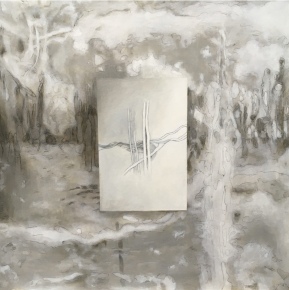
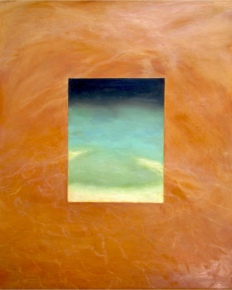
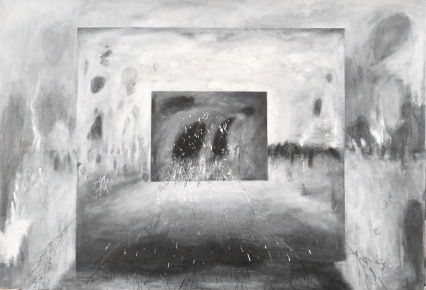
ARTIST IN RESIDENCE MARJORIE MORTON (IT/CAN) I am working towards bringing together the freedom and spontaneity I have acquired in the past two years with some of the detail and refinement of what I had been doing before. I haven’t yet achieved that kind of synthesis, but it is on my mind because both personify me.
I feel that I am achieving moods and dynamics in my work which are sometimes very engaging to people. I can always tell who is spontaneously engaged and who is trying too hard! I am seeking to create work that I would surround myself with and want to live with, that would reflect what excites me, calms me, echos feelings and haunts me. I don’t care a bit about making pieces that are sellable, but rather pieces that I would like to be able to share with an audience when possible.
I brought back from my last residency in Caylus, three big gifts:
—the beginnings of understanding, viscerally, the importance and relevance of my body and movement in my work
—a greater awareness of playing with mark-making
—photos that have inspired a lot of my work: Major influences since I last saw you:
“Thunderclap: A memoir of art and life and sudden death” By Laura Cumming. Chat and Windus. London. 2023
“Moving Imagination” Ed. by Helena De Preester. John Benjamins. Amsterdam/Philadelphia.2013
“Letters to Gwen John” By Celia Paul. Jonathan Cape. London. 2022
Exhibition: “Marks and Whispers,” drawings, paintings by Oscar Murillo at Gagosian, Rome “Hockney on Art: Conversations with Paul Joyce” David Hockney and Paul Joyce. Little, Brown. Boston, NY, London.1999 (This mainly because of his brilliant insights into the limitations and fallacies of Renaissance perspective derived from his observations while making his large scale collage installations with Polaroid photos.)
|
|
|
|
March/April 2025
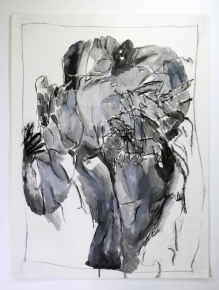
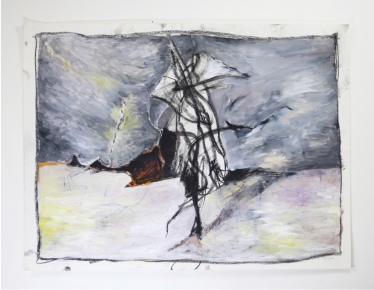
ARTIST IN RESIDENCE - KIM TROYER (USA) I have been living and working in Tbilisi as an interdisciplinary artist in underground spaces and places of transit without the professional space of the gallery.
The past few years I have been through different countries lecturing on line and drawing, balancing notions of the gallery and the outside space through projects with sound, and using line to understand it as movement as a barrier which is always present.
I’m involved with forms of mark-making and composition that appear distorted. Their vocabulary of lines and color relationships serve to document a pictorial choreography. The conflict is understood as being between containment and breach of form; the viewer’s perceptual experience of the work is most important. This simultaneously changes the conditions in which they view that work within the space itself. By exploring boundaries, both geographically and conceptually, I hope to engage in new experiences through an interaction with drawing.
Kim Troyer
|
|
|
|
March/April 2025
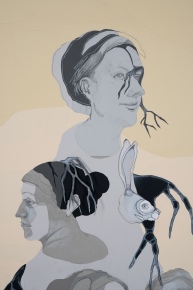
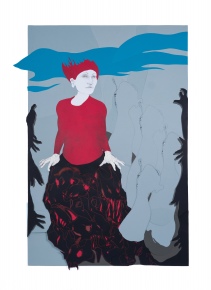
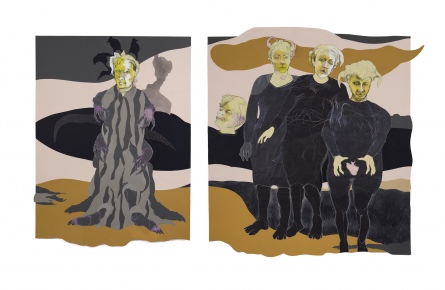
ARTIST IN RESIDENCE - DEBORAH THOMPSON (CANADA) I have a process-based visual art practice with a focus on painting and drawing.
Over the past 25 years, this process-based approach has expanded my practice to include sculpture, printmaking and most recently stop motion animation. I see my drawing as the foundation of my process of inquiry, and as a way of being in relationship with both the materials and image-making towards the emergent unknown. The revealing of this third unknown element is the work of my practice. I find in the modality of drawing an immediacy and fluidity that meets my interest in working with intuition and as a way of channeling the subconscious through visual imagery. A central and continuous theme in my practice is my curiosity around the relationship between matter and spirit. In particular, my work questions what lies outside of visual perception and outside the familiar spectrum of birth - death. My work also investigates instinctual consciousness, our innate and unconscious responses and actions around survival, movement, relationship, creativity and meaning-making.
In this way, my practice seeks to heal and re-imagine the rich connectivity that instinctual consciousness offers us. And to work with this foundational energy towards meeting the world in a time of so many challenging changes and dynamics.
|
|
|
|
September / October 2024
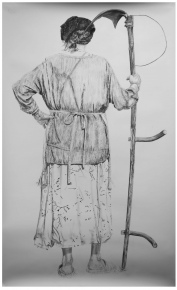
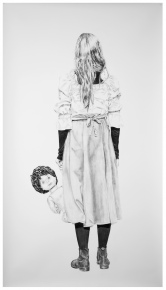
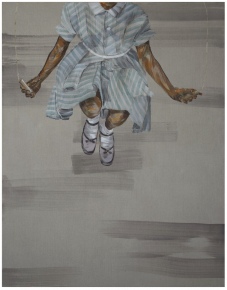
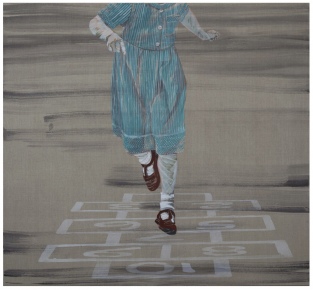
ARTIST IN RESIDENCE - ROLINA NELL (NL) My work is rooted in my observation of, and interaction with, my surroundings and daily life. Intuition and imagination play an important role in this. Stemming from my own femininity, women and girls take centre stage in my work. I am fascinated by universal female postures and poses which, though subtle and culturally influenced, nevertheless reveal a personality. The absence of faces as a major human characteristic sets one free to explore the female identity behind cultural codes. In my work, identity remains mysterious and the past remains tangible; almost with a whisper, I paint and draw these into the present or it takes shape in collages, murals and installations.
The starting point for the new work I am going to develop are photographs. Photos that I find in my immediate environment, for which I draw from an archive that I build up through my observation walks in the area. Photos that I take myself of models from the area and find on the internet. Photos that connect with the history of the place where I work as an artist-in-residence and have a close connection with women in this current time. These images and their story form the starting point for my drawings, paintings and installations. I will observe women in their actions, in their comings and goings. The title of my project teken de tijd, refers to the act of drawing in relation to time, the past, the present and the future. I don’t want my project to just be a nostalgic experience, but to bring it into the present. A confrontation or meeting of the present and the past.
A journey of discovery for a translation that fits well with the content of my work and the transformation of my drawings into a site-specific, three-dimensional work. I also hope to gain more knowledge of materials and techniques that serve the content of my work. On site, in the residency and its surroundings, I will delve further into topics and themes that I come across, that touch me, and work from there on a series of drawings.
|
|
|
|
June / July 2024
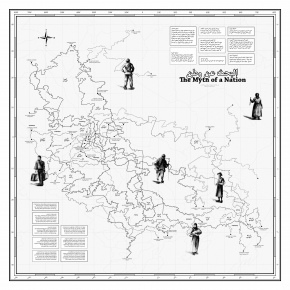
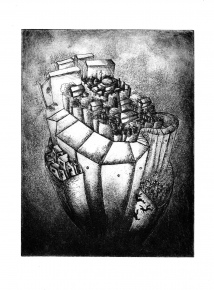
ARTIST IN RESIDENCE - YOSRA EL GAZZAR (EG) I’m a visual artist and graphic designer based in Cairo, Egypt. My work usually explores issues of body and space, and how each one influences the other.
As a graphic designer, I use visual communication as a tool for advocacy and provoking social change. In 2016, I joined Visualizing Palestine, a small team that uses research and design to visually communicate the Palestinian narrative. Throughout my work with VP, I delve into themes of infrastructure and geography of apartheid, as well as building solidarity between the Palestinian movement and other social justice movements worldwide.
As a visual artist and writer on the other hand, I tend to focus on the more personal and intimate stories. I work with a variety of mediums including: drawing, printmaking, photography, and video. I am currently exploring different forms of visual essays, using a combination of images and words to follow a thread that weaves ideas together through a stream of consciousness.
|
|
|
|
June / July 2024
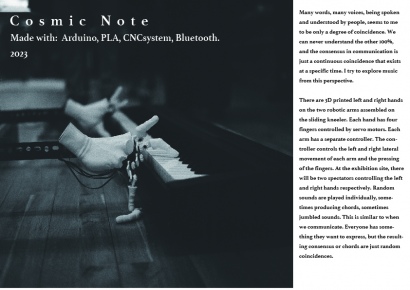
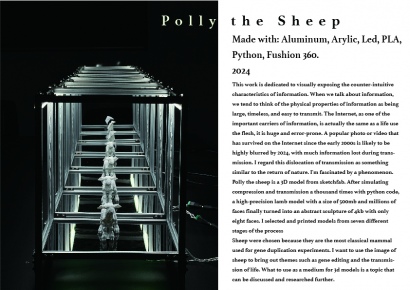
ARTIST IN RESIDENCE - LENING HOU (CN/USA) As a new media artist, designer, and photographer enrolled in NYU's Interactive Telecommunications Program, my artistic endeavours have primarily focused on the intersection of technology and traditional art forms, particularly drawing and painting. My work explores the translation of metaphysical ideas into visual narratives through a blend of photography, sculpture, digital, and mechanical mediums.
Despite my technological bent, drawing and painting remain a central component of my artistic development, serving as a bridge between my technical skills and creative ambitions.
This blend of interests has led me to pursue this drawing residency, aiming to explore mechanical painting as an evolution of the quest for automatism in art - a movement that sought to capture nature's essence mechanically, marking a significant departure from mere photographic replication towards recognising mechanical drawing/painting as a unique art form.
My proposal for this residency involves a series of experimental projects utilising a custom-built, portable painting machine capable of executing pre-programmed paintings, capturing dynamic scenes over time in a manner reminiscent of Monet's haystacks, and allowing for spontaneous "freestyle" sessions to capture specific scene elements. These experiments are designed to push the boundaries of mechanical painting, challenging traditional perceptions and exploring the medium's potential across a range of styles, from Impressionism to Cubism.
By doing so, I aim to demonstrate the versatility and depth of mechanical painting, situating it as a legitimate continuation of the historical quest for automatic art. This exploration is particularly poignant in today's era, where the delineation between human and machine contributions to art is increasingly blurred, necessitating a broader understanding and appreciation of mechanical painting's capabilities beyond its conventional confines.
Influenced by a diverse array of figures across art, science, and literature, I am driven by a desire to engage with the complex interplay between these disciplines, seeking to contribute to the ongoing dialogue around the evolution of art in the age of technology.
|
|
|
|
April / May 2024
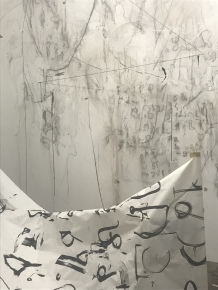
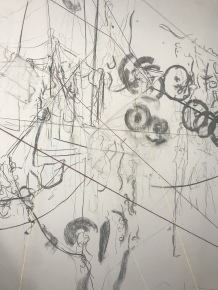
ARTIST IN RESIDENCE - AUDE PARICHOT (FR/AUS) Drawing is at the core of my art-practice as a way of thinking and engaging with my circumstances. Currently I am working in a multi-disciplinary way, moving through drawing, installation, performance, photography, video, participative art and recently poetical writing. By engaging with processes and evolving systems I explore our relationship to place, change, time, language and our use of everyday digital technology.
I see my work as a continuous engagement and exploration of the flow between art and everyday life.
Having been a French expatriate for the past 17 years, I intend to transform such an opportunity into a series of works investigating my relationship to my birth country and also the impact time has on physical and mental spaces. I will investigate the relationship between body language, written language and mark making. Aude Parichot
|
|
|
|
April / May 2024
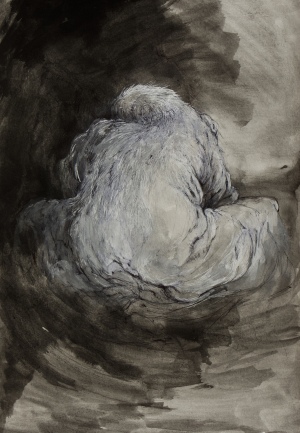
ARTIST IN RESIDENCE - ALI DARKE (UK) Focusing on drawing as a means of externalising ideas, and as the final product of the creative process, rather than in the service of my sculptural work, would disrupt my habitual methodology. My process begins with drawing, but can become a dead-end when I attempt to recreate a drawing into sculptural form, or conversely become restricted, when drawing is just designing what I mean to make. Both pitfalls inhibit the freedom and free association required for optimum creative process.
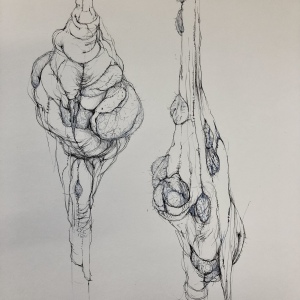
I would continue investigating a primary concern that permeates my practice; the experience of embodiment, of being, having and inhabiting a body. The body as both subject and object. It is exciting to draw without a defined purpose or end product in mind - without trying to draw a ‘thing’ but to express something I feel. There is fear and resistance in this freedom, and therefore prompts something to confront. The tension inherent in attempting to draw this way focuses on sensorial phenomena within the body. My interest in psychoanalysis has drawn me to research the impact of past experience and trauma in the body/mind dynamic, and attempt to visualise these concepts that exist beyond the representational. Evocative language used to describe phenomena of the psyche often uses metaphoric allusions to the topography, anatomy and biology of the body, and inspires a visceral response. My creative practice is an attempt to communicate this through drawing and materialised in sculpture. My ambition during this residency is to see where drawing could lead when freed from a propositional relationship to my sculptural practice.
Performative embodiment has connected me deeply to my past, and I reveal the body as an archive of our ancestry interconnected with our own lived experience. Evocations transmitted across generations are experienced as unlocatable, unspeakable, pre-conscious; the unthought-known. The body, in which we feel all emotions and bears the scars of life, can be experienced as a burden, unruly, and in discord with the self. A public but also deeply private object, we might wish to escape entrapment by flights of fancy, fracture and psychic dissociation. My work has evolved into creating hybrid forms and fragmented parts, that express these conflicts, hovering between growth and decay, beauty and abjection.
Inherent to the mechanics of drawing is the engine of the body as the tool for mark making and so has the potential to be both creative and destructive, the source and limit of all expression. I would hope to push these to their extreme. I propose a practice where repeated cycles of research, movement and drawing become reflective and responsive to each other, experimenting with unfamiliar materials, processes and scale of drawing along the way. I am excited to expand drawing, employing my interest in scenography to present the work in dynamic ways. I propose an organic and open-ended process, an alchemical exchange between body, mind and environment recorded in a drawing practice. Ali Darke
|
|
|
|
March/ April / May 2024
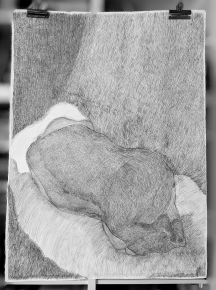
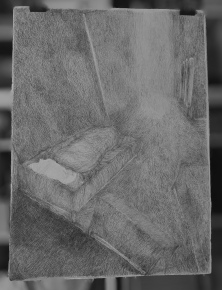
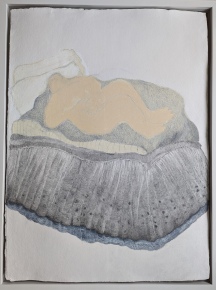
ARTIST IN RESIDENCE - LITO APOSTOLAKOU (GR/UK) Central to my practice is the exploration of the architecture of remembered space, a space that is both concrete and uncertain, real and fictional, shaped by memories, dreams and mental events – we remember spaces the ways we used to dream in or of them. The remembered space is a fluid and fragmented realm where the conscious and the subconscious meet and the body is both a distinct entity and an obscure mass. It is a space not very dissimilar in its liminality and interiority to hypnagogia - the state between wakefulness and sleep. At times indistinguishable from dream-sleep, but often occurring hand-in-hand with some awareness of the external environment, hypnagogia is “the possibility of holding a dialogue with the unconscious and of dreaming without losing consciousness.”
Lito Apostolakou
|
|
|
|
February / March 2024
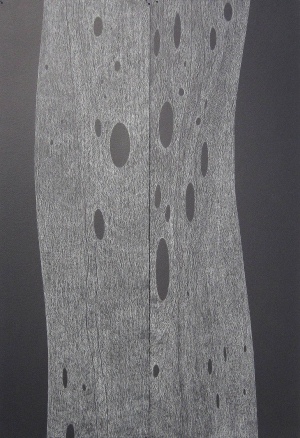
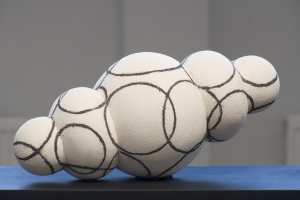
ARTIST IN RESIDENCE - OUTI SARKIKOSKI (FI) I am a visual artist trained as a graphic designer and ended up working in two ceramic companies. Gradually I also learned ceramic techniques and in 1980´s I founded my own ceramic studio.
Some years ago, after decades of ceramics I returned to drawing and printing techniques as the call to my original passion became so strong. I went to work at an artist residence in the archipelago of Åland and found my lost touch for drawing while going around in the landscape I love. Since then I have had several exhibitions of drawings and monoprints based on seaside nature. I feel like I am taking new steps with paper and pencils as for years I was focusing on three dimensional clay works. I love the plain techniques of drawings, as its best it is just a pencil and the paper. The contrast of black and white is inspiring. In the nature I find marks of something hidden and I try to catch it into my drawings. At the moment my works are impressions of the surrounding nature as well as small details in the environment. I think the landscape shapes us as human beings so it is interesting to reflect that in art work too.
|
|
|
|
November 2023
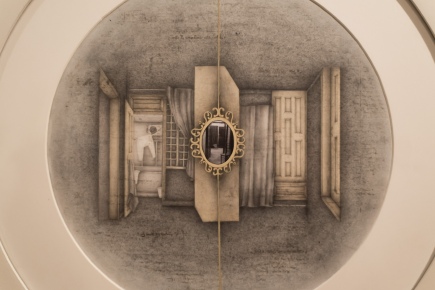
ARTIST IN RESIDENCE - EMAAN PIRZADA (Pakistan) Throughout my artistic journey, I have seen my creative horizons expand through various mediums, yet at the heart of it all, drawing remains the cornerstone of my expression. Graphite, in its elegant simplicity, has been my constant companion, fostering a profound connection with the act of drawing itself. As I stand at the threshold of a new phase in my artistic evolution, I am drawn to the allure of more linear forms, seeking to explore the raw essence of space and line.
Through this residency, I aim to push the boundaries of my work, exploring new dimensions and scales. I envision embarking on a transformative journey where drawing, research, and action converge harmoniously. Emaan Pirzada Residency supported by the French Embassy Islamabad.
|
|
|
|
October / November 2023
ARTIST IN RESIDENCE - OPEN CALL 2023 OPEN CALL 2023
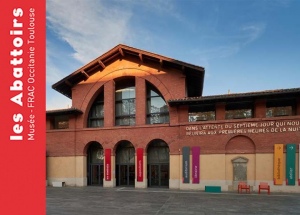
AiR DRAWinternational Les Abattoirs, Musée – Frac Occitanie Toulouse and DRAWinternational, already partners in the curation of exhibitions of works from the collections of the Abattoirs, are joining forces in 2023, for the second consecutive year, to host a residency for an artist primarily from Ukraine or Russian dissident to affirm their solidarity with artists suffering from the war. DRAW - drawing, research, action and works
The centre is a place for research, experimentation and production of drawing in all its forms, which examines concepts, methods and significance of material within the discipline of contemporary drawing and encourages the sharing and exchange between the artist and the public. Workshop - Accommodation The artist has a studio and independent accommodation in a medieval building in the centre of the village. Additional facilities include large format space, technical workshop, etching press, top loading oven and technical support. Internet access via Wifi for personal laptops. A gallery space for works in progress or completed works is also available where appropriate. An evening meal is provided by the centre for all artists once a week and artists are taken on cultural visits in relation to their particular projects. Duration of residency 8 weeks from October 2023 Fees and support
Les Abattoirs, Musée – Frac Occitanie covers the cost of the residency for 8 weeks (studio and accommodation), travel to Caylus and a €2,000 creation grant - this does not include meals. Application requirements:
Please send your application in French or English before 1st June, 2023 to
|
|
|
|
October / November 2023
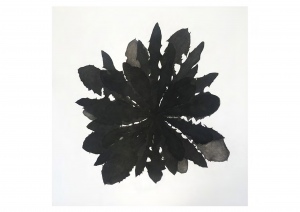
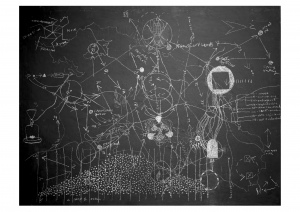
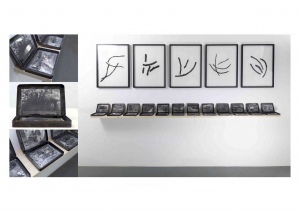
ARTIST IN RESIDENCE - CHRISTINE MACKEY (IRE) In the parameters of this residency programme I am interested in extending the scope of my drawing practice to-date through the process of diagramming. Diagramming as an open system can couple the dynamic activities of drawing, walking and talking a place as interactive tools in an attempt to activate new ideas related to site, agency and ecology.
The proposed work will re-locate ‘drawing’ within the field of the ‘diagram’ in order to open a new framework for artistic practice. The academic area in which I have located this research is not typically to be found in the visual arts, but within the disciplines of science, mathematics and communicational practices that are essential to the theories and principles of systems found in General Systems Theory and Cybernetics and whose influence in diagrammatic practice has historically being overlooked. I am also interested in how a systems diagramming process, can facilitate a new creative platform, from which to develop a discursive exchange between, on the one hand the action of drawing, and on the other it’s potential as a communicative social and research device. Christine Mackey Residency supported by Creative Europe. Culture Moves Europe
|
|
|
|
September / October 2023
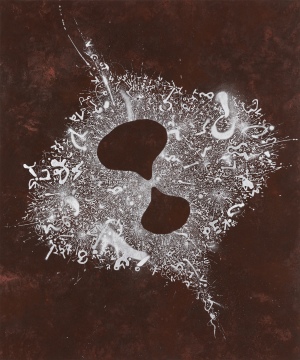
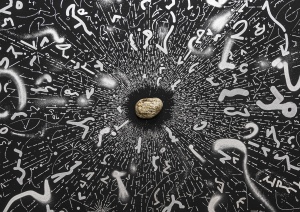
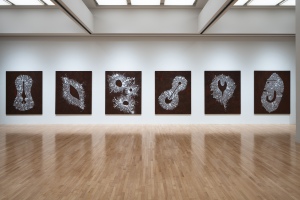
ARTIST IN RESIDENCE - HIRAKU SUZUKI (Japan) As an artist, I work with various media that range from two-dimensional work to sculpture, video, installation, and performance. However, all of my practice is ultimately based on drawing, and more precisely on its expanded notion. For me, “drawing” is like a process of excavation, aimed at exploring the interconnection between drawing and language. I currently work as an associate professor at the Tokyo University of the Arts, where I teach experimental drawing in the Graduate School of Fine Art’s course “Global Art Practice” (GAP). I am also the founder of the international platform “Drawing Tube”, a collective dedicated to alternative drawing research and practices.
In 2019, after the opening of my solo exhibition in Montpellier, I took the opportunity and visited the Pech Merle cave to see its ancient drawings. It was one of the most inspiring moments of my life. Since I grew up near an excavation site in the suburbs of Tokyo, archaeology has been a great interest of mine since childhood, and surely this had an impact on my artistic practice. I shall add that my drawing practice is also inspired by space science, particularly by its quest into the past and future of things.
It is precisely this concept of “tube” that helps me explore, or I would say “excavate”, what I see as the nature of drawing. More specifically, my focus is on exploring the dimension of one specific “tube”, the one that universally connects drawing and writing in this present world.
In considering these matters, cave drawings are fascinating because they give us a timeless perspective. The famous animal paintings and the “negative” hands are next to multiple inscribed signs, or what they call “primal characters”. In Japan, there are caves with pictograms too: so even caves, in themselves, are like sort of tubes, that run underground connecting space-time dimensions.
|
|
|
|
August /September 2023
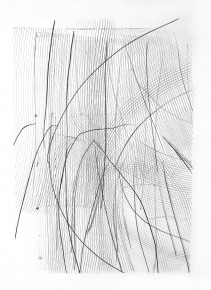
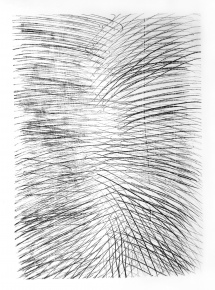
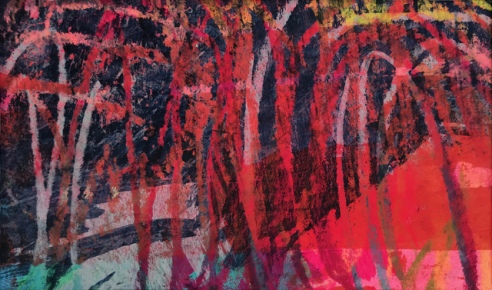
ARTIST IN RESIDENCE - ELEXIS VAN REEN (USA) I work with mark-making in painting and drawing to uncover the relationship between patterns, systems, feeling, and gesture.
I have been based in Rhode Island, but in the summer of 2023 I began a 60 day, self-guided explorative tour in Portugal and Italy to continue building my understanding of mark in many contexts: creation, corrosion, climate, worship, wear, and weather.
My time at DRAWinternational will focus on the possibilities within drawing to communicate gesture through intuition. I will be responding to the environment; its color, atmosphere, patterning; exploring mark across context and material.
Drawing is foundational to my practice; I have been drawing throughout my life. It has become a physical extension of my body in the world. It is intuitive and ongoing; an in real time manifestation of my hand in response to information.
I'm curious in understanding a mark or material until it becomes a part of my intuitive knowledge, until I approach the surface with complete gesture or until thinking and drawing are one action.
|
|
|
|
August / September 2023
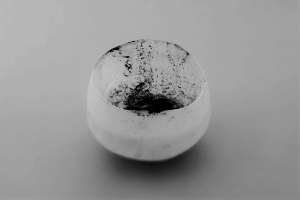
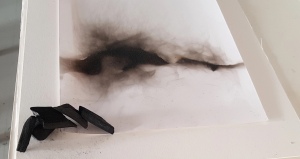
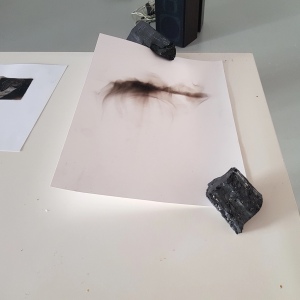
ARTIST IN RESIDENCE - NADINE SOUBEYRAN (FR) If there is one thing that doesn't accumulate in the 21st century, it's ice. An intangible symbol of accelerating anthropogenic global warming, the melting of the ice, although measurable, remains a disembodied, imperceptible and too distant signal.
Making the invisible disaster sensitive and intimate has been one of the main challenges of my artistic approach for nearly 20 years. Drawing with smoke, packing ice cubes, or repairing cracked ice with gold leaf, actions alternately funny, solemn or moving, would perhaps be the flapping of a butterfly's wing, supposed to lead to a lasting transformation of our gaze on the world, to commit ourselves to protecting it.
In a just-in-time and networked world, immersed in the culture of the quickly consumed and the instantaneous, our human traces have become indelible footprints, ecological footprint, climate footprint or carbon footprint.
My work by its ephemeral side, tries to sanctify the moment, the appointment with a work that tomorrow will no longer exist, to give back to the imprint, the fragile and sensitive poetics of a footprint in the snow or of a drawing on a steamy window.
In the perspective of further exploring these patterns of trace and imprint, while keeping as a horizon line the challenge of invisible disasters, drawing and engraving appear to me today as privileged media. Reading the texts of Michael Ferrier is not without connection with my decision to mirror "the drawing" and "the series of curiously elegant, abstract and disembodied environmental disasters, which feed a news item”.
For me, ice is a privileged material with which to question the notion of support in drawing, the fragility of conservation and the problem of erasure, a paradoxical gesture that has become an artistic practice in its own right.
An artist residency such as the one proposed by DRAWinternational, would represent the opportunity to continue, in a workshop that has become a laboratory, my alchemical experiments on fire and ice, in a new direction: that of the drawing left by fire in ice. During this residency my desire would be to mobilize drawing and continue to explore its porosity with other artistic practices such as photography, engraving and animation drawing.
Nadine Soubeyran
|
|
|
|
July / August 2023
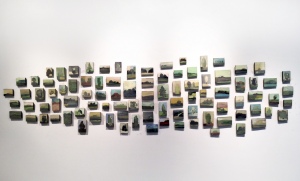
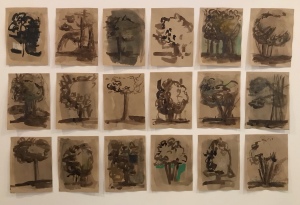
ARTIST IN RESIDENCE - LORI KENT (USA) In the city, as I walk from the train, I pass homeless individuals. One captured my interest (because I have been thinking about the purposes of drawing). She had a mound of cardboard, all covered with a particular mark, her mark. She exists. In 19th century American society, James McNeil Whistler could draw such a perfect circle that he often left it as his signature in guest books. This stands as a record of Whistler’s eye, mind, and hand working in a way that only he could. Like the individual imagination, drawing can demonstrate who we uniquely are. Concept has driven my art making more than media, so I went through my archives to find some aesthetic threads. Most of my drawings are made during summer travels. I see an attention to the landscape, the color green, the chaotic rendering of plant life. Out of the four functions of drawing, I favor drawing as expression and drawing as understanding, or meaning making. As an urban person, a connection to nature, an attention to the interstitial spaces, inspire me.. I would like to unify my experiments into a series of large-scale drawings, an invitation to be seduced by the beauty to be found in twisting, growing, blooming, and wilting plant life.The project may become about regeneration or conservation. In order to save a given thing, one has to notice, know the name, and acknowledge its place in the too-large-to-comprehend order of things. Time and space would let me spend time with artists who have achieved similar goals. Mary Delany (18thc) Tacita Dean (21c) and...well, I lose the names I collected in museum visits. American culture compartmentalises botanical drawing and certainly rewards a limited approach to fine art. Because of the dominance of the “white cube,”I respect folk artists and children because art should be for all people to create to grow the mind. No, I don’t see myself turning into a botanical illustrator (although there are excellent programs at the New York Botanical Gardens). Nor do I want to be seen as untrained. I want to capture what Dürer knew to be true: there is value in attending to what might not be noticed...a flower or a weed has intrinsic value. My goal, as it stands now, is to invent gardens, representations that may nod to the Victorian language of flowers but also combinatory un-real plants that imply new forms of life altered in response to a changing climate. I realize that the Muslims are probably right—nature is too perfect to be represented. Therefore, interpretations of non-existent plant life is an open visual discussion.
Lori Kent
|
|
|
|
June/July/August 2023
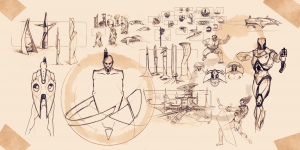
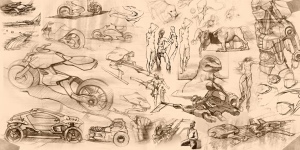
ARTIST IN RESIDENCE - MICHAL JELINEK (Cz) We all do that. We all doodle, scribble, sketch on napkins, post-it leaves, magazines, and simply on everything and everywhere. We all love filling handcrafted pages of beautiful Moleskin sketchbooks with our illustrations, which we also call sketches. But wait. Are these still sketches? And what is the sketch, actually? Well, there are many forms of sketches, obviously. In this particular case, I am interested in the form categorized as ideation sketching.
These are undoubtedly bold questions, and we may have more of them by the end of the residence. But I believe it is at least an opportunity to test out my Metasketching manifesto:
Obey the ambiguity Explore and interact Let slip the artefact
I am an artist, designer, and researcher who worked on projects such as Terminator: Dark Fate (Tim Miller/Jim Cameron), Love, Death and Robots (Netflix, 2022), and Future Ink (Wacom, Ars Electronica, 2020) or Dubai's museum of the future (Tellart, exhibition research, 2018). My design career started in Skoda Auto, where I worked for seven years, and now his clients' list includes names such as Pilsner Urquell, Scarpar, Nike, Prim and much more.
|
|
|
|
May / June 2023
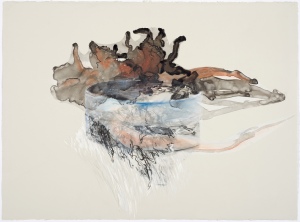
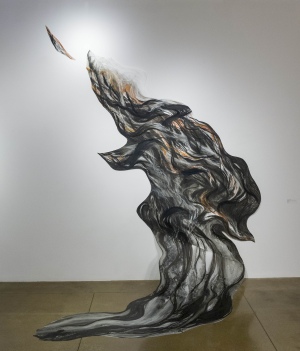
ARTIST IN RESIDENCE - MARY-ANN KOKOSKA (CAN) My current work addresses the changing nature of landscape and my altered perception of it in response to global warming. In so doing I revisit and question the traditions of a picturesque vista in light of recent climactic events. I am particularly interested in the effects of monster storms as well as the devastating wild fires and floods that have been so destructive in recent years.
My work utilises the medium and process of drawing and collage. These are most appropriate for conveying an environment in flux and the instability of our climate through their immediacy and malleability. I compose in fragments, bits and pieces of paper, gestural notations, as well as glimpses of representation imagery. I pay particular attention to drawing directly from nature, as well as through the material manifestations of memory and imagination in the form of sketching. In times when such traditional processes are neglected in place of new technology, such written and drawn observations continue to be important to me. My approach allows a cognitive mimesis that operates mindfully and speculatively through seeing, thinking, relating and remembering. It is about looking at and looking through the subject at hand.
The act of construction develops concurrently with the act of drawing. Paper is cut away or added in an unrestricted manner allowing the work to grow and assume its own shape as an installation collage. The repetitive act of drawing and redrawing grows into a rhythmic expanse and a multiplicity of marks which are often in the form of a gesture, a movement that accentuates my body. The resulting work is equally about my presence and my process as well as my subject.
I deliberately play with ambiguity and uncertainty reflecting the precariousness of our current situation in nature. The resulting images maintain an openness, are never quite fixed and question pre-existing notions of ‘finish’. They suggest that meaning actually lies ‘in between’, in a state of flux, a transient place as nature itself.
Mary-Ann Kokoska
|
|
|
|
May / June 2023
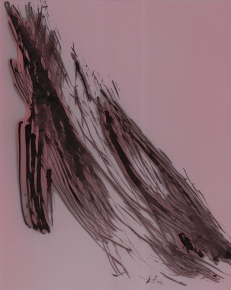
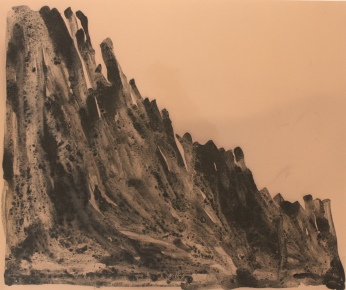
ARTIST IN RESIDENCE - LUCY CROUCH (UK) Through explorative play with materials my research focuses on the intersection of New Materialism and drawing. I am exploring how the drawn gesture is embedded within natural materials and processes, and how recognising non-human drawing might affect our own artistic practice. The act of drawing allows me to slow down, notice detail and immerse myself in surface, material, line, texture, and space. Drawn to its malleable edges, I have considered all my art practice through the language of drawing throughout its different forms.
‘Drawing – understood in the widest sense as a linear movement that leaves an impression or trace of one kind or another’
Using Tim Ingold’s generous definition as a touchstone, for me drawing lies in the imprint, the trace of an action, evidence of two materials touching. The moment between: verb and noun, stillness and action, presence and absence. I am interested in paying attention to draw-ing as gesture and action, to its physical substance and the quality of materials. Working with materials associated historically with drawing - chalk, graphite, ink, charcoal – and beyond, I aim to draw in collaboration with material in a ‘working with rather than a doing to.’
Drawing materials have a history of their own prior the point of draw-ing. According to Timothy Morton ‘there is no such thing as unformatted matter, waiting for someone to stamp a form on it.’ Matter is not inert but in the process of unfolding and becoming. How does noticing the drawing gestures inherent within material effect how we then use it to draw with? How do methods of extracting and combining matter to produce drawing materials mirror the actions we use as artists? Locating drawing conceptually in natural objects, - presenting material as material - sculpturally and sonically, I wish to make connections between the embodied actions of the expressive gesture and non-human agents.
I plan to make work in which the drawings and materials are rooted in the residency location, paying attention to earth, history and landscape. It is an opportunity for me to really interrogate how my practice changes in response to a new environment, and finding new ways of noticing drawing in, and drawing with, the materials available.
|
|
|
|
April/May 2023
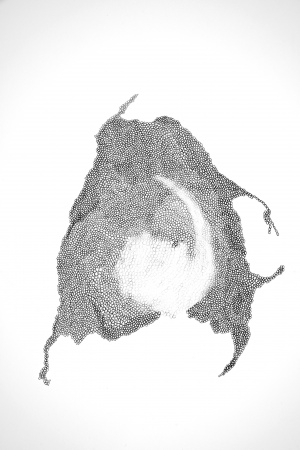
ARTIST IN RESIDENCE - NELL BERGER (NL) Drawing
Drawing and moving is my initial/primary way of communicating with myself.
The seaside
The moveable landscape
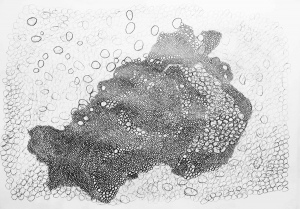
Transforming nature is the base which I want to explore and materialise because of the fast changes due to climate change. Normally the seasons come in a more or less normal moment in a year. I feel and see that things in nature/climate rapidly transform and this gives a lot of disorder and fear in peoples lives and species on earth. Also in mine, so it isn’t only pleasure what I discover from nature, this discomfort will be also a part of my research.
|
|
|
|
March 2023
ARTIST IN RESIDENCE - EMMY MAVROIDIS (AUS) My time with DRAWinternational will allow me the opportunity for experimentation in my drawing practice, and the chance to consolidate my research with like-minded contemporary artists and academics with a passion for contemporary drawing. I want to explore how the performativity of drawing can be communicated. What is my hand thinking? My research is a comparative investigation of drawing: gestural mark making, the body, and movement. I explore the relationship of gestural mark making in visual art and I examine cross disciplinary methods in the arts. How is a gesture illuminated through the body and how does the performative and choreographic nature of drawing align with this?
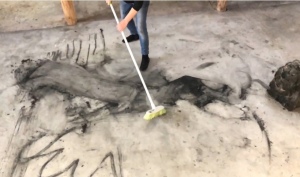
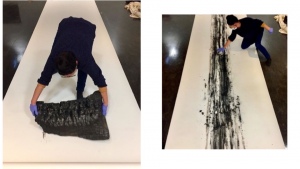
My body of works physically depict the corporeal involvement, through tactile kinaesthetic making and thinking through the hand. Often beginning as a series of small dynamic movement studies and drawings, they are arrayed in a linear sequence to animate the movement dynamics of the event. Responding and capturing a fleeting moment in time challenges how we relate to each other as we navigate our way through the world. How one responds immediately to a particular situation, to a figure, or an object, exposes a hidden and fragile part of us.
Emmy Mavroidis
|
|
|
|
March / April 2023
ARTIST IN RESIDENCE - MARJORIE MORTON (IT/CAN) “The Dialectic of Time and Timelessness”
I was a filmmaker and film production professor for many years before I decided to change course and turn to painting and drawing. Why, now, do I feel a very strong pull towards creating what I feel I have been working towards but unable to approach?
I am fascinated by triptychs, polyptychs, altar pieces, Asian screens and works of art that either divide a continuous image or juxtapose images. Perhaps this has to do with my background in film. If you divide a continuous image in three with frame lines between the three parts, for me, the whole feel of the image changes. What was static becomes dynamic. Space seems to flatten even if the image is based on rules of perspective. The flattened space and separations take the now separated images through time, but simultaneously lift the whole piece out of time. I become very engaged in this dialectic.
I have been mainly painting for some years now, using realist and hyper-realist technique. The work is slow and methodical. I am no longer satisfied with my strictly realistic images and have a strong urge to cut loose, working in a less literal and more intuitive and kinetic way, combining elements of abstraction and realism and to use, as an impulse, the theme of time and timelessness.
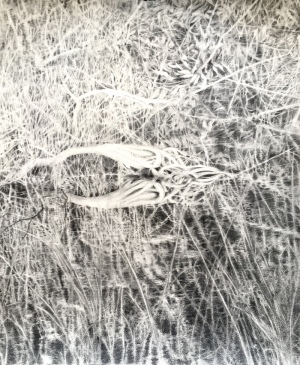
I would like to make several large scale drawings on paper, at least 80 x 200 cm. I may use figurative images in some, but others may be partially or completely abstract. There will be some sort of sequencing within each of these drawings, with or without visible internal borders. I would like to experiment with speed and stillness both in terms of content and technique and with the idea of movement and pause.
Marjorie Morton
|
|
|
|
March / April 2023
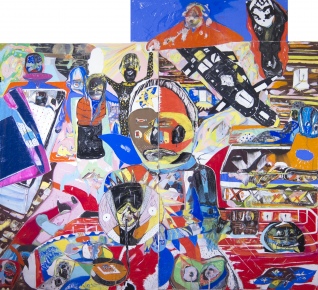
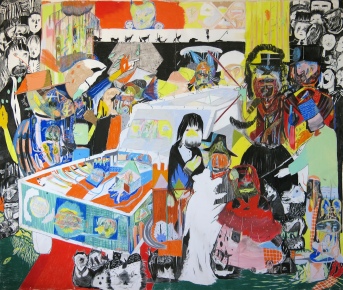
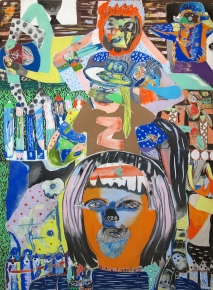
ARTIST IN RESIDENCE - LUIS ALMEIDA (PT) My artistic practice is very focused on drawing. I used charcoal for many years because of the directness and fastness with which I can work with that material. And the high contrasted result between black and white always appealed to me. Recently I have been drawing with pastel, in colours, which I appreciate very much. It’s a different medium which requires a longer time to work on and working with colours is opening a new world for me. My work is figurative and I'm not searching for a realistic or naturalistic approach. My approach is a mix of several comic and cartoonish intentions, and it reveals a figurative/ adolescent world where the narrative is put aside in order for an agglomeration of many small stories to keep building the space and to start creating connections between them. Recently, I have been developing a body of work related to old and classical painting, re-appropriating obsolete subject matters and rethinking them in a more contemporary look. After I have chosen the painting which I would like to work on, I start developing a series of small scale drawings done very meticulously. My intention here is to be as faithful and precise as I can in copying them. At the same time, I work on large scale drawings of the same motif, but here, I let the imagination run wild and try to incorporate my own ideas of this subject matter. I have a predisposition for humorous approaches and often the work becomes a parody of the subject matter which is depicted. I use a personal method of collaging, where I superimpose many sheets of paper and cut directly onto the paper. The surface becomes broken and reveals the layers underneath it. I usually use a mix of different materials, such as charcoal, pastel, watercolour and pencil.
During the residency I want to continue my investigation on iconic and obsolete painting subjects of the past, and create works which are at the same time an homage and a reproach to them.
Luis Almeida
|
|
|
|
October / November 2022
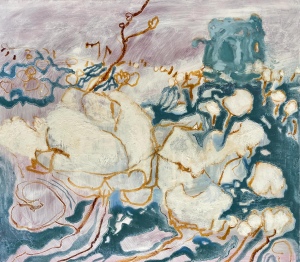
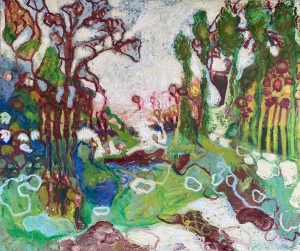
ARTIST IN RESIDENCE - AMY ROBSON UK/USA Drawing is at the heart of my process. I use it as a tool to mine my subconscious as I engage with a particular subject or place. I value brokenness and artistic subjectivity and drawing from observation, memory or imagination is therefore critical. The resulting work pushes representational boundaries with disjointed pictorial spaces and uncanny juxtapositions to emphasise contemporary dislocation and collective anxiety. Weird and wonky trees or banal net curtains and ghostlike figures suggest the uncertainty and strangeness of being alive in the modern world. The work is created as a response to a self-directed question or to a challenge. My proposal for DRAWinternational expands on the theme of personal shame by considering it in the wider context of systemic racism and the privilege of whiteness. In Caylus, I would like to use drawing as a research method to consider the intersection of American history, personal history and psychology. I plan to use a practice-based research approach: using drawing, collage, writing and possibly animation to mine personal memories using Jungian-based ‘shadow’ exploration. As I have experienced on previous residencies, the novelty and majesty of the rural French landscape would amplify the potential for self-reflection. How has my experience of whiteness shaped my life in America and abroad? The unblinking interrogation of my past will be uncomfortable, and I don’t know where it will lead. The personal is political as the exploration of systemic racism in America is as necessary now as it was in 1968. Amy Robson
|
|
|
|
September/ October 2022
ARTIST IN RESIDENCE - NATALIIA LEVITASOVA Solidarité Ukraine - accueil de l’artiste Nataliia Levitasova
Les Abattoirs, Musée – Frac Occitanie Toulouse and DRAWinternational, already partners in the production of exhibitions of works from the collections of the Abattoirs, are joining forces in 2022 to host a residency. artist, primarily from Ukraine to affirm their solidarity with the artistic scene of this country.
DRAW - drawing, research, action and works
The center is a place of research, experimentation and production of drawing in all its forms which is above all a space for exploring the different processes of contemporary drawing, and of sharing and exchange between the artist and the public. For 15 years, The centre has welcomed international artists who, for several weeks, take possession of the studios to reflect, experiment and create works.
DRAW's support is both practical and theoretical at the heart of contemporary thinking.
Following the open call for a residency for an artist from Ukraine or a dissident Russian artist, around forty applications from artists from the Ukraine were received.
Nataliia Levitasova was selected by Drawinternational and Les Abattoirs to participate in this artist residency.
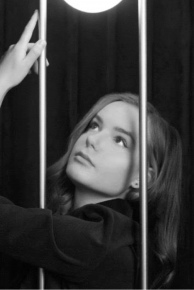
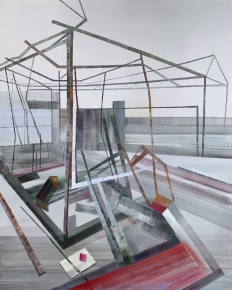
Nataliia Levitasova was born in 1996 in Kyiv. She currently lives in temporary accommodation in a village in the Ukrainian Carpathians, in the southwest of the country. A graduate of the Shevchenko State Art School (2014) and the Ukrainian Academy of Printing (2018), the young artist explores the theme of industrialization, the decline and disruption of nature through the expansion of cities, the loneliness of man in the modern world. She treats these subjects mainly in painting in a style that is similar to that of neo-cubismNa
Since 2014, Nata Levitasova has participated in collective exhibitions in Ukraine and abroad. His works are kept in the collection of the Khmelnytsky museum of art, the Artsvit gallery (Dnipro), the Lysenko gallery (London) and in private collections in Ukraine, Germany, Switzerland, Great Britain, Lithuania, Finland and the States -United.
|
|
|
|
September/ October/ November 2022
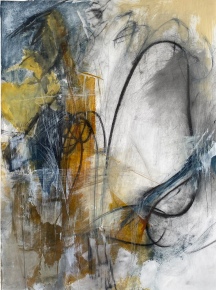
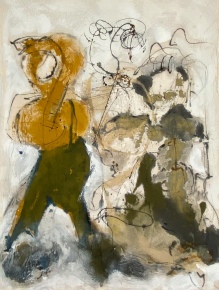
ARTIST IN RESIDENCE - NAN WHITNEY (USA) My work is intuitive, energetically gestural, and textural. It’s a visual narrative and an exploratory dance between colour, shape and line. Through my mark making and fluidity of movement I explore my vulnerability, courage and expression of spirit.
I am looking for the gift of time, space and creative support in a visually stimulating and creative environment to deepen my artistic exploration. I gain personal insight through creative social dialogue and quiet solitary observation. I look forward to creating a series of works on paper reexamining those experiences from other perspectives; different physical and social environments.
Nan Whitney
|
|
|
|
August/September 2022
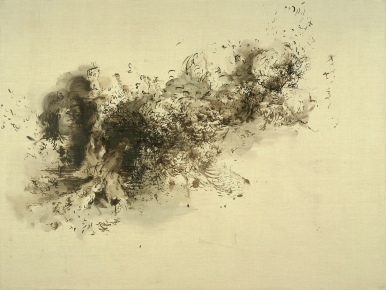
ARTIST IN RESIDENCE - KATE BROAD (UK) I am an artist/educator who has returned to her practice after a prolonged period of lecturing. The last 12 months of Covid pandemic has created a studio sabbatical reuniting me with my own drawing directives alongside its relevance to pedagogy and research into drawing as learning. Resurrecting my thoughts concerning the cultural significance of landscape, documenting space, both internal and external has led to outcomes of a topographical nature. The landscape for me constitutes a composite, transient and multi layered image either through meaning or image, weighted by contemporary or historical symbolism or human impact. The result is an emotive geography rather than a romantic visionary landscape.
I am interested in using the period to develop further visual conversations regarding the residency itself. the artists response to location and event. A sequence of works, part diary, part scape. Commonplace drawings generic and specific at the same time. The figure and figures being anything from natural elements to the props of drawing practice themselves. The artist IS the figure in the landscape. Ultimately it would represent a vibration or seismic reaction to the overlying experience.
|
|
|
|
July / August 2022
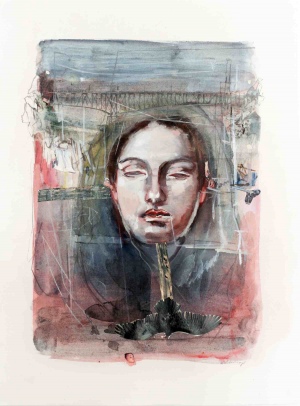
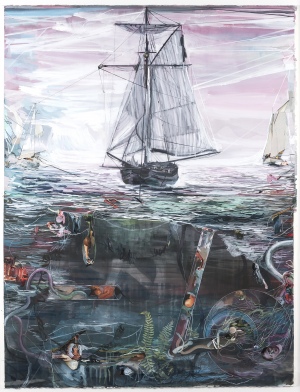
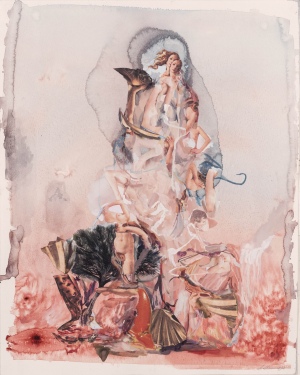
ARTIST IN RESIDENCE - LOUISA CHIRCOP (AUS) Between the 1930s and 1940s in Australian Art, artists looked towards European Surrealism through the writings and works of André Breton and André Masson and while no artistic movement eventuated, its influence was idiosyncratically captured in their art. Australian artists developed individual hybrid styles and approaches in response to their own culture, history and landscape. No other artist captured this more than the prolific oeuvre of James Gleeson. Gleeson wrote the first text in Australia that identified Australian artists as surrealists: What is Surrealism? Published in Art in Australia in 1940, he states that surrealism... “is an attempt, not to abandon reason, but to make reason reasonable-to rejuvenate the concept of reason. It is the fantastic used as a method of elucidation. It aims at a re-orientation of values through a broadening of the concept of reality”. Gleeson understood surrealism to be a way of approaching the truth of our humanity... “creating a synthesis between the daytime reality of our mind and the darkness of our subconscious world”. My practice gains inspiration from my interest in art history and psychological phenomenons. Primarily a painter and drawer, I’m fascinated in drawing as a hybrid medium. For years I’ve struggled to keep drawing and painting separate, finding myself experimenting with this thought in my practice. What interests me is the liminal space between drawing and painting, the process of transitioning, waiting and not knowing where the work will journey. I’m also obsessed with the idea of revelation, between the 'what was' and ‘what becomes next’ and how this informs part of this existential experience. Gleeson similarly explored liminality and has been a key influence on my creative process. Traditionally trained to draw, I’ve been working in mixed media to make composite works that resemble a fusion between elements of drawing combined with characteristics of painting. Working in mixed media has become a metaphor approach similar to the idea of gold panning, a surrealist method of sifting the psyche to analyse residual experience to come to a process of realisation through the material itself. Emulating this idea in my process, I make works using photomontage clippings honed with different drawing materials, watercolour and gouache. I create what I call “thinking drawings” or “drawing paintings”; drawings that explore patterns of thought as I work, a means of navigating moral and spiritual pathways of the human condition. Drawing becomes a way of seeing - of understanding how my external and internal world cross- pollinate. It’s a vehicle for my mind, body and spirit and an expression about my acceptance of how images are birthed through the material formation itself. I wish to further explore these ideas and develop new forms of hybrid drawing approaches into an experimental body of research - perhaps through different materials both developed and/or sourced, and using invented tools and methods. Once discovered, I intend to use these hybrid drawing forms as a catalyst for further research. My intention is to create a visual response to each hybrid drawing form (using more traditional methods) documenting my experience of creativity and patterns of thinking as if I was retracing my thought activities whilst making the work (this will be a representation about the preconception of the actual process of what was or could have been the unfulfilled gaps and a memory of my thinking).
The research will form a body of work becoming a conversation about the unknown through the activity of drawing hybrid forms - a kind of experimental dialogue about flux that represents the multifarious nature of drawing, how it can capture thought processes of both subconscious and conscious states, illustrating patterns of the irrational and rational states of my psyche.
|
|
|
|
June/July 2022
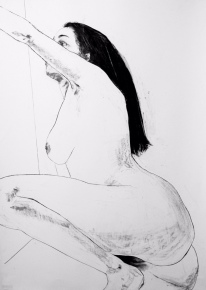
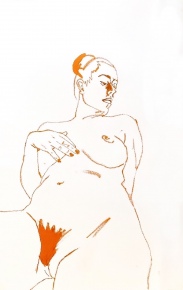
ARTIST IN RESIDENCE - ISABELLA MACK (AUS/USA) I am a figurative artist who investigates the feminine experience in the constantly developing landscape of modern society. I want to address issues that are important to me, such as women's rights, human rights, objectification, sexualisation vs sexual freedom, gender norms and the female gaze. I work primarily with charcoal on paper creating large-scale figurative drawings, I have recently been exploring colour and am excited to see where that may take me. Through my drawings I try to allude to the complexities and shadows of everyday existence. I depict apparently banal human actions and seek to contemplate and reveal the deeper psychological ambiguities of the human experience. My drawings of women (often including myself) invite and challenge the viewer to question their role within the scene depicted, quietly exploring the nature of objectification, making the viewer implicit in the work. I attempt to portray the journey of navigating womanhood in the constantly developing landscape of modern feminism. An exploration of the parameters of authenticity in a heavily commercialised world presenting femininity as a rebellion against societal expectations and outdated notions of gender norms. I'm interested in exploring the experience of ‘body’, the experience of drawing itself and the relationship between the two. I am also interested in the controversial charge of separating the definitions between “Pornography” and “Erotic Art”.
Isabella Mack
|
|
|
|
June/July 2022
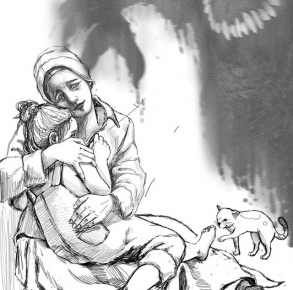
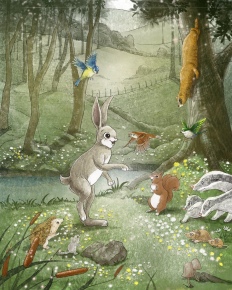
ARTIST IN RESIDENCE - SUNGEUN BAE (KR) Although we make problems in destroying the earth, we rather don’t want to face the problems we have caused. If we don’t become active social activists, at least we need to recognise changes to our daily lives. As an artistic messenger, I am trying to find a lighter more accessible way.
During the residency period I will create a digital drawing picture book of which the concept is the ‘Awakening’ of climate change. Through my picture books you will see the imbalance we have made and have a moment to think about it. Messages without text can be interpreted and shared as their own stories through experiences and emotions of the person looking at the picture.
The ultimate intent is that we get a positive aspect to see the world and will have hopes again. Through this work, I hope that many people achieve dreams and childhood innocence, positive thoughts and hopes, friendship and sharing, awakening and development.
Sungeun Bae
|
|
|
|
June/July 2022
ARTIST IN RESIDENCE - HUI CHI LEE (TAIWAN) Throughout my artistic career, drawing has been my primary creative medium. I enjoy the precision and subtle nuance it allows as well as the primal, direct impact it gives to the viewer.
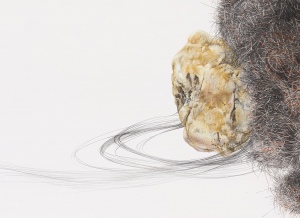
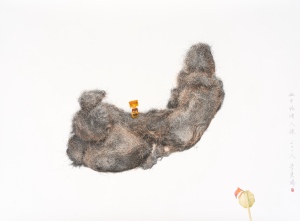
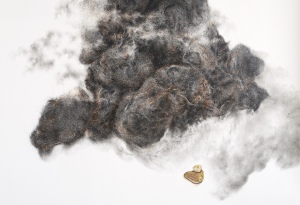
My most recent work reflects my cultural traditions and East Asian ways of thought and expression. I use pencil to draw human hair, which is a subject that is rich with cultural and historical symbolism. Depicting the intricacies in the forms and shapes of human hair in a meticulous manner becomes an act of meditation for me. To depict the complex textures of human hair requires an open but yet focused mindset for the drawing to emerge naturally on the paper while maintaining gentle, tranquil, and minimalistic qualities. I intentionally adopted the subject matter and media to slow down my creative process and to counteract my perception of the contemporary world where things demand high speed, instantaneous gratification, which often results in endless chaos. During this residency, I plan to investigate further new directions in using my subject matter and materials. My most recent work utilizes the visual aesthetic of traditional Chinese landscapes to pursue more holistic and ecological connections between humanity and the natural environment. In the past few years, I learned to master the technique of depicting small fragmentations within a mass of hair. While I gained a much deeper understanding of the form, I still think that my strategy of using it for generating deeper conversations or delivering specific concepts remains in its infancy. I would like to push more aggressive approaches for a greater and more significant visual impact and to explore interesting visual associations and connections. I am very interested in working in a larger format and also would like to explore a non-objective approach so the subject matter will not be confined by its definition.
Hui Chi Lee
|
|
|
|
April/May/June 2022
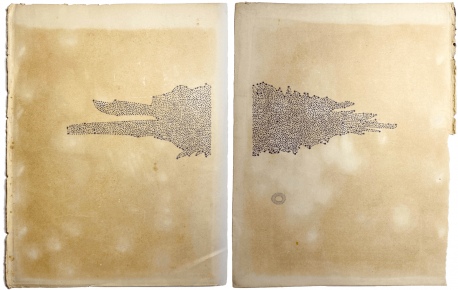
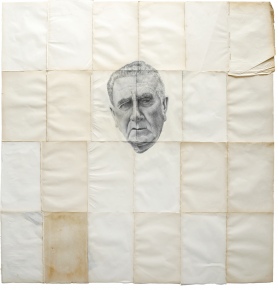
ARTIST IN RESIDENCE - MARCELO ALBAGLI (BRAZIL) I am a Brazilian artist who has returned to his practice after a long period of professional work in design. In much of my work, I look for references from different sources, such as film, scientific drawings, documents and photographic archives, to reimagine the images I find using different materials on paper.
At DRAWinternational, I intend to carry on with my research on the themes of memory, time, and identity. I am particularly interested in non traditional mark-making processes, but I do not have a specific project to be accomplished. I will rather use the opportunity to fully immerse myself in an investigation yet to be defined.
|
|
|
|
April/May 2022
ARTIST IN RESIDENCE -JULIA FELD (USA) Mental health issues become more and more prevalent in modern society. Pace of life, the world around us with all its political, economic, environmental, sociological problems contribute to a high level of anxiety and depression.
What does it mean to be lonely? Can one be absolutely alone without any physical contact with other people and not be lonely?
Loneliness is an emotional state that every person will face at a certain stage of his/her life. Sounds strange - in the age of social media, mass communication and the availability of constant interaction – loneliness, like an invisible but heavy creature, crawls into our lives and establishes a permanent residence. I want to research and explore this phenomenon and express it through the composition of lines and shapes.
I want to explore the intimacy of small scale, its limitations, difficulties, and intriguing nature. Small work requires not only undivided attention to details, but it also forces the artist to think about the importance of each element, each detail. I want to introduce multiple layers of information that reveal themselves gradually either as a part of sculpture or part of a drawn or painted narrative. I want to intensify the viewers’ experience through the reduction of scale and specificity of information and bring them to my level of involvement with the work. Certain things can only be said in a low voice, in a whisper, or seen by being held in one’s hands and brought up close to one’s eyes.
Julia Feld.
|
|
|
|
April/ May 2022
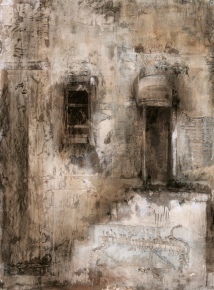
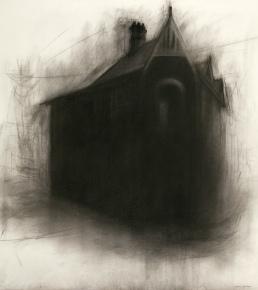
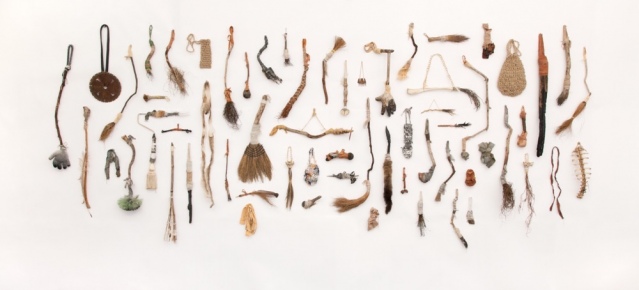
ARTIST IN RESIDENCE - JODY GRAHAM (AUS) I would like to research practical and theoretical ideas about extended notions of drawing. I want to examine what drawing is by investigating marks that are visible and invisible, as well as two dimensional and three dimensional. Drawing is at the core of my work, exploring mark making for over two decades. Currently I am interested in finding ways to make marks which are void of the ego. Marks that are made for the pure pleasure of experiencing the process of making marks, as well as connecting to the aesthetic qualities a mark conveys. Most of my drawings have been representational with abstract elements. I would like to use this residency to push my work into non-representational mark making. To stimulate this move from representational to non-representational I have been making drawing tools from discarded material. I intend to make new tools on this residency and draw with them to support research into studying the marks they make, rather than using them to draw in a representational way. Investigating the support for these marks is something else I would like to explore on this residency. For example, what will be the best surface to make marks on, paper, the body, the ground, with sound and so on. I work with rejected material because of my longing to restore and rescue. Collecting and gathering discarded material helps me understand and connect with an area. On this occasion, it will help reduce the amount of art supplies I travel with. This plan will assist me as a starting point for this residency. I am open to and welcome inspiration and creative exchange that is likely to developed working in a new community and location.
|
|
|
|
March / April 2022
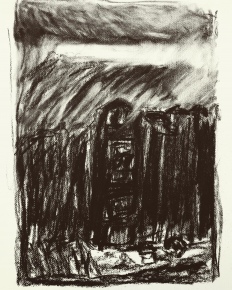
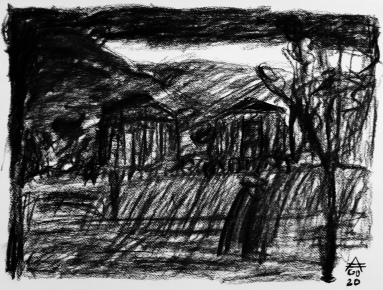
ARTIST IN RESIDENCE - GORKEM UTKU ALPASLAN (TURKEY) Drawing is more important to me than painting. I draw what I see without intermediaries. Brush, ink and charcoal are the techniques I use the most.
Drawing is poetic. I attach importance to lyrical expression, I try to capture a spiritual and lyrical atmosphere in my drawings. Because true freedom is in our mind.
I believe that the residency program will open my horizons. I care about the knowledge I will gain and I think that engaging in dialogue with international artists will be beneficial for the painting studio courses that I will give at my university.
The works I will produce will of course touch upon the problems of the society and the world in which I live now (freedom of the press, freedom of thought, human rights, secularism, etc.). I will process these problems in a lyrical way in my own drawing style. I believe the uncertainty of art will lead us to the illusion that anything can be art, yet at the same time, art is a tool to enlighten society. Thus, it must have a philosophical content.
Görkem Utku ALPARSLAN
|
|
|
|
March/April 2022
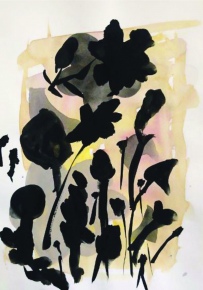
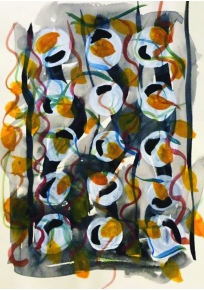
ARTIST IN RESIDENCE - DEBRA BREHMER (USA) I am an art historian, writer, and curator from the Midwest, USA, who runs a contemporary art gallery in Milwaukee, WI. I write for the New York based, international art publication, Hyperallergic. My work is feminist in that I am interested in a kind of revisionist art history that examines the specifics of how discriminatory practices of gender, race, age, and economics have influenced art production.
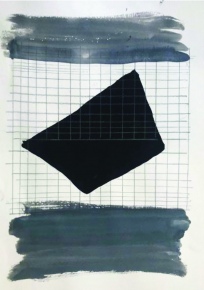
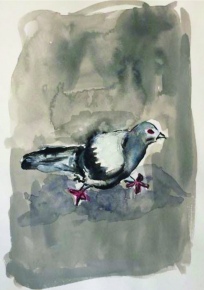
Increasingly, I have been turning to drawing as a means of processing experience and locale. I created 80 drawings that ranged from sketches of things I saw in the world, to abstract works that somehow indirectly absorbed the feelings and conditions of person and place.
I would like to give myself time to draw and to experiment more fully with drawing.
|
|
|
|
January/February/March 2022
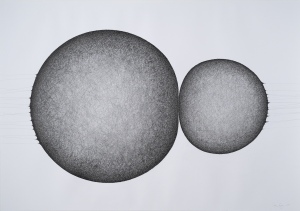
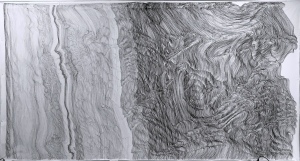
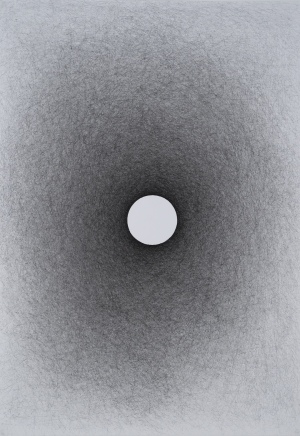
ARTIST IN RESIDENCE - ANDREAS SJOSTRAND (SE) It all starts in awe and curiosity of consciousness, the universe, the human condition, and the processing of emotions—and an innate drive to investigate and go deeper into these topics through visuals.
The act rather than the result takes precedence in my drawings. It is also true of how I want to lead my life. They have always been a kind of performance, albeit earlier, only for myself. Now I am investigating the act of drawing with even more fervency and focus, making my body and its movements an integral part of the artwork.
I set purpose and rules that dictate my movements and (try to) let go of my conscious self and its desire to alter it on superficial grounds. And I give it time, time to go deep. It serves as a comment on and a personal grounding from the ailments of today's society. Namely, the distress and impossible expectations of the attention economy. The loss of body-mind connection in this technology-focused world. And its detrimental effects on human psychological and physiological wellbeing.
|
|
|
|
October / November 2021
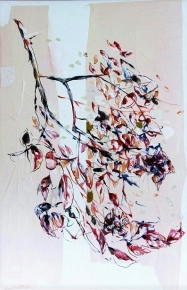
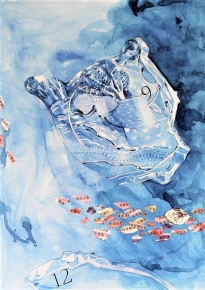
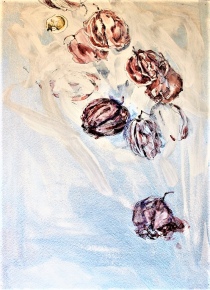
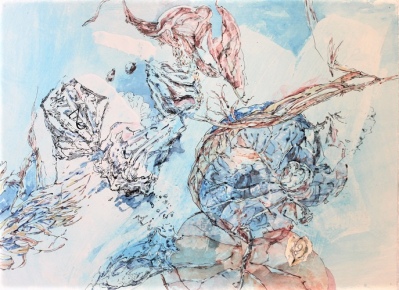
ARTIST IN RESIDENCE - LAURA KMETZ (USA) My interpretation of “drawing” is that there is evidence of a line or lines, however delicate, bold, or obscured, of any length. It includes the act of making and does not necessarily take place on a page. My intention within the residency is to explore ways in which the integrity of a line, or of the image or of the page itself, can be altered by ripping, cutting, burning, shredding, soiling or saturating. I am interested to then devise ways to reconstruct by stitching, patching, weaving together, wrapping, erasing, drying or any other as of yet unfathomed method. How will the line, image, page be forever changed? Will it then acquire a different meaning? I wish to create a new body of work concerned with concepts of tearing apart and repairing, harm and healing. This process alludes to our collective trauma, self-inflicted by the societies of which we are members, and as is inflicted on our planet. The process has three distinct components. There is first the construction/creation, followed by deconstruction/decimation, and finally reconstruction/reintegration. A record will forever remain embedded in the object, thereby preserving the act of its creation. I like to consider these explorations as a visual journal of discoveries, as a diary of sorts. My work is informed by the patterns and elements of nature. More than by its state of being in any given moment, I am inspired by how something moves and by its potential to transform, regenerate or be acted upon. In addition to flowers and branches, I want to be more attentive to subtle atmospheric shifts, wind patterns and water currents. I am fascinated by archeology, excavation, fossils, symbols and ancient texts. All of these mysteries will somehow find their way into my initial drawings, so as I create something new, I will reference what has gone before. LAURA KMETZ
|
|
|
|
September/October/November 2021
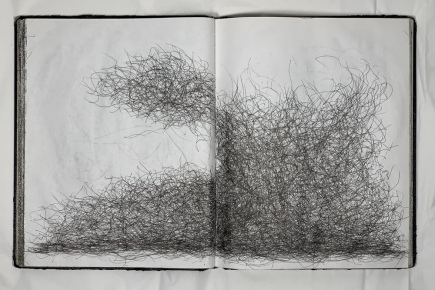
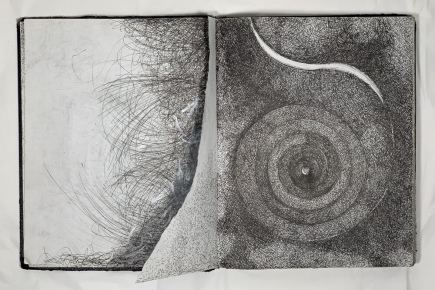
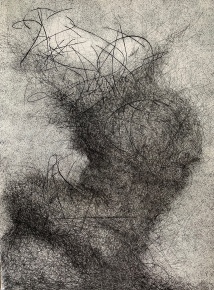
ARTIST IN RESIDENCE - JAMES HOWARD COLLINS (USA) In November of 2018, I started drawing in a blank sketch book after a lengthy hiatus. It was during one of many trips to Ireland that I became inspired to draw again - inspired not so much by what I saw, but by what I felt. I happened on some inexpensive Muji gel pens and began drawing as often as possible in this book.
What has interested me over the last eighteen months or so, are the shapes that are formed by intersecting gestural lines. Spontaneity and gesture with deliberation and consideration, are the two areas of process that are very important to my artistic expression.
One of the suggested areas of pursuit mentioned in your email was “drawing as philosophical thought”. That is appealing to me. But I might modify that a bit to incorporate emotional or even spiritual struggle. I am fascinated by the clash of opposing forces in ourselves, in the world around us and how they might be expressed in art. It’s a vast range that includes: light/dark, line/shape, emptiness/fullness, noise/quiet, peace/unrest, precision/imprecision - concepts that might describe the craft of drawing or equally, forces of the universe.
Above all, I’m interested in evoking and provoking emotion. And I would venture to say emotion and thought overlap. I feel emotion is the more authentic, but without thought, it remains wild and untamed.
|
|
|
|
June /July 2021
ARTIST IN RESIDENCE - KOJI MAEKAWA (JAPAN) During this residency period, I would like to develop my two drawing practices that concern haptic perception.
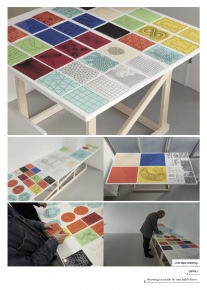
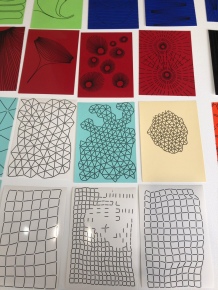
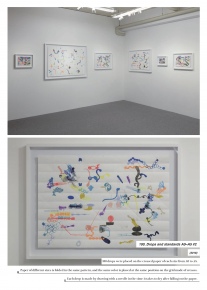
The first drawing series uses touchable line drawings and the second is a series of drawings about inherent size of drops and hand palms.
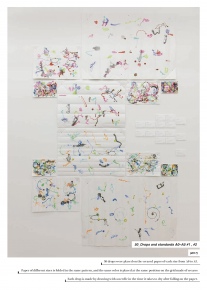
Line Tape drawing 25 drops and standards 25 drops were placed on the creased paper of each size from A0 to A5. Paper of different sizes is folded in the same pattern, and the same colour is placed at the same position on the grid made of creases. Each drop is made by drawing with a needle in the time it takes to dry after falling on the paper. Stacked 7_Space of hands This object is made by stacking 2 combinations of 7 units vertically. Each unit is made of a material that fits in my hands palms.
I would also like to research places related to my activities and interests. For example: Art pariétal (cave painting) Clinique de La Borde - a model in the field of institutional psychotherapy where patients actively participate in running the facility. Art Brut (outsider art) Louis Braille educator and inventor of a system of reading and writing for use by the blind or visually impaired and the development of tactile graphics.
I would like to share my drawing practice with the local and wider community.
Koji MAEKAWA
|
|
|
|
June /July 2021
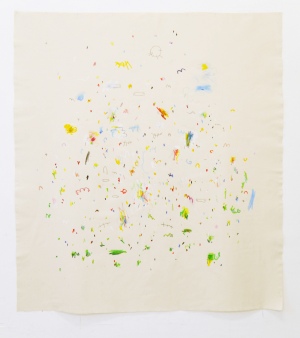
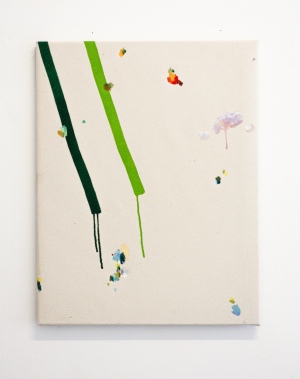
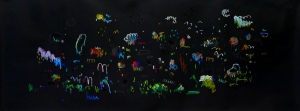
ARTIST IN RESIDENCE - MARIA KUBYSH - CANADA I am curious about the ability of visuals to touch silently, puzzle, and perturb. Pictures operate in ways that are notoriously tough to put into words. In 2020, my main topic of interest was abstract artists' signature icon alphabets. I looked at the works of Cy Twombly, Jean-Michel Basquait, Laura Owens, Giorgio Griffa and Kasimir Malevich. To a lesser extent, Kandinsky, Matisse, Joan Mitchel, Agnes Martin, Hilma af Klint and Georgia O'Keeffe. This work resulted in a painting show at Tapir Kunstraum in Berlin, centred on the transition from writing and encoding to painting. Looking at these author's icon sets, it occurred to me that, despite being uniquely idiosyncratic, there was a common element to them all. A universal set of icons, if you will. This made me think of an "author's hand" in its opposite — the universals. From that, my interest shifted to pattern recognition in painting—the meaning of each optical element—the position, the colour, material, size, etc. I am curious about the emergence of "universal" abstract imagery in "spontaneous" or "natural" movement. I want to explore the gradual transition between the gestural and the iconic: encoding and improvisation. How far does the "artist's hand" extend into the tools and the setup. The ergonomic peculiarities of a human hand, the drawing implements, the surface? Wouldn't individual hand movement due to ergonomic build be a "natural phenomenon"? Furthermore, are visual brain capacity, motor and language ability "natural phenomena" too? They are unique to each individual, of course. But are they unrepeatable? How much authorship does an author exude? There is evidence that children's early tadpole drawings are identical across cultures. So are the cave drawings of prehistoric humans all over the globe. These facts may highlight the universal something that drives these drawings' creation. Could it be that there is a universal drawing language that all humans share(d)? I want to continue exploring the agency and who's doing the encoding and leads the associations. If the author is not always responsible for the encoded meaning — what else contributes to it: the author's hand? The painting tradition? The collective subconsciousness? I will experiment with drawings by inhuman agents, such as trees or inanimate objects. Is there a way to draw as a "nonhuman"? I.e. without exerting my hand as in usual writing, letting the ergonomics of my arm and shoulder muscles and bones play out, whichever way it may. This process would create drawings that are mine and not mine at the same time. They would question who is it, that's drawing these.
Maria Kubysh www.mariakubysh.com
|
|
|
|
June /July 2021
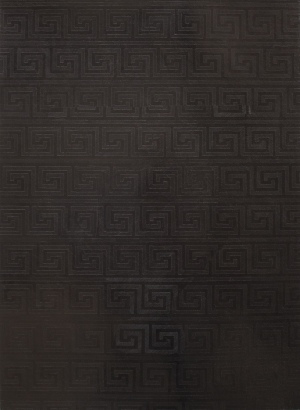
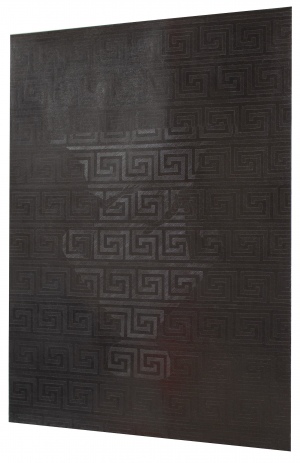
ARTIST IN RESIDENCE - JAIME KNIGHT (USA) I am an artist, educator and musician working at the intersection of print, drawing and sculpture trying to address the radical intricacies of queer subjectivity. My work is an ongoing exploration that uses images taken from ancient greek pottery, disco and historic and contemporary popular culture. I’m working within a series of extended metaphors that play with the correlation between the AIDS crisis and the nuclear threat of the Reagan era, ideas of queer utopianism and longing, and representations of gays in history and contemporary media. Drawing for me has always existed as an experimental practice and one I have constantly returned to over the last decade. Forced to approach it obliquely because I am not naturally inclined towards rendering, I’ve developed a practice which is almost sculptural. Beginning with drawings of heavy graphite I lay down a solid field of many layers. I use a needle to etch a line, erasers and sand paper to remove material and a chamois to polish and refine the surface. Since 2011 I have been exploring images culled from the Corpus Vasorum Antiquorum, an archived collection of mostly Greek painted ceramics from antiquity. Founded on Oxford University's Beazley Archive, this online collection has provided me with source material for a number of drawings, objects and prints. Searching the archive with particular keywords gives rise to images of ancient Greek same sex sociality and relationships. For me, these images are cypher and metaphor. They speak to my own coming out (in a young queer’s obsession with greek imagery) and the idiom "going Greek"; but also to a sexual/ political coming out with my first reading of Foucault's History of Sexuality. Research in the archive continues to be an inspiration and the work has evolved to become more abstracted and coded. Materially I am interested in the quality the heavy graphite gives to the "drawn" object, how the etched line both appears and disappears with the reflecting light and operates as another code for queerness. The haptic quality of the surface alongside the elusive nature of the image combine to give the work a unique characteristic. The surface of these drawings is largely indelible. Once a mark is made it is impossible to delete. As a result my process with this technique has become very deliberate, often relying on mechanical and computational means. My aim at DRAWinternational is to expand my capacities for mark-making on this surface, to experiment with the limits of the surface itself and to create new and novel methods of interrupting it with the goal of evolving the drawings to their next iteration in a new body of work. The following questions will lead my investigations. What tools can I create to abrade, emboss or imprint the surface of the drawing in lieu of simply scratching it? In what ways can I experiment with the creation of the surface itself using the full variety of graphite products available? What materials will successfully combine with the graphite to allow for a variety of outcomes, color, or surface variation? How can I loosen up with the kind of marks I am making while still investigating a subject matter through abstracted representation?
www.jaimecknight.com
|
|
|
|
March/April 2021
ARTIST IN RESIDENCE - HANNA ROMIN (SE) I challenge the materiality, concept, and approach to drawing through experimental methods. I try to find alternative ways to work with drawing through questioning the process of drawing as well as the outcome. I am often drawn to work within discourses about memory, temporalities or site-specificity. In my drawing practice, I challenge two different ways of mark-making; a performative and a material based expression. I approach drawing with an intention to go beyond the traditional norms that limit drawing to a particular material or expression as well as how we consume drawings as a viewer. The bodily gesture and encounter with the audience are present in my work in different ways, which is why I use these two different ways of expression. Through my interest in the ephemeral, I have worked with non-permanent or semi-permanent mark-making and I also seek ways to make drawings durational prior static or something complete. As a research method, I am interested in the bodily aspects of mark-making that can be emphasised through the act of drawings rather than the final result. The hierarchy between material, making, and the visual result is not always explicit, therefore drawing as an act and drawing, as a result, is usually combined in my art pieces. I have consequently started to explore more performative ways to create lines both outdoors as well as in indoor settings. I am interested in the mark-making as an act in relation to a site's memories and time's interference. In what I refer to as studies I construct frameworks that direct the making outside my decision-making in an experimental way. I am through these expanding the boundaries of drawing both material-wise as well as how lines can be generated through, for example, an octopus, movement or digital media such as a GPS tracker. My other interest is a more traditional expression of drawing, with pen or markers on paper or other fat surfaces. With the two dimensional images, I often present them in tridimensional mixed-media installations. With the installations comes an interest in finding ways to be inside or enclosed by the drawing; both as an artist and as an audience, these installations can also have durational qualities. I would like to use the residency at DRAWinternational to reevaluate and deepen my drawing methods.
Hanna Romin
Hanna Romin has been awarded grants for this residency from the following organisations : The Swedish Arts Grants Committee - International Cultural Exchange and Travel - Image and Form 2020, Otto and Charlotte Mannheimer Foundation Fund 2020 and Västra Götaland Region International Travel Scholarship 2020.
www.hannaromin.se
|
  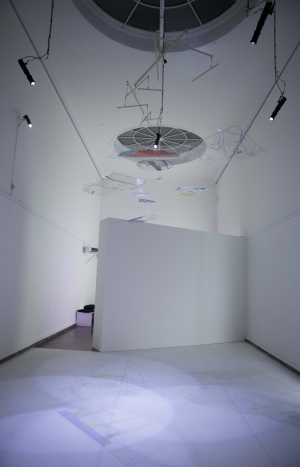 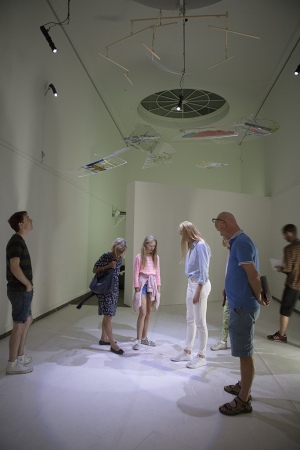
|
|
|
March/April 2021
ARTIST IN RESIDENCE - ANDREAS MELZER (DE) Zen kalegrapie, actionist expressions. Speed. The dance and the silence Turn off controller thinking. Unfortunately, because I didn't always have to express my creativity only in art, I couldn't do it straight away. So I always drew when I could. What do I want with you? Time space and people who have dedicated themselves to the sign as an original expression. I want to be as little targeted as possible. I am interested in not wanting, connecting, by giving up fixed pattern technology, Or beliefs and identities. Yes, it is not entirely without an object .. Man is one of the issues. I drew nudes for many years, now the figures that are in me come to me of their own accord. To give myself the space and time to let something arise, that's what I'm looking for.
And I'm happy to share this with serious people.
|
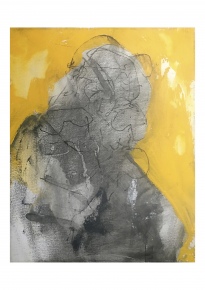 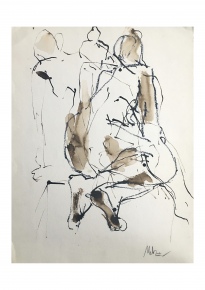
|
|
|
Fevrier 2021
ARTIST IN RESIDENCE - VIRTUAL RESIDENCY - RIGMOR DAHLQVIST (SE) I’m drawing because I want to be in the “drawing room”. The “drawing room” to me, means the mental room I enter when I have put a paper on the wall and picked up a piece of charcoal or whatever I want to use for drawing. There I am standing in a stream of images, with a strong desire to make events from the inner stage visible – traces of impressions, traces of experiences, fragments of memories, emotions never expressed, quiet questions, reflections. A desire to create drawings from hidden rooms within and a desire that these drawings may have something to say to other people.
It sounds, scrapes, messes when I’m drawing. The charcoal meets the paper with a shuffling sound, the graphite crayon squeaks. I like these sounds and I like to wrestle with materials that gives blackness. Blackness tells me about stillness and focus. With the same piece of charcoal or crayon I can find myself talking with something very light and fragile, something which almost has no voice. Talking, drawing, listening, drawing. In this way, series of drawings appear. I’m always looking forward to these talks!
On one hand, I would like to find out if it’s possible for me to find the way to my “drawing room” – my intuitive way of drawing – in a new and “unknown” environment. In what way would new conditions influence my art work? On the other hand, I want to take steps out of this way of working. Not to leave it behind, but to regularly spend time to focus on “looking out”, observe the external surroundings with a crayon in my hand.
When I worked with my series of drawings named “Growing”, I never made sketches from roots, trunks, buds or tree crowns. The drawings grew out of my inner sense of “growing”. I have an idea to go on with the “growing” series, now with drawings made from sketches of “real” trees and plants, roots, bark, leaves, buds, fruits, seeds…. May be use them for diptychs, let them meet drawings made from “inside”, “from inside”/ ”looking out”. Or drawings with layers of different views – “from inside”/ ”looking out”. A residence stay could give me both the structure for a project like this and also unexpected impulses to my way of thinking about a drawing project!
|
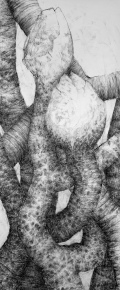 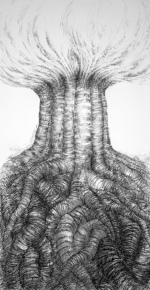 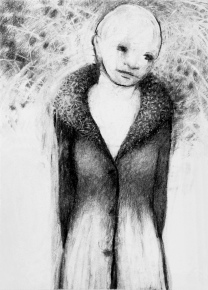 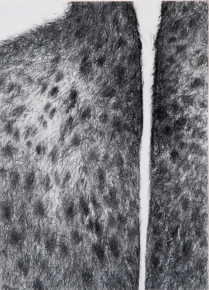
|
|
|
January/February 2021
ARTIST IN RESIDENCE - ILONA SKLADZIEN (POL) My work explores the socio-political 'grey' areas through a psychological lens. Through adopting diverse drawing and painting techniques in the making of my work, I disrupt and alter the imagery taken from secondary sources, drawing attention to subjects of memory, perception, cruelty and free will. In my recent practice, I use the content found online, specifically on YouTube, to delve more deeply into questions of perception and the role technology plays in shaping our understanding of the world and choices we make. My interest in perception and memory, and our relationship and understanding of the content online - especially popular online platforms such as YouTube and Twitter informed my latest work. My starting point for the residency is one of my recent drawing series titled 'YouTube'. The drawings morphed into 'doodles', while my attention was occupied by explicit YouTube videos of the poultry industry. Bringing a flow to the paper, the unconscious and the illogical connected myself and my doodles to the moving image of the horrific content presented. 'Seeing things that are not there is the result of top-down processes in the brain. Conscious perception is largely based on these top-down processes: your brain continuously compares the information that comes in through your eyes with what it expects on the basis of what you know about the world. The final result of this comparison process is what we eventually experience as reality. Our research results suggest that the brain builds up expectations not just on the basis of experience but on your mood as well.' A new study by researcher Jacob Jolij and student Maaike Meurs of the Psychology Department of the University of Groningen made me interested in exploring the manipulation of the senses in the creating process and its influence on the perception of the content found online, specifically YouTube. During six weeks of residency at DRAWinternational, I am planning to undertake a practice based research. Through the notion of 'doodling' and under the influence of meditation, as well as additional manipulation of the sense of hearing and possibly smell, I will carry out the experiments in response to one chosen YouTube video. I have chosen to work from YouTube video titled 'Asian Dog Meat Report [Documentary Film]', due to the polarity of emotions this video released in me. Upsetting lack of humanity as well as understanding the cultural differences, made me see the video as potentially opening contrary avenues of thinking and feeling about the subject matter.
|
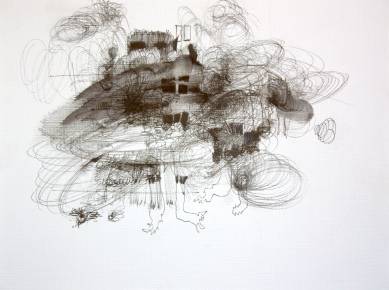 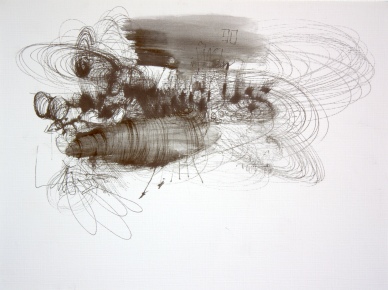
See gallery >> |
|
|
January/February 2021
ARTIST IN RESIDENCE - VALENTINA SAVA (ARG) I research human relationships, the form of clothing that represents each person, sexuality and sensuality, gender and objects that unite us to people. Fascinated by possible scenes and scenarios, colourful and friendly spaces that generate intimacy and sometimes discomfort, laughter or empathy.
I conceive art as a way of seeing the world, particular and distinctive and that is what I aspire to. I like to think I carry with me a language code that can tell current daily life without prejudice. In these different formats, materials and textures I find myself surrounded by stories that are not always told in the same way, but lead me to a similar feeling: Being inside a dream.
Valentina Sava
|
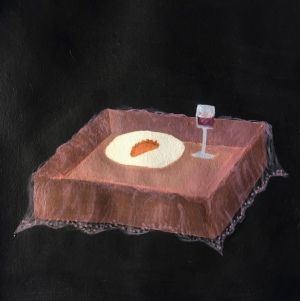 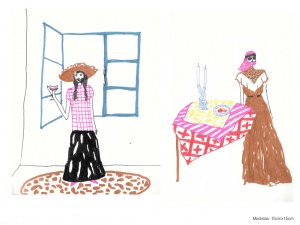
|
|
|
April / May 2020
ARTIST IN RESIDENCE - PATRICIA CARRIGAN (USA) For me the answer always lies first in the drawing. Recently I have been learning to let difficult and painful memories and moments pass through me without taking permanent root. I think that I am finding forgiveness in the actual process of drawing. Through mark making multiple areas and images wrestle for space sometimes staying or going while always leading to something new and unexpected. I prefer to work with charcoal and graphite adding and subtracting with powders and erasure across the surfaces of large papers. The layering and erasing allows me to mark, remove and reposition recalled memories along with linear indications of small encounters of daily life, bits of conversations or thoughts, stories, places and landscapes along with large expanses of open and closed space.
My residency at DRAWinternational would enable me to begin a series of large charcoal and graphite drawings on paper. This series will be centred on issues of place finding, retrieving and recalling moments of clarity, peace, and calm and coming to terms with what one thought their life would be, what it actually turns out to be and all the spaces in between.
www.patriciacarriganartist.com
|
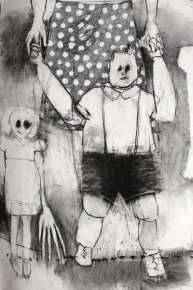 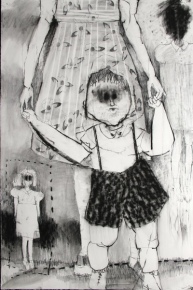  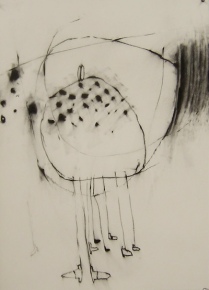
|
|
|
October 2019
ARTIST IN RESIDENCE - EDMUNDO FERNANDEZ (PH) After 19 years without any artistic output I went on an artist residency for three months in the United States. I was drawn to concentrate on drawing, rather than painting, as this was a media I had engaged with a lot in the past. For the duration of the residency I explored the richness of drawing, working out its many challenges on over-sized paper. The gestural quality that is most inherent to drawing, as well as its repetitive nature brings me to a most zen-like calmness, an inner stillness, akin to going for a good, long run.
The imagery I have worked on the past eight years has mostly been representational, with a concentration on two unconnected subjects: clothing and divers. Clothing has always intrigued me as objects that are expressive of its wearer, a reflection of a life lived, chosen, cast aside. But clothing, when worn, is different to one found hanging on the back of a seat or hanging from a hook, disembodied and lifeless. My practice wrestles with the latter, working on absences found between folds, with wrinkles as details found on the skin of my subjects.
I have also been fascinated by the image of a platform diver in free fall. The falling body, the velocity of its drop, set against an empty background, bestows a purity to the single action. My drawings catch the diver’s falling body suspended in mid-fall, tracing the line and arc of his descent.
My current work does not allow me much time to do creative work, and I am hoping to make the most of the residency with DRAWinternational to continue and further my practice. I am hoping that the time and space will allow me to renew my energy to explore new ideas and new imagery, further exploring the capacity of drawing and its many trajectories. Edmundo Fernandez
|
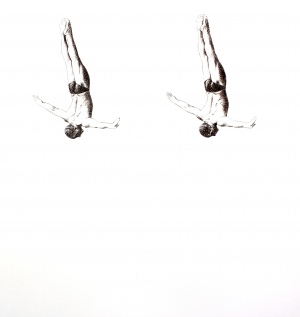 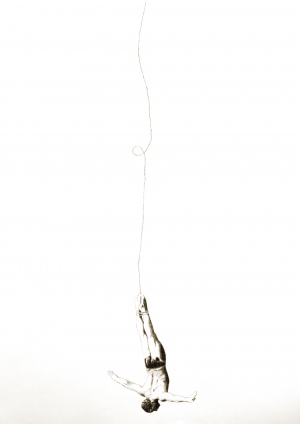
|
|
|
October 2019
EXILE, MIGRATION and FOREIGNNESS -ARTIST IN RESIDENCE - RITCHIE RHOMBUS (USA) I make transformative art experiences that expand and challenge social constructs. My work scales from the personal to the public, from intimate rituals to large-scale adventurous social events. I use social dynamics and human behaviour as mediums of play and invention to connect people's bodies to greater ideas, employing drawing as a way to communicate story and action for social reality.
During my residency at DRAWinternational I aim to make work that expresses ‘transformation of the individual’ as they pass across a border/threshold.
When ‘We are all born foreigners’, how we transform to become natives to ourselves becomes a crucial element in being human. As an individual enters into another territory their migration lets them look back at their origin from a distance. It lets a person explore their very nature from a place of transition and transformation.
I will explore drawing and the body as it transitions over time. I will explore the body as it crosses over a border, psychological, politically and physically. I will express the migrant as a person of change, a person who has found themselves through their own movement across space and time. I will show this changing state in the physical works of art I produce.
Ritchie Rhombus
|
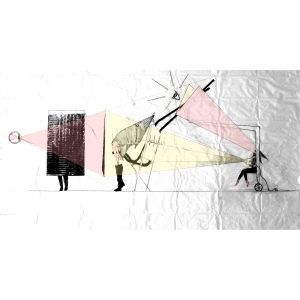 
|
|
|
September 2019
EXILE, MIGRATION and FOREIGNNESS - ARTIST IN RESIDENCE - FRANCISCA YANEZ (CHILE) From a Country Without a Name On January 18, 1974, when my father was expelled from the country, we took a flight from Santiago de Chile to Germany. As a carry-on bag, my mother gave me a small plastic suitcase to keep what I wanted to take with me. I filled it with what at two and a half years was my most important property: the paper figures I collected. At the airport we were escorted by armed soldiers to the plane and the indication was to board quickly. When climbing the stairs, I do not know if by a gust of wind or because I dropped it, the suitcase opened and the figurines flew out. I thought I had done something very bad because if we did not get up fast the military could get angry, but I did not care if the military got angry, it mattered more that my parents got angry with me. When I turned around, my parents and my brother were going down the stairs and began to retrieve all the figures they could and stored in the suitcase. I kept these figures for many years in all the displacements that came for the next 17 years with Refugee status granted by UNHCR. My father maintained the prohibition of entering the country until in 1988 the end of the exile in my country was decreed and since then I keep coming and going, looking for my place in the world. As an artist I have also traveled through different disciplines: visual arts, graphic design and book illustration. I feel that in all of them I do the same thing: expose these stories and gather paper figures. In a natural way, my work has come together in ways to make visible the stories of those who continue moving around the world today. I gather and confront those worlds: that of the exiles and those who receive, those who recover and cling to their treasures to continue living and those who can not. Looking to the fragility of the dispossession and the tenderness of those who try to recover the pieces of paper or, simply, extend a hand to receive.
Francisca Yanez
|
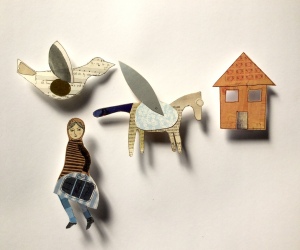 
|
|
|
September 2019
EXILE, MIGRATION and FOREIGNNESS - ARTIST IN RESIDENCE - ANTONIA GUERRERO (MEXICO/USA) In my long career I feel at this time I am at a new threshold in my explorative pursuit in drawing.
|
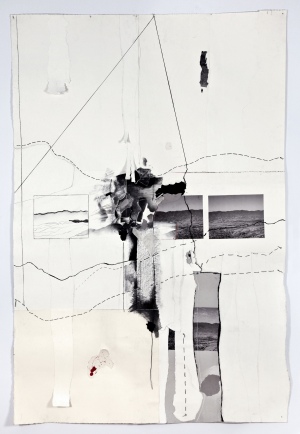 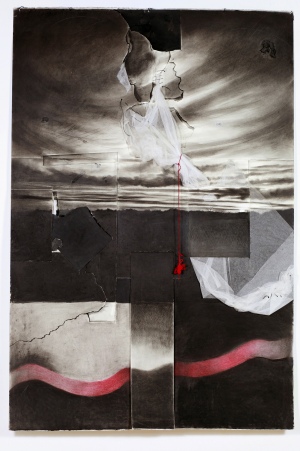
|
|
|
August / September 2019
EXILE, MIGRATION and FOREIGNNESS - ARTIST IN RESIDENCE - GRACE CRABTREE (UK) My practice centres on the figure, although this can extend into abstraction, through the repetition or rearrangement of forms, or in the figure’s relationship to an environment, to light, line, or space. My focus is often on the image field, using the most apposite materials and marks to create a certain sense of time or place, often grounded by an ambiguous character, who might be repeated across multiple images in a series.
I will use the experience at DRAWinternational to develop a series of drawings, combining these techniques to make complex but delicately layered pieces. These will draw on my interest in sinopia, the underdrawings of frescoes discovered when the uppermost layer is removed in restoration. I am drawn to their poetic relationship with the layering and the underbelly of time, and through the residency I will interrogate both the conceptual and material possibilities of this notion.
|
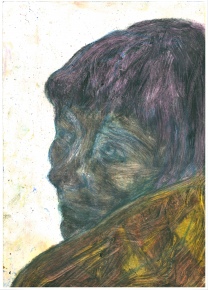
|
|
|
August 2019
EXILE, MIGRATION and FOREIGNNESS - ARTIST IN RESIDENCE - JOHN BARRY (UK) Where pontoons lay Lifeboats adrift smiling Dad steps from the skit Silt and gulls diving
I recently visited the once remote island of Sherkin my grandmother Margaret Barry was brought up on, during the C19 thousands had left escaping famine and penury leaving a population of less than 100, a migration that for different reasons is ongoing. I sat in Island House built by my great grandfather and listened to J2zz with my second cousin Sean O’Neil, smoking rollies while Tony Allen kicked it out on the radio. I have visited the island many times as a child, an itinerant young squatter and now of age reflecting on life. There are photos of my parents honeymoon on Sherkin where they look happy, very much in love; but the light faded, home became a battleground, shouts and absences mutually exclusive. This immersion in being Irish yet brought up in Stockport, Manchester is a common story: a feeling of not belonging, being perceived as Irish here, as British in West Cork.
A blind eye or acting on impulse
We all have our stories of belonging, or not and stories where a chance encounter with a stranger prevents a slight mishap, potential calamity or even loss of citizenship. I am interested human stories and wish to collect the stories you write: the taxi driver who returns your phone, a jump start in the pouring rain; small acts of human kindness which cost nothing but prevents your perfect evening being spoiled, temporarily reminding you to do the same to others. But these acts are on a continuum. For many, one pay check away from the streets, living illegally or fleeing violence an opportunity, a blind eye, a lend, these altruistic acts between individuals, communities, between strangers and even officials can prevent a thread of tough reality snapping. They can be a measure of what it is to be a human, sometimes done at personal danger, despite our better judgement and are a rejection of social norms, data drive profiling, stereotyping and fake news revealing our shared vulnerability and humanity.
Subjugated and obedient
Travel now is sold as been imperceptibly easy, we are all people of the world, an exchange of documents, taken for granted this can lead to complacency. A friend of mine got stopped at gunpoint yesterday(Monday) travelling out of Catalonia, her life passed in front of her eyes but was allowed to travel because she had the right papers. Lots of journeys/ migrations have universal themes where once we were bounded by the physical landscape we now pass man made borders and checkpoints which are stressful luminal spaces that make one feel we are no longer individuals with hard fought citizen rights. We must submit to a dehumanising process established to ensure our safety, but in fact often feels to be polarising, profiling types and behaviours. The Windrush generation, Shamima Begum, Brexit, peace walls, demilitarised zones are all about moded forms of citizenship; a border can be an inconvenience to the tourist, an open wound to the patriot, an opportunity to the smuggler or a death trap to the refugee. All these things build physical and metaphorical spaces between people, in contrast to the chance altruism described above.
My research intends to investigate the theme of these liminal metaphysical landscapes defined by chasms, rips, power imbalance and imagined space between individuals which are non pictorial but suggest naturalistic barriers: mountains, walls, rivers and how forms fragment and butt up against each other. The texts are process driven through often repetitive mark making, frottage, print, collage and also entail chance discoveries and acts of risk taking and altruism.
The residency is an opportunity to refine my thinking and work in collaboration with other artists....my work exists in the form of incomplete written texts, small sketches/ideas, collage/prints and large drawings/collages which need fully contextualising and bringing into the light.
John Barry
|
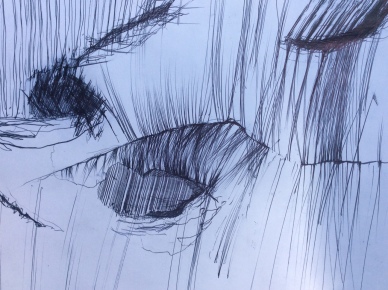 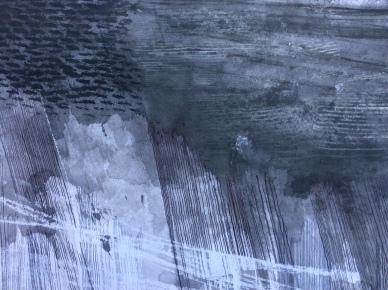 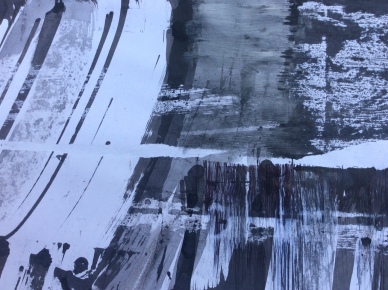 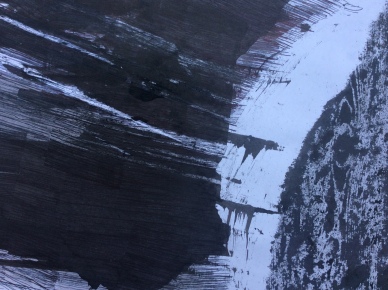
|
|
|
July 2019
EXILE, MIGRATION and FOREIGNNESS - ARTIST IN RESIDENCE - MEGHANA BISINEER (INDIA/USA) Drawing is at the core of my artistic practice. My work investigates the nature of time, personal memory and loss in relation to place and landscape. I often draw directly into/ onto urban spaces/ landscapes. The emerging marks are minute and measured, enormous, fluid, aggressive, meditative: a lexicon of individual marks mapping the simultaneous complexities of an inner landscape and the land we inhabit. Several drawings are layered over the surfaces - paper, walls, floors and windows and recorded using a digital camera resulting in an animation which is a mere residue of the process. Akin to what we do with our landscapes, etching and marking into them, every place a palimpsest of memories and past forces. We are our memories, or the erasures of. Our bodies remember things that our minds forget. A conversation, an exchange, a meditative contemplation on time, memory, home and identity, connections and communications, at a time when the ground is rapidly shifting; personally, politically and environmentally. My work is a desperate attempt to reconnect, lest I fail to find any meaning, and hope.
|
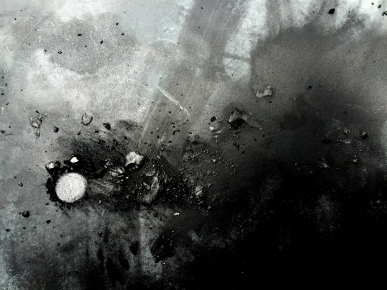 
|
|
|
June/July 2019
EXILE, MIGRATION and FOREIGNNESS - ARTIST IN RESIDENCE - WHITNEY ROSALISE HIEBERT (USA) I am a fine artist, illustrator, and multi-instrumentalist composer. I focus on the creation of large- scale, highly detailed subjects of sound and movement. I compose sound for image and image for sound. The work that I plan to pursue at DRAWinternational will focus on a sponsored set of four pieces (Greed, Suffering, Love, & Wisdom), that will be released in parallel with musical works written and performed by the Mount Veritas ( mountveritas.org ) collective. The songs are written along the arc of a young immigrant seeking a path towards material wealth (Greed), but getting lost in the chaos of the new world (Suffering), finding redemption through their grandparents (Love), and ultimately understanding the true nature of what guides such suffering & joy (Wisdom). The visual artworks will be equal and complementary to the music, and will combine original illustrations with visual works from various traditions that touch on these universal themes. Specifically, the new works will build upon proverbial West African Adinkra symbols and meditative Indian mandalas, and will represent the cyclical balance between the chaotic nature of this world and the calming strength and beauty of familial and social bonds. Whitney Rosalise Hiebert
|
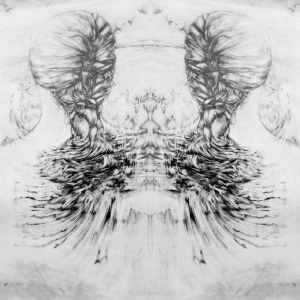 
|
|
|
May 2019
ARTIST IN RESIDENCE - SARA FRANKEL (USA) In my work, I construct ambiguous narratives inclined toward the dark and foreboding. Sometimes, they describe an interior frame of mind or mood and other times I consciously strive for a larger, more global perspective and commentary. Either way, my subjects function as personifications of specific and generalised anxieties about the contemporary world. Drawing offers an immediacy and materiality intrinsic to their meaning.
With dark layers of charcoal, ink or watercolours, frenetic marks and bits of colour, I begin with images of familiar places--my backyard, local parks and woods, for backdrops, focusing particularly on the drama and mystery of the night. Through numerous starts and revisions, I establish and arrange the mise-en-scene and populate it with characters. The protagonists are oftentimes women and adolescents, whose images I derive from childhood memories, composites of family photos and random scenes of actors from vintage, noir and sci-fi films photographed off my TV screen. They are frozen in ambiguous gestures, self-absorbed, opaque and melancholy, seemingly unaware of dangers lurking in night time woods. These scenes are my attempt to pull the past forward and morph it into an in-between place - real and yet dreamlike, futuristic and retrograde, lived and fabricated - where the utopian promise of suburbia and America have now gone to seed to become a creepy, unforgiving and overgrown wilderness. The women and children are left to fend for themselves. Sara Frankel
|
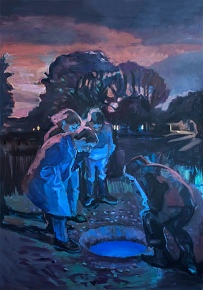 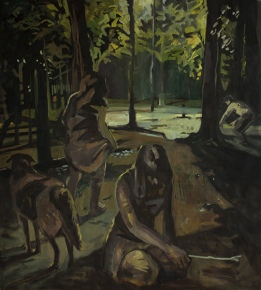
|
|
|
April 2019
ARTIST IN RESIDENCE -JULIANNE ALLCORN (AUS) Drawing Research Residency 'THE INVISIBLE REALM OF POSSIBILITY'
The project will focus upon notions of intention and the physical act of drawing as it arrives as a vectorial force on a material surface. One could say, an infrastructure from where other possibilities collide, from common habitual behaviours toward the realm of the unknown.
This residency programme is in partnership with l’AiR ARTS and FIAP, PARIS Julianne Allcorn (Australia) Drawing from real life, I make very detailed, fine and focused studies of the insects, birds, flora and fauna; these are so important to the work as they are hidden and placed within the artwork to bring alive the conversations of the bush. I am interested in the chance to research drawing,and extend my practice, both working alone and with other artists in a specific creative space. The opportunity to explore the surrounds and history, the chance to visit art galleries and to immerse myself in not only my art but to be part of exploring art with others who work in different media and from different backgrounds is also valuable to me.
This experience will enable me as an artist and art teacher to bring to the studio and the classroom an invaluable energy and insight into the world of art and creating art.
|
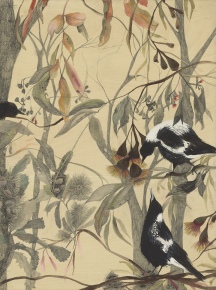 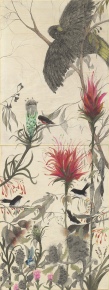
|
|
|
April 2019
ARTIST IN RESIDENCE - LIESJE VAN DEN BERK (NL) My drawings and performances are actions and interventions in different cultural environments to create social dialogue between the individual, the communal and the surroundings. Through the sensory experiences of material and environment, I react to physical space and participate with the audience. I explore the relationship between a body and the traces it leaves on a surface, such as paper or a floor. The dust of found objects and graphite pencils mark memories of a temporary presence, an expression of identity in a site-specific place. Drawing is the core of my work. Instead of pre-thought drawings that lead to controlled final results I create starting points and principles. I set up interactive situations and provide frameworks in which there is room for diversity and where I encourage non-verbal encounters between people with different cultural and social backgrounds.. Traces and memories gradually emerge as reflections of the act. At DRAWinternational I would like to deepen my research of the social dialogue of drawing, communicate with the citizens through immersive nonverbal actions of drawing. I create concepts, drawings, workshops and performances for intercultural dialogue and interaction with the audience.
I would like to expand and evolve my drawing and performance-based research practices and create new work and methodologies to create a social dialogue through drawing.
|
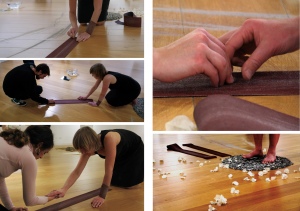 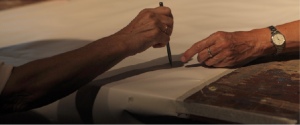 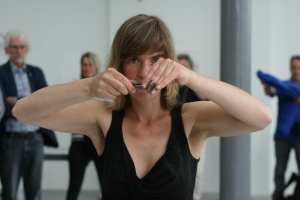
|
|
|
February/March/April 2019
ARTIST IN RESIDENCE - TERENCE WENNINK (FR) Drawing Research Residency 'THE INVISIBLE REALM OF POSSIBILITY'
The project will focus upon notions of intention and the physical act of drawing as it arrives as a vectorial force on a material surface. One could say, an infrastructure from where other possibilities collide, from common habitual behaviours toward the realm of the unknown. This residency programme is in partnership with l’AiR ARTS and FIAP, PARIS Invited Artist - Terence Wennink "For a moment, I thought I saw something. In a fuzzy patch of the wall, or the uncertain contours of bark.
For a moment I was seized by the dazzling of this image. Which immediately retracted to the surface from which it had appeared. Leaving only a poorly drawn silhouette - like a footprint having come out of the bath.
This, outburst filled the whole space with a strange sensation. It was a daydream that my activity erased- unable to recover the accuracy of the evocation in the contours of the forms. Our lives are filled with these small outbursts; these false alerts. And the gushing falls away like a dream that could not be born ...
But sometimes the gushing becomes persistent not to say real. Like the rise of George Didi-Huberman's Phasme ... What was hidden from our eyes is suddenly revealed and overwhelms us. Upsetting the scenery that the second before we had taken for granted.
The artistic image or the image in general does not escape this. This persistent reverie intrudes into our reality and grabs us. And makes of this chaos that surrounds us and fills us, a singular meeting place.
From then on, our experience is increased by this new encounter. Especially since this intimacy resists our analysis for a time. The aim being to stretch to a maximum this moment.
Since once over, this thing will be named and arranged in our personal history.
And once named, it will lose the dazzle from which we had learnt so much.
Because before it was still connected to infinite possibilities, and behind this form could be perceived an infinity of others.
That's what I look for - this infinity of possibilities. Thereby, I would have both lost and found myself in these distant entrenched forms.
My mind contemplating a world with new eyes, an infinite and open space, finally stripped of the barriers that withdrew it. "
|
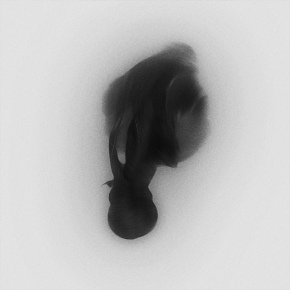 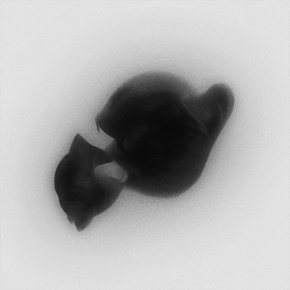
|
|
|
February/March/April 2019
ARTIST IN RESIDENCE - KHUSHBU PATEL (IN) Drawing Research Residency 'THE INVISIBLE REALM OF POSSIBILITY'
The project will focus upon notions of intention and the physical act of drawing as it arrives as a vectorial force on a material surface. One could say, an infrastructure from where other possibilities collide, from common habitual behaviours toward the realm of the unknown.
This residency programme is in partnership with l’AiR ARTS and FIAP, PARIS
I am looking forward to expand into and develop the idea of ‘the body as a sculpture’, where I intend to respond to the various surrounding sites of the residency, by indulging my body as a material to add on, intervene or even to disintegrate it. My work relies on the preponderance of a harmony between technique and expression, my technique at once comes across as meticulous, rooted in its conceptual framework, rather than its dependence on medium, and my expression may be considered contemporary, as I find myself well seated in that space, not by accident, but intention. I hope to be pushed against and beyond my tendencies as regards medium and concept, I believe I would also be able to find some honest, open and sincere critique of my work which will fulfil the gaps in my conceptual understanding and enable me to solidify or even get rid of my preconceptions, depending on what is needed.
I’m interested in understanding the kind of revulsion that society holds on to, towards certain individuals, who don’t fit into the realm of the collective social idea of beauty. My process is also about questioning the state and society regarding its indifference, and its attitude. My art practice is mainly about looking through the lens of abjection –talking about that which inherently disturbs conventional identity and cultural concepts. This includes notions of beauty, the impermanence of essence, yet the concern is also about questioning history. The way people have thus far defined beauty, existing societal stereotypes, objectification of bodies and political abjection.
|
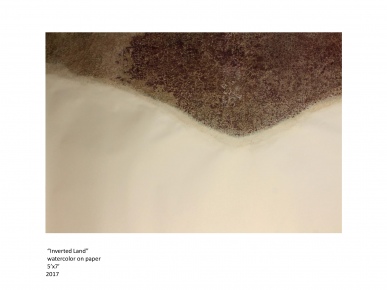 
|
|
|
February/March/April 2019
ARTIST IN RESIDENCE - ALKA DASS (SA) Drawing Research Residency 'THE INVISIBLE REALM OF POSSIBILITY'
The project will focus upon notions of intention and the physical act of drawing as it arrives as a vectorial force on a material surface. One could say, an infrastructure from where other possibilities collide, from common habitual behaviours toward the realm of the unknown.
This residency programme is in partnership with l’AiR ARTS and FIAP, PARIS
I like keeping my creative process organic. My material for creation is not usually one specific medium. It varies based on what moves me at the time and what best articulates what I intend to say. The physicality of the work and the language it speaks is of utter importance to me. There has to be that clear relationship between the two. This residency would help me be exposed to learning new techniques that I have not revealed before. My main focus would be also taking these new experiences and creating a cohesive body of work that has the ability to translate my concept into my artworks flawlessly. I definitely feel I am most inspired when I find new inspiration as well as Interacting with local artists. Learning from them. learning and understanding the culture and the people of that area. The program fits that description perfectly.
|
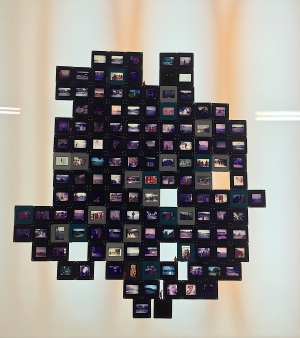 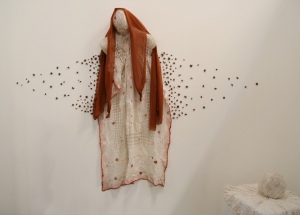
|
|
|
February/March/April 2019
ARTIST IN RESIDENCE - KATE ARTHUR (SA) Drawing Research Residency 'THE INVISIBLE REALM OF POSSIBILITY'
The project will focus upon notions of intention and the physical act of drawing as it arrives as a vectorial force on a material surface. One could say, an infrastructure from where other possibilities collide, from common habitual behaviours toward the realm of the unknown.
This residency programme is in partnership with l’AiR ARTS and FIAP, PARIS
Kate Arthur ( South Africa)
This year I have been focusing on drawing particularly, experimenting with its parameters and extending my personal repertoire in mark-making. I would love to have this dedicated space and opportunity to push my creative practice in new directions, looking at and experimenting with my subjects in new ways. I want to push production and experimentation in the studio as far as I can. The program sounds challenging and stimulating and I would be open to the feedback and insights provided by the various other artists and curators I would encounter.
I have been developing an ongoing series of what I call “Body Portraits”, which look at the body as a site of identity – in particular, the bodies of people who identify as queer. Portraiture involves a process of looking that allows me to focus on the physical details of a person’s face and body and to consider how those details might bring to light aspects of who they are and what they have have experienced. Acknowledging the body as a site of identity is particularly pertinent to queer people, whose bodies are often sites of ridicule, shame and persecution. I am interested in the questions and conversations that these body portraits might open up about the narratives of both individual and collective identity. The term ‘queer’ encompasses elements of sexuality and gender, but also holds a politics that acknowledges intersectional overlaps. In this work I consciously embrace and employ LGBTQ politics with the hope of presenting a challenge to normative understandings of gender, sex and sexuality. I intend to keep building on this series of portraits as a means of honouring, celebrating and making visible these bodies and individuals to whom they belong.
www.katearthur.com
|
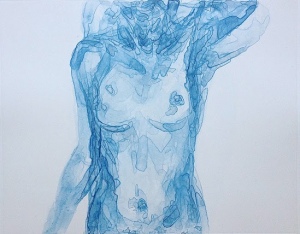 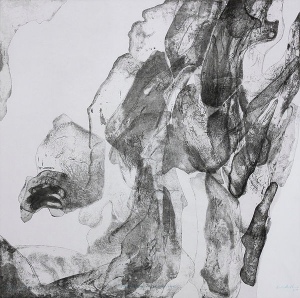
|
|
|
November/ December 2018
ARTIST IN RESIDENCE - MARIAM STEPHAN (USA) My work explores a space of physical and psychological upheaval. I paint constructed landscapes that piece together scenes of conflict, abandonment and disarray. Split-level scenes from little lifeboats cracked in half, fractured piers, scaffolding, to huddled shapes trying to escape or hide. I am questioning my own pervasive feeling of helplessness. Using boat shapes is an immediate connection to a slow, archaic, and maybe timeless means of transport. My painted worlds explore uncertainty and hardship, using water as a way for me to destabilize the ground and suggest a constant state of fluctuation. My paintings and drawings explore the enormity and power of external forces in contrast to forces small and fragile.
In preparation for two exhibitions in 2019, my intention is to carve out a quiet, focused, and creatively energised period of studio time. I have two bodies of work I plan to continue; a series of small ink drawings that use Goya’s, 'Disasters of War ' as a model of bearing witness using image and text; and a larger series of oil paint drawings on paper that are more physically immersive landscapes that continue to explore themes of displacement and disorientation in an attempt to link ecological and psychological upheaval. www.mariamstephan.com
|
 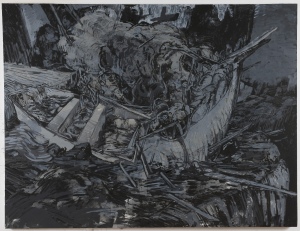 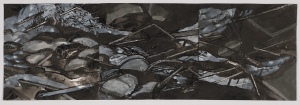
|
|
|
November 2018
ARTIST IN RESIDENCE - LYNN IMPERATORE (UK/USA) I always have had an effortless facility for drawing and—from that long engagement—come to understand that my practice is driven by the 'fact' or 'mystery' of drawing—as an embodied exercise of perception, as revelation of imagination—rather than by interest in cultivating some identity as 'artist'. From such understanding emerged a hybrid practice-as-research approach, where drawing is framed as an account of vision—divulged from purposeful digression away from expectations of sight, filtered through imagination, and composed from subtle traces of perceptual input. Drawing thus fixes and reveals transient qualities of perception, over and above any nominal subject-matter immediately apparent on its surface. For me, a drawing's success lay not in its faithful reproduction of external reality, but instead with how well it chronicles an individual perceptual journey. Even when seemingly a product of direct observation, a drawing stands as a translation of the interiority of imagination into manifest, externalised record. My practice-led PhD, "Out of the Corner of the Eye/the 'I': Drawing as Disposition of Perception" evaluated drawing as adaptation of perception, situating drawing as distinct mode of cognition. Here knowledge is disclosed through image alone, as a cognition of a different calibre than language-based ideation. After my PhD, I continued to follow the threads of that scholarly project through writing, teaching, and other forms of research activity— but now arrive at a juncture where the language of the academic constrains the curiosity of making, the wonder of drawing, my access to vivid discovery that arises only from immersion within the processes of practice. There is a lingering query that arose from research, which has to do with considering how and why (western) traditions of drawing—as acquired expressive skill—coalesce around a specific set of rules for looking; i.e., contour, negative/positive, perspective, and so on. These conventions instruct us to reposition our application/reception of vision, and such repositioning allows for some ‘honest’ representation to be discerned and transcribed. Yet these sensory reconfigurations also afford an expanded embrace of what can be deemed 'observable'. It seems likely that the transcriptional traditions for drawing evolved from perceptual promptings that appear along other subtle pathways within vision — from when someone took note of altering moments of looking that deviated from our habitual projects/expectations of observation. As there is always more available to possible perception than can be derived from each instance of sight, then might there be additional and/or alternative 'rules' to be discerned through/for drawing practice? It is this notion, these expanded and variable sensibilities/sensory data, that I wish to interrogate. What additional aspects and avenues of perception might become discerned/revealed within both the process and the enduring artefact of drawing? If one breaks open the 'conventions' of drawing—what else may emerge into 'the visible'?
|
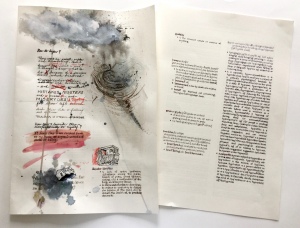 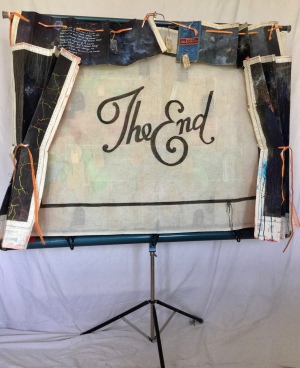 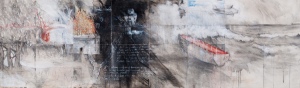
|
|
|
October/November/December 2018
ARTIST IN RESIDENCE - DAVID McSWEENEY (IE/UK) I am an artist whose subject matter is drawn from travel experiences. What initially began as a means of escape and a reflection upon the passage of time has lead to an exploration of one’s own fragile existence within the natural world. Inspiration is triggered by an emotional response, be it an incidental landscape, natures role as a sculptor, or chance discovery. This has resulted in a body of work represented by drawing, printmaking and painting.
Drawing has always played an key role in my creative process. Initially I develop ideas on paper through a series of sketches and drawings. I allow texture, layer making, expressive and gestural marks to play an integral role. Printmaking as a medium has also taught me to embrace chance elements that occur during the process. The importance of drawing and mark making have therefore become increasingly important as my practice has evolved. I welcome the prospect of exploring further drawing methodologies during my DRAWinternational residency.
Having travelled extensively over the last two years with a matured mind set- this enquiry has continued as I have become more politically, socially and environmentally aware. Asia became my main source of inspiration, I was fascinated by it’s historical, mythological and spiritual past and in particular after visiting temples and ruins in both Nepal and Cambodia. Research lead me to the Romanticism movement in the context of ancient monuments as the only human achievement that could transcend the destructive process of time. These crumbling architectural structures lost to the jungle and comparable to turbulent times we live in or serving as a metaphor for the global issues that preoccupy and concern me. A two month period in Berlin during the summer lead to further research about the ultra Romanticism movement that has emerged in Germany in recent years - this is the project I wish to pursue during my stay.
My main objective is to develop a more academic approach to my practice. I feel I will benefit enormously from academic support and regular discussion of work at the centre. My intention is to produce a body of work which I can possibly exhibit but more importantly advance on a more academic trajectory in both my research approach and in the execution of new work. David McSweeney
|
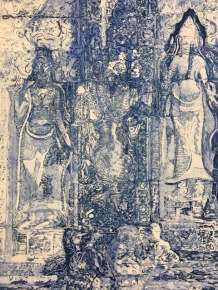 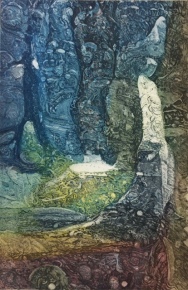 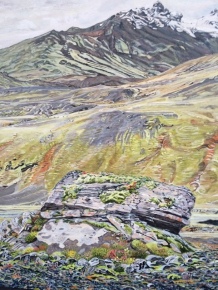 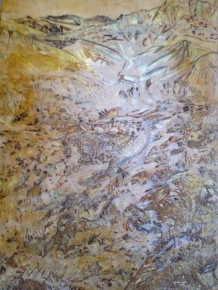
|
|
|
October 2018
ARTIST IN RESIDENCE - MARY JO MANN (USA) Though I call myself a “painter” and up until two or three years ago worked exclusively with oil on canvas, drawing is the foundation for my work. During a residency in Italy, I abandoned oil paints and canvas, and began experimenting with fluid water based paints. This process of playing with water, gravity, and the accidental mark led me down a new path.
|
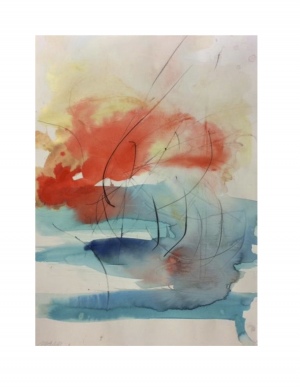
|
|
|
October 2018
ARTIST IN RESIDENCE - HEATHER McGEACHY (USA) I play with the ironic, the sublime, the sad and the secret. My work is generally representational and most often grounded in natural landscapes. Trees are a common theme. I use the landscape imagery to tell my tales and use titles to nudge the viewer along with the story. This has been me. The artist I describe to myself and others. Quiet, thoughtful, silently amused and meditative.
But lately, I have felt a tug…no a pounding rush of something louder, stronger, angrier. Quiet reflection and subtle nuance are giving way to shouting, screaming expressive lines followed by punched in blackest of black charcoal. The rough scrapping sounds, the powdery dust and smell of burnt wood – it’s intoxicating – makes me drunk, awake, a seer of visions, a prophet, an instigator….the other side of my own quiet coin. I’m becoming my own dark twin.
Where I’ve always used charcoal in my work, lovingly formed with my own hands by burning pieces and parts of the trees I meet….I’ve now been thinking of charcoal as burned, raging fires that engulf, destroy and char. Maybe to match the wildfires that ravage the land around me here in Oregon, maybe to match the political unrest and tension that surround my digital world. My drawings include more figurative suggestions; both beast and man. They are forced together into a new being, rougher, unhappy with itself as its never truly of nature or man any longer. Werewolves of all shapes and ancestries. Heather McGeachy
|
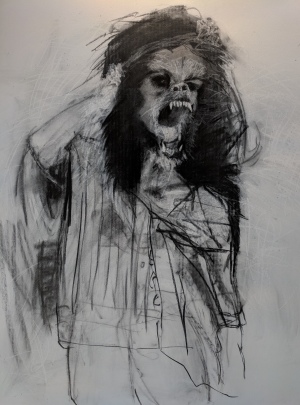
|
|
|
September 2018
ARTIST IN RESIDENCE - MATT COLLIER (UK)
Within the immense variety in this line of thinking, it gives birth to a personal language I believe drawing supports. For example, spatially the momentum of creating a dynamic proposal informs my use of composition- the space and negative spaces around a specimen illustration, the places the drawing exits or enters a rectangular ground, how to break-out or disrupt what appears a controlled illustration. This naturally continues toward the variety of mark making, line making, accident and control within a chosen list of materials.
An interesting feature about the art of science is its illustrative authority, whereby a seemingly objective scientific ‘truth’ is attempted to be established. This has developed its clean, crisp and informational methodology of representation a strategy I use in order to create a ‘trust’ in the viewer. It seeks to be factual, in a sense that is what religious art sought out to do - to be a convincing vision of something we believe to be true. In this sense this proposes potentialities and possibilities concerning our ideas on life. Conceptually speaking, at times these are monstrous combinations (suggested first through the manipulations of modern science) worked through accident, chaos in contrast to a clean presentation.
Matt Collier
www.mattcollier.com
|
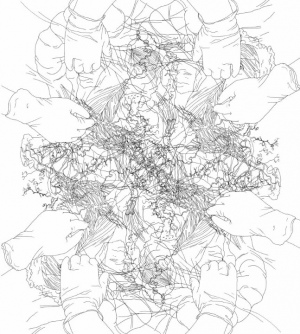 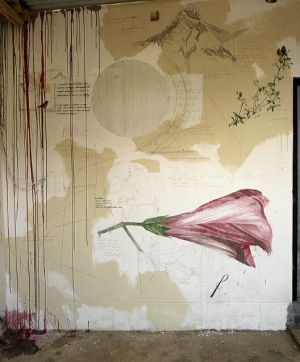 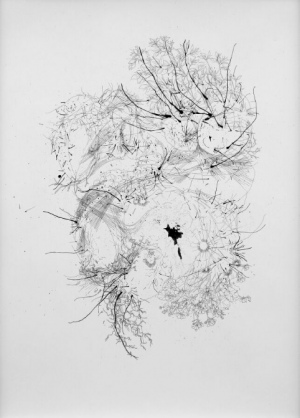
|
|
|
August / September 2018
ARTIST IN RESIDENCE - ARMANDO CHANT (AUS) I would like to explore two aspects to my creative practice while on the AIR at DRAWinternational which would be drawn responses and re-imaginings to existing works, and push the way in which the drawn act and its visual residues is understood as being an integral part of a inter disciplinary creative practice based on material and surface transformation.
Firstly, creating gestural drawn interpretations of existing three-dimensional imaged garment forms to further my understanding of the relationship between image and object and the drawn intersection between them.
Secondly making drawn transcriptions of bodily gestures from video works that have been created, thereby creating gestural topographic drawings of the digital trace.
I feel that both of these approaches would open up and answer key elements within not only my creative practice but also how the role of the drawn gesture can be explained within the practice based PhD I am undertaking.
Image/object
Within the work I have made so far I am currently understanding the garments that have been created as a form that transitions from drawn image on a two dimensional surface to three dimensional imaged sculptural form.
I would like to explore this change from two to three dimensions further by creating gestural drawn interpretations of these three dimensional forms, where they sit as sculptural objects within the plane of the paper surface, created through addition and erasure of gestural mark and line.
The aim would be for these drawn interpretations of sculptural forms not to be defined but open and fluid where the image sitting on the surface defines surface and shape and embodies action and energy in their form of making.
Gestural mapping
I have created various films that have explored the way in which the image interacts with the body and is interpreted as a form of drawing.
The body be it static where the image is projected onto it or in movement enacting a choreographed performance is understood as drawing across and on the surface of the screen and within the depth of the studio space.
I would like to develop this further by creating a series of drawn works on paper, which are investigating a visual mapping of the body’s movement that traverses across the screen and its intersected spaces, and as such creates a topographic drawn visualisation of body, image and movement.
|
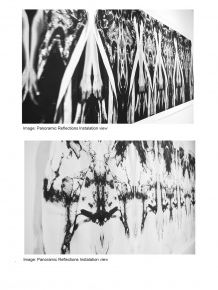 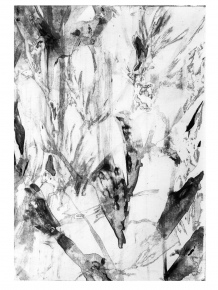 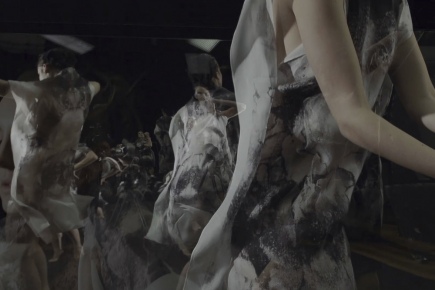
|
|
|
July / August 2018
ARTIST IN RESIDENCE - DEVIN LEE JOHNSON (USA) Currently, my artistic practice is a constant and rigorous reflection on the concept of “line”, and the human principles that have developed by this concept's “existence”. I create drawings, paintings, and sculptures that act as models for “line's” potential to affect space. I see "line" as a fundamental origin point of understanding and human development. Written language, numerical systems, pictorial representations, and so much more of our human foundations all stem from one basis of humanity, “line”. How one interprets these man-made marks begins to determine their relationship with reality. My goal is to reveal this through my work and raise deeper questions about how truthful our delineations of the world actually are. Why do we delineate what we exist in? Is it for understanding or control? Is it to reveal truth or cover it up? “Line" drastically alters our relationship with space, and each one of us relate to this foundational concept differently.
The reason I am interested in (this) residency program is because I have discovered, through traveling, that every culture, region, or city has a different relationship with the land they exist in. Every society's physical location develops a different relationship between how much their environment controls them and how much they control their environment. I want to study these differences and create new bodies of work that incorporate the differences and similarities I observe between the various regions. [...] Every landscape has a unique voice, and I want to listen to the land and create a new body of work that represents what it is I hear. Devin Lee Johnson devinleejohnson.com.
|
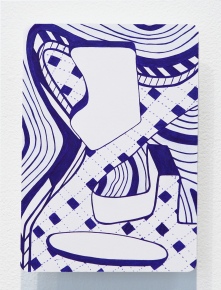 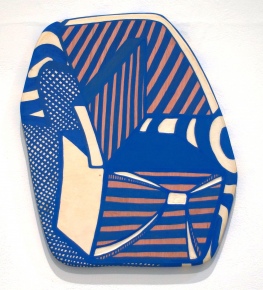
|
|
|
June 2018
ARTIST IN RESIDENCE - NIDHI AGARWAL (IN) Drawing, a continuous process to me:
In my 25 years of artistic practice, DRAWING has persistently played the most innate role obviously carving out my vocabulary. Starting from charcoal, conté, ink, rice paper, and oil bars to paint. I have currently moved to a broader perspective in drawing.
My recent innovation is works in fibre and fabric with thread, wool and conté to create large scale works; <i am creating these collages by means of drawing as a language with the application of embroidery, cut outs of fabric and charcoal lines. The continuous coexisting practices of drawing and painting demanded an amalgamation into a single surgical treatment. I don't need to practice them separately anymore.
My work is broadly earthy texturally rich and rough deliberately ignoring the elements of discipline and uniformity. This fascination of raw and nude expression compels a hallucinatory rendering of imagination.
My works are gradually evolving into the concept of CITY which in a broader connotation contain the elements of all forms of life, habitats, innovations, destruction, consumption and construction. Cities are chambers of human action that design both our eco and social systems and engineer the structure of our existence.
Nidhi Argawal
|
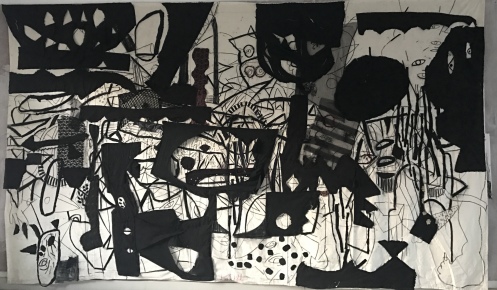
|
|
|
June 2018
ARTIST IN RESIDENCE - DAVID GRIESSEL (ZA) I am a professional freelance artist and illustrator based in Cape Town, South Africa. I have been quite successful, but to make a living from drawing I often have had to take on more commercial projects and commissions. One of the big reasons I want to do a drawing residency is to have the freedom to explore and develop new techniques and working practices, without having to spend too much time assessing the commercial viability of it.
My main method of work is drawing in ink, charcoal and graphite. I have also done performative work based around the concept of drawing as method of coping with reality. My aims with the residency is to have time to develop my book project into more experimental territories. I am experimenting with the use of new mediums and looser drawing approaches to my work and have also started to incorporate my sketchbooks more prominently in my artistic practise. Often the process and planning sketches of works are just (or even more) interesting than finished artworks or illustrations.
Two of the ‘Little Books of Mysteries’ consist mainly of scanned in version of my Moleskine drawings. I have also recently been exploring the territories of folk art and 'outsider art' as an antidote to the over conceptualised and often cynical/fashionable element to much of contemporary art.
Being in a new environment and culture will definitely be fecund ground for the growth of new ideas, stories and techniques in my work. Also having the time to focus solely on my own stories and character designs for a month long period will certainly help me to make advances with my book. I would also definitely want to learn more about local folklore and myths and incorporate this into my art. Intellectually I am interested in storytelling and narrative traditions and how they are presented in visual languages across different cultures. David Griessel www.davidgriessel.com
|
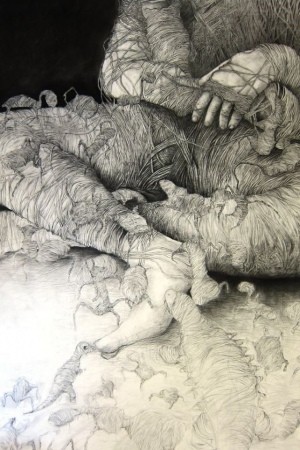 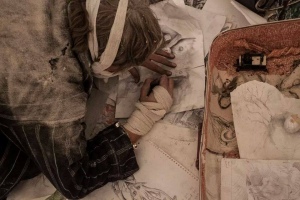
|
|
|
May 2018
ARTIST IN RESIDENCE - AMY DYNAN (AUS) My drawing practice merges photorealism with abstract sensibilities to explore the beauty and brevity of everyday life. My art practice rationale is to apply drawing to everyday subjects, symbols and still life objects that represent the full spectrum of life. I feel most alive when drawing. For me the repetitive, labour intensive and time-consuming method forces me to be still. I have recently completed a Master of Contemporary Art and Master of Fine Art at the University of Sydney, researching drawing as an embodies and meditative state of Being. This rigorous and immersive program turned my practice inside out, solidifying my commitment to my medium and dramatically evolving my subjectivity. This has become the platform for a whole new body of work using abstract/photo real aesthetics to engage a dialogue between materiality and symbolism.
My practice currently centres on the still life. Of particular enamour is Vanitas painting—a visual commentary of motifs that capture the fragility and fullness of being alive. Of fascination to me is the performative level to which the message is inverted through the symbolism. It is the contradiction of the vanitas that is the image’s exquisite semiotic structure, ensuring that that which is sacred is not merely pictured. Rather, the allure of the image delivers the sacred, by way of a dark or fallen world.
For the DRAWinternational residency I propose a rigorous daily immersion into the function and agency of the everyday still life using my everyday experience of residency life for subjectivity. I have always used objects of symbolism throughout my practice, even in portraiture. For me, objects or motifs possess a stronger capacity to point to who and what we are. I will look at different ways in which the medium of drawing within the still life can be utilised and innovated.
Amy Dynan
|
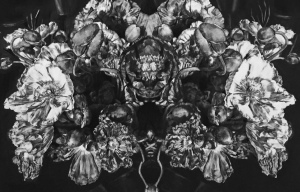 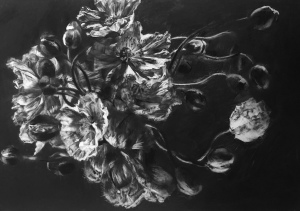
|
|
|
April / May 2018
ARTIST IN RESIDENCE - EDITA KADIRIC (RS) Drawing is my biggest love. Everything starts from it and everything that I have done after (paintings, video art, animation of handmade drawings and theatre) is just the extension of my drawingly thinking. To make this comprehensible I need to go back to my childhood, because my work always strives to create itself from an immense collection of memories related to the dynamic path of growing. In fact, the ritual of drawing had a very special place for me from my earliest years. And this is not about any type of drawing on a physical support as a usual infantile drawing on paper or on a slate. No, I used to constantly do it "on" and "in" the air. What does this actually mean? That today the motivation of my drawing practice has evolved from the initial point of wanting to explain this world to myself through images that I created with my finger in the space, to something greater than that, that is, to visualise them in light and space.
Edita Kadiric
|
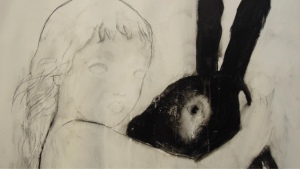 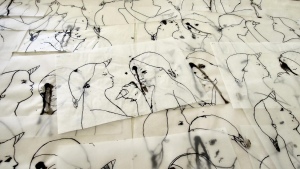 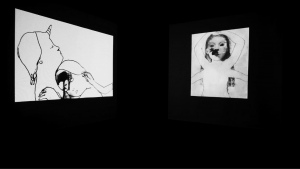
|
|
|
April 2018
ARTIST IN RESIDENCE - KATARINA BRAMER I find your profile and philosophy at DRAW International appealing. My intent of applying for an AIR is to further explore the consciousness of my artistic work in relation to space, movement, materiality and drawing. I often relate to my work as abstract sculpture or installation but my work is also an expanded field of drawing in relation to composition, rhythm, movement, materiality and space. I would surely benefit from a focused working time in an inspiring environment with professional support during the process. Katarina Bramer (SE)
|
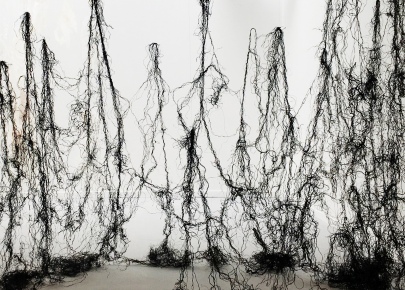
|
|
|
March 2018
ARTIST IN RESIDENCE - SIH CI FAN (TAIWAN) For me, to create is a mysterious and indescribable process. What is it exactly? I draw lines in order to better understand it.
I am interested in the status of perceptions during intuitive creation. When I studied at art school, I learnt many painting skills. However, I felt estranged from my works at the time. I could make works in an Expressionist style, but I did not have any particular kinds of emotions in my life, therefore there was a gap between me and the work.
During this residency, I would like to further develop this unconscious way of drawing. Based on previous experience, I would like make landscape sketches of Caylus. I will go around the town, use body perceptions to feel the atmosphere and sketch it. The images I sketch will be not only figurative expressions, but also unconscious appearances. It will be a challenge for me exploring how to combine figurative expressions and unconscious appearances in harmony on paper.
FAN SIH-CI www.sihcifan.com
|
|
|
|
March 2018
ARTIST IN RESIDENCE - JOHN LORD (UK) The challenge of engaging with the local culture would act as an amazing stimulus to create new work.
Currently I am working from elements of wallpaper design using water soluble pens, reproducing and distressing the image. This element of distortion from the original image has become something that includes an element of chance. Continuing to work in this manner during the residency would be something that I would like to pursue. I feel this residency would give me a fantastic opportunity to work and develop ideas with fellow Artists and the local community, I anticipate there could be an exciting crossover and exchange of ideas. Anticipating the creation of site specific pieces; I would like to achieve a body of work that represents a diary of my residency.
|
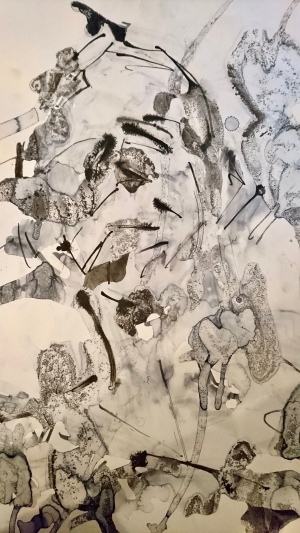
|
|
|
February 2018
ARTIST IN RESIDENCE - MILCA RONZONI (ARG) In my current artworks I try to analyse the relationship between humans and nature, and how can they create or destroy each other. In the last years, I’ve been investigating the effects of climate change over nature and human life.
These are:
Water gold, they come for the water Fungi
www.milcaronzoni.com.ar
|
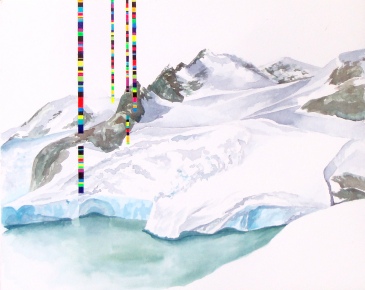 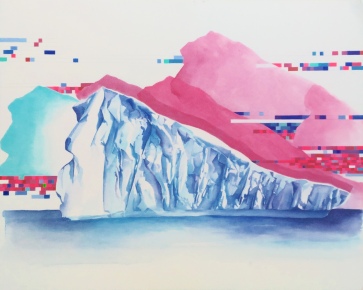
|
|
|
January/February 2018
ARTIST IN RESIDENCE - SARAH ELLIOTT (USA/FR) At DRAWinternational I am eager to engage intensively with developments in my work that I haven’t yet deeply explored. For many years I have enjoyed using observation as my starting point (whether it be of people, landscapes, objects etc.), although my practice has been to complete the works away from the initial subject matter. At different points in my life as an artist, though notably during the past few years, I have revisited the process of constructing works without direct reference to nature. This inevitably involves both my feelings and, even if indirectly, my physical surroundings. For this reason, the works incorporate a dynamic dialogue between inner and outer influences. These represent the beginnings of a personal language that I’m keen to develop. It is a matter of learning to listen to what the emerging drawings are telling me. While a broad range of elements has arisen, simple geometric forms and patterns, mixed with both subtle and bold illusions of space and movement have been repeatedly present in the works. I would like to deepen my understanding of what is emerging and consider how to best move forward with what I sense to be basic building blocks of visual expression. It is these that I feel speak to the similarities between people in the midst of the differences that so often obscure them. This could include touching upon how these works may relate to a wide range of artistic practices, whether they be traditional Aboriginal works, South East Asian textiles, Constructivist paintings or children’s drawings.
www.sarahelliottstudio.com
|
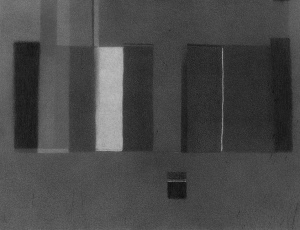 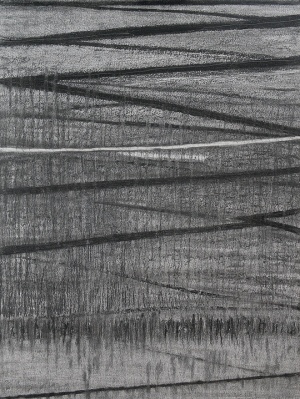
|
|
|
December 2017 / February 2018
ARTIST IN RESIDENCE - ROBBIE KARMEL (AUS) In my current PhD investigations I propose that mimetic practice is facilitated by the human being’s capacity for the analytical process of thinking and developing understanding through the embodied, enactive and intermodal process of re-presentation. I suggest that mimetic practice is the process of observation and representation as facilitated and shaped by the material conditions of embodied being. That is the process of accessing the world and its objects, including perceptions of the body as being of the world, through the intermodal array of senses, attending to perceptual experience, and re-presenting comprehensions of experience back unto the world through the embodied being’s capacity for reflective and considered enactive motility.
Over the course of the residency I will produce experimental works that engage with the construction of studio furniture and architectural spaces that facilitate and shape mimetic drawing processes. These arrangements will aim to invite participatory and collaborative engagement and serve as the ground for the production of a body of drawing work. The studio furniture constructions and resulting drawings will engage the symmetry of the body, intermodal processes of observation and expression, and consider the materials and form of the furniture as objects of observation. Robbie Karmel
|
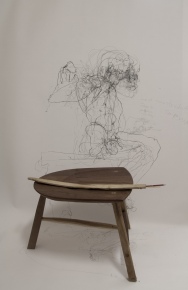 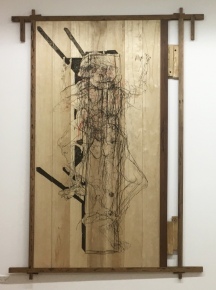
|
|
|
November 2017
ARTIST IN RESIDENCE - TAE EUN AHN (SOUTH KOREA) My works are about a matter of perception. It is deeply rooted upon my attempt to perceive the world and the others through the body. To me, body is considered not only as a bridge between the inner and the outer world but also as an open site to encounter the world. The mutual interactivity between the body and the world plays a significant role in a process of creating perception, forming unprecedented relationships. Emphasising intersubjective body, most of my art practices focus on body’s movement (gesture or action), accepting it as a core medium to work with.
Through my practices, I use a simple gesture that can be easily found in everyday life. However, rather than approaching it under the context of everyday, I de-contextualise daily condition by positioning the gesture in a shifted condition which I particularly provide. By doing so, the gesture can be separated from its original function and its conventional meanings and, therefore, allows itself to be released and perceived purely as-it- is. In removing any social, political, or cultural conditions from the gesture and repeating it meditatively, my work seeks to provide a platform to reconsider the meaning of a given gesture and its potential to perceive the world through interactions that are derived from it.
|
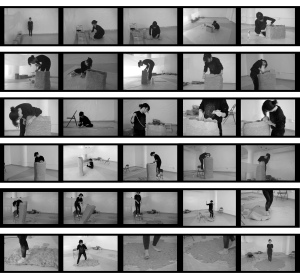 
|
|
|
October / November 2017
ARTIST IN RESIDENCE - AGNES JONES (UK) I am an artist blacksmith who “draws” in steel, using the steel bars to create two dimensional sketches in space. I use a material which is often used in to create structure instead to make linear, flowing drawings, leading to the viewer being surprised and excited by the result. I try to use one line to make the drawing flow, and to lead the viewers eye through the piece. Often, I create drawings of objects which can then be used as the object itself.
|
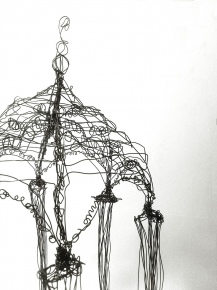 
|
|
|
September / October/ November 2017
ARTIST IN RESIDENCE - TOMIE SEO (JAPAN) Since March 2017, I have been staying in the North East of England to research refugees and immigrants. I have contacted and attended Drop-Ins at churches and charity organisations in the area and met with local refugees and asylees. I have conducted interviews with some of them and recorded our conversations with their agreement. Because I myself, as an immigrant, have lived in the U.S. and UK for my university education, I am interested in the issue of identity; life and location that are determined by politics, society and the nurturing surroundings of our own countries. Creating a contradiction between who you are and who you are seen to be. Since my work has been on social issues, I took a specific direction focusing on migration. This research is both for creating works and also educating myself to fully understand their and my own standpoint and issues. This research is to create drawings/paintings, sound and video works on the subject, using images and recorded sound from interviews with the refugees. During my residency at DRAWinternational I would like to focus on the production side of my practice, which is to create and visualise projects in drawing, painting and sculptural forms with interactive elements. I would like to experiment and create drawings of the refugees to see what form best suits the migration issue and the stories and backgrounds from the individual refugees. I hope to have the opportunity to meet refugees in the Tarn and Garonne, also. In addition, I would also like to explore creating a jigsaw puzzle structure, each of which has prints of pictures of refugees who I have met and spoken to, and to assemble these to make a layered-maze-kind of sculpture with electronic elements such as sensors, push buttons, LEDs and motors as an interactive and kinetic project. The 2D drawing and sculpture both have their own autonomy but these are a narrative within the same subject matter.
Tomie Seo
|
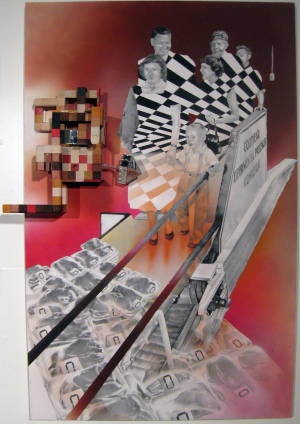
|
|
|
August/September 2017
ARTIST IN RESIDENCE - LEZLI RUBIN-KUNDA (CAN) Drawing is a central concern and means for me in my practice. Working in the fields of site - specific live action, performative drawing, installation, video, I have been concentrating on drawing in two different, sometimes related capacities.
The first, as a way to interact with local contexts and surfaces - incising, scratching into, rubbing over.
Secondly, I connect to the mark-making activity- investigating the state of flux, transience through drawing /erasing activity. (In earlier works, I worked on paper, now I am chiefly working directly on walls) Charcoal and eraser are my primary tools to explore these states. I am interested in drawing as pure action, connecting body and mind, nature and culture, material and spirit.
PERFORMANCE Live Actions, site-specific projects
Connection to place and site using body, materials, drawing, marking. Works include site-specific or gallery works, works performed live, or for camera only; action-based projects that incorporate installation, photography, video; short actions or durational work. In recent works, I have been concentrating on drawing and book-based site work.
www.lezlirubinkunda.com
|
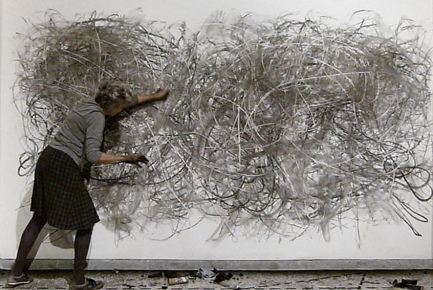
|
|
|
August/September 2017
ARTIST IN RESIDENCE - HELOISA POMFRET (BRA/USA) My work is inspired by images of the brain, its processes, chemistry and states of the mind. The philosophy of my work is about the energy, order and chaos that occurs during psychological or physical stress. Violence is often suggested as a theoretical support to the mark-making and constructs of my work. The surface is often an analogy to the body and memory, in which experience occurs and is transformed. There is also a parallel between architecture and the brain, where components counter-balance and support each other. In this regard, I use images of the physiology of the brain for inspiration; for its elements are aesthetically compelling to me and it is in the brain where impulses start. These visual elements are used as a starting point of abstraction for drawings/paintings, collages and ceramics. Within the drawing/painting body of work, I use scratching for mark-making with metal blades, as an analogy to fight, defense and the searching of memory. I also use stitches or sutures as an analogy for mending and healing. The collages of the installation pieces suggest the organs of the brain that produce the impulses of
|
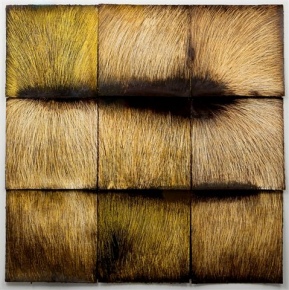 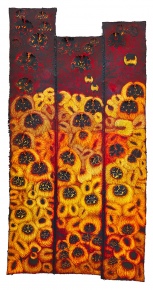
|
|
|
August 2017
ARTIST IN RESIDENCE - SALLY CLEARY (AUSTRALIA) Through my artwork, I explore the representation of nature and human ecology transposed through mixed-media sculpture, art installations and photography, combining hand made organic forms with natural and man-made found objects. I am interested in the relationship between objects, and the relationship that we, as human beings have, with the natural environment.
Drawing is a natural process in my work. I approach my work through making studies of collected and handmade objects through collage and the juxtaposition of the objects. These collages are then documented and become photographs. I am interested in the exploration of the digital image and projection for the purposes of exhibition, documentation and installation art.
I moved to Paris, from Australia, in 2015, and have recently returned to the medium of ceramics to create ceramic artworks from porcelain paper clay and have discovered new ways of making objects that reflect my interest in the natural and constructed environment. The inherent qualities of porcelain are not dissimilar to paper, and I use this similarity to emboss, draw and paint on the clay surface. As a collected body of work I am producing objects that become an installation - a forest or city of forms, which are also stand alone objects, and have the potential for image projection.
From the above premise of my artwork, I am open to possibilities of development and the creation of new work.
Sally Cleary
|
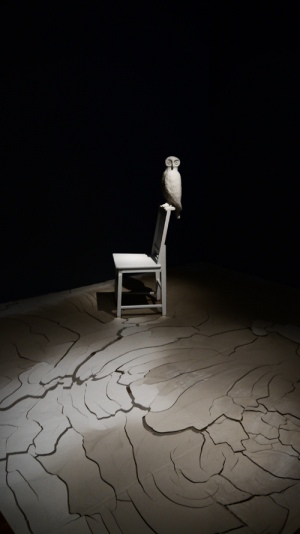 
|
|
|
August/September 2017
ARTIST IN RESIDENCE - KEVIN MORGAN JONES (AUS) My proposal aimed to be a drawing so I suppose this aims to be a writing. I’m interested in language I’m interested in structures I’m interested in meanings that arise from language and from structures. The contingencies of what why and how we know are slippery. The ground underneath understanding is not as solid or firm as our social agreement suggests. I enjoy moving about the things I know or the things I think I know in order to create new things about those things. It’s cerebral, but it aims to be beautiful. In Caylus I wish to learn French, to speak French, and to try and better understand French thought. Many of my favourite thinkers are French and i would like to get to know them in their language, not just mine. Kevin Morgan Jones
|
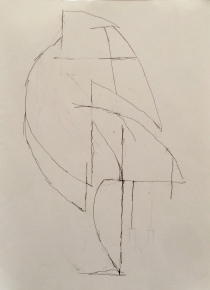 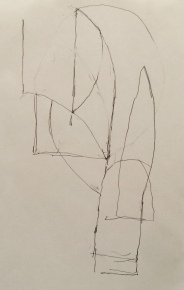
|
|
|
July 2017
ARTIST IN RESIDENCE - STEFAN BAKMAND (DK) Bybliomoebia is the working title for my artistic research on the relationship between ornaments, fractals, religious iconography and sacred geometry, through writing, drawing, printing, bookmaking, happenings/performances, botany and chemistry. This artistic research considers at the microscopic aspects of language, and what goes beyond it. It is an ongoing project, building an archive of images, texts and objects as a foundation for conducting artworks that explore the microscopic aspects of language and being, with research in anthropology, shamanism, art brut, psychology, semiotics, biology and much more. The smallest structures that resemble the largest. Language as an eco-system of organisms/beings. For this residency, focusing on drawing, I will investigate natures way of pattern-making, its production of lines and dots, its textures and shapes. Natures way of ornamentation, and the drawing would be expanded and investigated toward land-art performances and gestures in nature, documented with photography and video-drawing with my body, but still involving the surface and the paper. These performances would then evolve in the studio into other possible works, installations, sound-pieces, sculptures, books and drawings. Stefan Bakmand
|
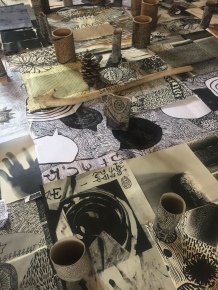 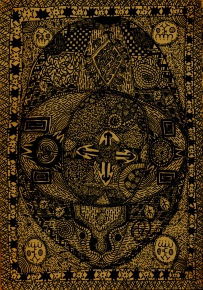
|
|
|
July 2017
ARTIST IN RESIDENCE - MARIANNE McCRANEY (USA) I am guided by a fascination between the marks humans make on our world and those left by nature. Materials, rusted and abandoned, overgrown and decayed, mimic our cycle of life and our deepest memories. My own feelings of displacement and longing will be examined in relation to the surrounding environment. Places hold the marks of nature and of people who have come and gone. The symbols that sometimes appear in my work: nests, birds, industrial materials such as a chain link fence, decaying or rusted materials, and handwritten notes, are an indication of the history and mapping of the layers that exist simultaneously in our minds, and in the land we inhabit. I will look to this new environment, with a rich history of scars, both natural and human, to bring many images and symbols to the surface, and into the process of my drawing, painting, and mark making. My hope is to map the emotional, spiritual and physical aspects of the site with abstract and recognizable symbols. I would relish the opportunity to delve deeper into these ideas in a way that in not possible during my busy working and teaching life.
|
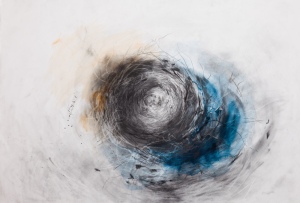 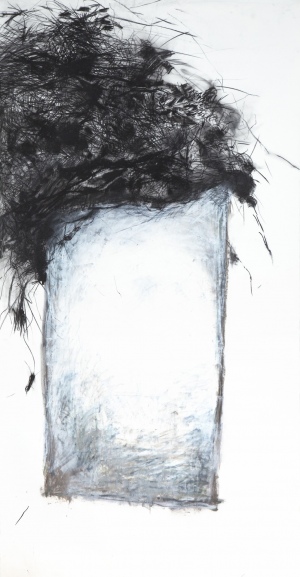
|
|
|
July 2017
ARTIST IN RESIDENCE - LUCIE CHAN (CAN) I would like to occupy a designated space within DRAWinternational in order to create a series of frottage-drawings in response to the Studio's environment within the landscape around Caylus, Tarn-et-Garonne. The frottage drawing-process reflects my interest in the past as it resonates in the present, though it may not be readily visible, so becoming conceptually lost. Touching and rubbing surfaces which are not a part of my personal history, is for me a meditative and contemplative act of imagining what came before me without my having been present. I then try to find ways of incorporating these historical traces into my art-practice, as opposed to taking away literal versions of things or removing actual things from their 'home'. I find I need to undertake this work outside my own country, in a completely new environment where the possibilities and experience of discovery are greater and deeper than those back home. My relating empathically to strangers and new places is essential to the growth of this work. Its subsequent public presentation involves elements of the written word, sound and performance, as well as animations of photographs and drawings. Lucie Chan
|
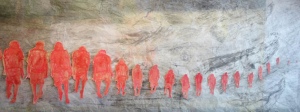 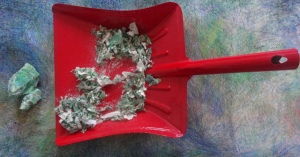
|
|
|
June 2017
ARTIST IN RESIDENCE - HANA SHOUP (USA) My art is formed by my passion for human forms, women's biographies, and art history. I combine formal abstraction and classical figuration with physical gestures, expressionist color, and ambiguous anatomy. I am fascinated by the way that art can capture, glorify, and immortalize a person. Great portraits of the past provide visual inspiration and a starting point for my own artwork. I absorb these influences and synthesize them with my own memories and experiences in order to create psychological self-portraits. I insert my facial features as a self-portrait into these immortalized images. The AiR residency will further my art practice by giving me the space and resources to expand the scale of my work. I want to combine the art historical and fashion elements of my paintings with the gestural self-expression of the drawing process. I will create an experience where the eye will travel through a history of painting, portraits, and fashion, while my process will ensure the deconstruction and reconstruction of an image multiple times. History, traveling and my own experiences are the portals of my creative exploration. The unique environment of Caylus is historically significant and an inspiring setting. Hana Shoup
|
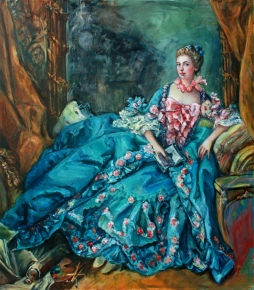 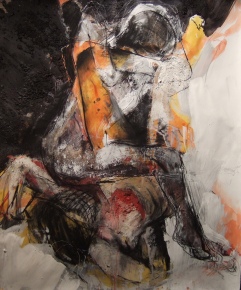
|
|
|
May 2017
ARTIST IN RESIDENCE - DIANE PERNDT (AUS) I would like to continue a theme of exploration that started some 30 years ago with my arrival in Australia from the very different northern hemisphere country of Canada. Through my drawing practice I have followed the footsteps of the early naturalists and artists, fascinated by their voyage of discovery documenting the extraordinary flora and fauna, in search of an Arcadian Antipodes.
Widely travelled, I have always been interested in nature and/or objects that embody and reverberate my experience of place. Recent forays have explored esoteric Buddhism from ancient Japan, resulting in large charcoal drawings of temple gongs, incense cauldrons and dragons. A current body of work of fine pencil drawings depicts a personal reflection of inheritance and responsibility through objects bequeathed to me from my mother.
The misericords found in the churches of medieval England have been a source of fascination. I have seen photographs of the gargoyles of Caylus, some gazing down from the facades of old buildings, others embedded in the town's ramparts and an impressive display seated on plinths with their heads stretched upwards, as if howling to the moon. I could see these creatures inspiring a series of large gestural charcoal drawings as a starting point. I would like the opportunity to extend my drawing practice, experiment and challenge myself through a residency with Draw International within the surrounds of this 12th century village.
|
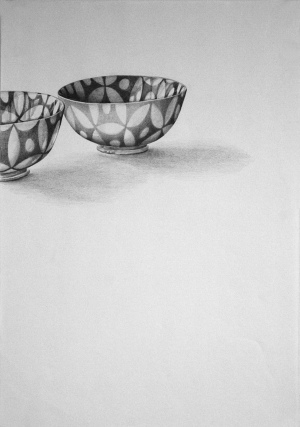 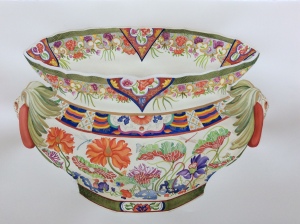
|
|
|
April 2017
ARTISTS IN RESIDENCE - CHRISTINA HARRISON AND KARL RICHARDSON (AUS) An Australian husband and wife team who work together researching, creating and presenting exhibitions around Australia and beyond.
Christina Harrison
One of my major loves is to draw. I love to explore what I am thinking and reacting to by simply drawing. It is my way of processing the world around me - from this basis, other art works emerge. My research methods in education have been ethnographic, which I have brought into research in art.
Dr Karl Richardson
My interest in Art is conceptual. I am interested in exploring areas such as mathematics, social justice, education and the environment. I have a medical background and have been a clinician for many years, working with a wide diversity patients – as a family general practitioner, anaesthetist, intensivist, pain specialist, drug addiction, flying doctor – from inner city to rural towns to remote communities in Australia – as well as working overseas in England and the Netherlands – and as a medical officer in the Australian Army Medical Corps. I like to really question what I read and observe – especially working across new boundaries. I have done much of the research for the past two touring exhibitions: Christina and I spend many hours discussing how to amalgamate the concepts. I mainly work on the games section of the exhibition as it requires precision and accuracy, linking the art to scientific areas (eg genetics, when models of the DNA double helix provide a visual perception, enhanced by touching and discussion. Like Christina, I like to have visitors interact, question, learn and develop their own art.
|
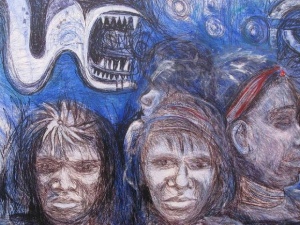 
|
|
|
April 2017
ARTIST IN RESIDENCE - BADRA AJI (AUS) I think of my works, from my photographs, videos, writings, prints and my drawings, as direct products of life itself. They are objects produced from my experiences and personal encounters, brought into the exhibiting space as a series of curated and selected life fragments. There are no hierarchies in the mediums I choose. Materiality and process is chosen for the distinct qualities each offers. References to foreign cinema can be found in my work. Subtitles in particular, enable me to place the viewers as outsiders. Similarly, by using drawings and prints as a cryptic visual language, the viewers become onlookers to a series of metaphoric poetry. The subjects of my work come from personal experiences. There’s a direct relationship between my personal life and my art making. I think my life and my personal experiences create the work, whilst the making of the work affects life itself. I’m also profoundly influenced by my early experiences as a foreigner immigrating to Australia. The memories of being an observing newcomer made me constantly feel like I was looking from the outside. By making the viewers the outsiders, I attempt to reverse the order of things, compelling empathy toward the experience of others. I believe by undertaking a one month long residency program at DRAWInternational, Caylus I will get the opportunity to create a body of work based on my experiences with the unfamiliar surroundings and the strangers I encounter. The residency will provide me with the opportunity to observe the unknown and to investigate the idea of the ‘normal’ and ‘odd’. I would also like to further explore the idea of drawing as a problem solving process. Whilst art making is made parallel to my personal life, drawing then becomes a means of resolving any personal enquiry; a means of resolving the unresolved.
|
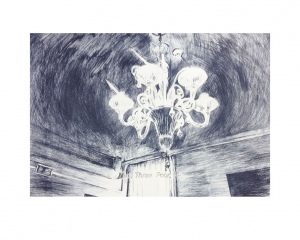 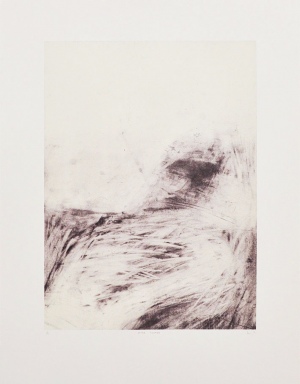
|
|
|
January/February 2017
ARTIST IN RESIDENCE - TATJANA BUISSON (ZA) I'm an illustrator with a history in advertising, graphic design and entrepreneurship. The rediscovery of my late grandfather’s antique dipping pen in 2012 inspired me to get illustrating.
Hi John
Thank you for taking your time to reply with such personalised, thoughtful attention to my email. You make a great point. I think the fact that I have freed all this time to create (for the first time) makes me want to jam it all in like a child at a Christmas buffet.
I spent a week in Paris at the end of October and after visiting a spectrum of museums in search of "where do I begin". My answer, while looking at the Picasso / Giacometti exhibition was "drawing". I have illustrated works commercially using ink and paper but haven't ever really explored the medium. Perhaps it would make more sense for me to come and explore drawing with a specific focus on drawing in ink. I have been using an ink brush and am so excited about the range it offers but haven't even scratched the surface. The idea of loose charcoal on un-precious paper also feels like a good place to start.
Dear Tatjana,
I think this deeper focus will prove useful and lead you to further ideas and processes. It does not prevent you using other media i.e. clay but to the service of the drawing and I can take you there with directed studies with a mind to 3D and 4D.
Drawing tools can also be a direction, some which you may wish to make dealing with dryness and liquidity. I have a workshop where we can make drawing implements to suit the individual concepts.
|
|
|
|
December 2016
ARTIST IN RESIDENCE - JUDI PETTITE (USA)
PLANT AN IDEA - RESIDENCY Art making has always been a way for me to make sense of the world. In many ways I drew as a way of being at home in myself, in ways that I was not allowed to while growing up.
Dialog of any meaningful sort was not valued nor encouraged and my ability to articulate thoughts and feeling felt stilted and stifled.
I suppose this series in the form of a half drawn half written journal/sketchbook is the reclamation of suppressed experiences and denied emotions of a kind that seek integration with a balanced (and mostly cheerful adult) self.
This alchemical process of ‘Conjunctio’, Carl Jung’s joining together is taking shape and seeks the light of day; this is the story I hope to explore this winter at DRAWinternational.
I like the idea of allocating time for drawing, apart from painting apart from lecturing and away from my native habitat. I relish any opportunity to share ideas with other visiting artists and engage in dialog about the ideas being brought to the surface.
Mind, memory and body are reference fields that float back and forth between my drawings some with accompanying text incorporated into the drawings, others just pictures. I start with small intimate portals, and seek to widen and deepen on a scale that moves from the preciousness of a diary entry to an expanse that feels risky, scary, vulnerable; one that the viewer can step into an inhabit in another way.
Judi Pettite
|
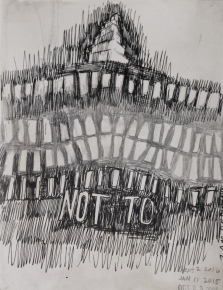 
|
|
|
November 2016
ARTIST IN RESIDENCE - ALICIA DUPONT LIEVENS (FR) My work mainly comes from the technique of free drawing or free painting because it allows a kind of self-investigation of my imaginary and it is also a way for me to keep alive conflicts amongst myself. However, since a year, I started to focus on collage. In my project, I am always looking for new means of expression because my work reflects on the act of creation in itself. Therefore, this process also questions about the place of the artist in the society. Collage is for me a way to experiment with differents concept in Art. For exemple, this medium is constantly in connection with the idea of appropriation or recontextualisation. However, another element came to me through my use of collage, which is Sacralisation.
In fact, the elements that I cut and paste in my work are seen as something that have a sacred utility. This idea creates a lot of paradox in my drawing because collage is a very naive and ‘childish’ medium. Nevertheless, I use it in a metaphysical and sacred way.
Alicia Dupont Lievens I would like to serve my time in this residency to think about the signification of Appropriation in our post- internet world and experiment on the notion of the sacred in my work. In addition, I could test different ways of putting my collage in a space. This process is a very challenging thing for me and yet the most important because my work is open to many interpretations for the viewer. Through the idea of the sacred in my collage, I would like to play on the idea of making triptychs.
|
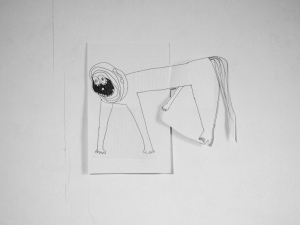
|
|
|
October/November 2016
ARTIST IN RESIDENCE - DORIS FEND (AUT) 'Drawing is to me an interior dialogue with the making as I am making it' Richard Serra This sentence – and also the exhibition of Richard Serras huge drawings at the Kunsthaus Bregenz some years ago – led me to the series of black spatial drawings on heavy hand made printing paper. The initial question was what may happen when I 'close' the surface of the sheet and only leave some white lines as a subject to be seen. It created shiny, almost homogenous surfaces where the traces of the making are only noticeable with a closer look. That made it impossible for me to present them as framed pictures. So I developed the longterm series of the so called 'wall hangings'. Sheets with riveted holes and connecting polyester ropes combine several pieces for variable combinations. This allows smaller artworks to be expanded towards space gaining ensembles. The artwork might be very exposed but at the same time experienced in a three-dimensional way. Apart from the blacks I have created a kind of vocabulary for my minimalist art work. Different pencil grades allow me to create subtle qualities of surface and texture. There is no thinking of geometry or construction that leads me to my compositions but intuition and 'sensed' dimensions. For my residency I would like to extend my thinking and making of the 'wall hanging series' in order to enlarge my spectrum. Maybe the fresh and new environment can even lead me to a new direction. I would also be pleased to exchange thoughts and interests with other drawing artists. Doris Fend www.dorisfend.at
|
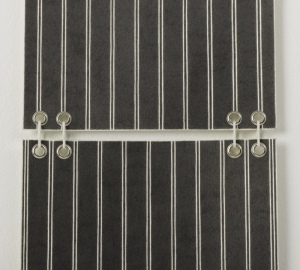 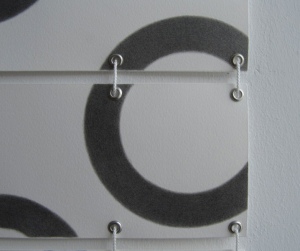
|
|
|
October 2016
ARTIST IN RESIDENCE - ANDREA FERRIGNO (USA) My work has evolved from studies completed some fifteen years ago of Monet’s Rouen Cathedral paintings. I was initially drawn to the veil-like nature of the images. This investigation sparked my interest into the geometry that this cathedral and many others have been constructed around. I became fascinated by the geometric underpinnings that informed the genesis of the architectural form, its relationship to the body and the philosophical interpretations of this ‘Sacred Geometry.’ This interest has evolved over the years into studies of non-Euclidean geometry and deeper into systems of science, such as physics and evolutionary developmental biology. These systems have become the generative force that drives my work. I see my drawings as phenomenological interrogations of space and form. In dialogue with Plato’s ideas of mimicry in art, I use the motion and gesture of my hand and body to mimic the movement of gliding particles. This is a frequent first stage of my process; from there I map the generated information, extracting structure, with concepts in mind of growth and form. I am interested in a complex topological space that is spontaneous and emergent, hinging on principles rooted in mathematical and scientific thought, yet allowing subjective decision making in. My early work as mentioned grew out of the studies of Monet’s paintings of Rouen Cathedral but I have never been to the physical site. I am curious to start a second phase of work informed by this place, full circle, but this time in the flesh. From these studies I plan to make several large-scale drawings investigating the relationship of the animated body to the architectural information. Andrea Ferrigno www.andreaferrigno.com
|
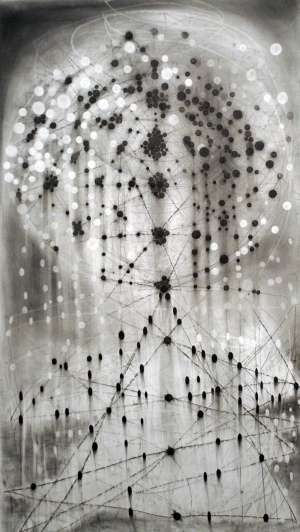
|
|
|
October/November 2016
ARTIST IN RESIDENCE - ALZBETA WOLFOVA (Cz) PLANT AN IDEA - RESIDENCY Works that will contribute to the development of a community garden 'les jardis de paradis' Drawing and design may feature as part of the work but so too can painting, sculpture, print, performance, installation, music and poetry as a site specific act. I had gained a clearer sense of direction and purpose while working for four months on my bachelor thesis which involved making a series of lithography prints. The works are depicting a human drama in the form of animals. I was drawing an inspiration from the natural form but I searched for the expression of something transcendent. I researched a lot of work of C. G. Jung so I found courage to explore my own personal mythology within these images. I wondered how the symbols I considered very personal can perhaps speak to the collective? I wanted the form to be a symbol of a specific state of mind. I came to consider drawing a spiritual and contemplative practice. The time demanding nature of lithography allowed the space to wonder and question, and simultaneously ride the waves of oblivion. The method held my practice in a sort of order. I would like now to use the experiences and return to just drawing again perhaps more introspectively and interrogatively. How to negotiate a balance between an intellectual insight, spiritual practice and a deepening of craft and skill? How to make drawn lines a scaffolding of concepts and ideas? How to abandon the ambition to concretise and still embody spirit within a drawing? How to be isolated and achieve community, include a tentacle within one’s work that could potentially touch the viewer? What is the place of sentimentality and stubbornness of a traditional technique within the contemporary art discourse? How much do I have to insist on my direction and how little do I let outer demands influence the way I work? Can choices in the way I make things signify something political? All of these questions I felt I didn’t have yet enough space to to respond to. But I always found that the solution to any doubt is work... I had so far experienced the exaltation of long work hours and suffocated the doubt with the passion of “having done right” in my drawing.
Surrounded by the gently curved line s of hills on the horizon, under the dot of sun, hands deep in dirt. Alžběta Wolfová
|
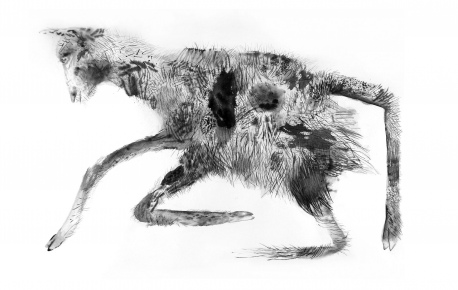 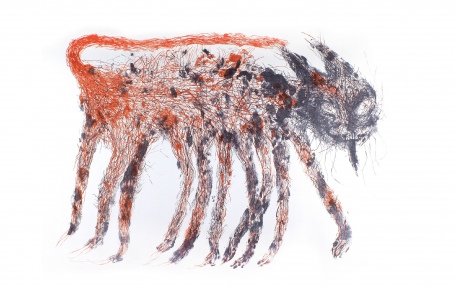
|
|
|
August/September/October 2016
WRITER IN RESIDENCE + INTERN - ALYS ROSE GREEN (UK) After studying filmmaking at the University of Western Scotland, I went on to receive a Masters in Creative Writing from Edinburgh Napier University. There I developed my writing style and figured out the kinds of stories I wished to tell. My writing is mainly fantasy fiction and draws inspiration from Mythology and Folklore. While in Caylus I aim to finish my first novel, an Urban Fantasy set in Victorian Edinburgh, about a group of people who hunt monsters and demons. I also plan to develop my photography, making use of the stunning scenery and architecture in the area.
“October saw autumn arrive with a vengeance. Bitter winds and driving rain fought to make up for the time lost to the long summer. Winter coats were dragged from storage with some reluctance, as umbrellas were ripped asunder. While the sun still held some warmth, noses were sent running, lips turned numb, and cheeks were painted a rosy red.”
|
|
|
|
August/September 2016
ARTIST IN RESIDENCE - ELKE SADA (DE) Drawing is a wonderful and immediate way to express inspired moments and feelings with simple tools. Pencils, crayons, ink and brushes become extensions of an artist's emotions. Fine or bold, expressive or delicate, lines become instrumental in the emerging composition. Drawing shares a distinctive quality with poetry and music: they have the power to move the listener, viewer or reader, make them weep or dance, laugh or feel blue, you name it. I once listened to a piece of music played by a Moldovan violinist and a Turkish pianist and composer. The vitality of it went straight through my body and I felt a most powerful urge to draw what I was hearing. I rushed to get the record and listened to it in my studio. My body responded directly to the rhythms and emotions, for me, contained in this music. And so did my tools. It was a revelation. The urge to explore this way of drawing more deeply has since never ceased. I tried to incorporate some sessions into my daily life as a ceramicist, but soon realised that I would need a continuous period of time to develop this approach any further. The residency will allow me to fully focus on experimenting and playing with these elements. I want to immerse myself in this music and find out what will come up. I want to respond with my drawing tools and be part of it. I want to improvise and get carried away. Like sound, I want to fill the room with drawings. Elke Sada www.elkesada.de
|
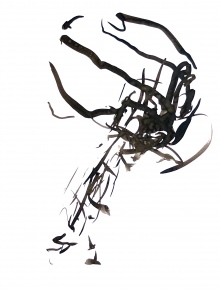 
|
|
|
August 2016
ARTIST IN RESIDENCE - LAURA EDMUNDS (UK) My work is preoccupied with drawing and its innate ability to convey loss and the passage of time. To further expand on this, my work also explores the act of drawing as a means of asserting ones corporeality, creating traces of being in physical human form using abstracted marks. I work on a large scale using translucent drawing surfaces such as drafting film, to create drawing installations that address the issue of loss but also challenge the notion of drawing as a humble, preparatory medium that is displayed against a wall, in a frame. DRAWinternational’s philosophy of exploring the possibilities within the practice of drawing runs parallel to my own; wishing to pull drawing into a sculptural and experiential domain, an expanded drawing practice. This level of thinking is critical to drawing research and its vital importance as an art form in its own right. Drawing communicates immediacy, and for my practice in particular, is a mode to speak of the desire to feel grounded without being tied down against our will. I believe that drawing potentially communicates seeing, breathing, moving, touching; evidence of being alive. Balancing between being solid and tenuous matter, the drawn marks of porous wisps or tints are impossible to pin down yet there is evidence of the attempt. I am interested in exploring how drawing simultaneously communicates both desire and withdrawal; presence and absence. At DRAWinternational, my intentions for the residency are to evoke an awareness of the physicality involved in the act of drawing through an expanded drawing practice; negotiating the concept through installation, moving image, sound and large-scale, performative drawing. Desire takes its place in the mark drawn, the implement brushing the surface whilst the motion of withdrawing the hand from the surface communicates loss and time passing. I seek solace in the epistemic nature attributed to drawing; searching for meaning in the experience of being human. The work becomes a method of reflecting on the seemingly unanswerable – a meditative practice of exploring the paradox of feeling bound to the ephemeral, a desire to “know what is the body and what is not”. Laura Edmunds
|
 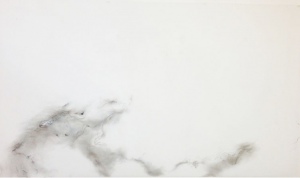
|
|
|
August 2016
ARTIST IN RESIDENCE - CHRISTL BERG (AUS) Over the past few years my art practice has moved from being based in photography towards drawing. I consider this as a shift from a technology-dependent to a rather tactile mode of working. The emphasis has also moved from the translation of elements in a physical, visible world, and an investigation of sense of place, to a more imaginative contemplation and a transcribing of being in time. At DRAWinternational I would hope to be stimulated and challenged, to extend my repertoire and understanding of the medium of drawing. CHRISTL BERG (AUS)
|
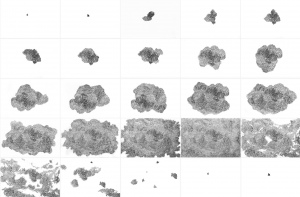 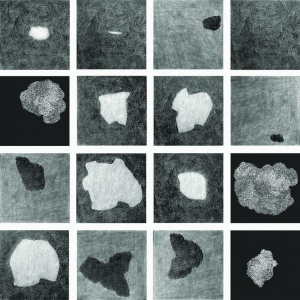
|
|
|
August 2016
ARTIST IN RESIDENCE - CRIS FRANCHEVICH (BRAZIL/USA) Throughout my life I have lived in countries that influence and re-define my cultural identity. Living between Brazil, Bolivia, and Chile in South America and now in North America, in Minnesota, I am exposed to variation of light, texture, and color, and the tremendous cultural, social, and political differences. I gather these experiences to counterbalance the technical rules of watercolour with the introduction of encaustics, graphite, charcoal, chalk, threads, scrapes, and marks. Fluidity between technical rules and gritty markings create an allusiveness of my subject matter, the human figure, in relationship with space and time. Places, body parts, fragments of life, invite the viewer to formulate a narrative: Who is this person? Where is this person from? Through my work I explore physical and spatial relationships between people and places, capturing moments in my paintings and drawings that speak to the universal notions of global identity, memory, and displacement. Watercolour and encaustics are quite different techniques in essence, although paradoxically very similar in process. The plasticity of the melted beeswax is no different than water, and neither media can be totally controlled due to its aqueous nature, involving certain degree of uncertainty and freedom from control. The ethereal fluidity and malleability, transparency and mystery are qualities intricately inherent to both, and the process and the results fascinate me. As a result of my background in architecture and urban planning, I look for the meaning of space, public and private, documenting my perceptions in a sketchbook, analysing the results and detecting the intentions, registering and processing my thoughts. And so I realise my media of choice is more an attitude rather than a technique, a way of life, linking back and trying to make sense of my experiences as a woman, as an immigrant, and as an artist. Cris Franchevich www.mnartists.org/crismgf
|
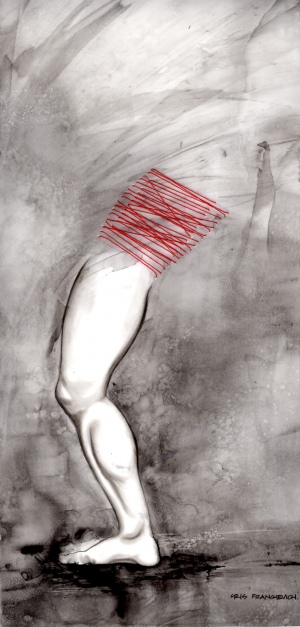
|
|
|
July/August 2016
ARTIST IN RESIDENCE - LUCY SIYAO LIU (CAN) In my practice, drawing is a technology, and drawing is research. Before I am an architect, or a designer, I am first and foremost a drawer, and my currency is the line. Most of my works are drawings in one phase or another (either as a drawing on paper or a projected animation). For the past year, I have been experimenting with the combination of drawing and animation by adopting the methods of slit-scan photography. I explore various ways to present information simultaneously, by compositing and cutting and undercutting, layering and splaying and reconnecting once again. I hybridise these methods to investigate the ways we acquire, retain and draw forth histories, to consider alternate futures between frames, moving from an analysis of time to a synthesis. My work connects systems in nature with systems of representation, and sometimes even simulation. Discovering the real, staging the hyperreal and drawing forth the illusion compose the framework for my inquiry. My process relies on a ‘material imagination’ to fuse technology, technique and tools with the essence of matter through drawing. Simultaneously, my background in architectural design motivates me to explore drawing techniques that breach prescribed categorisations of representation. The synaesthesia we experience in spatial order can only teach us more about the alternate capacities capable within our representational technologies. For my residency at DRAWinternational, I propose a collection of drawings, animations, and writings of reveries that take flight from Gaston Bachelard’s rhetorical question in Air and Dreams: ‘can the study of fleeting objects be a subject?’ I rise to answer Bachelard by considering the matter of Cloud. Previous subjects I have undertaken in my projects include island(s), rocks, asteroids and trees, but none carried the characteristics of the aerial complex like the cloud. Ever changing and forever in motion, clouds embody our contemporary desires to disperse, distribute and ultimately, melt into Air. Extending Bachelard’s query, I ask, how do we give form to things we have not (yet) seen? It is a double-edged question: one that deals with the transmission of information to build our inner spatial constructs, and the other, the external techniques to express and materialise. The interpolation from the innermost apparatus of Freud to the outermost apparatus of Kittler has left our heads heavy with form rather than inspired by formation. METHOD/MODALITIES My work is concerned with the scale(less) and time(less). Master cloud drawers, such as Constable, Cozens, Turner, Ruskin, Correggio, each devise their own systems for representing the elusive cloud, and their drawings struggle to negotiate between the systems for drawing and the animated systems of nature. I hope to explore new methods for contemporary cloud drawing, such as stop-motion capture with the drawing process, drawing over slit-scans, recombining footage to project onto drawings…to thrive on technical misconduct and invent new ways to represent time. My work will rely on the combination of hand drawing, 3D visualisation software, animation (both manual and digital) and projection. The combination of cloud and drawing present fascinating challenges that I envision to be explored among the following domains: - taxonomy of line work in relation to its history and use (collecting and hybridising various types of line as deployed in the representation of clouds historically, for example, in engravings); - multiples, in series, and similarly (drawing time, adopting methods of animation to investigate cloud movement within drawing and between drawing, which inevitably pushes the limits of our human capacities to perceive and conceive); - instruMentality (drawing manifested through different media, acquiring material properties that inspire our ‘aerial complex’, constructions that draw and are redrawn); - mnemonic projections (observing, remembering, recording, computing...repeat). www.liulucy.com
|
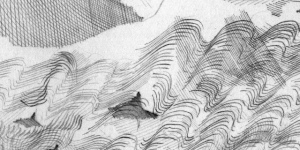 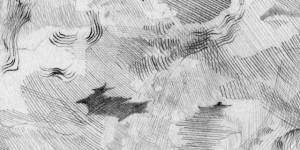 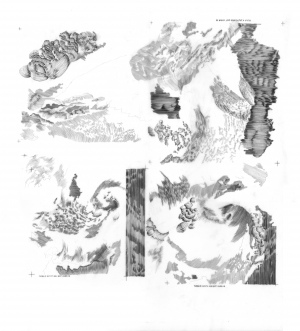 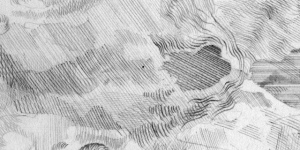
|
|
|
July 2016
ARTIST IN RESIDENCE - DARCY JOHNSON (CAN) I am interested in mind, memory and how artistic process can be both a conduit into and a reflection of our interior worlds. My abstract drawing is an unselfconscious way to uncover the working of my own mental life and see the ways my experiences in the world are reorganized and filtered into my imagery. I make the assumption that my own internal experience can be generalized to the creative processes of other artists. Because of my lifelong study of biology, my visual language contains elements of the natural world. Abstracted cells, seedpods, bone, connective tissue are some of the important forms and metaphors I work with. The idea of evolution in the natural world can also be applied to personal mark making. Every artist selects some “marks” or imagery, while dismissing others. In this way, the drawing becomes a representation of the mind that creates it. I explore this by taking spontaneous abstract drawings and then redrawing them in various ways such as changing scale or media or simply selecting a reselecting parts of the drawing I will keep and those I will leave out. The project I wish to pursue in this residency is to develop drawings using my usual techniques and explore the influence of a new environment. I am fascinated by the ways we humans remain constant in our individual natures yet are also being continually refined and refocused by our experiences. This is why it is important for me to work in new places and with other artist interested in the ideas and processes of art making. Darcy Johnson www.darcyelisejohnson.com
|
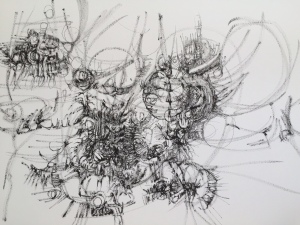 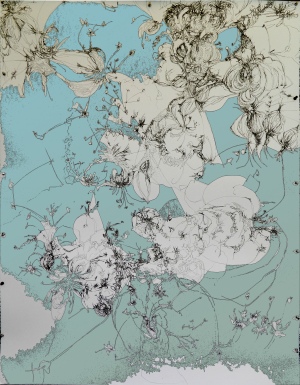
|
|
|
June 2016
ARTIST IN RESIDENCE - MICHELE SCHIANO (USA) I have spent my time exploring the ways in which the elements and principles of design can be interpreted in order to create new strategies of art making. Central to this method is the use of drawing both as a means to represent subject matter in a traditional sense or as a stepping stone to achieving more conceptual results. The driving motivation for this outlook is a personal fascination with drawing, and art as a whole, as a historical phenomenon. I am captivated by the ways in which the visual arts have been used by different cultures in order to convey that which was important to them. Thus my works are guided by how different artists throughout time have chosen to manipulate the plastic elements not only to create distinct styles, but also to provide new interpretations to the human experience. My reasons for applying to the DRAWinternational residency program are to secure an uninterrupted period of time during which I can continue to refine my techniques, as well as continue my investigations of how design has been used throughout history in order to convey meaning. Michele Schiano blackbridge.tumblr.com
|
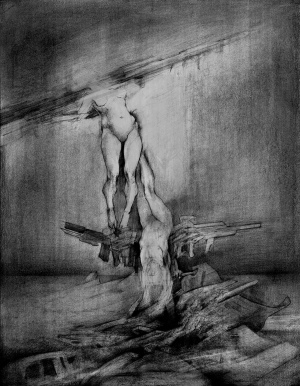
|
|
|
June/July 2016
ARTIST IN RESIDENCE - CARLA STETSON (USA) “Space and Place are basic components of the lived world; we take them for granted. When we think about them they may assume unexpected meanings and raise questions we have not thought to ask.” (Yi Tuan 1977) How does contemporary art address the idea of place and homeland when the man-made environment is nearly omnipresent and ever more homogenized? How do contemporary artists reveal and question common assumptions about land, water, and environmental issues? My recent work follows a cartographic impulse in drawings and installation, and in individual and collaborative works. This work explores human relationships to global systems such as the atmosphere, bodies of water, or polar communities bound by temperature. The fluid insistent meander of water becomes a metaphor for the inability to control nature in works such as The Nomadic River and Caution to the Wind. Concerns about global climate change and habitat destruction influence this work. Removing entire mountaintops, polluting ocean gulfs with oil, blasting vast underground substructures of shale for methane are among the issues that galvanize my attention. As I respond in the studio to these concerns the work becomes somber, but it also seeks to re-invigorate a sense of wholeness and connection in the viewer. In the collaborative installation, Troposphere, the glowing translucency, subtle movement, large scale and multiple points of view surround the audience, causing them to consider this layer of air that supports life, to remember that it has consistency, and that it forms our breath. My drawing Ramifications of Glaciers uses a cartographic style to depict glacial flows, but these shapes strongly suggest interior body spaces. This drawing alludes both to satellite surveillance and also to photographic exploration inside the body. These works and others speak of a sense of expanded self, a spatial extension into the world. Carla Stetson www.carlastetson.com
|
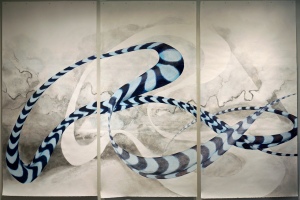 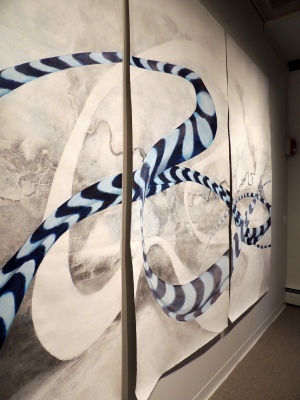
|
|
|
June/July 2016
ARTIST IN RESIDENCE - ALEX CALLENDER (USA) While in residence at DRAWinternational I will be working on research and developing materials processes for a series entitled Everything Has Its Nature, a body of work, which I am just in the beginning stages of creating. Visiting Italy last summer, moving through churches, cathedrals, plazas and then later to the arcades architecture, I was encouraged to revisit Walter Benjamin’s Arcades Project, and the later reinterpretation of his works through Susan Buck-Morss and other writers working with concepts of new nature and historical materialism. These visual lineages that connect Renaissance, Baroque and Colonial spaces made me think about our contemporary cosmologies and ordering of belief. The ways in which we think of decorative surface to bodily landscapes, authority to looking upward, monumentality cloaks exploitation of labor and mining of resources-it was like looking between the parenthesis marks from the beginning of the colonial project, to where we are now, hundreds of years later at the other side of the some large suggestive body of water having not fully transformed our beliefs, material relations or meaning structures. I began a drawing project, which uses the easily reproducible visage of Delftware as a type of history and privilege on the surfaces of varying objects and hand gesture forms, which are both embedded in and govern histories of craft and cheaply labored goods. The activity of much of our “object” life being the relation between the “valued” and the “outmoded” that becomes relegated to an expendable nature, and its inherent relationship to female identities who are the global producers of so many anonymous goods… something blue, intangible and decorative and the other side of that identity something plastic, excessive and economically constitutive. I am interested in finding through the process of drawing a coding that wants to understand the colonial cosmology under which we still in many ways operate. I have always been interested in the subtle (and not so subtle) anthropomorphizing of objects, I think this stems from my own ambiguity of objectifying people by portrayals, and so I remain an excavator of objects and surfaces through which we define assimilation, dissent and historical context. I am interested in considering through drawing, how A) once the colonial project considered nature a resource to be managed then B) the result would be that we naturalize ourselves through objects, which hold a material memory of the natural resource they once represented. And C) nature would exist through art images of value, and that value would appear to have reality. In these drawings I am using color space and graphite and charcoal to denote different relationships. Alex Callender www.alexcallender.com
|
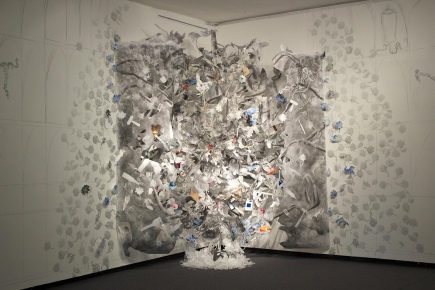 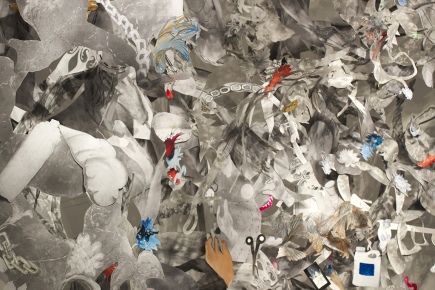
|
|
|
May 2016
ARTISTS IN RESIDENCE - LE COLLECTIF CAMBOUIS LES 12 M Feel, hear, touch. To take one's place. public place, private interior place. Desires to question everyday life. To settle where. Where we are, around the table, with children. In the garden. In the waiting room. At the market. At the bank. In the heart. Tension, joy, despondency. Welcome the norm, observe, comply with it or not, above all do not be fooled. Acting thus, exactly. No built escape. No ideas. A dream-like presence, rhythmic presence, material presence : everything is already there. Breathe fully with he who passes, stays, moves on and the Other, the irreducible. Le Collectif CAMBOUIS Sarah Turquety, poet, writes and directs poetic acts between composition and improvisation, individually or in collaboration with other artists. Her research covers: femininity, the upside, the ellipse, the notion of otherness, disorientation and what that can allow, the creation of susceptible spaces. Thierry Sterckval, protean musician, in love with his instrument ( 6 string fretless electric bass), a tinker with electronics, always looking for a fair and sassy expression. Through numerous intra and extra musical collaborations, he always puts the work back on the workbench, abolishing the routine. Melanie Gabu, artist, set designer, invites us to take the time to travel, to oscillate between what is distinguished and what is hidden, as if projecting us into the intrigue. At the heart of it, the female form, animals, they appear upset the order and play with the scenery. Between legible, visible and invisible, interrupted narratives shape what we see, new stories are suggested, murmured.
|
|
|
|
April/May/June 2016
ARTIST IN RESIDENCE - KIM ANDERSON (AUS) Close observational drawing forms the basis of my work, which traverses both traditional techniques and installation. Minute structures of the body, the connection between body and mind, and the physical manifestations of a psyche in turmoil have all been recurring themes. At DRAWInternational, my primary aim is to challenge my current practice, find a new direction and achieve greater complexity in my work – both in concept and technique. I have recently become more aware that process plays an important role in my work, and there is often a very specific relationship between this process and the environment it takes place in: the setting dictates the outcome. My compulsive drive to be making and creating all the time has given way to the revelation that the process can actually be an end in itself, taking on far greater meaning than the finished work. Regardless of scale or subject matter, whether permanent or ephemeral, private or public, my creative process usually becomes a feat of physical and mental endurance – line after tiny line on a wall or a page, an exhausting, exhilarating and painstakingly meticulous performance that takes on various aspects of a journey, a meditation, and in some ways a search for salvation. Parallel to this idea, I am fascinated by the incidental “artwork” that occurs, often unintentionally, alongside or as a result of this process. This could be the discarded pile of used-up pens, the imprint that comes through the paper, the flecks of charcoal and rubber shavings that build up beneath the wall or drawing board, or the calluses that appear on my fingers – the residue left by performing the repetitive movements that make up the creation of the work. These are all significant for what they represent – like a stage set after the show has finished, they are the remains of a performance that often (but not always) happens privately in the studio. I want to look at ways of incorporating these elements into my overall work, documenting them through drawing and photography, or leaving them as part of an installation, to give them as much importance as the finished work they were instrumental in making. Kim Anderson www.kim-anderson.com.au
|
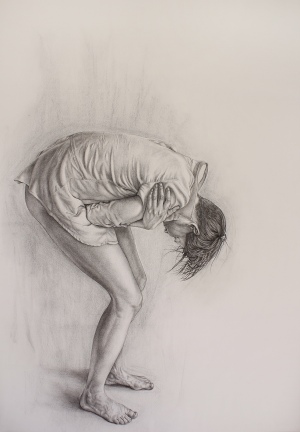 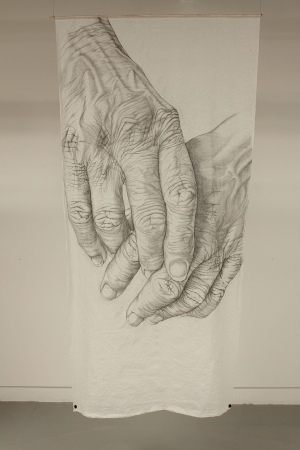
|
|
|
March/April 2016
ARTIST IN RESIDENCE - EMILIA RINALDINI (USA) My focus is portraiture, and my goal with my drawings is to show the variety of expressions and perspectives that one face can provide. Robert Longo is a major influence of mine. Like Longo, I like simplicity in my work even though it is very detailed. I do not draw a background with my subject, I want the face I am drawing to be the only focus. I work in charcoal, allowing for high contrast lighting. The combination of the physical size of each piece, the lighting used and the facial expressions shown, my pieces are meant to be visually dramatic. I believe that anything other than the subject in the drawing would take away from the visual impact, and make the work too busy. I usually focus on painting, but a major focus of the paintings I have been doing for the past few years is the importance of the drawing before and during the painting process. These charcoal drawings are a new series for me, and are very important to me. Painting is not possible without drawing, and I aim to show the viewers of my work how impactful a drawing can be. This opportunity with DRAWinternational will help me gain new insight from other residents, and also from being somewhere I have never been. Opening myself up to new places, people and experiences gives me endless motivation and inspiration. Emilia Rinaldini www.emiliarinaldini.com
|
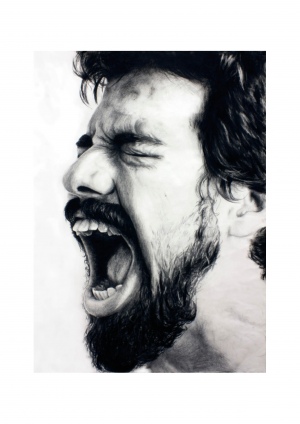
|
|
|
March/April 2016
ARTIST IN RESIDENCE - ANASTASIJA KOMARNYCKYJ (AUS) Although I am predominantly a painter, the idea of allocating a concentrated period of time to engage with the practice of drawing, exploring the mark making process, would undoubtedly be beneficial. Drawing was a strong subject for me during my studies however seems to have been overshadowed by the use of various other media in recent practice. Exploration of my cultural heritage has been urgent and is ongoing. Ordinary objects and events of life are often referenced in my work and assigned emotive interest. The natural environment is also deeply ingrained within my psyche; another genre that features prominently within my arts practice. I believe this AIR program would provide me with a multi faceted opportunity to develop and investigate subject material prevalent within my arts practice. More importantly, I would like to be open to interpreting my site-specific response. This can, I believe, be achieved in the following ways. A concentrated immersion geographically and culturally within Europe, place of origin. Observation and comparison of cultural practices. An opportunity to observe, experience and document nuances of the European landscape and juxtapose findings with that of Australia: contrasts and similarities. An allocation of specific time, devoid of day-to-day interruptions, to the development and pursuit of my arts practice. An opportunity to welcome new ways of seeing through collaboration and sharing of ideas with other artists. Challenge pre-conception. Providing focus on developing and expanding drawing techniques and, possibilities of incorporation of this medium into my work more specifically. Remain open and receptive to opportunities and insights that arise through the AIR process: explore unexpected changes of direction. Anastasija Komarnyckyj www.komarnyckyj.com
|
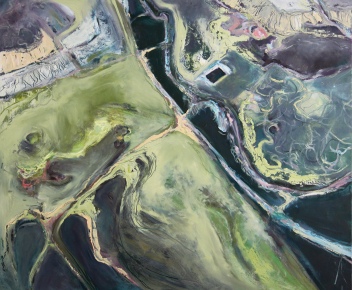
|
|
|
March/ April 2016
ARTIST IN RESIDENCE - CAROL SMITH (UK) My work is about Investigating Universal Consciousness, and explores ideas about what the world is made of and how things come into being in the universe. I’m particularly interested in the converging ideas of Quantum Physics and Eastern Spirituality that suggest that there is a field of energy behind the material appearance of things, from which everything arises. As quantum particles arise from this field they carry with them ‘information’ that allows them to cluster and connect to form tangible matter. For me this is a kind of ‘Universal Consciousness’, and it is made manifest in the patterns and structures that we see in nature both at a cosmic and microscopic scale. Patterns form when particles are acted upon by universal forces like gravity, heat, pressure, chemical bonds and magnetic fields. I allow these forces to play a role so that delicate tracery formed by nature is part of my finished work. At DRAWinternational I would like to continue this path of enquiry by experimenting with, and documenting, the interactions between various solid and liquid drawing materials. My outcome would be to create some very large-scale single works on paper, and also some sculptural works, or paper installations, that look at combining small scale experimental pieces in unusual ways. In parallel to the studio and experimental work I would also value the time to research further links between scientific knowledge and other forms of spiritual knowing, as a way to spark new ideas. www.carolsmithartist.com
|
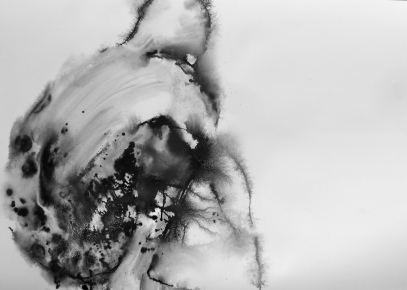
|
|
|
Novembre 2015
ARTIST IN RESIDENCE - SALLYANNE MATHEWS (UK) I would describe my work as conceptual figurative. I use the figures as a means of expression and there is usually an easy access to interpretation. I like to be uncomplicated. There is sometimes a thematic element to the works. I would like to explore more ways of marking the sculptures and am excited to have the time and space to enable that. Sallyanne Mathews
|
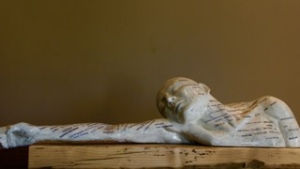 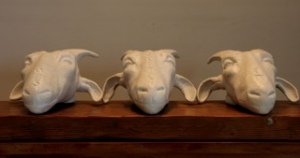
|
|
|
October 2015
ARTIST IN RESIDENCE - ZIYUN WANG (CHINA) I am interested in traces and marks, my work proceeds from lines and contours, I apply colours, then remove them again and again. Leave the traces, modify, where down the surface. The figures are encircled again and again. For me the work could never be finished. Constantly keep destroying and activiting. Painting is like breathing and thinking, especially when life is full of information and experiences. Drawing can lead me back to some initimate/ free state that is a primal relationship between the body and nature. When you give up your conscious state, you are able to respond/reflect more to the environment around you. Merleau Ponty refers to the 'flesh of the world' and Roland Barthes called 'Derive' the body in 'jouissance'. Purposfulness without purpose is similar to the spirit of Chinese aesthetics. Non action and Xinzhai in Tao philosophy is an approach to carefree state/peripateticism. I would like to further these ideas during my residency. Make drawings in response to daily events, the natural environment, the individual and the community. I would like to explore the relation between gesture and body consciousness, my research into incompleted drawings, the desire of lines and the pleasure of drawing.
|
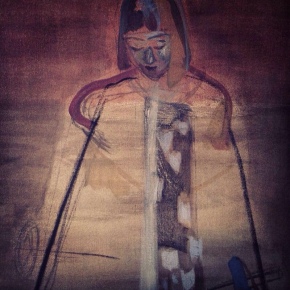
|
|
|
October 2015 and April 2016
ARTIST IN RESIDENCE - LAURA DONKERS (UK) I investigate bio-cultural links between people and the lands they inhabit. Interconnectedness of art, ecology, site and politics provides a rich framework for artistic and intellectual explorations, assisted by good agrarian knowledge gained through a life on the land.I am interested in 'living as an act' and how art expands ways to reflect and develop lived experience. As lives become increasingly encoded and intellectually based there are less and less opportunities to directly connect with the places where we live. Through dialogical processes of field research using methods such as interviewing, field-walking, and surveying via the photographic, videoed and drawn, I collect and present primary observations, through sound, video and sculptural interventions that aim to trigger understanding of connection, presenting experiences of living 'first hand', in touch with environment, community and self. My practice explores 'the collection and presentation of primary observations which interrogate the political, physical and material conditions of landscape as experienced through the body.' However, in practice, I find that much seems to get lost in the translation from 'fieldwork' to artwork, so the work is as much about exploring the ambiguous space between language and its ability to communicate clearly or truthfully. I've found the year of study to be as beneficial as it was frustrating as I have been unable to develop the physical practice of drawing that is fundamental to my thought processes yet have been successful in pin pointing the source of my concerns and outlook. I would use this residency to focus on the skill of drawing and specifically the practice of 'blind drawing' for it's ability to override the analytical mind to present an embodied, physical truth. I would greatly value the opportunity to discuss and engage with your team and fellow residents on the ability of drawing to express truth. Laura Donkers
|
 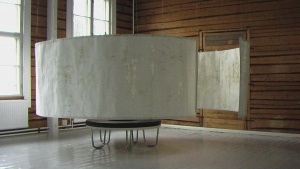 
|
|
|
Octobre 2015
ARTIST IN RESIDENCE - CHRISTOPHE BOULANGER (FR) Its difficult to predict an art work for a residency. Inspiration can come either from the place, a meeting, an intuition or a detail. The work starts with sketches, and it becomes a project. I make first, and the explanation comes later. It is rarely trivial. In a recent residency in Puglia in southern Italy, the taxi that took me from the airport to the workshop, went along a road lined with ancient olive trees. Ancestors, crumbling, twisted, but hooked to life. Each had a unique appearance that was more geological than plant-like. I chose during my residency to uproot them and to make them dance to the rhythm of the tarantella - a local healing ritual, combining music, trance, and devotion. I wanted to repair them, to patch them, and to graft them a heart - pumping colours. They took on the shades of Italian baroque palaces, they became organic, and turned into characters of "heroic-fantasy". Generally, I like to restore colour to things that have lost their vibrance and energy and to things that seem static / frozen. I like to pick up the pieces ... taking care in doing so, to put in a little disorder.
|
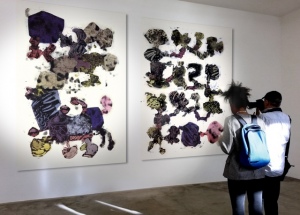 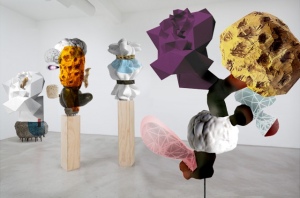
|
|
|
October 2015
ARTIST IN RESIDENCE - RACHEL KREMIDAS (USA) I would like to start by explaining the initial inspiration for this project: the ancient Roman philosopher Pliny told a beautiful story of man's first drawing. There were two lovers, and the man went off to war. In a moment of passion, the woman saw his shadow on the wall and traced it before he left. I want my creative passion to match the passion of her whim. These fictional lovers emboldened my most recent work, wherein I use shadows as a metaphor for drawing,and the distortion of three dimensions into two dimensions. I built small, intricate sculptures and meticulously drew their shadows with graphite. The process is both conceptual, intuitive, and meditative. To further this idea, I want to revert to Pliny's original story. I need humans in my subject matter; however, I do not need boring human profiles. Rather, the distortion of human shadows interest me. In some paintings, I've experimented with models. But to get the necessary drama, this requires artistic collaboration and huge space. Gestural graphite and charcoal will energize the process more so than painting could. I have lived and worked in New York City for five years, and the urban landscape has influenced but also stifled me. Space for a project like this is hard to come by, and the pace of the city does not encourage focused collaboration. I want the architecture and landscapes of Caylus activate my process, and the range of local participants to engage with the project. www.rachelkremidas.com.
|
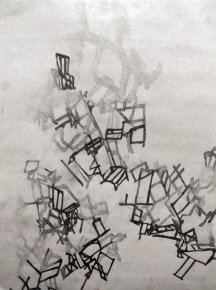 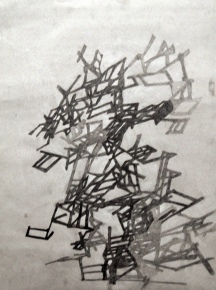
|
|
|
September 2015
ARTIST IN RESIDENCE - ANGELA ARROCHA (MEX/CAN) Born in Mexico, and raised in Canada by a leftist family, I grew up learning from intense political arguments and more "irrational" folk songs and stories. While my dad taught me about colonialism in Latin America , my mom's bed time song warned that "if I don't fall asleep the white devil will come and bite my little leg off". My engagement in grotesque tales that disrupt accepted narratives is evident in my puppet-like sculptures. These are outcasts suspended in their stories: Ghosts, Freaks, and subconscious thoughts that surface like smelly oil over water. Like Jean Genet who in prison, masturbates and writes his fantasies to escape, my characters are dreaming, and I am dreaming them. DRAWinternational is an ideal environment for me to develop the content of my work and experiment with techniques. I propose to continue making these "characters" and discover new ways to animate them. They have potential to be kinetic sculptures by using toy-motors; to interact with environments via photography; or to be juxtaposed with the surreal literature I am inspired by. Drawing is rebellious! it can playfully be combined with other mediums to tell multi-dimensional stories that challenge accepted truths. angelaarrocha.wordpress.com
|
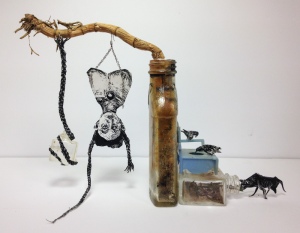 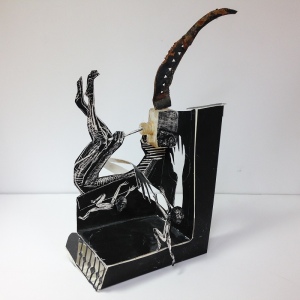
See gallery >> |
|
|
September 2015
ARTIST IN RESIDENCE - OLIVIA LENNON (AUS) I would like to develop two small bodies of work in dialogue with each other: Order is constant (Parmenides/Apollo) These drawings explore the idea of a pervasive order in the universe; that change and chaos are a fallacy - the result of our perceptual limitations. Both the form and material of these works are tightly constrained. Painted very slowly, I spend 40 or more hours on each black circular sheet of paper repeating one golden brushstroke or geometric shape until the paper is flled. Drawings are made with 'interference watercolour on handmade rag paper' . Flux is constant (Heraclitus/Dionysus) The second part would be a series of small sculptural spectacles, or looking-machines, that alter the visual perception of the wearer. These sculptures posit that change in the universe is the only constant; that only human perception is responsible for the appearance of order. http://www.olivia-lennon.com
|
 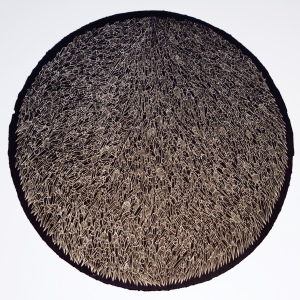
See gallery >> |
|
|
September 2015
ARTIST IN RESIDENCE - DEMENCIA BEIVIDE (MEXICO) To be an artist is to have a talent and flourish it, its the passion inside you that makes you seek, question and observe your environment, for you to create something tangible and make others reflect about it. Art is a very challenging career, it always has been and it always will be. To be an artist is a profession with a lot of responsibilities, it’s a visual microphone. Creations can be interesting, complex, innovating, disgusting or ambiguous but often challenging work can bring about a deeper contemplation for artist and the public. To develop as an artist to find a unique technique is a world’s quest. A unique and profound search to reach a common language and a communal feeling in society. Working as an artist seeking a conceptual and genuine processes, provides art with a number of definitions. For me it is the ability to express and confront a public. My creative process starts with a painted smudge, where colours melt and techniques blend together. They join themselves to give life to expression, until its a complete colour symphony is made. Many adventurous paint drops can evoke and remind one of the beauty within imperfections. The festivities and the cult of Mexican traditions inspire me because they live today within all of us. As an emerging artist in Mexico, I reinforce the pre-hispanic truth about Mexico’s reality and vast culture, in a unique and contemporary way. Transcending the moments of pure creativity, from insanity that lets me survive the social reality we live in today, Demencia Beivide manifests as a call for help, creating a wave of awareness against the society we seem to continually pursue today with many of its inherent dangers. A residency program helps an artist to submerge in different cultures, various environments, particular habits, it helps the spread of visual tendencies, various messages, and it helps the artist grow in a holistic way. The topic of my Residency Project will be about “ Trees of Life ” . Trees of life had been created throughout history, telling stories in a traditional way, mostly the ones created in Mexico tell stories and popularise the belief of the Catholic Church. The ‘’ Trees of life ‘’ series will tell stories about today from a historical past. The complex elements of life and culture will be realised as large colourful paintings as a reflection/ comparison to a particular French environment. www.demenciabeivide.com
|
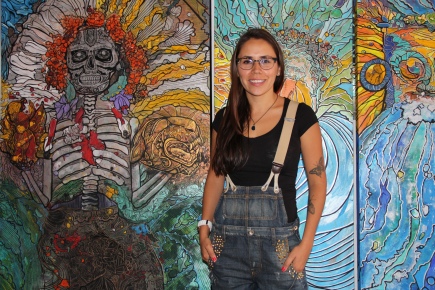
|
|
|
August/September/October 2015
ARTIST IN RESIDENCE - MARIA O'TOOLE (NZ) Drawing Breath Rooms of the Soul, Remembered in the Body. My practice is a perceptual experience of space and time, which focuses closely on the senses and sensuality. I explore the role of phenomenology and embodiment within a drawing practice. These drawings navigate the 'inbetween' space that I experience when taking a walk, when the rhythm of my body and imagining consciousness slips into another space where daydreams open up and expand my experience of a vast inner landscape. The resulting works are a form of lyrical abstraction. I have been exploring the ‘rooms of the soul, remembered in the body’ (Gaston Bachelard) within my own drawing practice. I activate these spaces by walking and drawing, sometimes at the same time. I do not look at the surface or choose what to draw; instead I let my bodily responses guide the work. mariaotoole.co.nz
|
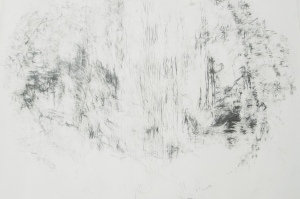 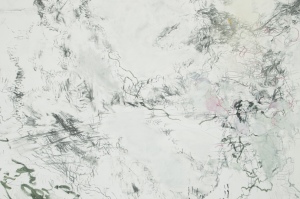
|
|
|
August 2015
ARTIST IN RESIDENCE - JENINE SHEREOS (USA) Over the past several years, I have been interested in the investigation of line as it is formed by ink, thread, hair, shadow, and light. In the Leaf series, for example, the intricacies of a leaf’s veining are recreated by wrapping, stitching, and knotting together strands of human hair, and in Lacework, I create lace patterns by tracing the shadows of trees. In the De/constructed Lace installation series, which I first began during a month-long residency in Marnay-sur-Seine, France, I knit lace to interact with the structure of the architecture or landscape surrounding it. During this residency I also created a piece entitled Hair Drawing, in which I used natural sunlight and my own hair to create a series of cyanotypes, resulting in a fluid gesture of lines seemingly referencing clouds or smoke. Most recently, I have been developing a drawing/installation series inspired by the cellular structure of trees and the knit structure of lace. These works begin as ink drawings, and will extend outward onto the frame and wall. I have been experimenting with a number of red ink drawings (see attached images), use ink drawings along with materials such as altered wood frames, cut paper, gesso, knit thread, textile hardener, and natural ephemera to create a series of installation works. During my time in France two years ago, I was incredibly inspired by the natural beauty of the French countryside, the unique architecture and history, and the cultural history of lacemaking in France. I know that spending a month at DRAWinternational in the town of Caylus, France would yield significant development in this new drawing/installation series. www.jenineshereos.com
|
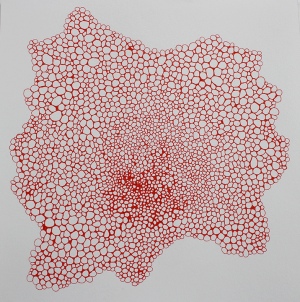 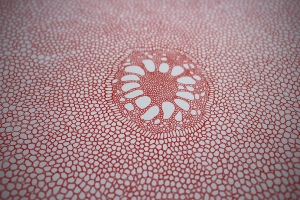
See gallery >> |
|
|
August 2015
ARTIST IN RESIDENCE - SUSAN ATWILL (UK) How do objects we make and accumulate change in different space-times? The displacement of space by an object made by hands leaves a physical echo, an action in a state of flux between past and present. Clay is ancient and futuristic, permanent and fragile; its edge defining where space ends and physical matter begins. Within its form, proportion, scale, balance and materiality, are leftover traces of human behaviour, and I wish to investigate how and whether drawing and the materiality of paper could represent this. I wish to create an investigation of ‘traces’. Construction of physical mass intervening with its context could disrupt and alter these spaces. Displacing the objects within different environments, real and imaginary, could transform the ordinary to ludicrous, plain to intricate, humble to monumental. In Orhan Pamuk’s The Innocence of Objects ‘Remembering the past always comes with an image or a view attached’. Through experiments with layers, altering materials, sound, displacement, sacle of mark vs object. I would like to use my time at DRAWinternational to investigate altering perception of materiality and the boundary between two-dimensions and three dimensions. Susan Atwill.
|
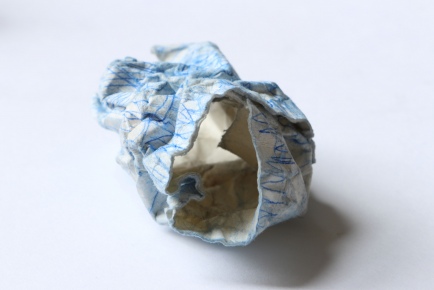
|
|
|
August 2015
ARTIST IN RESIDENCE - CELIA EID (BRAZIL) Since my first stay in Caylus, I've been doing research on how to bring my own style and experience of drawing on paper to video animations. Over the last 2 years at the same time as making virtual art I’ve continued working on paper drawings and making lithographs. Now my focus is on how to combine my virtual work with my paper drawings. Celia Eid
|
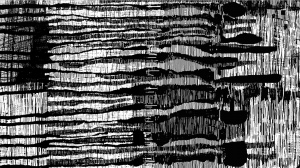 
|
|
|
July 2015
ARTIST IN RESIDENCE - VANESSA BORTUCAN (BRAZIL) I am a visual artist, researcher and educator. I recently finished my Masters degree in the 'History and Theory of Art' (august 2014) and I am now trying to produce more drawings. I have always loved drawing and here there is a big lack in drawing teaching (theory and practice). It is because of this, that, for my undergraduate studies I chose to focus my studies on art theory hoping it could give me some answers in relation to practice. At present I am teaching in an elementary in a school, curating independent courses for adults in partnership with the Museum of Santa Catarina School, courses designed for people interested to learn more about drawings and to exercise their practical potential through perception as well as writing and publishing in national and international journals. My intention is to improve my work and learn more about drawing with people (artists and researches) from the field. I see my residency at DRAWnternational as an opportunity to meet qualified and fascinating people with interests that I share and I think these interactions through workshops, actions etc will make me experience new things I couldn’t experience here. Vanessa Bortucan.
|
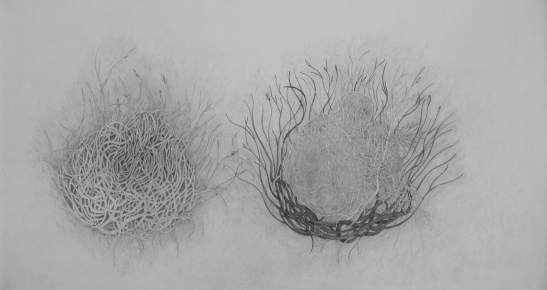
|
|
|
July 2015
ARTISTS IN RESIDENCE - JULIA HITCHCOCK / ERIN WIERSMA (USA) Conceptual Underpinning: a collaboration. Julia Hitchcock and Erin Wiersma share a common belief that is deeply rooted in the notion that the act of drawing is a means to understanding a unique form of knowledge and visual logic central to their studio practice. Aesthetically their line quality appears strikingly similar in terms of embodied energy and is evident in their applied marks, and yes both artists clearly agree that their works are vastly different in regards to their chosen imagery. So why collaborate at all? Merging the two will be difficult and that in and of itself sets up a visual/aesthetic tension worthy of a serious inquiry. The visual research and collaboration will address how Wiersma’s nonrepresentational environment where the tangible space is often dense and undulating act as an immersive environment for Hitchcock’s tragic figures. Wiersma’s “drawn” spaces rely on mark vocabulary made by using self-imposed drawing restraints that are based on her personal human proportion (such as arm length, total height, wrist and joint range of motion). Wiersma’s applied drawing methods philosophically beckon Hitchcock’s figures to navigate this vast and often treacherous terrain. Wiersma’s works are spatially rich and interact as portals or passages converging within the works and shares a mutual interest with Hitchcock in re-inviting found forms within her ‘environmental and non-representational’ drawings. Hitchcock’s ability to deliver the figure with an acute awareness of spatial ambiguity plays homage to this type of figure ground relationship and strikes at the heart of this invitation. The human figure in whole or part will be drafted and grafted by Hitchcock into Wiersma’s compressed or expansive space. Hitchcock’s figuratively conceived drawn imagery will invite Wiersma to work to either accept or thwart the figurative element in favor of a terrain that imposes a varied yet intentional spatial response. www.juliahitchcock.com www.erinwiersma.com
|
|
|
|
June 2015
ARTIST IN RESIDENCE - CLARA McCLENON (USA) My creative practice builds on my studies of cognitive science and information science as I employ analytic techniques to reach poetic ends. Working from observation and photographs, I strive to record visual information that might normally escape perception: the distinct shapes found in 500 leaves; the rich detail in a single alley view; the effect of light on a pattern of treetops. As I explore a subject, I aim to establish a logical tie between reality and representation. Consequently, my drawings often employ investigative systems for gathering and distilling information. In these investigations, my efforts towards accuracy (in the measurement strategies and recording processes I employ) are not meant to reach a definitive empirical truth. Rather, they reflect the tenuousness of our perception of the physical world. By drawing attention to my strategies for documentation and recording, my work examines the “sampling” methods we unconsciously employ to make sense of an incomprehensibly complex reality. At the core of my practice, I am constantly motivated by our wonderfully paradoxical experience of the world: how hopeless it is that we perceive so little and how beautiful it is that we can perceive anything at all. www.claramcclenon.com
|
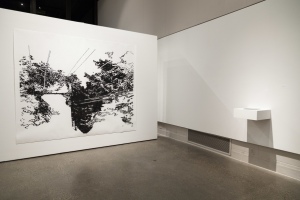 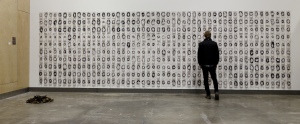
See gallery >> |
|
|
June 2015
ARTIST IN RESIDENCE - LINDA BERKLEY (USA) As a DRAWinternational Artist-in-Residence, I wish to engage my personal and artistic response with the profound sense of place I find in the natural world. I hope my work explores a dialogue on how we relate to nature and the way our relationships are interpreted and expressed through our visual traditions. I also seek to incorporate a saturation of new colour relationships, elegant line qualities, and a more asymmetrical balance of compositional design into my approach as inspired by my recent introduction to ‘Roketsuzome’ or Japanese wax-resist dye painting. My drawings, paintings, and mixed media installations engage in a correspondence between internal and external structures of nature and human experience - spiritual, emotional and corporeal. The imagery in my work references the body, natural forms and the structures of vast and powerful landscapes. I have painted on patterned fabric and drawn over aged wood grains to achieve monumental scale, flooding the surface with transparent skeins of colour or linear rhythms of charcoal. These compositions reveal the body opened, showing layers of internal structures as beautiful and vulnerable; as epic landscapes or as intimate interiors. A dominate rhythm of my creative process is to create and collect a density of visual elements that interact and intuitively coalesce as compositions. I wish my work to relate the landscape of true self as reflected in nature. The focus of a DRAWinternational A.i.R. will offer me the professional context to explore and expand the ways I compose and create meaning and context in my work. Linda Berkley.
|
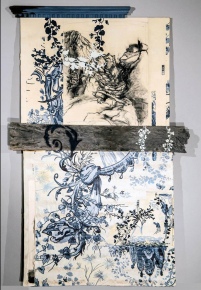 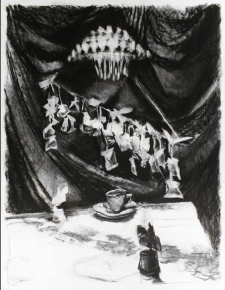
|
|
|
June 2015
ARTIST IN RESIDENCE - JANE BRUCKER (USA) Using performance, sculpture, installation, drawing and video I engage the viewer in works that exhibit a strong tactile sensibility–simultaneously exploring the visceral and the spiritual. My recent performances and installations involve the specific unraveling of textiles, often my own knitwear, as a metaphor for “taking apart” or “undoing knots and tension” in the body. I am interested in the idea of creating psycho-physical ease by becoming aware of habitual patterns of tension; an idea that is a central concept of the teachings of FM Alexander. At DRAWinternational I will take these insights a step further. I plan to use my expertise as a professor of drawing and a teacher of the Alexander Technique to suggest that drawing can be a form of meditative practice. By creating a set of exercises and a series of new drawings that further capture the sense of depth that solitude and meditation instills. These exercises and drawings will rely on kinesthetic experience and the specific handling of materials. The manner in which I create work using varied elements is done carefully and meticulously so as to illuminate the content or experience evoked. Ultimately, I am creating a sensorial exploration of contemplation while observing the correlation between the activities of drawing and meditation. Jane Brucker www.janebrucker.net
|
|
|
|
June 2015
ARTIST IN RESIDENCE - JEREMY WASSER (USA) I believe in the marriage of arts and science and the value of a cross-disciplinary approach to research and education. As a professor of physiology, I have observed that conventional pre-clinical education omits, for the most part, instruction in the history and philosophy of the discipline, and scant attention is paid to the core tenet of physiology: the essential importance of treating the body as a whole. Science is a supremely humanistic endeavor, yet we have gone a long way toward turning medical science into a technique-driven, narrowly focused, isolated, and mechanical activity, stripped of its connectedness to the larger organism, the complex human animal. As a writer-in-residence at DRAWinternational, I will continue my work designing a new kind of teaching tool for medical students–a guidebook emphasizing the core tenet of physiology–that we humans, as complex animals, are most effectively addressed in the clinical setting as whole systems consisting of interrelated parts. Like a travel guide, it will weave a series of interconnected stories and images together by introducing key people, places, concepts, and events in the history of physiology as it developed into a modern science in Europe. I will begin this story in the Middle Ages when the distinction between medicine and magic, science and theology, were fluid and end in the 19th century with the establishment of a modern scientific basis for diagnosis and therapy. I will take advantage of the medieval environs of Caylus and the presence at DRAWinternational of a diverse group of artists/humanists to help drive my project towards a creative synergy of text and image, science and art. Jeremy Wasser
|
|
|
|
May 2015
ARTIST IN RESIDENCE - ANNE PEARCE (USA) During my residency I would like to continue my ongoing series entitled Micro Myths. The seeds of the Micro Myths series were planted during an artist residency in Mauritius where I created a love letter writing booth; passersby were invited to stop by the small booth and choose an abstract drawing I created while on the island as the platform for writing personal love letters in French, Creole, and English. With sacred space and reflection in mind, I will debut a new iteration of the series entitled Micro Myths: Confession. This series is part of a three-day residency I was invited to conduct in collaboration with artists Steven and William Ladd and their exhibition Chapel opening in the Invisible Dog Arts Center in Brooklyn, New York in fall of 2015. This iteration of the Micro Myths series focuses on imbuing the ritual of confession within a spectrum of positives. I will be creating several hundred sacred, abstract drawings on 5” x 7” cards that will be installed in Chapel. Gallery visitors will have the opportunity to select a drawing and then respond with a confession of good on the back of the drawing they will then keep. Thus, the drawing and written reflection become a memento of the visitors experience, and a provocation for meditation, reflection and daydreaming. At DRAWinternational I want to begin an entirely new iteration of the Micro Myths series revolving around notions of love lost. Entitled The Telltale Heart: Carnivores and Ghosts (Macro Myths), I will create a larger-scale series of 15 Macro Myths utilizing cards of 8” x 10” or larger, and reflect upon 15 stories of love lost that I will collect by personal invitation prior to the residency. Each drawing will be categorized and titled based on the sequence of Mozart’s Requiem Mass in D minor (Introitus, Kyrie eleison, Sequenia, Offertorium, Sanctus, Agnus Dei, Communio) as it exudes a melodic sense of grief and reflection. Looking at dried seaweed as a metaphor for lost love, I believe these drawings will serve as an act of reincarnation, a rehydration of something lost but not forgotten. In this sense, these Macro Myths are like a memorial, a deliberate meditation on and resuscitation of love lost, and a chance to enliven it through imagination and the gesture of drawing. I believe classical music parallels abstraction; it’s a landscape wide and big enough for all people to bring in their most personal experiences while still relating to one another. Hopefully, the act of drawing these myths within the framework of the music transcends and serves as a respite for human beings to feel less alone. Anne Pearce
|
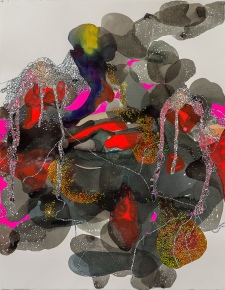 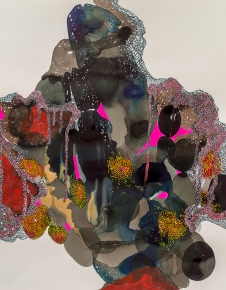
|
|
|
May / June 2015
ARTIST IN RESIDENCE - STAVROS PAVLIDES (USA) In my work I aim to combine abstract, emotive elements with distorted figuration in the service of craft and catharsis. I want to create work that emanates presence, skill, and mood. Drawing content from film, literature, and the urban, I seek to inject emotional states with subtle satire of white-collar angst, all while retaining an element of the personal. I am a primarily figurative artist, yet I spent many years with a split artistic personality, separating my emotional, ‘action painting’ from my craft-oriented realism. The last couple of years however I have started to use both at once, opening up an overwhelming amount of new possibilities. What I would hope to accomplish through a residency in Caylus is to further advance my work. The ‘monastic artist’ is an lifestyle that has always appealed to me, and the kind of concentration, focus, and lack of distraction inherent in a residency would pay great dividends to my craft. I want to continue my examination of seamlessly melding drawing, painting, the figurative, and the abstract, until I can forge something cohesive, startling, and beautiful. I enjoy writing about art and developing art theory almost as much as I do painting and drawing. A residency would give me the opportunity to write about my creative examinations and to address more deeply the medium of drawing and of painting. It has been an ongoing project of mine to develop a dialogue about what separates these forms of expression from others, and to establish dialectically the inimitable qualities for which drawing still matters. www.stavrospavlides.com
|
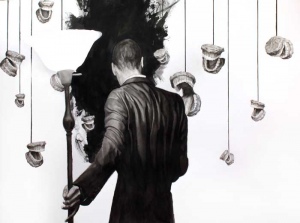 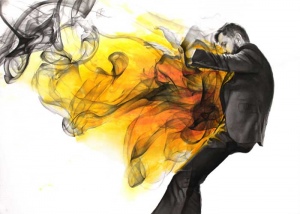
|
|
|
April/May/June 2015
ARTIST IN RESIDENCE - LUI MEDINA (PH) I am interested in the manner in which an object affects our understanding and knowledge of reality. How does the act of making negotiate an object’s historical and scientific implications and vice versa? And how does this conversation work out our fundamental desire to make sense of what we see? These are the questions my artistic enquiry seeks to address. My practice consists of a system of working that hovers between “expression” and “object”, and is informed by processes of abstraction. Abstraction, addressed within the context of my enquiry, is mostly action -‐ a way of deconstructing and redirecting the gaze, to suspend vision and transform it into a phenomenological encounter. I’m not interested in painting as a psychological activity or speaking of it in relation to sign making. My approach to the project of painting mirrors that of scientific study; a manner of working that negotiates the very nature of painting and its multiple discourses in contemporary art. My work is largely contingent on the idea of making -‐ on painting, drawing, and creating objects where the visceral qualities of medium and form take precedence over imagery. I look at it as research, a careful, almost calculated pursuit of knowledge. I use natural science to navigate these ideas, with a particular focus on landscapes. I create geologically inspired forms and wall bound objects that contemplate the relationship between what is seen and what is recognisable. I think of my art making as a form of construction, an assembling and filling in of multi-‐layered structures. Building objects with a rhythmic application of colour, texture and pattern allows me to investigate the sculptural possibilities of my work. As an A-‐I-‐R at DRAWInternational I intend to focus on form and process. I wish to take this opportunity to explore further possibilities of object making and examine the role drawing plays within the context of my enquiry. I plan to contemplate the idea of ‘objecthood’ in relation to drawing, to reflect on the mediums materiality and to deal with it in more physical terms. How do I negotiate the project of drawing and its two-‐dimensionality and flatness in relation to object making? Can drawing really be perceived as ‘object’ and method of thinking rather than just image and expression? Is it possible to deal with the activity of drawing outside the confines of the pictorial and purely optical? I aim to work these questions out at the centre by engaging with the medium not as an independent work of art in it’s own right, but as an idea and intellectual activity. Lui Medina www.luimedina.com
|
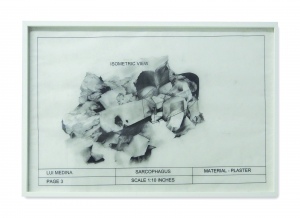 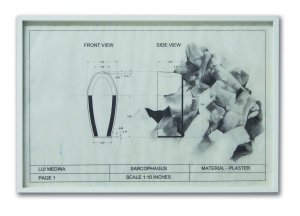
|
|
|
April 2015
ARTIST IN RESIDENCE - KATRIEN VAN HETTEMA (NL) The passed few years in my artistic practice I have mainly made commissioned works of art. Some of them should be defined as community art. It was a satisfying experience finding ways in combining the conditions of the commission, the people involved and my artistic possibilities and aspirations. Now it is time to follow again my own ideas and to exploit the artistic sources and forces I left unattended for some time. I used to express my ideas into large works on textile, drawings and mixed media on silkscreen print. My subjects on textile were the house, or houses and on paper appeared the landscapes that I experienced in trekking in Iceland, Lapland and the Alps. My practice is often making small series in combination with different details in collage or by drawing. My works are mainly of a figurative and narrative character. My intention at DRAWinternational is to concentrate on large scale drawing. This will become the start of my research into the subjects that intrigue me: landscape, nature, history and houses. The village and the environment of Caylus will doubtlessly be of great inspiring value. A large number of small drawings, and or one big drawing as a panoptical image and to find and choose the subjects that remain for a continuation. I then intend to enlarge and focus on the found and chosen subjects. Colour will probably appear; I love colour. It is now time to improve on the quality of my work and at DRAW the circumstances and possibilities seem to me the very best I could wish. www.katrienvanhettema.nl
|
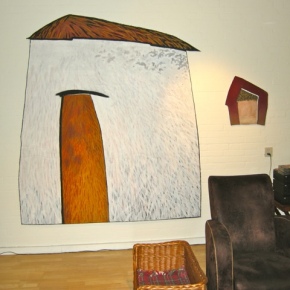 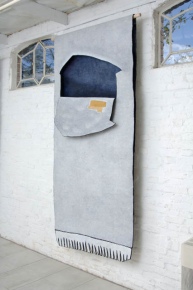
|
|
|
March 2015
ARTIST IN RESIDENCE - ROBERT LUZAR (Slovenia/Canada) My proposal is to investigate 'the point' as a conceptual trace, a speculative mark that gives shared attention to the body as a materially present form of physicality. As I have discovered in my doctoral research, numerous exhibitions and live art events (made during the course of my PhD, since 2009), the point is a conundrum, distinct from the standard indexical mark, commonly perceived as a gesturally inscribed imprint. The point, as I have and still do consider, shifts drawing closer to performance-based and technologically mediated engagements with bodily gesture. To investigate this obstructive trace and its relation to physiological appearance I now ask: how can the point be engaged to show, display or exhibit bodily actions predicated by weight, shifts of position, and forms of inoperative stillness? Engaging in a month‐long residency will allow me, individually and with esteemed practitioners, to explore this question in two ways: • experimenting, presenting and discussing possibilities of physiological response to states of obstruction. Physiological and intellectual obstructions are indicated by passively and strangely executed movements – for example, aligning the legs, arms of torso to spatial constructions, or temporarily placed media such as tapes or light projections. • debating and assessing the point in its multiplicity, namely the pragmatic dissemination and (non-) philosophical understanding of ‘trace’. In practice, I aim to use this residency to experiment with non‐traceable media, such as digital projection, light spots, laser pointers, tapes, gums and chalks. The ability to apply, re‐adjust and, inevitably, remove actual traces made by such media can, as I wish to see, reveal a kind of physicality that is made to 'appear', namely become viewable by audiences in brief positions as well as through longer periods of endurance, heaviness and fatigue. The prosaic and strange physiological responses – made by (re)aligning with these markings and holding still – can appear either as immobile positions or gradual spatial re‐orientations (shifts of motion to newly held positions). Given the conceptual quality of these works I feel it apt that, as a discursive adjunct to my practical proposal, a series of public dialogues would be instrumental here. These talks would extend a more group oriented investigation into notions of obstruction. What is the point? This question is one way of naming these debates, inviting artists and DRAW members to take part. It is my hope that these dialogical events will examine 'point' and 'body' to see whether such terms qualify as operative concepts; in other words, questions that can open onto palpable interpretations or, more critically, remain beguiling forms of obstruction, truly problematic. www.robertluzar.com
|
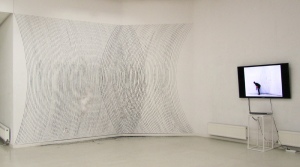 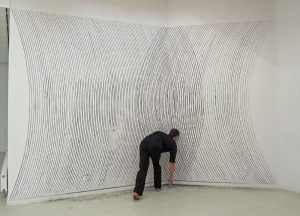
See gallery >> |
|
|
October 2014
ARTIST IN RESIDENCE - NISSIM BEN ADERET (ISRAEL) My artwork stems from of a simple black line on a white canvas. The painting starts with the placement of the marker pen upon the large empty drawing platform, which then evolves to create an intricate world of patterns. I study the movement of the line and its expressive powers as they are assimilated into the canvas, from the first point of contact to the lifting of the hand away from it. Each painting is one long continuum, but once it is complete, I find it impossible to trace the line back to its origin. The line becomes a duration, one action invested in time and matter. My technique is connected to the expressive gesture of the action painting, but my work process is very quiet and controlled. My consciousness and my body are solely focused on the moving of the black marker. Thus, I think of my choice to work in high contrast of black and white as an effort to reduce the gesture, and the pattern, to a zero degree. The engagement between the line and the platform examines figures that exist in different states of emergence, forming a somewhat symmetrical, abstract while orderly, sometimes crowded worlds. They depict a fragile figurative balance of independence and codependence, that reflects upon communal life and social interaction. As more layers of pattern are drawn, more possible interrelations are created and visual hierarchies intertwine. Moving away from the canvas I let the line stand still, knowing it will be forever present within the depth of the pattern created. During the DRAWinternational Residency Program, I want to set out on a new in-depth research about the ‘line’ by involving both sight restrictions and sound. nissimbenaderet.com
|
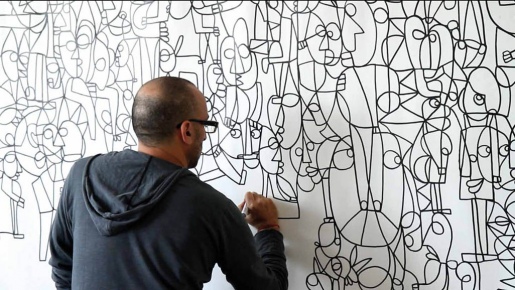
|
|
|
October 2014
ARTIST IN RESIDENCE - NIKY ROEHREKE (DE/JAPAN) I am interested in non-verbal communication, particularly in communication through hands. I believe that drawing has the power to speak to people more effectively than words which I sometimes feel can be very restricting and controlling, dependent on language, age, education, cultural background and many other aspects. Drawing on the other hand is free of all those restrictions and I believe it has the potential to speak from human being to human being independent from who you are and what you've experienced. I like hands, because I think they are uncontrollably honest. When I'm happy I naturally want to clap my hands, when I'm angry or when I'm nervous I naturally feel it in my hands. When I visit a foreign country, even if I don't know the language, I often naturally use my hands and manage to communicate. When I'm in love I want to hold hands with the person, which is natural and a global phenomenon. Because of this 'uncontrollable' honesty of hands, I believe that drawing made by hands can be the most powerful and purest form of communication, but I also think that it can only be truly effective if they are done in the most unconscious manner. Through my residency I want to concentrate on these 'uncontrolled' drawings, and I believe that the residency in Caylus is an excellent location, away from the place, people, things and client work I am used to. http://www.nikyniky.com
|
|
|
|
October 2014
ARTIST IN RESIDENCE - TIA-MARIA SOROSKIE (CANADA) I labor to uncover how women are bound to place and how the female body occupies space. A gathering process transpires, wherein I collect objects from my surroundings. These may take the form of vintage undergarments to create “feminine spaces” or bowls of honey and sugar to create “sweet spaces.” I place and manipulate objects in a space or setting via a drawing, painting, sculpture and/or installation process. A “hands-on” approach to making art allows me to examine the materiality and tactility of surfaces that are involved in a medium. By engaging an interdisciplinary practice, I can integrate different mediums and ideas on a daily basis while declining to consider constraints. I utilize scraps or remnants of clothing, fabric, pattern, and paper together with fragments of history, time, femininity and text. These fragments are ephemeral yet enduring. They allow the gaze to come into question. It is the female gender I explore, deconstruct and reconstruct. I choose the female as subject because I am a woman and I can only make work that comes from my point of view, life experience, and upbringing. I realize that not every woman makes art from this perspective. However, at this point in my life, I feel the need to examine the world through “gendered” eyes hoping in turn, that this practice will answer questions I have about the past and how I perceive myself today. As an artist-in-residence at DRAWinternational, I intend to further explore two themes that show up in my work – the exploration of the female body and how it occupies space and the exposure and sharing of the childhood rules that I grew up with – rules that center on femininity and what it means to be a “lady.” Working within the drawing process, on a small scale, and in an intimate manner, I will study fragments of the female body and imbed, transcribe, trace, layer, and superimpose text and pattern onto the female form and in the exhibit space. This process will allow me to examine the subject of vulnerability and femininity as I experience it.
|
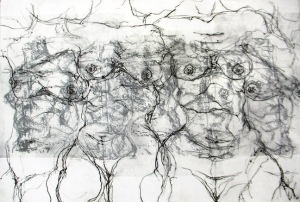 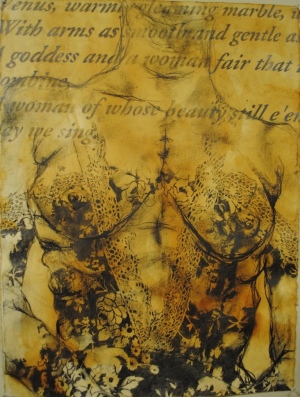
|
|
|
September 2014
ARTIST IN RESIDENCE - CHLOE BENSAHEL (USA) I am interested in the connection we have to materiality, more specifically to that which is closest to our bodies on a daily basis - fiber. My experience in fashion and textiles has only contributed to the research I have been conducting around the relationship between our 'selves' and the natural world (I include the body in my definition of the natural world as I believe that establishing more connections to our own physicality contributes to how much we truly take in the world beyond it.) I have found that the best way for me to explore this is through drawing. Each drawing is a kind of meditation on itself, starting with the thread. I seek only to record a material instant so as to draw the viewer into the materiality of the drawing. At DRAWinternationaI I will continue developing these investigations on a larger scale as this is how I imagine them. I always try and work with local materials when possible, since connection to a material also means connection to a place. Chloe Bensahel.
|
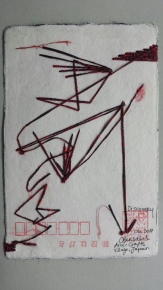 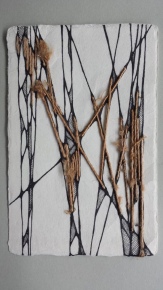
|
|
|
September 2014
ARTIST IN RESIDENCE - JESICA LEWIT (ARGENTINA) We never look at just one thing; we are always looking at the relationship between things. And so with a seemingly 2-dimensional picture we see beyond two entwined bodies and instead weave a narrative to occupy the space between picture and viewer. Using a technical blend of palimpsest Jesica Lewit overlaps her line-work and thus brings even the simplest of black and white line drawings to life. The sketching style is frantic, yet purposeful, as though each line were fighting to find their own space. Drawing on influences from her studies into the art of Japanese ink, Sumi-e, Lewit sees the body as a landscape, but it was one summer whilst gazing out over the awe-inspiring mountain ranges of Mendoza in Lewit’s home country of Argentina that she found a connection between these two subject matters. Sketching the dramatic contours before her, she noted how the rise and fall of the stark Argentinean mountain side recalled the peaks and thoughts of the human body. When Jesica puts pen to paper, she aims to scout the body, as an explorer would a road less travelled. Drawing upon philosophical teachings of Greek theorist Philo of Alexandria who crafted analogies that likened human bones to stones, human hairs to plants and human blood to rivers, she creates landscapes of her subjects. Jesica Lewit’s art happens in the white spaces and blank areas between the known and unknown, between the tangible and that which is left to our own imaginations. www.jesicalewit.com
|
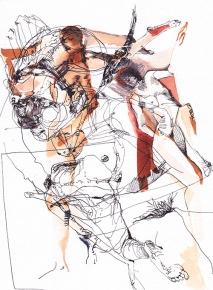 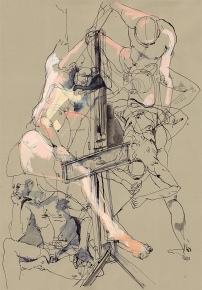
|
|
|
August/September 2014
DRAWing + AiR - MANUEL WEGRIA (BELGIUM) My work process oscillates between two quite different approaches that are compatible with each other and that can be mixed. The first uses a variety of data taken from the real world which are interpreted by the means of sensory captors / micro controller card / computer to generate virtual sonic worlds and independent graphics. This technique is the generative / interactive part of my work and can be used in multiple ways (transcription of movements into sounds, sounds to images, images to movements ...) The second concerns auto-generative / algorithmic systems , where no data is provided to the algorithm and it creates all itself…Its therefore a self-sufficient system / entity "automatic" and self-generative, completely independent from exterior influences (an entity endowed with a singular inner life and capable of building its own complexity). The core of this work is the algorithmic / complexity, the design of intelligent patterns able to create and develop a system themselves. This branch of my work is closely linked to artificial intelligence and aspects belonging to the study of neural systems. Some of my favourite themes of work include: neural networks, fractals as the "code of nature" recurrent algorithms and the visualisation of data. The main tools I use to create these projects are three software programmes interconnected via OSC (a protocol for sharing data) : Arduino / Supercollider / Processing. I propose initially to perform basic research on practices that enrich the act of drawing itself . This would be followed by the implemention of interactive systems (design interface/ sensors / algorithms / projector.) This project is therefore a trialectic relationship between the designer, algorithms and multimedia intervention.
|
|
|
|
August/September 2014
DRAWing + AiR - TOMIE SEO (JAPAN) Socio-‐political, philosophical, scientific but religious way of describing how the world works, how things are related/comparative that lead the world’s phenomenon seen/unfold/appear and unseen/fold/disappear is my current practice. I am especially interested and questioning unexplainable and unexpected social hysteria such as anti-‐Semitism, the Witch-‐hunt and even racial segregation due to nurtures with certain thoughts and human-‐psych. I made a hypothesis for depicting the theme: Literally and also theoretically contrasting images, forms and materials are used in my work to depict the two worlds/things/events in opposition. Often these images are placed on a structure as an invisible social/political frame within our society – for instance, rooms in a house; each room represents different categories, zones and classification like orders of taxonomy. Below is the list of some of the terms. Each line states words in pair/opposition/contrast but cannot exist without the other: Objectivity | Subjectivity Heterogeneous Society | Homogeneous Society Capitalism | Communism/Socialism Aristocracy | Democracy Future/Present | History/Past Mother Nature | Civilization Utopia | Dystopia Infinite | Finite Birth | Death The link between my work and audiences is also an important point, which makes a fluent conversation between them, and I combine interactional elements which have their own movements, body and autonomy into my work; such as living/raw entities and electrical units or even viewers. The parts each become Transmitter (or Utopian Elements/World) between my work and viewers. I state that this world is accumulation of layers of individual things, existences and events, and each people have different view-‐points for each thing. I seek to solve and discover the meaning, system and order of this complexity of the world with human-‐psych. www.tomieseo.com
|
|
|
|
July/August/September 2014
DRAWing + AiR - LIN CHAU (HONGKONG/UK) My influences are first and foremost, things I see, feel and experience. However, over the years, I have been particularly drawn to issues related to migration, the idea of existing in-between spaces and notions of transience and displacement. At present, I am interested in the interconnection between the subjective and the objective aspects of what we encounter through the media and how politics and world events increasingly enter our daily domestic sphere. The core of my practice includes drawing, printmaking and installations. The material I use is often semi-autobiographical, stemming from my own cultural and social influences. The subject matter of each body of work determines the materials and the forms of the work; they can be constructed or ready-made. www.linchau.com
|
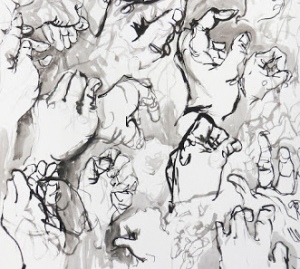
|
|
|
July/August 2014
DRAWing+ AiR - BRUNO PATYN (BELGIUM) My practice as a painter is highly influenced by the place I work in, and the surrounding landscape. I use the word landscape in its broadest sense, including nature, architecture, food, smell, language, people, to name only the physical factors. Most of the content of my paintings, however, will arise from the non-physical landscape, and the painting will be reflective of its imprint on myself as a person. I draw inspiration from the external world, and a natural and peaceful environment is highly conducive to the state of being I prefer while working. In this residency, it is my goal to go beyond the boundaries of the paper during the creation process and during the presentation of the work, and interact more boldly with the actual physical environment. I am very excited about a long residency that allows me to pursue these goals and that would offer me the time and the environment for meditation as well as production. My most recent work consists mostly of watercolor paintings on rice paper. They can be regarded as landscapes, but the subject matter is derived from the meditative practice of the act of painting itself, and in that way they have no material or 'real' counterpart. Specifically, they are dealing with the state of our consciousness as a collective, and the symbols that are available to us as reflections of that state. I regard the painting both as a mirror and as a tool for the spectator to work with themes that may arise in the painting symbolically. www.brunopatyn.com
|
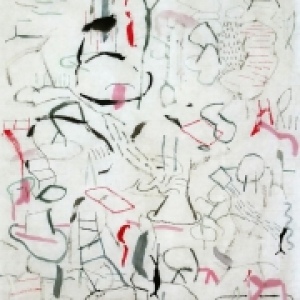 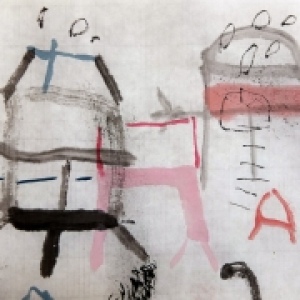
|
|
|
July 2014
ARTIST IN RESIDENCE - DIANE RICHEY-WARD (USA) I’m intrigued by the progression of one form as it morphs into another, in addition to the challenge of converging diverse imagery. I plan to further investigate the potential of layering as it relates to the coalescence of form and idea. I plan to develop this interest in structural and organic form by creating 10 drawings that investigate the morphology of architectural forms . By intersecting colorful framework with a variety of abstract layers, it will provide me with a potentially unlimited source of new configurations. I hope to find a certain linear energy or reverberation between the layers. As Diane Arbus the photographer once said, '"It's what I've never seen before that I recognize". In an attempt to find my own voice in an increasingly turbulent world, I'm seeking a certain poetic reality- an unexpected trace order in chaos. www.dianericheyward.com.
|
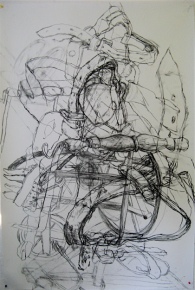
See gallery >> |
|
|
July 2014
ARTIST IN RESIDENCE - MONICA RIZZOLLI (BRAZIL) I use drawing as a medium to create an ongoing thematic and reference map based on my personal experiences in different surroundings. It is a thematic map because it tells a story and displays visual and textual data organized in order to create a comprehensible non-linear narrative. It is a reference map because it preserves at least one geographic relationship: the direction (used to determine where things are in relation to other things). I collect the data displayed on the map during drifts and other experiences based mainly in my intuition. Nevertheless, some criteria are important to choose which data I will display on the map. Those criteria are the visual or social relevance of the data. It could be for example: a singular architectural pattern, a demonstration or a frontier. In some cases the data are related to a specific period of time and those represent transitory landmarks. In each montage of the map new layers are incorporated to the previous one, creating not only new spatial correlations (relation between distance and similarity) but also new topological relations and narratives resulting in an overlap of different architectural patterns and social organization. My observation of the city includes also the observation of nature; some cities incorporate nature as an extension of their own territory, in other cases nature acts as a frontier. Finally, it is important to remember that the experience of the space is singular and each individual navigates and makes decisions also based on his/her memories and perceptions. Each of us has its own ongoing internal map and the decision to transform an internal map into an open process is also a decision to share experiences and create collaborative paths.
|
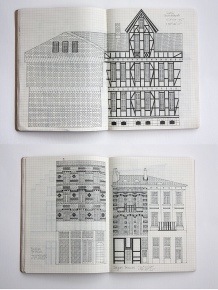 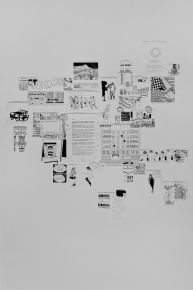 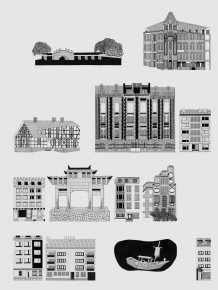
See gallery >> |
|
|
June 2014
ARTIST IN RESIDENCE - ANGELA GOOLIAFF (CANADA) Bug Struggles is a new idea that I would like to evolve into a series of large drawings. The preliminary sketches have already received a lot of attention; and though the idea is inchoate, it has evolved into a collaboration with a creative thinker who will provide text that will accompany each bug drawing. The creative thinker is a trained and working biologist. During the one-month residency at DRAWinternational, my focus will be bridging the text and drawings, creating a new body of large works in colour that is connected through narrative. At present, I use children’s plastic toys as models for drawing and sketching bugs. In the attached photos, you will see sketches based on the Bug Struggles theme. The process is approaching the subject matter through their struggle, and creating new ways to interpret struggle, via drawing. Each critter is named by the creative writer/biologist who also provides a short description describing what the bug is doing or has happened to it. There have been already a number of gallery and museum requests for exhibition of these drawings. Thus, I am currently drawing 14” x 16” works without text for immediate gallery requests. I am also in discussion with a British Columbia museum to draw specimens from their collection. What distinguishes my present work from the time spent at the DRAWinternational residency is the creation of a cohesive narrative and production of large format works in colour (approximately 4’ x 4’), combining the text with each drawing. The goal is to transfer the small-scale sketches into a larger versions of themselves based on the text. My work uses parody to reflect patterns in human behaviour and I have recently taken to studying dream analysis with a Jungian therapist. In Bug Struggles, I am investigating the social pressures we all experience to attain perfection, or how we hide our struggles in order to be perceived as “fine”. Through struggle, we learn, grow, evolve and are ultimately more relatable to others; thus, we are more connected and balanced. Struggle, a universal condition, is a basic component for being human. The struggles that we endure are unavoidable; yet, there is a frantic desire to avoid them and hide them from others. I use insects as subject matter to mirror human behaviour. This is further elaborated on in a 3-minute documentary about my work: http://vimeo.com/59824644. The documentary was produced by Teens@Evergreen, a program by the Evergreen Cultural Centre, in Coquitlam, British Columbia, Canada. In the following drawings, some (not all) of the bugs have been named and given a description. There is a brief update under each drawing indicating its status. These examples provide context of the work’s essence. www.angelagooliaff.com
|
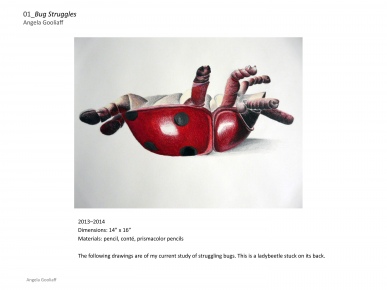  
|
|
|
May / June 2014
ARTIST IN RESIDENCE - ALTAIR ROELANTS (AUS) As a writer, drawing has always fascinated me due to its explicit ties to mark making – the hand and surface – just like words. No other art from bridges the space between writing and visual art so convincingly. Historically, both are born from the need to understand the world, to record it and acquire knowledge. Similarly, drawing and writing give meaning – one through images and one through words – via recognized patterns, shapes, forms, symbols and marks. As practices, or modes of communication, they don’t always stand apart for example hieroglyphics, Arabic scripture, Chinese calligraphy, pictograms or within the bound margins of artist sketchbooks or diaries. As an action – drawing is closely linked to the act of writing – the movement of the hand, the body’s gestures, the consideration of shape, texture, colour and positioning on the page. There is a connection in the physical process, relationship to the materials and the outcome. Similarly the tools are often the same – the pencil, quill of the ink brush, charcoal, the pen and the canvases of stone, bark and paper. In the current climate where digital art, social media, online publishing and e-books are expanding dramatically, writing and drawings focus on material and touch which evokes the surface and body, simultaneously challenges digital reinventions while also positioning them at the forefront of creative experimentation in the virtual field. My aim as a writer in residence at DRAWinternational is to explore this multi-faceted relationship between writing and drawing by creating a body of ‘active’ writing that is in direct dialogue with the artists in residence and creative dynamics at DRAW. An arts criticism that responds to, and develops alongside artistic practice and research, to foster an approach to writing that becomes imbedded in the processes of making itself, rather than sitting apart from it. By considering drawing and writing alongside one another, I hope to expand my writing into a conceptual and practice based framework to investigate alternative models of arts criticism and generate new cross-discipline discussions - part of my ongoing interest in writing’s relationship to other art forms such as ceramics and performance. I also hope to observe artists’ engagement with writing and influence on practice, and the impact of this methodology on my own work. And in the nature of DRAWs ethos, I am hoping their will be possibilities to collaborate with artists through interrelated text and drawing works with the intent to exhibit or publish, or devise a workshop or event onsite. The portfolio of writing I develop at DRAW will be be compiled into a publication, alongside regular online documentation on my website. www.writingthevisual.wordpress.com Altair Roelants in conversation with Australian artist Todd Robinson in front of his exhibition Oooh (2013), Galerie pompom at Sydney Contemporary 2013. Image courtesy of Galerie pompom. Cuneiform inscribed clay brick from American artist Charlie Schneider's recent work - The Wake Project (2013). A feature article by Altair Roelants exploring schneider's practice can be found in the current issue of The Journal of Australian Ceramics Vol. 52/3. Image courtesy of Charlie Schneider.
|
|
|
|
May 2014
ARTIST IN RESIDENCE - BOEDI WIDJAJA (SINGAPORE) Drawing recurs in my works. It is a visceral method to enquire, clarify, test, imagine, map and most importantly, to search by sensing out possibilities in and through the act itself. Drawing is in me, not a specialised skill that I acquired through formal studies but a natural activity borne of lifelong practice. For me to explore drawing means also to enquire into issues that are important to me: home, identity, and place. Urban sociologist Richard Sennett in The Craftsman urges making as a way to learn more about ourselves, especially with our modern cities’ disconnection with material culture. I draw to know and with new understanding drawing again to see. At the residency, I hope to: seek out new material and conceptual possibilities for contemporary handmade drawings. critically reflect upon my drawing practice: impulses, motivations, processes, imagery, materiality, interactivity, physical activity and presentation. www.boediwidjaja.com
|
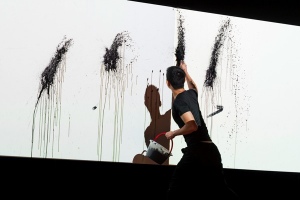 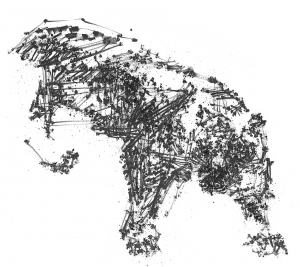
|
|
|
March /April 2014
ARTIST IN RESIDENCE - JACK CANDLISH (CANADA) My work has been particularly influenced by Craig Owens postmodern theory. I am attracted to Owen’s deconstruction of an idea, or symbol of society, to better critically analyze modern assumptions. From there, I wanted to create work that is a visual interpretation of this critical deconstruction and begin rebuilding, to create something that is not in stasis but rather changing, evolving, progressing for better or worse. With Owens’ theories of allegory and postmodernism in combination with a personal narrative, I attempt to visualize contemporary society as a whole and its affects on the individual. I would like to see how the individual in turn affects the structure of the whole, how personal narratives add up to change and shape the overall structure. This also provides an opportunity for individual connection or interpretation of the piece. I believe that a residency will allow for an excellent opportunity to continue developing this work. Jack Candlish
|
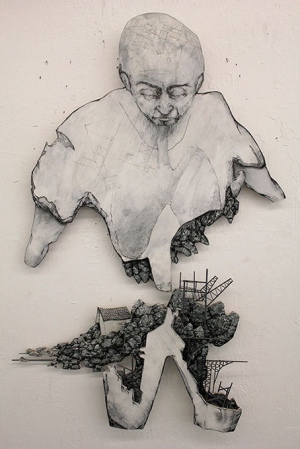
|
|
|
February/March/April 2014
ARTIST IN RESIDENCE - DANIELLA TURBIN (UK) Within a period of three months spent at DRAWinternational, I propose to continue an investigation into human mind with a focus drawn towards the psychological space one encounters when dreaming. This is of fundamental significance to human development, my point of departure lies within the documentation of this alternate world as a process to understand, derive order from chaos, elevate the overlooked, grasp the paradoxical, interconnect the physical and abstract. In an attempt to grasp the impossible and paradoxical structures and layout of the dream world, the works of M.C Escher and 'Inception' are my point of departure. Stemming from Freud's Interpretation of Dreams through to Jefferey Moussaieff's contemporary dream analysis. Drawing is used as a primary tool or investigative medium, currently exploring the subjective and objective mark. Reinforced by Ludwig Wittensteins 'Philosophical Investigations 2', the subjective and objective mark is further explored through dualisms, in the case of dreams the external (objective) and internal (subjective). The work I intend to create will act as a transgression of the two into three dimensional, taking the language of mark making to alter the viewers perception, this will be further explored through juxtaposition and further examination of the relationship between text and image, and the possibilities of altering the viewers perception of text through combining with mark making. reinforced through writings on perception such as Aldous Huxley's 'Doors of Perception' and Walter Benjamin's 'On Paintings, Signs and Marks'. Daniella Turbin Aibophobia, 2013 Mixed Media This autumn, Daniella Turbin was one of seven graduates selected for the Turner Contemporary Platform exhibition showcasing the talent of emerging artists from East Kent in the Clore Learning Studio and other spaces, as part of the Platform programme which aims to support graduate professional development and nurture new talent. Aibophobia presents the outcome of a series of two dimensional studies in the form of a three dimensional drawing, juxtaposing mathematical ‘certainty’ against the indeterminable mark. Aibophobia investigates space and light, as the psychological space of the dream comes to interrogate physical space of the drawing. Daniella is documenting her residency on her blog : http://daniellaturbin.wordpress.com
|
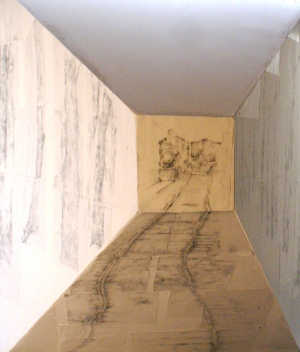 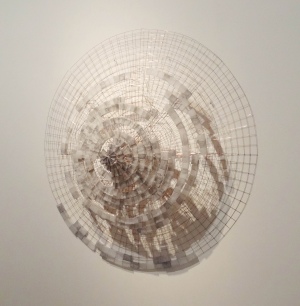
|
|
|
February 2014
ARTIST IN RESIDENCE - MARTHE ZINK (NL) In my drawings I make the contradiction between academic drawings and thick lines, comic figures. I find it interesting to experiment with more versus less brighter colours / grayscale. While using everyday objects, I want to create my own perception. I want to remove their familiar context and function, by placing them in a context where their function is no longer relevant and does not come into its own. The appearance of the objects will be preserved, but through their new environment, they take on another -unknown- character. In addition, I am involved with fundamental questions about man and his identity. In my work, I go against judgments and into appreciation of differences between people. I believe that anyone has the right to be different. In Nowadays society, aiming for individuality is seen as the highest goal. The paradox is that in aiming for individuality, they aim for the same and become more similar, not different. People have to become better aware of the influence of fellow human beings and give their own feelings a moment thought, leading to self-choice. I want to make people aware of their own freedom, by having them look in a different way at images and words they know. Last September and October I took part in an exhibition in The Stedelijk Museum of ‘s- Hertogenbosch (The Netherlands), because I saw all my recent work together over there, It was a good opportunity to take a bit of distance from my work and to ask myself new questions about it. The reason that I want to join the DRAWinternational residency is because I would like to get closer to the answers of the questions I am querying myself: How can I enlarge the contrast of elements in my work, without losing the narrative aspect of my work while elements falling apart? Furthermore, with this residency I want to learn how to steer the audience's viewing direction by developing more or less details in certain elements. How much can I steer the viewer’s viewing direction by making a clearer contrast between the foreground and the background? Do the visual elements I combine, work with each other as intended? This would help me to even better reflect on my work. In this way, I will be more contemplative, enabling me to work the choices I have made or I have in mind, to further the development of my work. By discussing with the other artists / participants I am confronting and confronted with new ways of thinking and new angles. This enables me to build and expand my vision. Last year I had an artist in Residence in Hamburg/ Tripkau (Germany) and I noticed that a different environment also had a big influence on my work. With the residency of DRAWinternational I would also find it interesting to discover what influence Caylus will have on my work.
|
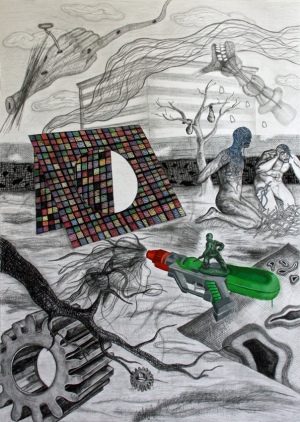 
|
|
|
October 2013
ARTIST IN RESIDENCE - SUSAN WALSH (USA) My work often tests the boundaries of photography and in this project I am fascinated by the intersection between drawing and the photographic image. Using the sun, pieces of thread, paper and my camera, I will create shadow drawings about time / place, about losing something vital and regaining one’s sense of connection (a thread) to the here and now. I have begun to create thread “drawings“ in my studio in Beacon, New York, at 3 o'clock in the afternoon — a precise, haunting intersection of an object (thread), the sun, the time, and location. These pieces look very much like pen and ink drawings. I see sound waves in these thread drawings, waves of music without sound. I was very moved by Kay Larson’s biography of John Cage, Where the Heart Beats. The expression "marking time" is about waiting, but it also alludes to the literal meaning of marching in place to the time or beat of music. www.susanwalshstudio.com
|
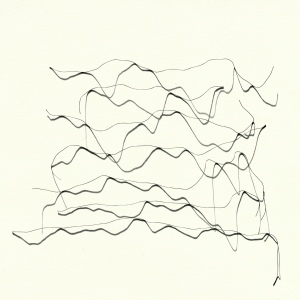
See gallery >> |
|
|
September/October 2013
ARTIST IN RESIDENCE - SANDE WATERS (CANADA) Throughout my life I have struggled to understand and feel comfortable with my sexuality, how I relate to others and the sexual expectations of my culture. My artistic practice has been a personal investigative therapy, which continues to enlighten me with new discoveries. Overwhelmingly my work evokes spiritual and erotic awareness of the female body as archetype of the human condition. At DRAWinternational I plan to continue pushing my work further regarding issues of female sexuality in relation to cultural norms and expectations by creating drawings which are collaged with photographs and painting. I am fascinated with the sexuality of older women and women who have atypical bodies. www.sandewaters.com
|
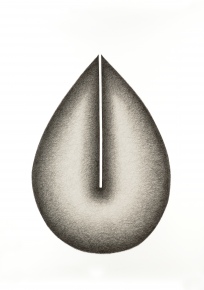 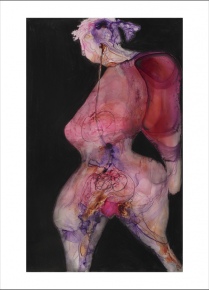
|
|
|
August 2013
ARTIST IN RESIDENCE - BARBIE KJAR (AUSTRALIA) In my current art practise I am focusing on drawing portraits from life and then introducing some form of disguise. I am exploring the idea of the double, and myths relating to the various guises Zeus undertook in order to seduce women, in particular his transformation into an eagle, bull, golden coins,and a cloud. I am interested in the idea of the double and the Jungian concept of the shadow/ the other. I have been drawing one person from two different sides. I believe a months residency would allow me to develop large scale portrait drawing, primarily in charcoal and ink. I would like to extend the type of people I draw to include people from other cultures or who have unusual facial composition. I am intending to enrol in a PHD for 2014 at sydney College for the Arts, my question relates to the source of portraiture and the process and how these influence the representation of portrait. I propose to investigate portraits drawn from life, from photographs (Marlene Dumas), from found images, from life and imagined or drawn from literary sources. My secondary question is, how relevant is the traditional model of drawing from life in contemporary portraiture? I will challenge my art practise and include images sourced apart from life drawing. My main aim for the residency is to extend the mark making and to challenge my drawing practise and to create large scale portraits. I would plan to work with charcoal, watercolour and ink onto large scale paper.
|
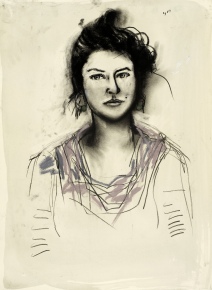 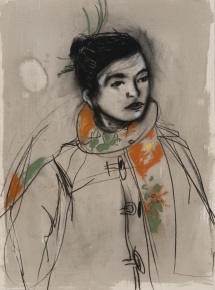
See gallery >> |
|
|
July/August 2013
ARTIST IN RESIDENCE - ALISON GRAHAM (UK) I have been offered a scholarship residency at DRAW international, as an opportunity to further develop my practice and research through explorative methods of drawing and documenting landscape and transferring this body of new research interpretations into a new series of ceramic artworks. This also allows me the opportunity to engage with visitors to the exhibition through discussions of my work and research, and developments during the residency in Caylus through an open-studio policy. I first met John and Grete McNorton when I began my Masters in Ceramics at Cardiff School of Art & Design in 2004. At the beginning of the course, a trip was organised to DRAWinternational, and I spent 4 days developing my drawing and mark-making skills under the guidance and tuition of Dr John McNorton. This intense period of tuition, guidance and support proved a crucial turning point in my artistic development: from a fear of drawing born out of insecurity, to an inquisitive and enthusiastic engagement with drawing and mark-making that continues to this day. DRAWinternational will be the first professional organisation to publicly showcase my doctoral artworks and studio-based investigations since graduating in July 2012, and offers a valuable opportunity for me to communicate my research outcomes and findings visually, orally and in written form to an international audience: through the exhibition of artworks, discussion of my research and artistic developments (both during and since my studies) through workshops and open studios. The opportunity to develop my work and my methods of creative and professional practice during this residency in a supportive, well-established and well-equipped environment, whilst reflecting directly on my doctoral research and current practice, will be invaluable. I intend to write an article about the experience and how it has challenged, changed or impacted on my creative practice, with a view to publication in an international art journal.
|
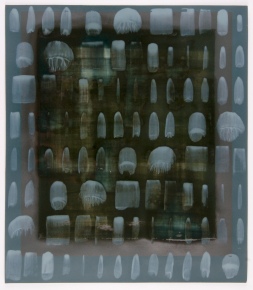 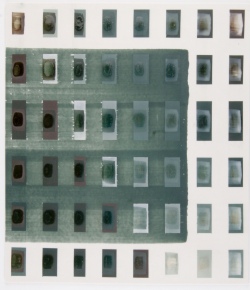
See gallery >> |
|
|
July 2013
ARTIST IN RESIDENCE - NIAMH MERC (IRELAND) The perception of touch through the medium of drawing and painting is a primary source of expression for me. Tactile perception through drawing on a surface allows me to explore myself at a semi-conscious level. It brings me to a completely unknown sense of myself. The expressive power of dots, lines, shapes, areas, colour and composition in the final exploratory paintings help to make my feelings real to me. I want to further explore this process of making marks on a surface in a more intensive and reflective manner. Measurement is a recurring theme in my work. I attempt to invent images that measure intangible phenomena such as the amounts of water needed in the body to release emotions. Further exploration into interpreting unresolved feelings that have surfaced for me are essential for my work to progress. I am searching to represent my own ideas about living between the earth and the sky. For me, this landscape is an inner and outer world and is both fact and fiction. Niamh Merc
|
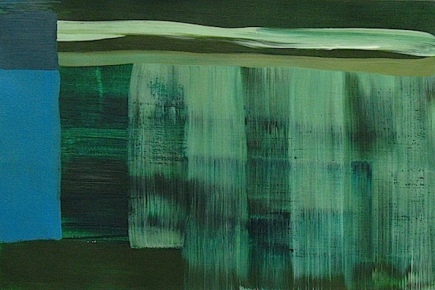
See gallery >> |
|
|
July/September 2013
ARTIST IN RESIDENCE - JEANNINE COOK (USA) For many years, I have been drawing in metalpoint. I am deeply interested in expanding the vocabulary and scope of this ancient medium. Recently, I have been using a black ground on which to draw, versus a white-cream or tinted ground. This is a stimulating and very different voice of metalpoint. I would use the opportunity of a month’s residency at Drawinternational to explore more fully the possibilities of this particular version of metalpoint on black. Heretofore, I have only worked in a very small format, but I hope to be able to scale up to larger drawings, using a freer, more gestural approach. This requires more time than I have been able to devote to this venture, particularly in view of metalpoint’s inherently slow intensity of execution.
|
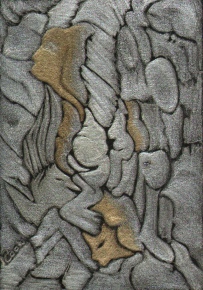
|
|
|
March 2013
ARTIST IN RESIDENCE - HANNAH SARAH JAMES (UK)
Is your drawing practice primarily concerned with ideas of abstraction ?
|
 1-1)  1-2)
See gallery >> |
|
|
February/March/April 2013
ARTIST IN RESIDENCE - KATIE BELCHER (CANADA) During this residency I plan to research and produce drawings on the wall and on paper that will mingle natural and manufactured forms with landscape. I will combine subjects drawn from observation with those done from memory—machinery, museum specimens, furrowed fields, feather, fur and rope, and abandoned or remembered architectures. It will be an exploration of agricultural history rather than my previous personal memory narratives. I intend also to experiment with documentation in new media (photography, video and animation) to further propel the performative aspects of my drawing practice. The opportunity to engage with other artists in discussions about drawing will enrich my practice, and I hope that my involvement would do the same for others. A residency focused on drawing in particular will provide me an environment within which to take risks in my practice while still exploring the richness of this medium. I look forward to the sustained completion of a single project and am excited for the depth of involvement in my practice that this opportunity will bring. www.katiebelcher.com
|
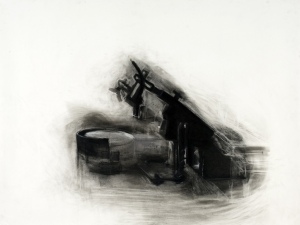 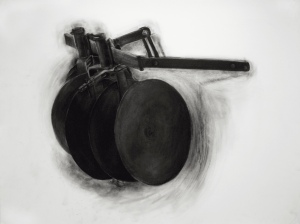
|
|
|
January/February 2013
ARTIST IN RESIDENCE - KELLIE O'DEMPSEY (AUSTRALIA) As an artist in residence I aim to research and develop a body of work investigating hand drawn gestural mark making in combination with live digital drawing. Incorporating elements unique its location my current practice is a flexible transportable model resulting in site-specific installations. Drawing is at the core of my collaborative and cross-disciplinary projects which explore the notion of the total artwork or Getsumkunstwerk. During this practice led production I aim to cultivate new work via a 4.part structure: 1.Collection: surface and site construction, field drawings and digital projection experiments 2.Design: narrative, parameters and collaboration 3.Performance: a progressive drawing installation work for the gallery 4.Exhibition: as installation including performance documentation as artifact This project investigates time, space, and movement as narrative and intends to avail an opportunity and a possibility for interaction way through experiential making and play. Identifying and unraveling notions of public and private space via drawing, I explore the interconnected experience of human engagement and hope to perform a public work. Kellie O'Dempsey Recipient Australia Council Artstart Grant.
|
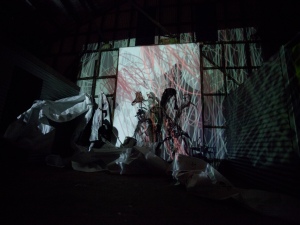 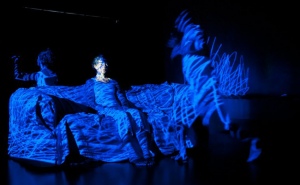
See gallery >> |
|
|
October 2012
ARTIST IN RESIDENCE - JULIE PAYNE (AUSTRALIA) I have recently completed a solo exhibition at Handmark Gallery in Tasmania that examined the notion of specimens. These drawings were influenced by the very careful botanical like approach to drawing that were then included in a greater landscape as a means of describing place. I have used the Japanese Album format to form a single continuous drawing. What I would like to achieve within the residency is to explore a sculptural approach to drawing, combined with a desire to experiment with as many different drawing methods as possible. www.juliepayne.com.au
|
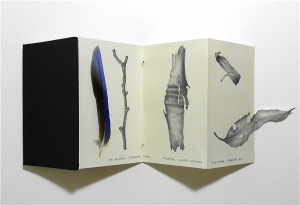 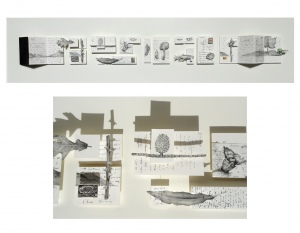
See gallery >> |
|
|
September/October 2012
ARTIST IN RESIDENCE - EVAN BROENS (CANADA) The theories presented by Goethe and his topic of intuitive consciousness as a way of understanding has become central to my working methodology. Drawing has operated as a grounding moment in my creative process and there are aspects of my practice and my work which includes drawing. Yet this way of working has not fully become a secure element in my portfolio. The DRAWinternational residency is an important opportunity to initiate drawing as its own entity in my practice, rather than being supplementary; bridging practice and theory and, as the website indicates, to locate a contextual framework. With the DRAWinternational residency, I intend on achieving within a two month period an exhibition consisting of ten to fifteen fully realized drawings. These works would be the result of several working series explored during the residency; selection for the exhibition would be based on the Board Members critique of all the works made in the multiple series. This process would aid in solidifying drawing as a part of my overall work. My intention here is to initiate a framework and to develop a theory regarding my mark making, and the tendencies that arise out of my drawing sensibilities. Using an assortment of materials and applications, I will be engaged with mark making as an intuitively conscious action in finding a shape as it is meant to be. Regarding my working methodology, shapes are my central interest when it comes to making visual art. I'll see them, I'll sense them, and I'll make several "attempts" to get them out. This is where abstraction is happening. I use a flexible material to get a shape quickly, like drawing and cloth folding, to get something grounded. At this grounding moment, I begin to try and understand how that particular shape needs to be. This is where I'm looking and trusting my actions, whether its cutting or drawing, or moving the materials. Generally, my over-arching interest in residencies is researching how a place affects visual language; I would like to be able to strengthen the skill of articulating the experiences of place and time into object making and thus in communicating through pure visual means. I postulate that the DRAWinternational residency will affectively change the vocabulary of my visual language, and wilfully come away with a more comprehensive cognition of my drawing as an integral part of my working method. The process of morphology in shape through drawing is documented on my website. October 22, 2011 Evan Broens evanbroens.tumblr.com
|
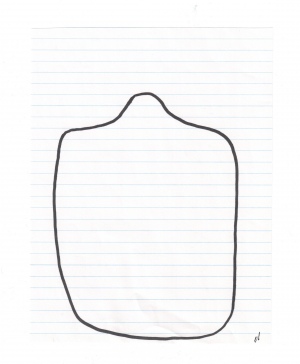 
See gallery >> |
|
|
September/October 2012
ARTIST IN RESIDENCE - ANNA HAYES (UK) Fragility within human existence is key to the beauty in our world. My exploration of this thus far has taken me to look at virtual reality, however my intentions are to discover the apparent ephemerality of our own nature without this metaphor. To use the etherial qualities of drawing and watercolour; to take from what exists in my direct surroundings, a way of mapping my own experience within this world and the delicacy of it. Drawing lends itself perfectly to this, as what is drawing other than absolute discovery. During my time at DRAWinternational I wish to make a body of small drawings and watercolours to aid ongoing research in to this area. Working with the emotional and sensory experience that I have with my environment, highlighting the subtlety and beauty of both mediums and the poetic and contemplative nature of the ideology.
|
See gallery >> |
|
|
September 2012
ARTIST IN RESIDENCE - NONI BOYLE (CANADA) My work is an exploration of identity and belonging through landscape – or more particularly, through an experience of environment. I have lived and worked in different areas of Canada, and these varied geographical environments have informed my work to a large extent. In 2008, I did an 8 week residency in the Yukon, and began to focus on notions of wilderness and the Canadian north as they relate to Canadian identity. Although the work is based in landscape, I am less interested in portraying the appearance of specific places than I am with capturing a sense of the rhythms and pulse of being there. In my mixed media constructions I deal with themes of ecology, spirituality, and personal experience of place. These works are layered in their physical construction, the various media and processes involved in creating them, and the layers of meaning and reference contained within them. There are several references to poets and poetry in the work, along with strategies of poetic construction and metaphor. The commonality shared by the poets and writers whose work influences me, is a theme of spiritual engagement with nature and reference to the transformative potential of contemplation. It is this sense of transformation through awareness that I attempt to address in my work. Since drawing is central to my practice, I was very excited to find a residency opportunity that seems to celebrate the act of drawing to the extent that DRAWinternational does. One of the reasons that I wish to do a residency in France has to do with the exploration of place, identity and belonging. My maternal family history has its roots in France (many generations past). I have not spent more than a few weeks in France prior to this, and would welcome the opportunity to stay long enough to absorb a sense of place and develop some work in response. The other objective I have is to work on a sustained project in which I plan to create a large installation/drawing, using materials as mark. This is a process I have employed before in my work, using material such as driftwood, twigs, glass, pebbles and so on. I have recently been developing some smaller versions of what I would like to explore on a much larger scale - using glass.
|
See gallery >> |
|
|
July 2012
ARTIST IN RESIDENCE - LYNDL HALL (CANADA) My work is engaged with drawing practices through the examination of the relationship between a line and its surface, specifically how a line transforms a blank space and how that space then contextualizes the impinging line; drawing then becomes an apparatus through which to think differently about the surface that is being marked — the world sustaining that mark. My goal is to execute a series of works, ranging from working drawings to documented performance, as I attempt to ascertain my exact position in space using a sextant, compass and sundial of my own construction, while exploring the poetic implications of alternative graphic based methods for direction, specifically the pre- enlightenment practice of Geomantic divination as a ’logical system’ for guidance. I have found that these directional methods have strong performative inclinations, and my proposal for a residency is to explore the potential for performativity in relation to drawing a line, casting a reading and positioning /locating oneself within the world. The sextant and geomancy both present comparatively primitive, yet elaborate, means for location in relation to modern technologies, and in light of my amateur training—failure becomes inevitable. My pursuit becomes decidedly more quixotic as I attempt to orient myself with these tools in a new space/city/country: even if I attain my goal and deduce my coordinates, I wonder what use the result will be to me—providing only a point in virtual space related to latitude and longitude, without any indication of where I truly might be in the actual world or how I might get home. The inevitable failure of a graphic understanding of place and location is foregrounded in this pursuit. The inverse to this failure is the ability of this graphic representation to trick or convince the viewer of a reality convincingly represented yet entirely fabricated, here the artist becomes charlatan, a trickster that can circumvent the structures in place with ordered disorder. These are the themes I am hoping to research during my residency.
|
|
|
|
June 2012
ARTIST IN RESIDENCE - JULIA HITCHCOCK (USA) The concentrated block of time devoted to creative research directly corresponds to the volume of work created. I have the ability to work with a very diverse group of personalities and find that these are always great opportunities for visual problem solving and aesthetic discourse. I believe maintaining a sense of flexibility is critical to achieving an optimum experience in a residency where the studio and environment is different than ones usual practice. I plan to execute drawings in charcoal, chalk and acrylic paint on paper. I wish to remain open to their construction and my response to the environment in Caylus, France. I expect the working environment and cultural exchange to have a significant and important impact on the creation of my visual imagery. My work typically employs raw and expressionistic marks countered with areas that are more controlled and carefully articulated to create visual tensions and counter thrusts. I find theses passages are necessary to evoke emotive response. I intentionally leave areas gritty where the surface is dense with multiple layers of paint, charcoal, and chalk that translate into levels of shift and movement. The drawings contain a historicity of marking vocabulary that comments on mistrials, hopeful starts, human frailty, and re-evaluations. The painted areas are often left flat without modulation of tonal values to create a sense of ambiguity, lack of conviction and spatial confusion. This material manipulation pictorially aides in the narrative content without being literal or didactic. Plasticity and the more formal elements of design are under constant evaluation and revision as I carefully weigh my aesthetic choices and the impact they may exert on the thematic development of each drawing within the scope of the project.
|
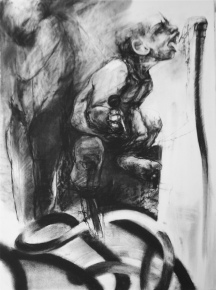 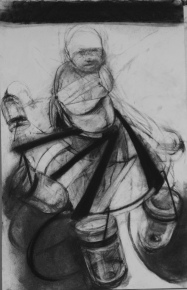
|
|
|
April 2012 (rescheduled)
ARTIST IN RESIDENCE - DAVID NECHAK (USA) I want to establish a dialogue between several locations in an environment whereby existing objects with coded colors result in connecting site lines between the objects in the landscape. This might be relating to how painters move color throughout an image to connect different areas within the painting. My desired result would be to encourage people to walk from one location to another to realize the conceptual connections between the objects. In regard to my choice of materials I can use fabric having color, painted papers or painted objects or words of colors or all of the above. The project in a visual sense relates to 'tagging' in a respectful manner. David Nechak has a faculty position at the Cornish College of the Arts, Seattle, Washington.
|
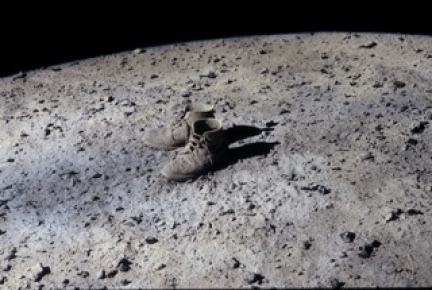
|
|
|
September/October 2011
ARTIST IN RESIDENCE - KAZUKI NAKAHARA (JAPAN) I would like to be engaged during my residency in making new drawings. My theme, "oracle bone scrip", was the beginning of a script which originally came from China around 3000 years ago. They were made by observing nature and writing those responses on animal bones or turtle shells. These ancient forms are powerful means for communication and have been an inspiration for my own motif. I would like to continue to explore these ideas and intend to present work made as a floor and wall installation in the studios/gallery of Drawinternational in Caylus. wwww.kazukinakahara.com 'Kazuki Nakahara is a graduate of Hanns Schimansky's school of drawing. Born in Japan, he came to Berlin in 2005 to study with Schimansky. Shaped by his family's tradition - his father is a calligrapher - he has found a place in European art. With impressively precise pencil lines or ink strokes, he began making intuitive depictions of familiar objects on white paper. First they were oversized toothbrushes that danced in abstract space; later he reinvented the typical young girl's hairstyle - tightly bound, short pigtails. Parted hair tied tightly on both sides is one of Kazuki Nakahara's typical motifs which he investigates in many variations, sometimes floating freely in groups or as an individual form. Now, on large format paper placed on the floor, he meditatively makes circles, stroke by stroke. Nakahara's strictly controlled, linked lines and his spherical shapes, can be transformed in one's fantasies to billiard tables on which the "Parting-Award" is played for, they sweep out over our window sills and become magical heavenly bodies'. Inga Kondeyne
|
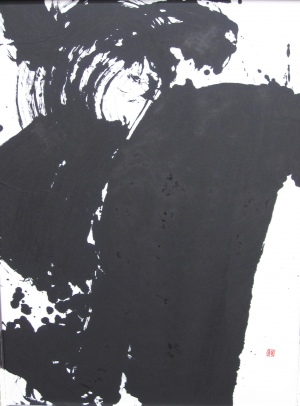 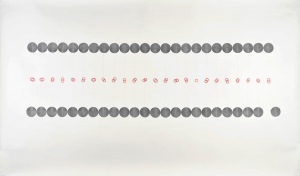
|
|
|
May/June 2011
ARTIST IN RESIDENCE - SARA SCHNECKLOTH (USA) At DRAWinternational, I would like to focus on developing a series of participatory interactive drawings that integrate vision and touch, and explore connections between the material practice of drawing and the local ecological systems around Caylus, France. I have been developing and showing participatory drawings for the past year, and I am eager to further develop the theoretical and practical aspects of this project through a residency at DRAWinternational. I define drawing as an expansive markmaking process, one that includes traditional rendering approaches combined with three-dimensional elements and new media. As a discipline, drawing is often referred to as ‘the thought process made visible,’ and promotes experimental methods of manifesting ideas. In my practice, I place this ethic of experimentation at the forefront, and invite participants to engage with the visual imagery and physical principles of science, while interacting with drawings that ask for their physical and aesthetic input. My goal is to develop a series of new drawings inspired by local natural systems, and to write critically about the theoretical underpinnings of the project. I would like to engage specifically with the local riparian systems, stone quarries, and flora that is unique to the Midi-Pyrenees. Each drawing would evoke a local natural system in flux, and point to the connections between them. I would utilize a range of traditional drawing materials and grounds, and experiment with new ways of integrating participatory elements into the pieces. My hope is to discover connections between drawing material and the natural environment, and uncover insights into how we interact with both. Conceptually, this drawing project engages with several concerns: What can drawing uniquely uncover and express about our physical and material experiences? What can be learned about an image, an idea, and sensory perception by examining a surface with both vision and touch? How do we interact with each other through art that asks for our participation? How do science and imagination inform each other? Taken on a larger level, these questions form the core of my research interest in drawing, embodiment, phenomenology, and participatory social networks. I believe that a residency experience at DRAW International would push my work in exciting new directions, in both theory and practice. Sara Schneckloth teaches drawing and critical practice at the University of South Carolina in Columbia. www.saraschneckloth.com
|
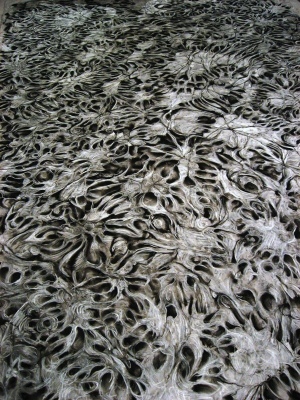
See gallery >> |
|
|
March/April 2011
ARTIST IN RESIDENCE - BEN SHEPPARD (AUSTRALIA) My process often involves the production of 3D drawings or ‘Idea Objects.’ These objects operate as drawings whereby the concept that ‘the thinking happens in the making’ is at the core of their creation. Lines are edited during manufacture in a way similar to those made and erased with charcoal or graphite and an eraser. The lineal aesthetic affects a feeling of an artefact that operates somewhere between the idea of something and the object that it represents. I intend, during the course of the residency, to substitute 'Idea Objects' into everyday contexts and will immerse myself into the local environment and culture to consider relevant subjects – particularly national and local icons. I look forward to producing a series of drawings (including some on photographic images) and small sculptures whilst being open to collaborative projects at DRAWinternational.
|
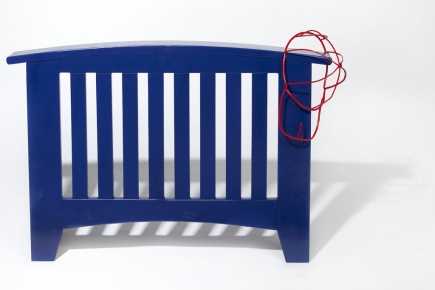 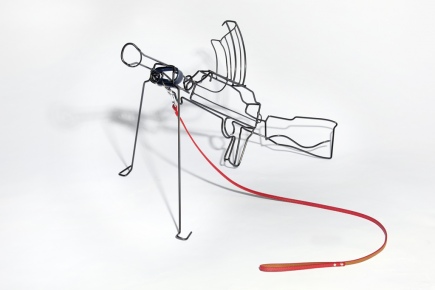
|
|
|
October/November 2010
ARTIST IN RESIDENCE - BRITT SALT (AUSTRALIA) During this residency I would like to develop works and research around the idea of ‘Klein Knot’; which I have re-coined as something spatial, movable and in flux, with the potential to incite us to re-orientate ourselves within the immediate spaces we inhabit. The “Klein Knot” installations may occur unexpectedly in public space, where, as the viewer moves closer to the facets of the installation, each part begins to turn and warp its shape. A knot has a strong sense of stability associated with it; it is a serious notion, with a functional strong hold. Yet an installation of tussling objects, three dimensional lines, or “Klein Knots”, which reposition themselves to constantly bring about a sense of instability, groundlessness and fragility in the viewer, as it is encountered. In France, I would like to use this time and idea of the “Klein Knot”, described, to consider how our influence on a given space might track our presence within it. Stated another way, how our effect and interaction within a space, has the potential to place us there, and how without that interaction we may be seemingly displaced and undetected by that space. In the past seven years I have developed a high standing in the Australian arts community, with solo exhibitions attracting positive reviews, contemporary art awards across the country and a nomination as one of Australia’s 50 Most Collectable Artists. Undertaking this residency, at this point in my career, would provide the unprecedented opportunity for me to focus on new studio work in an international environment.
|
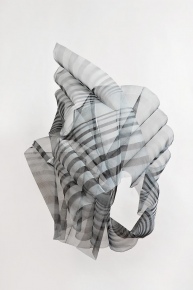 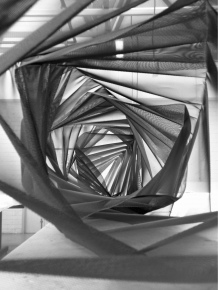
|
|