 |
 |
|
À propos de nous I Information I Brochure I Evénements I A.i.R. I Ateliers I Galerie I Coups de Coeur I Hébergement I Localisation I Actualités I Contact I Liens | > English |
|
 |
| Evénements archivés >> |
|
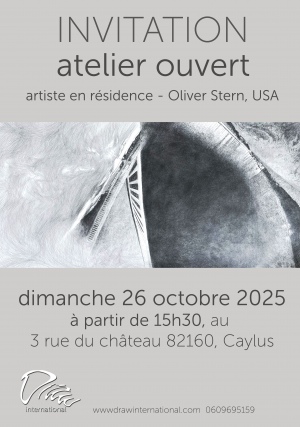
Atelier Ouvert
Octobre 2025 On vous invite à notre dernier atelier ouvert de notre programme de résidence 2025. Venez rencontrer notre jeune artiste américain Oliver Stern et découvrir ses œuvres inspirées de ses aventures parcourues dans le paysage local.
Nous espérons vous compter parmi nous ce dimanche pour cet dernier rendez-vous de l'année.
|
 |
|||
|
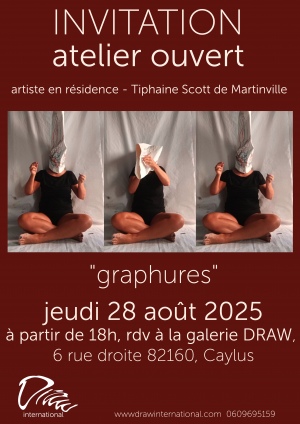
août 2025
Graphures Mon travail questionne principalement l'incarnation de l'élan vital tourné vers un horizon désiré.
En arrivant chez Grete et John, j'avais à l'idée de poursuivre la réflexion graphique autour des paroles que je collecte depuis deux ans auprès de participants à des sessions d'accompagnement, sans nom ni date. Je les reconstitue ensuite en rouleaux dont je fais des "pellicules mentales" d'un élan en train d'advenir. J'ai également extrait de ces rouleaux un alphabet de logogrammes, entre objets transitionnels et éléments pour de nouvelles phrases graphiques. Plus globalement, je tente inlassablement d'organiser une pensée de l'advenir autour d'une cartographie métaphorique d'un cerveau peuplé de monstres et instruments de langage, qui aideraient à pousser l'élan vital vers l'horizon désiré.
Si ces objets m'ont accompagnés pendant cette résidence, j'ai surtout basculé ici dans ce que je nomme aujourd'hui "dessin haptique" : tenter de saisir par le trait - généralement les yeux fermés - les oscillations internes des élans qui traversent la tête ou le corps - le mien ou celui d'autres, celui de végétaux collectés au gré de mes marches. Les protocoles tiennent compte du toucher d'une main, quand l'autre main tente par le trait de rendre compte des variations. L'exercice performatif donne lieu à des dessins de lignes sur des formats divers, dont il reste ensuite des matrices de ce qui est advenu.
Après une première carrière d'avocate, je poursuis depuis 15 ans un parcours de plasticienne, qui m'a notamment amenée à reprendre des études d'art il y a 5 ans. Diplômée en 2024 des beaux-arts du Mans avec les félicitations du jury, je termine également un master à Paris VIII lié à l'écologie des arts et des médias. Je souhaite poursuivre ma recherche plastique autour de l'élan vital, en particulier à travers des résidences dédiées qui permettent le recul et la maturation nécessaires à la réflexion.
Un grand merci à Grete et John qui, par leurs soutiens et questionnements constants, ont emmené mon travail dans de nouvelles dimensions.
Tiphaine Scott de Martinville, août 2025
|
 |
|||
|
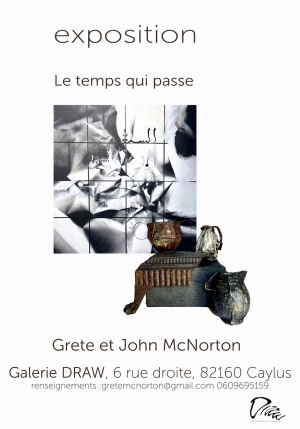
juillet / août 2025
Le temps qui passe
|
 |
|||
|
July 2025
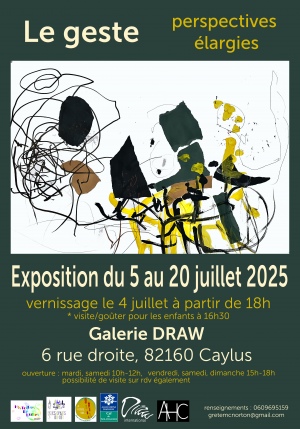
Le Geste Les dessins des jeunes enfants : qu'évoquent-ils ?
L’exploration du monde qui les entoure passe par de nombreuses étapes. Cette perception est évidente dès les premiers dessins et se poursuit jusqu’à l’adolescence. Le dessin est l’équivalent graphique de ce que les humains, passés et présents, continuent de voir, d’entendre, de sentir, de toucher et de ressentir kinesthésiquement quant à leur position dans le temps et l’espace. L’histoire de l’art témoigne clairement de l’évolution et de la diversité des conceptions spatiales au fil des siècles.
Les enfants ont également besoin d'espace et de temps pour explorer des idées de manière significative. Pour reprendre les mots du philosophe Ludwig Wittgenstein : « Quoi que l'histoire ait à voir avec moi, le mien est le premier et le seul monde. » Cela vaut également pour le jeune enfant. À un stade précoce de développement, il y a tant de choses à aborder, tant de choses à connaître. Comme nous le savons tous en tant que parents, on apprend beaucoup au cours de ces premières années et une expérience éducative variée et éclairée est essentielle. Nous apprenons tous différemment, et la pertinence des activités qui stimulent les intérêts favorise cette disposition à recevoir et donc à expérimenter en toute confiance.
Les dessins exposés reflètent le travail réalisé au cours de plusieurs mois d'ateliers et décrivent précisément ce que vivent les enfants de deux à trois ans, sans prédétermination. Les résultats sont aboutis, spontanés et réfléchis, exprimant le plaisir physique des matériaux et des marques, lignes et formes gestuelles qu'ils procurent. Ce fut un plaisir absolu d'observer l'énergie, la concentration et les résultats de leurs efforts créatifs. C'était émouvant et impressionnant de constater leur attention et leur sensibilité envers leur travail et les uns envers les autres, si manifestes lorsqu'on découvre à nouveau le fruit de leur talent et de leurs idées.
Merci pour cette opportunité.
John McNorton M.Ed, PhD RCA (London) Directeur DRAWinternational
|
 |
|||
|
avril 2025
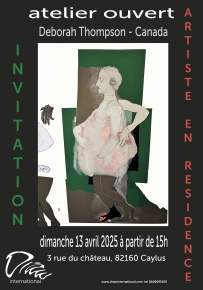
Atelier ouvert - Deborah Thompson (Canada) Il y a cinq ans, j'ai réorienté ma pratique des arts visuels de la peinture vers le dessin, notamment avec des images dessinées et des découpages pour créer des compositions figuratives, et aussi avec des animations à partir de mes dessins. Si le dessin était au cœur de mon processus pictural, il est désormais, avec cette nouvelle orientation, au cœur de ma pratique. C'est une période passionnante dans ma pratique.
Ici à Caylus, au cours des 6 dernières semaines à DRAWinternational, j'ai continué dans cette nouvelle direction pour étendre ma compréhension de mon langage visuel à travers des explorations avec des papiers translucides, des figures « autonomes » et l'ajout de couleur et de texture grâce à l'utilisation de crayons de couleur.
J'ai le sentiment d'intégrer de nombreux aspects de mon quotidien et de mes curiosités constantes à l’atelier. Mon travail se manifeste ou se construit à partir de ces influences et de ces expériences. Par exemple, mes promenades quotidiennes dans la nature, mes lectures, mes rêves et mes recherches sur l'histoire profonde de cette région m'ont accompagné dans la création de mes nouvelles œuvres. Je m'intéresse particulièrement aux gargouilles de la « Maison des Loups », au sol forestier avec ses lianes et ses lichens, au coassement des grenouilles (bien que j'aie commencé ces dessins de grenouilles avant d'entendre le magnifique chœur du printemps), et aux légendes de la sorcière et du loup-garou (tous les métamorphes).
Une œuvre murale commence généralement par le dessin d'un visage. Je suis fascinée par les visages et, en les dessinant, je cherche à toucher l'âme. Je dessine de nombreux visages, mais seul un petit nombre d'entre eux forment une œuvre plus grande. Dès que je ressens une connexion spirituelle avec un dessin de visage, une conversation s'engage : j'écoute ce que le visage me suggère : qui il deviendra et ce qu'il représente par rapport à cela, notamment la couleur, la texture, la silhouette, l'environnement, etc., jusqu'à ce que je sente que l'œuvre est achevée. Ici, ces œuvres se sont assemblées rapidement ; chez moi, il peut falloir des mois avant que mon travail ne prenne forme. Le jeu et l'intuition sont essentiels, car les idées freinent généralement la croissance d'une œuvre. Je ne fais pas de croquis préliminaires, mais je travaille directement sur le mur, de manière additive et soustractive.
Mon art est pour moi un moyen de réagir aux images et d'exploiter mon imagination. Ces vingt dernières années, je me suis principalement intéressée aux corps humain et animal, comme moyen d'explorer l'inconscient et d'exprimer mes émotions. Aujourd'hui, à ce stade de ma vie, je m'intéresse aux liens de parenté et aux relations que le corps humain entretient avec les plantes, les animaux, les reptiles, le macro et le micro… et la matière sous toutes ses formes. Je m'intéresse à la dissolution des logiques binaires qui nous enferment dans une pensée moins axée sur une chose et davantage sur une autre, comme l'idée que la conscience réside dans l'esprit et non dans le corps. À travers mon travail, je cherche à célébrer nos interdépendances qui permettent à la matière de se métamorphoser et de se renouveler continuellement. J'imagine de nouvelles façons de « devenir » dans un monde en constante évolution.
Fascinée depuis longtemps par la période médiévale, je suis ravie d'avoir le temps et l'espace nécessaires pour vivre et travailler dans un village aussi riche en histoire ! Cette expérience aura des répercussions pendant des années. Je suis reconnaissante d'avoir noué des amitiés avec tant de personnes authentiques qui m'ont accueillie au sein de cette merveilleuse culture française. Je suis particulièrement reconnaissante d'avoir participé à une résidence à DRAW international et d'avoir bénéficié de l'attention et des échanges privilégiés avec les directeurs Grete et John McNorton et leur fille Aloïse.
Deborah Thompson
|
 |
|||
|
28 juillet 2024
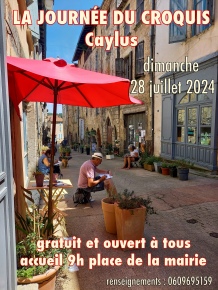
A vos crayons! Journée du croquis urbain - Caylus "Urban Sketchers" le dessin sur le vif, tout la journée.
|
 |
|||
|
28 juillet 2024
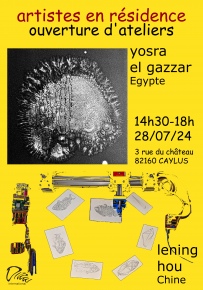
Ateliers Ouverts Artistes Yosra El Gazzar (Egypte) et Lening Hou (Chine) actuellement en residence ouvrent leurs ateliers au public.
|
 |
|||
|
28 juillet 2024
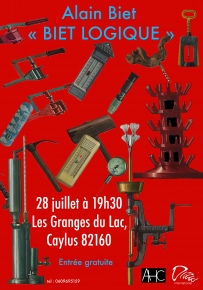
"BIET LOGIQUE"
Projection « BIET LOGIQUE » à 19h30 En compliment de son exposition « Halleboteur » à la Galerie DRAW Caylus (en partenariat avec les Abattoirs Musée Frac Occitanie)
|
 |
|||
|
juillet - août 2024
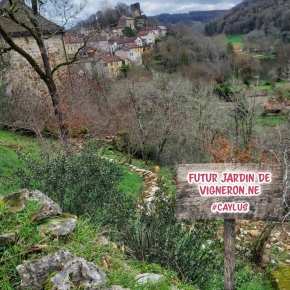
AIR Le jardin de Vigneron.ne ‘le jardin de vigneron.ne’ à Caylus et un projet qui s’inscrit dans la durée pour dynamiser le village et valoriser sa richesse et sa mémoire viticole.
Pour lancer le projet nous invitons les artistes à faire les premiers pas avec nous. Ce sera l'occasion d'explorer l'univers de la vigne et du vigneron et de le révéler à travers diverses actions créatives.
Résidence d’artiste ‘le jardin de vigneron.ne’ du 22 juillet au 31 aôut 2024
Le Jardin de Vigneron.ne a pour objectif de reconnecter un site naturel remarquable avec son passé viticole. Conscients que la biodiversité est la meilleure alliée du vigneron durable, nous souhaitons mettre en valeur le cycle créatif de ce terroir et partager ses atouts naturels avec une nouvelle génération. A travers des actions artistiques et culturelles autour de la vigne, très sensible à son environnement, le jardin viticole sera une source constante d'échanges et de nouvelles perspectives pour les artistes, artisans, agriculteurs ruraux, habitants et visiteurs : un lieu pour nourrir des liens, se rassembler notre énergie collective et lever un verre au monde vivant au fil des saisons !
Le jardin de vigneron.ne - un lieu où les artistes explorent l'intersection de l'art et de l'écologie. Un jardin viticole, regardé avec d'autres yeux, exploré par des moyens omniprésents et sensoriels. Un projet qui permettra de nouvelles perspectives, générera des histoires et offrira des possibilités pour une relation plus durable entre les humains et leur habitat. Un jardin viticole qui contribuera à la richesse culturelle et à la biodiversité du territoire.
Nous recherchons des artistes de toutes disciplines qui ont un intérêt particulier pour le dessin et l'environnement et qui, à travers leur propre pratique, exploreront, développeront et créeront des œuvres inspirées et travaillant avec l'environnement naturel et culturel.
Les artistes seront invités pendant une semaine dans un vignoble et les quatre semaines restantes se dérouleront dans les espaces de résidence ArtHouseCaylus et DRAWinternational.
« Le vigneron exprime son territoire mais aussi sa personnalité. Tout comme l’artiste » Michael Latz , vigneron.
“Le vigneron intègre dans son vin non seulement son amour du terroir et son respect de la nature, mais aussi ses qualités humaines, son identité, ses valeurs : et à ce titre, son travail révèle une part de sensibilité artistique. Ce qui fait de lui un artisan du vin. L'artiste, quant à lui, incarne l'expression. Il exprime souvent sous des formes inhabituelles ce que les autres ne voient pas ou ne ressentent pas.” *
L’enjeu de cette initiative est donc de faire dialoguer ces deux formes d’art entre elles et avec le public.
|
 |
|||
|
septembre / octobre 2024
Appel à candidatures - Artiste en Exil Appel à candidatures – Artiste en exil 2024 Résidence DRAWinternational Centre de recherche sur le dessin Caylus, Tarn-et-Garonne, France
Les Abattoirs, Musée – Frac Occitanie Toulouse et DRAWinternational, déjà partenaires en réalisations d’expositions d’œuvres des collections des Abattoirs depuis 2018 et d’accueil d’artistes d’Ukraine en 2022 et 2023, s’associent en 2024 pour accueillir en résidence à Caylus un.e. artiste en exil en France.
DRAW - dessin, recherche, action et œuvres Le centre DRAW est un lieu de recherche, d'expérimentation et de production lié au dessin sous toutes ses formes. Il se veut avant tout un lieu de développement des différents processus du dessin contemporain, de partage et d'échange entre l'artiste et le public. Il accueille des artistes internationaux qui, pendant plusieurs semaines, prennent possession des ateliers pour réfléchir, expérimenter et créer des œuvres. L’accompagnement de DRAW est à la fois pratique et théorique au cœur des réflexions contemporaines.
Atelier - Hébergement L’artiste dispose d’un atelier et d'un logement indépendant dans un bâtiment médiéval au cœur du village. Les installations supplémentaires comprennent un espace pour des grands formats, un atelier technique, une presse à graver, un four à chargement par le haut et une assistance technique. Le centre fournit un repas du soir à tous les artistes une fois par semaine Un espace galerie pour les travaux en cours ou achevés est également disponible lorsque cela est approprié, et vient compléter des événements réguliers de visites des ateliers.
Durée de la résidence 8 semaines – septembre-octobre 2024
Frais et soutien Les Abattoirs, Musée – Frac Occitanie prennent en charge le coût de la résidence durant 8 semaines (atelier et hébergement) le déplacement AR jusqu’à Caylus, et l’octroi d’une bourse de création de 2 000€ - cela ne comprend pas les repas.
L’artiste est soutenu.e dans son intégration au sein de la communauté. Le centre organise et fait la promotion de l'événement Open Studios. Il accompagne l'édition et traduction de textes écrits. Il offre un accès à Internet (wifi) pour les ordinateurs portables personnels et propose des visites culturelles.
Sortie de résidence Les Abattoirs, Musée – Frac Occitanie organisent une exposition des travaux réalisés sur le site du musée à Toulouse, en décembre 2024.
Informations demandées 1. Un book sur le travail artistique qui inclut une courte biographie. 2. Une lettre de motivation Envoyer le dossier en français ou en anglais à emmanuelle.hamon@lesabattoirs.org avant le 10 juillet 2024
|
    |
|||
|
15 juin au 22 septembre 2024
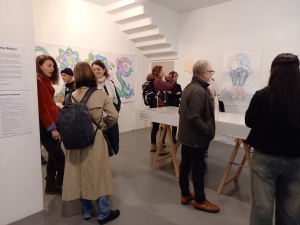
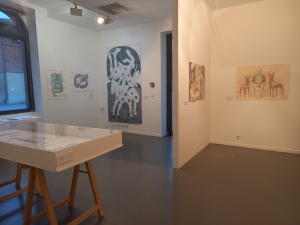
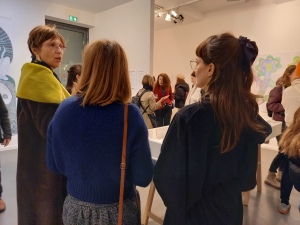
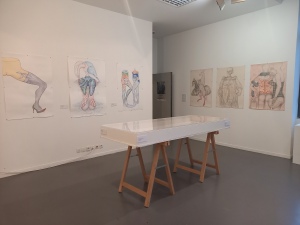
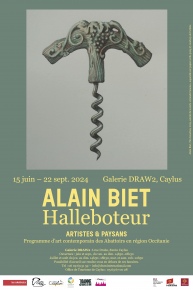
Exposition ALAIN BIET 'Halleboteur' On vous invite !
Galerie DRAW2, 6 rue droite, Caylus.
Les Abattoirs, Musée – Frac Occitanie Toulouse et DRAWinternational, déjà partenaires en réalisations d’expositions d’œuvres des collections des Abattoirs, s’associent en 2024, pour accueillir l’artiste Alain Biet.
À l’occasion du programme Artistes et paysans, Alain Biet revient à ses origines de fils de vignerons. Il a autrefois pratiqué tous les métiers de la vigne au sein de l’exploitation familiale, avant d’entreprendre une carrière artistique. Avec le titre de l'exposition, l’artiste affirme une identité, une histoire. En effet, "halleboteur" est un terme tourangeau qui désigne une personne qui grapille les raisins oubliés dans les vignes après les vendanges. Ce terme a aussi une histoire littéraire : il est référencé dans le célèbre roman de François Rabelais Gargantua (1534), dont le récit, qui se situe en Touraine, fait grand éloge du vin : "un liquide précieux doté de grandes vertus". Alain Biet vient ainsi en quelque sorte "halleboter" ses souvenirs peut-être oubliés et en proposer une nouvelle floraison à travers une profusion de dessins d’objets familiers liés au monde vigneron.
|
 |
|||
|
01/06/2024
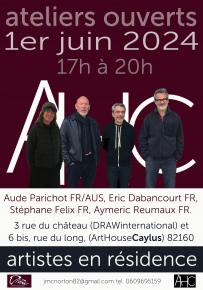
Restitution de résidence et soirée spéciale ! Restitution de résidence et soirée spéciale !
Nous vous invitons à la présentation du travail de recherche et création réalisé des quatre artistes.
Un temps d’échange convivial avec Aude Parichot FR/AUS soutenue par National Art School, Sydney et par la suite avec Eric Dabancourt, Stéphane Felix et Aymeric Reumaux, nos premiers artistes du nouveau programme de micro-résidence avec ArtHouseCaylus et La Fabrique Caylus.
L'événement se déroule dans deux espaces, d'abord à DRAWinternational 3 rue du château, puis se poursuit à l'espace ArtHouseCaylus, 6 bis rue du long, et il se termine en musique avec Retro Kandy.
Nous nous retrouverons donc à 17 h au 3 rue du château afin de parcourir les ateliers ensemble.
À samedi 1er juin !
|
 |
|||
|
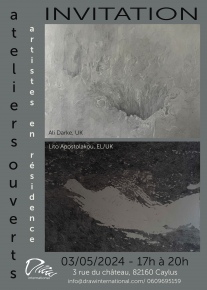
3 mai 2024
Ateliers Ouverts Artistes en résidence depuis 6 semaines, déjà, Ali Darke et Lito Apostolakou ouvrent leurs studios au public ce vendredi 3 mai.
|
 |
|||
|
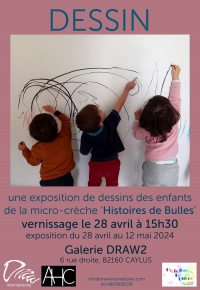
28 avril 2024
Exposition - DESSIN Cette exposition présente une sélection de dessins réalisés par les enfants lors de plusieurs ateliers organisés par Grete et John McNorton (DRAWinternational) à l'espace de projet 'ArtHouseCaylus'.
Ce n'est que le début d'une collaboration entre DRAWinternational, ArtHouseCaylus et Histoires de Bulles.
Une initiative conçue pour initier les enfants au monde de l'art en leur proposant différentes expériences artistiques et souligner l'importance de ces activités créatives pour le développement de l'enfant.
|
 |
|||
|
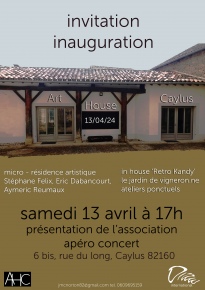
13 avril 2024
Inauguration ArtHouseCaylus - micro résidence Le printemps, saison de renaissance !
Rejoignez-nous pour célébrer le renouveau de l'association ArtHouseCaylus.
Un nouvel espace avec de nouveaux projets pour promouvoir les artistes locaux et les échanges culturels et sociaux.
Venez partager un moment convivial autour d’un apéro - plancha - musical !
L’équipe ArtHouseCaylus et DRAWinternational avec notre groupe de musiciens Retro Kandy.
|
 |
|||
|
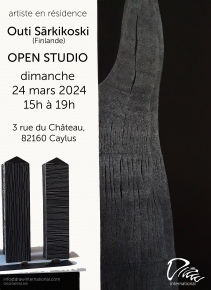
24 mars 2024
Atelier Ouvert - Outi Särkikoski J’ai fait des études de designer graphique mais finalement pendant des décennies j’ai été céramiste. Le dessin est une pratique qui me tient toujours à coeur, c’est pourquoi j’ai saisi l’opportunité de cette résidence pour me focaliser dessus.
Ces deux mois passés à DRAWinternational ont étés très bénéfiques et valorisants pour moi. J’ai pu expérimenter avec diverses méthodes pour faire des “marques sur papier”. Les oeuvres que j’ai réalisé sont des esquisses que je continuerai à mon retour en Finlande.
Les trois monotypes intitulés “Cliffs of Äland” furent réalisés avant mon séjour ici, dans une résidence située dans l’archipel d’Äland. Ce sont des îles magnifiques entre la Finlande et la Suède, je m’y rends souvent car elles me sont chères.
L’oeuvre “Japanese moon” est faite sur du papier de caIligraphie. J’aime beaucoup la culture Japonaise et je partage avec elle une passion pour la lune.
Ma visite à la Grotte de Pech Merle pour y voir les dessins préhistoriques, était vraiment memorable. C’était une expérience unique qui restera toujours avec moi.
Maintenant j’en connais un peu plus au sujet de la vie française, un peu plus au sujet de la langue française et un peu plus au sujet de la pratique du dessin. Merci beaucoup !
|
 |
|||
|
14 décembre 2023
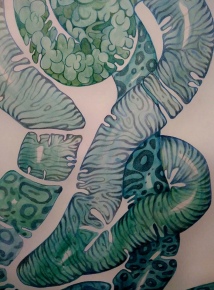
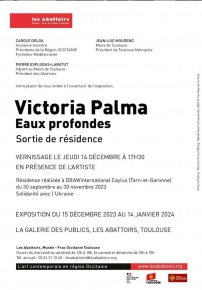
Eaux Profondes - Sortie de résidence - Victoria Palma Eaux Profondes
Un monde non pas tel qu'il est mais tel qu'il pourrait être. Une incarnation de soi dans les profondeurs de l'océan ne peut qu'invoquer des réalités dont nous n'avons pas conscience. Qu'elles soient observées scientifiquement ou quelles soient des créations imaginaires, elles nous offrent quelque chose de splendide dans toute leur gloire. Ces créatures ne nous parlent pas seulement mais nous écoutent aussi : une réciprocité perceptuelle à lieu.
La communication avec Victoria nous a rappelé les complexités du dialogue et du langage. Je me suis souvenu d'une parole de Wittgenstein dans son livre Remarques Philosophiques (1975) : "Nous ne commençons pas à communiquer grâce aux mots mais grâce à certaines occasions ou activités."
Le langage naît de la rencontre de deux corps physiques. Ces premiers actes de langage n'ont pas de syntaxe conventionnelle mais ressemblent plus au langage pré-verbal et pré-logique de l'enfant, plus intuitifs, plus concrets et toujours situés dans le présent.
Le temps passé avec Victoria a été joyeux, dynamique, fascinant et certainement plein de défis, mais toujours amusant et en résonance parfaite avec son talent pour la création de créatures imaginaires vitales et surprenantes qui défient le "langage" de nos expériences quotidiennes.
Nous avons une expression en Anglais qui dit : "Les eaux calmes s'écoulent en profondeur" mais les flux et reflux dans l'oeuvre de Victoria de ces eaux océaniques orageuses et profondes provoquent en nous joie et émerveillement et établissent clairement les compétences créatives et dynamiques d'une artiste professionnelle.
Merci Victoria.
John McNorton M.Ed. Ph.D, RCA (London) Directeur DRAWinternational.
*Traduit de l'anglais par Aloïse McNorton
|
  |
|||
|
25 novembre 2023
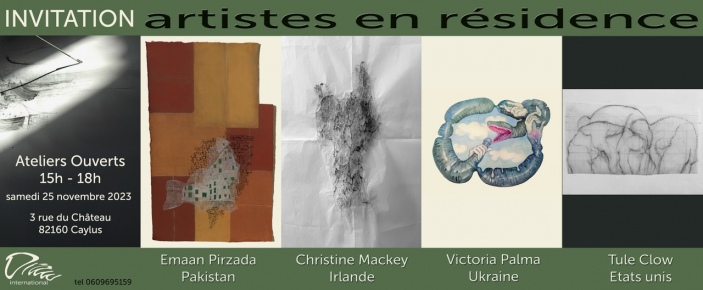
Ateliers Ouverts Notre dernier événement 'Open Studio' de 2023 ce samedi 25 novembre est vraiment festif !
A samedi !!
Les ateliers d'artistes seront ouverts au public de 15h à 18h, vous pourrez visiter chaque atelier et rencontrer et discuter avec les artistes.
|
 |
|||
|
14 / 15 octobre 2023
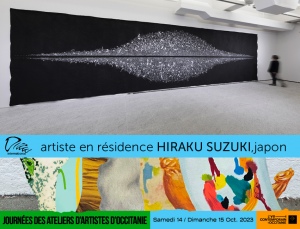
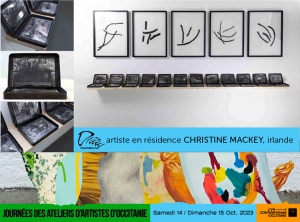
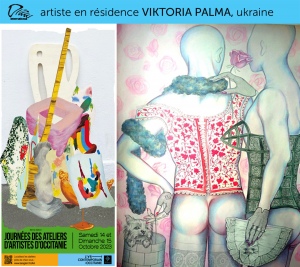
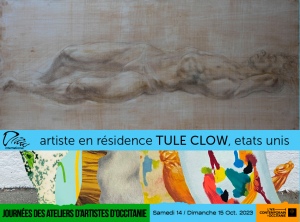
Journées des Ateliers d’Artistes d’Occitanie. Ce samedi et dimanche DRAWinternational participe aux 6ème Journées des Ateliers d’Artistes d’Occitanie.
Nous aurons le plaisir de vous présenter nos quatre artistes en résidence HIRAKU SUZUKI, Japon, CHRISTINE MACKEY, Irlande, VIKTORIA PALMA, Ukraine et TULE CLOW, Etats unis.
Venez pousser les portes de leurs ateliers et partager un moment d’échange et d’ouverture autour de la création du dessin contemporain.
Rdv samedi 14 et dimanche 15 octobre de 15 h à 18 h 30 à DRAWinternational, 3 rue du château et 6 rue droite 82160 Caylus.
|
    |
|||
|
4 août 2023
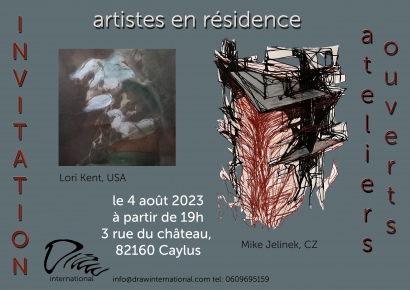
Ateliers ouverts Entrez dans l'univers des artistes en résidence Lori Kent et Mike Jelinek en visitant leurs ateliers, au 3 rue du château. Une opportunité très importante et apprécié d'échange entre l'artiste et le public.
|
 |
|||
|
4 août, 2023
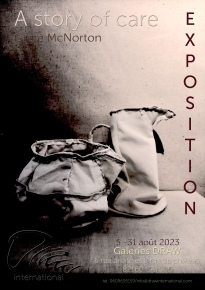
Exposition - Une histoire de sollicitude “Un ensemble d’oeuvres inspiré par les histoires et les souvenirs portés par les objets trouvés et les tissus pour embrasser la réalité imparfaite d'une vie réparée, transformée et renouvelée." Grete McNorton Ouvert du jeudi au dimanche de 15h à 18h30 et les mardis et samedis matins de 10h à 12h30. *toute la journée le 14 et 15 août En dehors de ces horaires sur RDV. tel: 06 09 69 51 59
|
 |
|||
|
2 juillet, 2023
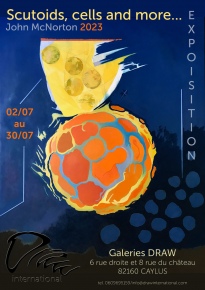
Exhibition - Scutoids cells and more... Scutoids, cells and more…
“Les défis de la vie exigent une attitude contemplative et l'expression esthétique est une voie puissante pour l'artiste et le spectateur”.
Les œuvres exposées dans les deux galeries sont une sélection de diverses peintures réalisées à Caylus au cours des 15 dernières années.
J'espère sincèrement que ces œuvres offrent un point de vue positif pour aider à générer un sentiment de bien-être.
John McNorton
|
 |
|||
|
4 juin 2023
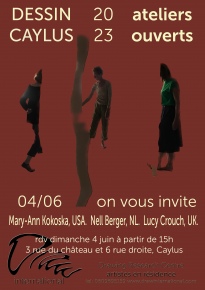
Ateliers Ouverts le 4 juin - Venez rencontrer les artistes actuellement en résidence.
Rendez vous à 15h :
Vivez une rencontre privilégiée au cours de laquelle vous pourrez rencontrer les artistes en résidence, découvrir leurs espaces de création et des œuvres en cours de réalisation.
Les Ateliers Ouverts privilégient l’échange avec les artistes et donnent un aperçu de leur pratique. Des textes en français et en anglais servent à contextualiser les œuvres présentées.
|
 |
|||
|
10 avril 2023
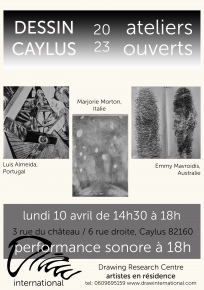
Ateliers Ouverts Notre premier événement open studio de 2023, on vous invite !
C'est un réel plaisir de travailler avec les artistes Luis Almeida, Marjorie Morton et Emmy Mavroidis.
|
 |
|||
|
Novembre
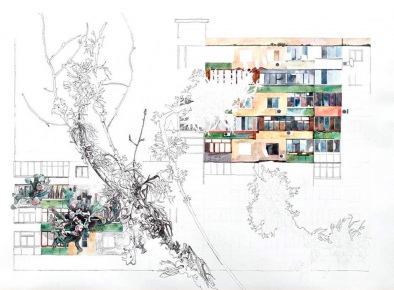
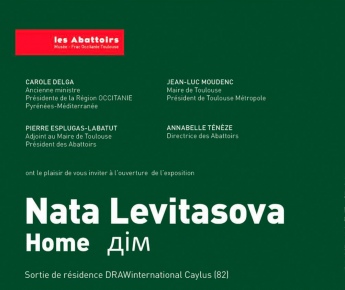
Restitution de residence HOME : Rencontre de fin de résidence avec Nata Levitasova.
Ce temps d'échange avec le public est vraiment précieux pour l'artiste, lui permettant de réfléchir sur son travail et d'imaginer de nouvelles voies possibles en relation avec les retours du public.
On espère vous y voir nombreux!
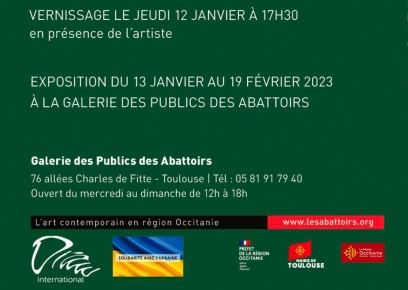
Vernissage le jeudi 12 janvier à 17h30, en présence de l’artiste à la Galerie des publics des Abattoirs.
|
   |
|||
|
Novembre 2022
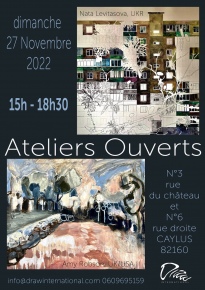
Ateliers Ouverts Nous sommes très heureux d'accueillir Nata, une artiste ukrainienne talentueuse et motivée, dans notre centre DRAWinternational au coeur de notre petit village de Caylus. L'environnement est un contraste si positif pour elle et l'expérience lui permet de réfléchir et d'élargir sa pratique professionnelle.
Soyez les bienvenus aux Ateliers Ouverts ce dimanche 27 novembre de 15h à 18h30, au 3 rue du Chateau et 6 rue droite, 81260 CAYLUS info@drawinternational.com 0609695159.
|
 |
|||
|
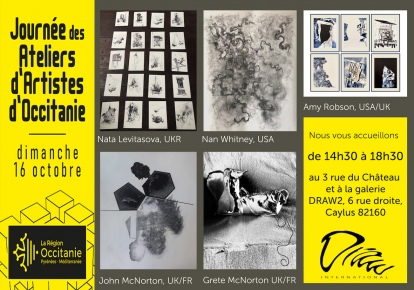
16/10/2022
La Journée des Ateliers d'Artistes d'Occitanie. C'est la Journée des Ateliers d'Artistes d'Occitanie.
Venir découvrir le travail de nos artistes en résidence:
Nata Levitasova - Ukraine, Nan Whitney - USA et Amy Robson - USA/UK.
Nous deux aussi auront nos oeuvres à vous montrer!
Rendez-vous dès 14h30 à la galerie DRAW2, 6 rue droite et 3 rue du château pour les ateliers des artistes.
Espérant partager encore un moment riche d'échanges et de découverts.
|
 |
|||
|
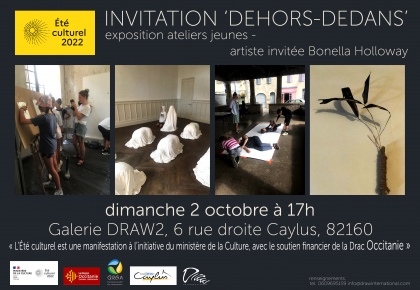
Octobre 2022
Eté Culturel - Exposition Atelier Jeunes “DEHORS-DEDANS” un projet culturel pour les jeunes locaux. L'exposition AWAKEN 'First Order and Beyond' défie la compréhension de certaines œuvres d'art avec une considération plus profonde et plus contemplative. De même, les ateliers pour les jeunes avaient pour l’objectif d'encourager une approche plus réfléchie de ce qui peut se cacher derrière une série d'œuvres. Des méthodes de dessin spécifiques, peu familières, ont été utilisées pour introduire les autres sens, tels que le toucher et la kinesthésie qui informent et se rapportent, consciemment ou inconsciemment, au sens dominant de la vue. Plusieurs œuvres réalisées par les jeunes, résolues et non résolues, seront exposées ainsi qu'une vidéo créative et des images fixes photographiques pour révéler les processus et les discussions lors des ateliers. Cette présentation doit être vue comme un panorama pédagogique, fidèle au groupe, pour montrer ce que chacun d'entre eux peut comprendre et peut communiquer.
|
 |
|||
|
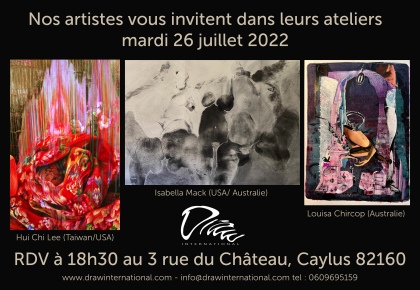
26 Juillet 2022
INVITATION - Ateliers ouverts Les artistes Hui Chi Lee, Isabella Mack et Louisa Chircop ouvrent leurs studios au public ce mardi soir à partir de 18h30. Venez découvrir leur pratique du dessin, leurs idées, les processus et les téchniques utilisés pour créer leurs œuvres. Une invitation à visiter les ateliers et à échanger avec les artistes.
|
 |
|||
|
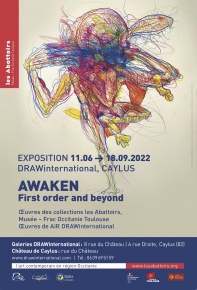
11 juin au 18 septembre 2022
AWAKEN First order and beyond La pratique de l’art, les pensées et les sentiments sur l'art, sous toutes ses formes, sont une composante culturelle nécessaire au progrès. Aujourd'hui, comme par le passé, les artistes ont remis en question notre perception et notre interprétation du monde. Cependant, certaines oeuvres artistiques nécessitent, voire exigent, une réflexion plus longue et profonde, si l'on veut démêler leur possible sens caché. En un seul coup d'oeil, nous ne détectons pas toujours le niveau de signification d’une oeuvre. Une exploration plus approfondie du mode de vie d'un artiste et de ses méthodes de travail, peut permettre au spectateur d’accéder à une compréhension plus profonde. Il s’agit de contempler les oeuvres d’un « oeil sensible ». L'art est capable de nous éveiller quant aux réalités présentes et futures pour susciter une libération d'idées et de changements. L'esthétique et les traditions visuelles doivent être libérées pour élargir les paramètres de l'expérience humaine quotidienne. Les artistes présentés dans l’exposition AWAKEN - First order and beyond évoquent cette problématique de multiples façons. Collections les Abattoirs, Musée – Frac Occitanie Toulouse : Gilles Barbier, Walter Barrientos, Democracia, Bernard Dufour, Safaa Erruas, Daniel Gerhardt, Mehdi-Georges Lahlou, Myriam Mechita, Clément Thomas, Gisèle Vienne, Jérôme Zonder OEuvres de AiR DRAWinternational : Armando Chant, Antonia Guerrero, Edita Kadiric, Robbie Karmel, Liesje van den Berk Horaires d’ouverture : juin et septembre : du vendredi au dimanche de 14h30 au 18h30 juillet et août ; du jeudi au dimanche de 14h30 à 18h30 et mardi et samedi 10h à 12h30. Galeries DRAWinternational 1 & 2, 8 rue du chateau et 6 rue droite et le Chateau de Caylus (82) info@drawinternational.com 0609695159
|
 |
|||
|
17 avril 2022
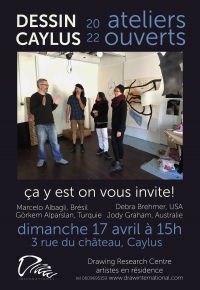
Ateliers Ouverts C'est avec grand plaisir que nous ouvrons nos ateliers d'artistes au public dimanche 17 avril. Restitution de résidence pour l'artiste Görkem Alparslan, Turquie et l'écrivain d'art Debra Brehmer et que le début de résidence pour les artistes Jody Graham, Australie et Marcelo Albagli, Brésil qui seront avec nous pour deux et trois mois respectivement. Rejoignez-nous dimanche pour l'occasion de rencontrer et d’échanger avec les artistes dans un environnement informel et convivial et de partager notre passion pour le dessin.
|
 |
|||
|
28 novembre 2021
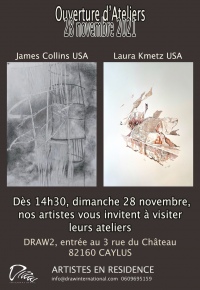
Ateliers ouverts - Invitation C'est le dernier événement de l'année, artistes en résidence Jame H Collins et Laura Kmetz vous invitent à visiter leurs ateliers; venez décrouvrir leur travail, discuter avec les artistes et parler du dessin.
|
 |
|||
|
14 juillet 2021
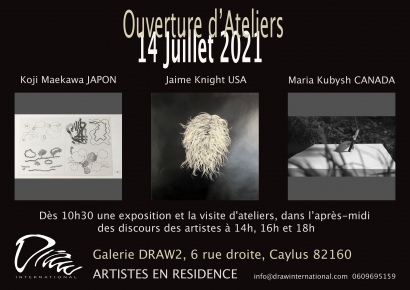
Ateliers ouverts - Invitation Koji Maekawa, Jaime Knight et Maria Kubysh se sont pris possession des ateliers DRAW depuis plusieurs semaines déjà, le 14 juillet ils vous invitent à découvrir leurs manières à penser et réaliser le dessin contemporain.
Dès 10h30 vous pouvez visiter l'exposition ainsi que leurs ateliers dans l'après-midi il y aura lieu trois séances des 'Artists Talks' ou chaque artiste présenteront leurs projets respectifs à 14h, 16h et 18h. Nous vous demandons de réserver votre place pour les 'Artist Talks' pour pouvoir respecter les consignes sanitaires actuelles.
L'exposition sera visible jusqu'au 18 juillet de 10h à 12h et de 14h à 18h. Il sera également possible de visiter les ateliers des artistes sur rendez-vous.
C'est un réel plaisir pour nous d'accompagner les artistes dans leur recherche et leur pratique ainsi que de promouvoir leur travail en partageant notre passion avec vous.
Amicalement,
John et Grete
|
 |
|||
|
10/11 avril 2021
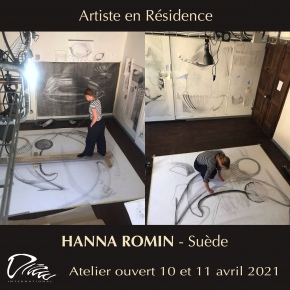
Atelier ouvert - Invitation Nous sommes heureux de vous annoncer que Hanna Romin (SE) ouvre son atelier ce weekend:
Samedi 10 avril de 14h30 à 18h 30 (arrivées 14h30/15h30/16h30/17h30)
Dimanche 11 avril de 14h30 à 18h30 (arrivées 14h30/15h30/16h30/17h30)
Pour ce qui sont à plus de dix kilometres du domicile, je peux vous envoyer une invitation personnelle et vous pouvez cocher la case 6 sur l’attestation de déplacement dérogatoire
Pour la sécurité de tous, nous proposons deux dates avec des horaires spécifiques, car nous devons limiter le nombre de visiteurs à la fois.
Nous vous demandons de nous contacter pour nous dire l'heure de votre arrivé par email ou par tel 0609695159.
Porte du masque obligatoire.
La dernière ouverture de nos ateliers d’artistes en résidence était déja compliqué. Nous étions heureux d’accueillir tous qui ont pu venir, vous étiez nombreux.
C’est un évenement très important pour les artistes, autant plus à l'heure actuel où pour eux les rencontres/échanges sont quasi inexistant et c'est un des éléments phare d'une résidence. Amicalement, John et Grete
|
 |
|||
|
19/21 fevrier 2021
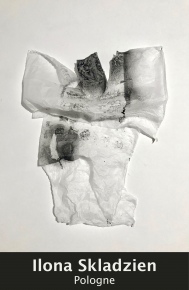
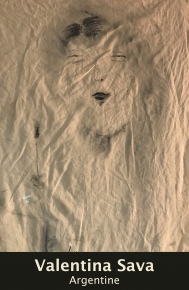
UNE INVITATION, UNE RENCONTRE, UNE PASSION Nous sommes très heureux, après un an d'incertitudes, de pouvoir vous inviter dans notre nouvel espace pour rencontrer nos premiers artistes en résidence. Notre souhait est de développer et révéler les processus divers du dessin contemporain et de partager et échanger des idées entre l’artiste et le public.
Pour la sécurité de tous, nous proposons deux dates avec des horaires spécifiques, car nous devons limiter le nombre de visiteurs.
Vendredi 19 février 14 h 30 à 15 h 30 15 h 30 à 16 h 30
Dimanche 21 février 14 h 30 à 15 h 30 15 h 30 à 16 h 30
Porte du masque obligatoire.
|
  |
|||
|
Octobre 2020
Ateliers Artistiques Ateliers artistiques
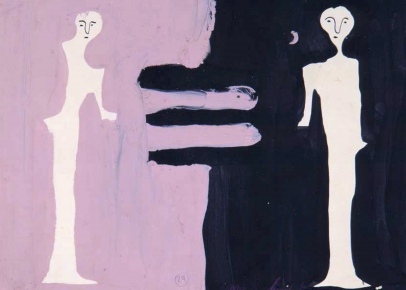
L'art nous rappelle que nous ne sommes pas seuls et que nous partageons une expérience humaine universelle. A travers l'exposition 'Not I', alone, Grete et John vous accompagnent votre rencontre à l’art contemporain, en mettant en avant les œuvres qu’ils ont sélectionné des collections les Abattoirs Musée Frac Occitannie Toulouse.
Ateliers artistiques en lien avec l’exposition : le dessin, la gravure et les techniques mixtes
Du 21 au 23 octobre 2020 - 3 séances consécutives
Enfants - mercredi/jeudi/vendredi 14 h à 15 h 30 72 euros matériaux fourni
Ados - mercredi/jeudi/vendredi 16 h à 18 h 00
Du 26 au 28 octobre 2020 - 3 séances consécutives
Adultes - Lundi/mardi/mercredi -14 h à 17 h 162 euros matériaux fourni
Que vous soyez les débutants ou confirmés ces ateliers offrent une initiation aux pratiques artistiques et permettent leur approfondissement.
Places limité à 4 Pour plus de renseignements, tarifs et réservations tel 06 09 69 51 59 /info@drawinternational.com
|
 |
|||
|
Octobre 2020
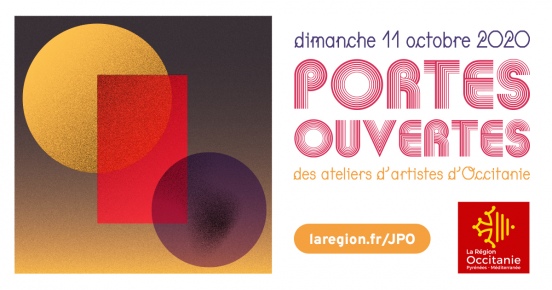
Ateliers Ouverts JOURNEE REGIONALE PORTES OUVERTES DES ATELIERS D’ARTISTES D’OCCITANIE Nos ateliers sont ouverts: 10h30 à 12h 30
14h30 à 18h
|
 |
|||
|
septembre/octobre 2020
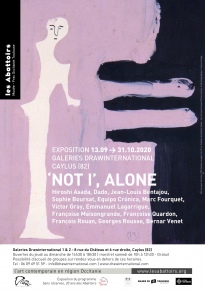
Exposition - 'Not I', alone ‘Not I’, alone
Rien n'existe isolément, toutes les œuvres d'art font référence à d'autres modes d'expression.
Dans le monologue «Not I» de Samuel Becket, «Mouth» semble écouter une voix intérieure inconnue du public.
Les œuvres sélectionnées pour cette exposition font écho à de nombreuses influences invisibles au spectateur.
La diversité des formes de pensée et de fabrication révèle la recherche et la motivation de chaque artiste, dans le champ de l'art, de la philosophie, de la poésie, de la science,des mathématiques, du matériau ou plus encore ...
Oeuvres des collections les Abattoirs Musée, Frac Occitanie Toulouse Exposition du programme Sans réserves, 20 ans des Abattoirs
|
 |
|||
|
Septembre 2019
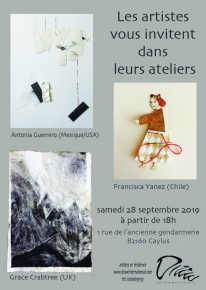
Ateliers Ouverts Ce samedi les artistes en résidence Francisca Yanez (Chile), Antonia Guerrero (Mexique/USA) et Grace Crabtree(UK) ouvrent leurs atelier. Vous êtes invités à venir decouvrir leur travail et échanger avec eux.
|
 |
|||
|
Juillet 2019
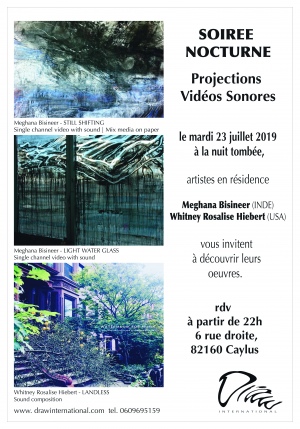
SOIREE NOCTURNE Soirée Nocturne Ayant répondu à notre appel à candidatures ‘exil migration foreignness’ en lien avec l’exposition actuelle Odyssées, ce mardi soir le 23 juillet à la nuit tombée, nous projettons les oeuvres 'LANDLESS' de Whitney Rosalise Hiebert (USA), 'STILL SHIFTING' et 'LIGHT WATER GLASS' de Meghana Bisineer (INDE) artistes en résidence à DRAWinternational.
|
 |
|||
|
Juillet/Août/Septembre 2019
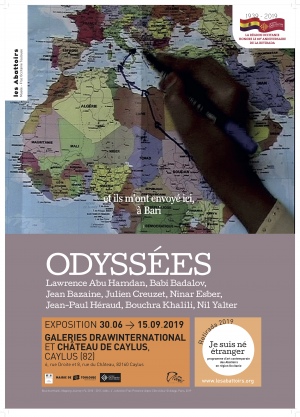
EXPOSITION - ODYSSEES Odyssées Lawrence Abu Hamdan, Babi Badalov, Jean Bazaine, Julien Creuzet, Ninar Esber, Jean-Paul Héraud, Bouchra Khalili, Nil Yalter Parcours d’exposition dans trois lieux de la ville de Caylus
Les récits liés à La Retirada sont d’autant plus vivaces dans le département du Tarn-et- Garonne qu’il fut une plaque tournante de l’exil républicain espagnol. La présence du camp de Judes, où furent internés Les artistes présentés dans Odyssées articulent des récits singuliers avec l’histoire collective. Leur travail plastique et visuel, fondé sur le langage, s’interroge sur : qui prend la parole, qui écrit les récits ? JE SUIS NÉ ÉTRANGER - Programme d'art contemporain des Abattoirs en région Occitanie
|
 |
|||
|
Avril 2019
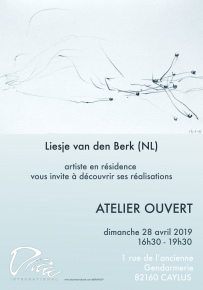
Ateliers Ouverts Ce dimanche artistes in résidence Liesje ven den Berk (NL) et Julianne Allcorn (AUS) ouvrent leurs ateliers au public.
|
  |
|||
|
Avril 2019
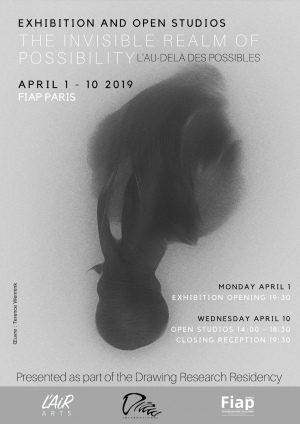
Exposition : The invisible realm of possibility / L'au-delà des possibles Presented as part of the Drawing Research Residency in partnership between L’AiR ARTS at FIAP Paris and DRAWinternational, Caylus, France.
De nombreux artistes révèlent ce qui n’est pas visible initialement. Ils utilisent une attitude qui transcende la pensée logique linéaire. Au lieu de cela, ils introduisent la possibilité d'utiliser l'expérience sensorielle afin de contempler d'autres lectures et interprétations d'un objet, d'une situation ou d'une pensée.
L'artiste, dans le vrai sens du terme, entraîne le spectateur dans un espace d'expérimentation qui peut défier et même modifier un état d’esprit.
The residency at DRAWinternational, Caylus focuses upon notions of intention and the physical act of drawing as it arrives as a vectorial force on a material surface. One could say, an infrastructure from where other possibilities collide, from common habitual behaviours toward the realm of the unknown.
The invisible realm of possibility / L'au-delà des possibles
Kate Arthur, South Africa Khushbu Patel, India Alka Dass, South Africa Terence Wennink, France Dr. John McNorton, a former visiting professor at the Royal College of Art in London and Head of Centre for Art and Design Education at the University of Wales Institute Cardiff, will give an opening presentation to the exhibition.
The Drawing Research Residency program is two-fold: a full month of creative practice in Caylus, followed by two weeks in Paris for contextual research and exploration, while exhibiting the work.
|
 |
|||
|
Décembre 2018
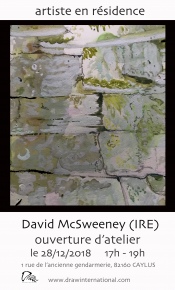
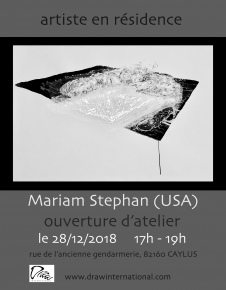
Ateliers Ouverts Artistes en résidence David McSweeney (IRE) et Mariam Stephan (USA) ouvrent leurs ateliers au public.
|
  |
|||
|
Novembre 2018
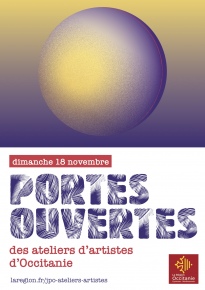
'PORTES OUVERTES' des ateliers des artistes d'Occitanie. Les ateliers de DRAWinternational sont ouverts dimanche 18 Novembre à l'occasion des 'PORTES OUVERTES' des ateliers des artistes d'Occitanie.
Venez decouvrir le travail des artistes en residence et aussi les ateliers de Grete et John McNorton. Ateliers ouverts - 10h30 à 12h 30 et 14h30 à 18h
1 rue de l'ancienne gendarmerie et
|
 |
|||
|
Septembre 2018
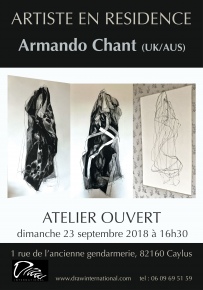
AiR - ATELIERS OUVERTS Armando Chant (UK/AUS) artiste en residence à DRAWinternational pendant les mois d'août et septembre vous invite à son atelier. Venez nous rejoindre pour rencontrer l'atiste et découvrir son travail. Dimanche 23 septembre à 16h30. 1 rue de l'ancienne gendarerie, Caylus 82160.
|
 |
|||
|
Septembre/Octobre 2018
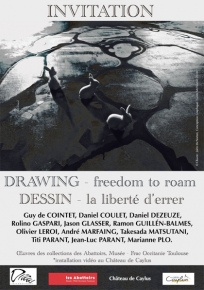
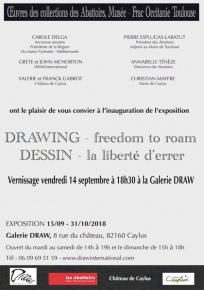
Exposition : DESSIN - LIBERTE D'ERRER La notion étendue du dessin est passionnante et ses méthodes et matériaux continuent d'intriguer et de stimuler l'action créatrice dans le monde postmoderne. DRAWinternational présente une exposition célébrant le dessin, le début d’une collaboration passionnante et continue avec Les Abattoirs, Musée - Frac Occitanie Toulouse et le Château de Caylus. Guy de Cointet, Daniel Coulet, Daniel Dezeuze, Rolino Gaspari, Jason Glasser, Ramon Guillén- Balmes, Olivier Roi, André Marfaing, Takesada Matsutani, Titi Parant, Jean-luc Parant, Marianne Plo. Les œuvres choisies nous révèlent une diversité et un attrait, comme une indication de la graine d'une idée; certaines exécutées avec rapidité et profondeur, tandis que d'autres, pièces aussi bien enracinées, examinent et célèbrent la joie de l'acte du dessin, son processus et sa signification.
|
  |
|||
|
Août 2018
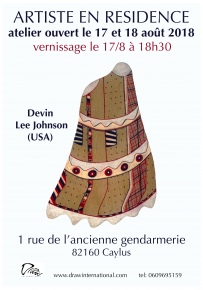
AiR - ATELIERS OUVERTS A l'occasion de la fin de ses deux mois de résidence à DRAWinternational, Caylus, Devin Lee Johnson (USA) vous invite à découvrir ses dessins. Le vendredi 17 et le samedi 18 Août à 18h30. Venez nous joindre pour un moment de découverte et d’échange convivial,1 rue de l'ancienne gendarmerie' 82160 Caylus. Un apéritif en compagnie de tous nos artistes en résidence vous sera servi.
|
 |
|||
|
Juin 2018
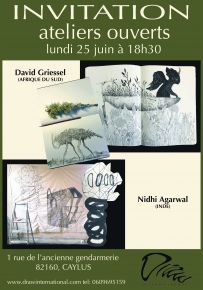
AiR - ATELIERS OUVERTS A l'occasion de la fin de leur résidence artistique à DRAWinternational, Caylus, les artistes David Griessel (Afrique du Sud) et Nidhi Agarwal (Inde) vous invitent à découvrir leurs oeuvres et échanger avec eux. Jeudi 25 Août à 19h Venez nous joindre pour un moment de découverte et d’échange convivial, 1 rue de l'ancienne gendarmerie' 82160 Caylus.
|
 |
|||
|
Mars 2018
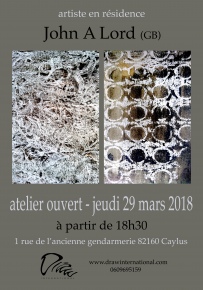
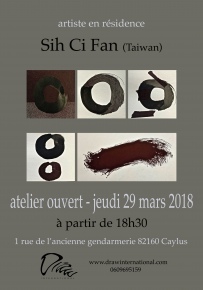
AiR - ATELIERS OUVERTS A l'occasion de la fin de leur résidence artistique à DRAWinternational, Caylus, artistes : John. A. Lord (UK) et Sih Ci Fan (Taiwan) vous invitent à leurs ateliers. Le jeudi 29 mars à partir de 18h30.
|
  |
|||
|
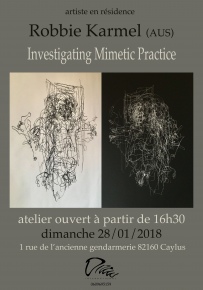
Janvier 2018
AiR - ATELIER OUVERT
A new year of exploration : research, projects and artists in search of fresh approaches to drawing.
On Sunday, January 28th at 4:30 pm - artist-in-residence Robbie Karmel opens his studio. Come and join us for a moment of discovery and friendly exchange, 1 rue de l'ancienne gendarmerie, 82160 Caylus. An aperitif with the artist will be served. John and Grete Mc.
|
 |
|||
|
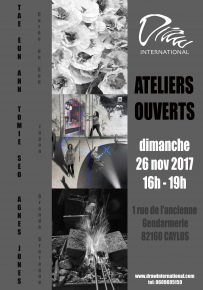
Novembre 2017
AiR - ATELIERS OUVERTS C’est la fin de l’année!
Les derniers artistes en résidence à DRAWinternational pour cette année 2017 vous invitent dans leurs ateliers pour voir leurs réalisatons.
Tae Eun Ahn (Corée du Sud), Tomie Seo (Japon) et Agnes Jones (UK). Nous partagerons un apéro festif !
|
 |
|||
|
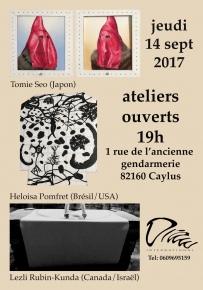
Août 2017
AiR - ATELIERS OUVERTS
A l'occasion de la fin de leur résidence artistique à DRAWinternational, Caylus, artistes :
|
 |
|||
|
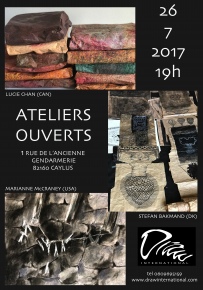
Juillet 2017
AiR - ATELIERS OUVERTS A l'occasion de la fin de leur résidence artistique à DRAWinternational, Caylus, artistes en résidence Lucie Chan (CAN), Stefan Bakmand (DK) et Marianne McCraney (USA) vous invitent à leurs ateliers. Mercredi 26 Juillet à 19h Venir nous rejoindre pour découvrir leurs réalisations, échanger avec les artistes, et partager un verre. 1 rue de l'ancienne gendarmerie, 82160 Caylus.
|
 |
|||
|
Juin 2017
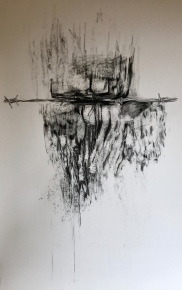
ARTISTE EN RESIDENCE - HANA SHOUP (USA) Studio practice
|
 |
|||
|
Mai 2017
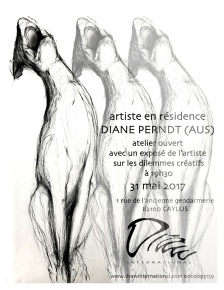
AiR - ATELIER OUVERT A l'occasion de la fin de sa résidence artistique à DRAWinternational, Caylus,
Diane Perndt (AUS) vous invite à son exposé sur les dilemmes créatifs, à découvrir ses oeuvres et échanger avec elle.
|
 |
|||
|
Mars 2017
AiR - ATELIER OUVERT Artiste en résidence Tatjana Buisson (Arfique du Sud) ouvre son atelier au public, venir voir ses réalisations, fruits de deux mois de résidence a DRAWinternational.
|
 |
|||
|
Novembre 2016
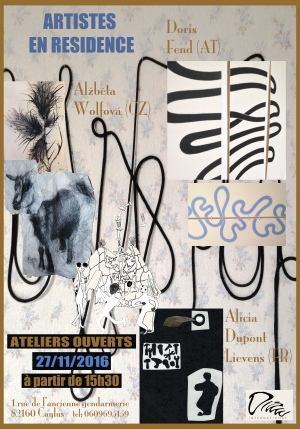
AiR - ATELIERS OUVERTS Artistes en résidence Doris Fend (Autriche), Alicia Dupont Lievens (France) and Alžběta Wolfová (République Tchèque), vous invitent à découvrir leurs ateliers. Dimanche 27 novembre à partir de 15h30. Venir nous rejoindre pour échanger avec les artistes, voir leurs réalisations, et partager un verre de vin chaud! 1 rue de l'ancienne gendarmerie, 82160 Caylus.
|
 |
|||
|
Octobre 2016
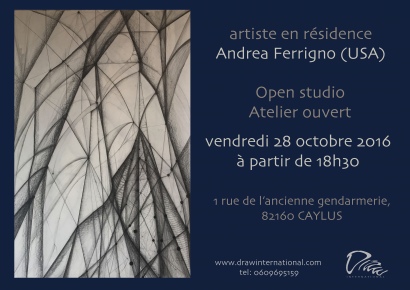
AiR - ATELIER OUVERT A l'occasion de la fin de son mois de résidence à DRAWinternational, Caylus, ANDREA FERRIGNO (USA) vous invite à découvrir ses dessins. Vendredi 28 Octobre à partir de 18h30 1 rue de l'ancienne gendarmerie, 82160 Caylus. Egalement en résidence : ALZBETA WOLFOVA (Cz), DORIS FEND (AUT), ALYS ROSE GREEN (UK) Venez nous joindre pour un moment de découverte et d’échange convivial autour d'un apéritif.
|
 |
|||
|
Octobre 2016
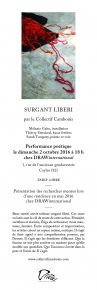
AiR - RESTITION DE RESIDENCE PERFORMANCE POETIQUE 'Surgant Liberi' Le collectif CAMBOUIS présent leurs recherches ménées lors d'une résidence à DRAWinternational en Mai 2016. Melanie Gabu - Installation Thierry Sterckval - Basse Fretless Sarah Turquety - Poème et voix Dimanche 2 octobre à 18h00. Venez nous joindre pour un moment de découverte et d’échange convivial,1 rue de l'ancienne gendarmerie' 82160 Caylus. Un apéritif en compagnie de tous nos artistes en résidence vous sera servi.
|
 |
|||
|
Septembre 2016
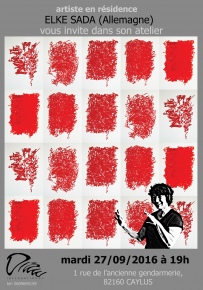
AiR - OPEN STUDIOS
|
 |
|||
|
25 Août 2016
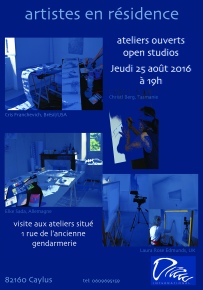
AiR - ATELIERS OUVERTS CRIS FRANCHEVICH (BREsIL/USA), CHRISTL BERG (TASMANIE), ELKE SADA (ALLEMAGNE), LAURA ROSE EDMUNDS (ROYAUME UNI) A l'occasion de la fin de leur résidence artistique à DRAWinternational, Caylus, les artistes vous invitent à découvrir leurs oeuvres et échanger avec eux. Jeudi 25 Août à 19h Venez nous joindre pour un moment de découverte et d’échange convivial, 1 rue de l'ancienne gendarmerie' 82160 Caylus.
|
 |
|||
|
28 Juillet 2016
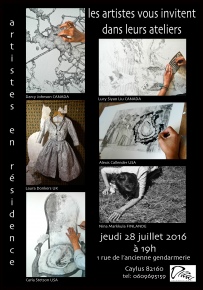
AiR - ATELIERS OUVERTS DARCY JOHNSON (CAN), LUCY SIYAO LIU (CAN), LAURA DONKERS (UK), ALEXIS CALLENDER (USA), NINA MARKKULA (FINLANDE), CARLA STETSON (USA). A l'occasion de la fin de leur résidence artistique à DRAWinternational, Caylus, les artistes vous invitent à découvrir leurs oeuvres et échanger avec eux. Jeudi 28 Juillet à 19h Venez nous joindre pour un moment de découverte et d’échange convivial, 1 rue de l'ancienne gendarmerie' 82160 Caylus.
|
 |
|||
|
Juin 2016
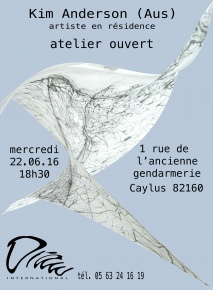
ATELIER OUVERT A l'occasion de la fin de ses trois mois de résidence à DRAWinternational, Caylus, Kim Anderson (Aus) vous invite à découvrir ses dessins. Mercredi 22 juin à 18h30. Venez nous joindre pour un moment de découverte et d’échange convivial,1 rue de l'ancienne gendarmerie' 82160 Caylus. Un apéritif en compagnie de tous nos artistes en résidence vous sera servi.
|
 |
|||
|
Avril 2016
ATELIERS OUVERTS C'est reparti pour 2016! Mardi 12 Avril à 19h - nos artistes en résidence ouvrent leurs ateliers. Venez nous joindre pour un moment de découverte et d’échange convivial,1 rue de l'ancienne gendarmerie' 82160 Caylus. Un apéritif en compagnie de nos artistes en résidence vous sera servi. ANASTASIJA KOMARNYCKYJ (AUS), CAROL SMITH (UK), EMILIA RINALDINI (USA)
|
 |
|||
|
Octobre 2015
ATELIERS OUVERTS ET LIVE MUSIC C'est la fin de la saison! Profitez-en! Nos derniers artistes en résidence ouvrent leurs ateliers suivi d'un apéro musical dansant. Rdv : Mercredi 28 Octobre à 19h, 8 rue du château, 82160 CAYLUS
|
 |
|||
|
Septembre 2015
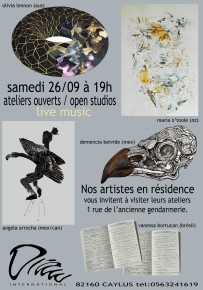
ATELIERS OUVERTS ET LIVE MUSIC Ce samedi 26 Sept à 19h - Cinq artistes en résidence ouvrent leurs ateliers situé '1 rue de l'ancienne gendarmerie'. Nous avons le plaisir d'accueillir aussi un groupe d'artistes musiciens - flûte traversière, saxophone, guitare basse et batterie. Venez nous rejoindre pour un moment de découverte et d’échange convivial. Un apéritif en compagnie de nos artistes en résidence vous sera servi.
|
 |
|||
|
Août 2015
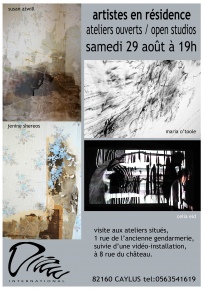
ATELIERS OUVERTS - ARTISTES EN RESIDENCE Ce samedi 29 Août à 19h - quatre artistes en résidence ouvrent leurs ateliers. DESSIN - INSTALLATION La visite commence aux ateliers n° 1 rue de l'ancienne gendarmerie'suivie d'une vidéo - installation à n°8 rue du chateau. Venez nous joindre pour un moment de découverte et d’échange convivial. Un apéritif en compagnie de nos artistes en résidence vous sera servi dans le jardin.
|
 |
|||
|
Juin 2015
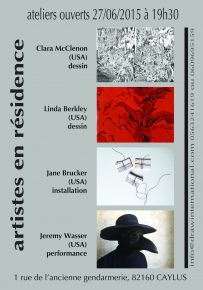
ATELIERS OUVERTS - ARTISTES EN RESIDENCE Ce samedi 27 juin à 19h30 - quatre artistes en résidence ouvrent leurs ateliers. DESSIN - INSTALLATION - PERFORMANCE La soirée commence aux ateliers '1 rue de l'ancienne gendarmerie' suivi d'un petit tour du village 'la science et la sorcellerie - la médecine et de la magie' et se termine aux ateliers '8 rue du chateau.' Venez nous joindre pour un moment de découverte et d’échange convivial.
|
 |
|||
|
Juin 2015
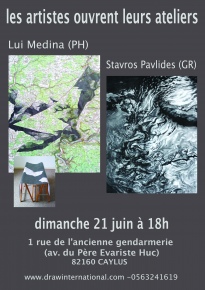
ATELIERS OUVERTS - ARTISTES EN RESIDENCE - LUI MEDINA (PH) - STAVROS PAVLIDES )GR) Les ateliers sont ouverts à 18h.
|
 |
|||
|
Mai 2015
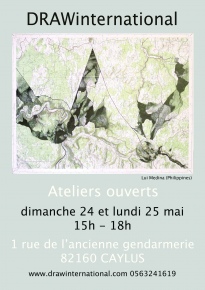
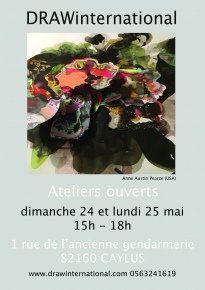
ATELIERS OUVERTS - ARTISTES EN RESIDENCE Les ateliers de DRAWinternational à l'Ancienne Gendarmerie Nationale, seront ouverts dimanche et lundi après midi de 15h à 18h. Vous êtes inviter à venir échanger avec nos artistes en résidence et découvrir leurs œuvres.
|
  |
|||
|
Mars 2015
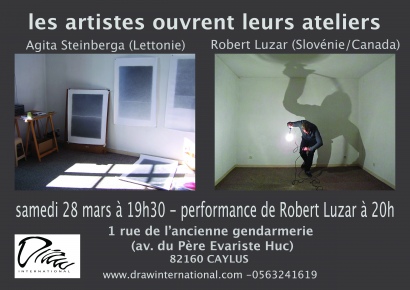
ATELIERS OUVERTS - ARTISTES EN RESIDENCE - ROBERT LUZAR - AGITA STEINBERGA Pour célébrer le début de notre programme d'Artiste en résidence 2015 et inaugurer nos nouveaux ateliers, Robert Luzar et Agita Steinberga présenteront leur travail au public. Les ateliers seront ouverts à partir de 19h30 et à 20 heures il y aura une performance de Robert Luzar.
|
 |
|||
|
Septembre 2014
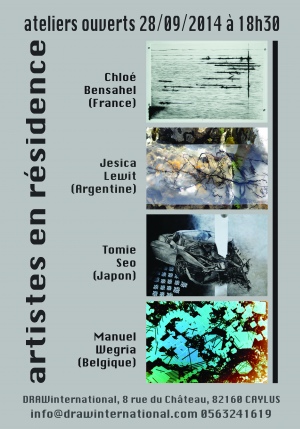
ATELIERS OUVERTS Artises en Résidence, Chloe Bensahel, Jesica Lewit, Tomie Seo and Manuel Wegria ouvrent leurs ateliers au public.
|
 |
|||
|
Septembre 2014
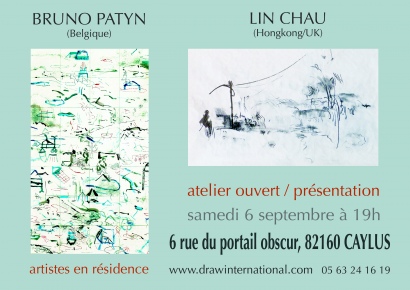
ATELIERS OUVERTS - ARTISTES EN RESIDENCE - BRUNO PATYN - LIN CHAU Souvent, un dessin ou une œuvre d'art est considéré comme un moyen de communication entre l'artiste et le spectateur, mais mes dessins ne sont pas conçus de cette façon. Quand je peins, j'ai une conversation avec moi-même à travers la peinture et quand le moment vient ou je ne peux pas pousser la conversation plus loin, le travail est fait. Mon processus de peinture est donc une façon non verbale de penser, placé dans un cadre visuel. La peinture m'aide à structurer le travail que je fais à l'intérieur de moi-même, comme un travail d'intégration. J’amène certains aspects de moi-même à la surface et je les intégre pleinement dans mon être. Mes dessins ne cherchent pas à livrer un message, toucher le monde, ou exprimer mes émotions les plus profondes à un spectateur anonyme. Je ne fais que penser à haute voix. Cela ne veut pas dire qu’une autre personne ne peut pas avoir une conversation avec la même peinture, mais ce n’est pas, tout simplement, une conversation avec moi. Le résultat final du dessin n'est pas le dessin, mais tous les possibilités infinies de la pensée et de la conversation qui pourrait survenir à travers le dessin, et aussi l'excuse de se réunir ici et rassembler les gens. Bruno Patyn Je suis fascinée par l’architecture : les pierres, la couleur et la façon dont elles sont utilisées dans la construction des maisons du village. La magnifique ligne d’horizon si bleue... Les maisons à Caylus qui s’écroulent me font penser aux villages ou j’ai grandi à Hongkong. Cette expérience m'inspire de retourner dans mon pays et documenter mes villages en train de disparaitre. Lin Chau
|
 |
|||
|
Juillet/Août 2014
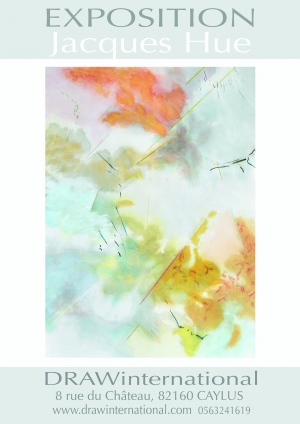
EXPOSITION - ESPACES DE MUSIQUES - JACQUES HUE La musique à jalonné la vie de jacques Hue et son parcours artistique. Elle est devenue une necessité de tous les jours. Sa rencontre avec le compositeur Roger Tessier en 2007, marque une étape importante. il a donc travaillé pendant deux années en "immersion totale" dans la musique de Robert Tessier, élaborant plusieurs appoches sensorielles, techniques, plastiques et réalisant une soixantaine de peintures et dessins. Après cette démarche d'analyse, de synthèse, au travers son univers musical, il a éprouvé le besoin , le désir d'aller explorer d'autres univers, d'approcher d'autres musiciens (jean Yves Bosseur, Pierre Boulez …) Mais aussi de revenir à d'autres formes musicales comme la musique indienne (de R. Shankar) la musique du Moyen Age en faisant une incursion chez Mozart (avec son Rquiem) pour revenir par l'Asie ( Japon, Corée, Chine ). Avant d'oser évoquer sa propre musique intérieure. Univers de vibrations, sons, couleurs, rythmes, formes. Sa peinture aujourd'hui révèle des ESPCES de MUSIQUES fruit d'une longue expérience sensible qui trouve son origine aux sources des diversité qui le font vibrer. MF.
|
 Plus d'images >> |
|||
|
Juillet 2014
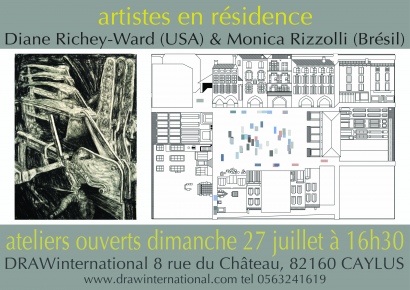
ATELIERS OUVERTS - ARTISTES EN RESIDENCE - DIANE RICHEY-WARD & MONICA RIZZOLLI My recent drawings represent an ongoing series entitled, “La Vitesse de l’Idee”, which investigates the potential of drawing mechanical imagery. By layering structural elements of French farming machinery, I find an unlimited source of configurations: ideally dramatic and anthropomorphic in nature. I have a continuing interest in line, and how it relates to motion and energy in a work of art. I attempt to create an environment where the vigour, or force created by the form is retained in the piece. By seeking a delicate balance between improvisation and resolution my goal is to retain a certain mystery and an unpredictable outcome. These drawings are created through a build-up of charcoal and pastel images on paper - with an search for a certain reverberation between layers. Diane Richey-Ward I am developing a series of drawings written in Processing computational language and executed on the Java platform. The processing language permits the insertion of random variables on the code, making the drawings slightly different each time the program runs. Each drawing represents one specific geographic coordinate and a specific time based on my personal experience of the space. By adding objective and subjective data, historical information, a textual narrative, movement and the code itself, I intend to create an approximation between the map that I am drawing and the territory that I perceive. This work continues my previous research, which investigates the interrelationship between three concepts: the social and physical space; the individual perception of the space, and the representation of that space. Monica Rizzolli
|
 |
|||
|
Juin 2014
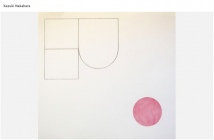
Kazuki Nakahara - Lauréat FID 2014 Kazuki Nakahara - Artiste en Résidence at DRAWinternational 2011, est lauréat de FID - Prix international du dessin dédié aux jeunes artistes 2014. Ses oeuvres sera exposer à la Galerie Catherine Putman à paris en Juin 2014. Destiné aux jeunes artistes et aux écoles d’art, le FID PRIZE a pour but de promouvoir le dessin contemporain et faire découvrir de jeunes talents. Sélectionnés par un jury spécialisé dans le dessin, parmi plus de 300 candidats venant de 30 pays, Camille Benarab-Lopez, Tsama Do Paço et Kazuki Nakahara sont les finalistes du FID PRIZE 2014 et exposeront leurs travaux les plus récents avec Hajime Yamada (mention spéciale du jury). D’horizons et de cultures différentes ces quatre artistes nous feront part de leur pratique singulière du dessin.
|
  |
|||
|
Juillet/Août 2014
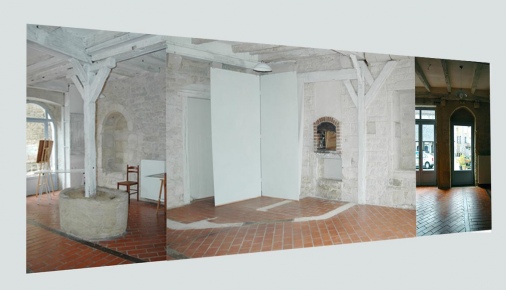
DESSIN + DRAWinternational - HORS LES MURS DRAWING + Je crois en l’écologie de l’imagination. Je crois en une écologie sociale comme un moyen d'offrir une contribution culturelle à la qualité de vie grâce à des activités dans le domaine des arts. Le conflit et l’aggression ne sont pas naturel à l’humanité - ce sont des réactions et des attitudes construites. Je rêve d’un village tolérant, diverse, avec un échange d’idées novatrices qui ammène à un environnement plus stimulateur ayant plus de valeur. Nous pouvons déterminer notre destin et notre environnement. Nous savons ce qui doit changer. Les artistes sont invités à y répondre avec leur projet créatif pour une résidence d'un ou deux mois : le dessin avec un autre medium. Nous recherchons des projets individuels et collaboratifs et peuvons accueillir jusqu'à huit artistes. Veuillez nous contacter pour les informations/tarifs.
|
 |
|||
|
Mai 2014
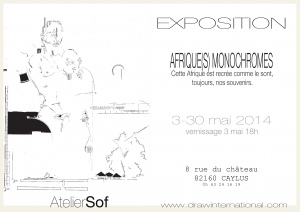
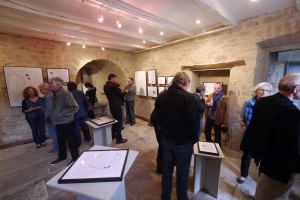
EXPOSITION - AFRIQUE(S) MONOCHROMES - ATELIER SOF Derrière l'atelier Sof, un peintre. Une enfance en Afrique de l'ouest, où est née, a vécu, sur plusieurs générations, la plupart de sa famille. Enfant, découverte du Sénégal ; des voyages ; des heures passées auprès de son père à couper, coller, monter des films 8 mm. Il se penche sur de minuscules images, étudiées une à une, mises bout à bout. Village de brousse ; portraits. Des légendes familiales : ses grands-pères, en Oubangui-Chari ou à Kayes. Jeunesse. Arrivée en France. Refusé aux Beaux-arts. Il travaille, voyage, dessine, écrit. Une formation de typographe. Recherches sur une nouvelle typographie et le développement des possibilités du livre. 2011 : premiers travaux des Afrique[s] monochrome. La mémoire ; le temps ; l'espace et l'absence ; le signe, la ligne, la lecture ; la recherche d'une présence. stephanefelix60.wix.com/ateliersof
|
  Plus d'images >> |
|||
|
Avril 2014
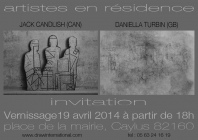
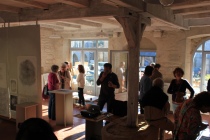
ATELIER OUVERT / EXPOSITION ARTISTES EN RESIDENCE - DANIELLA TURBIN (UK) ET JACK CANDLISH (CAN) Mon travail est une investigation sensible " in situ ", une synthèse de la perception physique et psychique du monde à travers l'activité du dessin. Mes dessins enquêtent le seuil de l'architecture abstraite et physique afin d'inclure le raccordement de l'espace, comme caractérisé par exemple par des escaliers, des voies de passage et des routes qui à leur tour se combinent pour former des espaces entrelacés, impossibles et paradoxaux. Daniella Turbin. Mes dessins reflètent une exploration de la nature, la relation entre l’individu et l’environnement. L’Humanité remodèle l’environnement physique qu’elle occupe, l’environnement physique influence la manière dont nous pensons. Le monde bouge et change, comme le font également nos interprétations et nos interactions. Jack Candlish
|
  Plus d'images >> |
|||
|
Septembre / October 2014
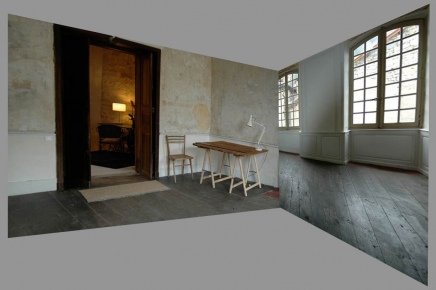
Votre pratique créative, est elle principalement du dessin? La communication par le dessin - une résidence pour artistes, ecrivains et musiciens. En raison d'une annulation récente. Nous avons une résidence disponible pour Septembre/Octobre 2014 à DRAWinternational. Nous sommes intéressés par un artiste qui a une ouverture d'esprit et approche expérimentale dans sa pratique du dessin. Nous vous invitons à jeter un oeil à des oeuvres sur notre site web et faire une proposition qui offre une dimension qui n'est pas encore représentée. Nous attendons vos propositions. La Committee DRAWinternational.
|
 |
|||
|
Octobre 2013
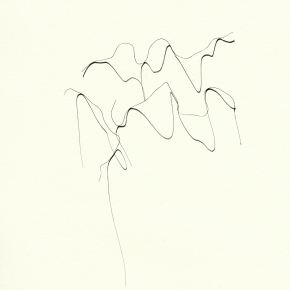
ARTISTE EN RESIDENCE - SUSAN WALSH (USA) 'The change in shadows due to the earth's rotation is the single most important indicator that time is passing. Consequently, noting changes in color of daylight and in the cast of shadows is the most reassuring means we know to mark the movement of time'. Leonard Shlain, in Art and Physics One of the most persistent dialogues in my work as an artist, is between loss and the visual evidence of the passage of time. Each visual image becomes a Memento Mori of time and spaces in transition. In the altered dimension of grief, after one suffers the pain of the loss of a loved one, one's relationship to time is reassessed: time feels too long, or it feels too short, or it seems to stop moving. One waits for signs: the mysterious and ultimately reassuring alchemy of time, presence, and form. I would like to wait for signs during this residency and produce a physical manifestation (drawings), of that waiting. Susan Walsh
|
 |
|||
|
Septembre 2013
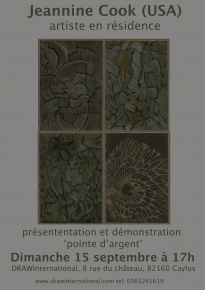
ARTISTE EN RESIDENCE - JEANNINE COOK Présentation et démonstration - Pointe d'argent Pendant mon enfance en Afrique de l'Est, j'ai passé des heures interminables dans la chambre noire avec mon grand-père photographe, et regardé des photos en noir et blanc apparaissent, comme par magie, dans les bacs à développer. Leur beauté monochromatique a finalement contribué, je me rends compte maintenant, à ma fascination pour la pratique de dessin de "silverpoint" "pointe d'argent". Dessinant avec la pointe d'argent est exigeante. Ce médium se développe lentement, comme un tirage photographique en noir et blanc. Son intensité d'exécution me permet de se concentrer sur le familier. Je réaffirme mon sens de connexion avec un endroit, aux rythmes des marées et des saisons, avec la lumière en mouvement, le changement, la transformation de tout. Pour moi, la pointe d'argent est un médium subtil qui offre un contrepoint calme de la haute tension au monde d'aujourd'hui. Peut-être que ce n'est pas surprenant, étant donné que cette technique, connu génériquement comme "point de métal" est né dans l'atmosphère contemplative des monastères européens du 12ème siècle. Silverpoint me permet un dialogue scintillant avec mon monde environnant.
|
 |
|||
|
Septembre/Octobre 2013
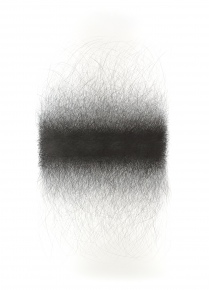
ARTISTE EN RESIDENCE - SANDE WATERS (CANADA) I have two bodies of current work which have a predominant theme referencing iconic female symbols. My large drawings are conceptual visual metaphors of female bodies. One of my drawings was five feet high by thirty feet long and required repetitive gestural mark making, taking several months to complete. To me, the physical and emotional environment one experiences results in choreography of unique gestures that may seem meaningless, and often we are not conscious of them, but they actually create form that defines who we are. My smaller more recent drawings are a study of rather engaging and playful ‘Goddess’ symbols. www.sandewaters.com
|
 |
|||
|
Août 2013
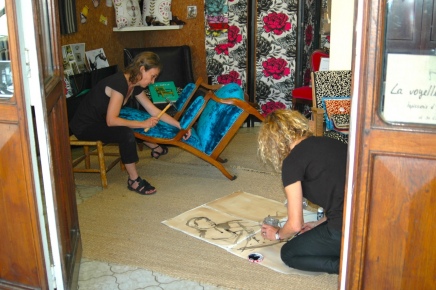
ARTISTE EN RESIDENCE - BARBIE KJAR (AUSTRALIE) Barbie Kjar, une artiste Tasmanienne en Quercy Barbie Kjar est une artiste venue de Tasmanie effectuer une résidence à DRAWinternational " Pendant ma résidence, je me suis concentrée sur l'élaboration de portraits de 7 personnes vivant à Caylus et 7 outils artisanaux. Dans certains cas, j’ai fait le portrait de la personne en train de travailler utilisant les différents outils liés à son métier. J’ai ainsi travaillé dans l’atelier de tapisserie de Nathalie Céré (photo). Ce métier très physique implique une relation quasi sensuelle avec l'objet. C'est comme une danse et une lutte en même temps, une métaphore des relations humaines (l'effet 'push/pull')." Barbie Kjar - Article la dépêche 26/08/2013 http://www.ladepeche.fr/article/2013/08/26/1695394-caylus-barbie-kjar-une-artiste-tasmanienne-en-quercy.html
|
 |
|||
|
Août 2013
ATELIER INTENSIF DE DESSIN - CELIA EID C’est une petite photo qui a allumé une étincelle dans mon âme : Un enfant, allongé sur le dos, dessine sur un grand papier blanc posé par terre. Son visage est caché entre les pieds d’un tabouret en bois renversé sur le sol. Ses bras sont derrière sa tête. Il vient de dessiner un grand trait rond. Il en a fait plusieurs. Il en fera bien d’autres. Il semble qu’il ne voit pas ce qu’il dessine. Lui et un compagnon remplissent de graphismes la surface démesurée du papier. Ils ont le visage du bonheur. J’ai envoyé un email à Drawinternational dès que j’ai vu cette image sur leur page net. Moi aussi, je veux apprendre à dessiner sous un tabouret : C’est ceci, mon projet. Je suis une artiste numérique. Je crée des animations image par image sur la musique contemporaine. Immobile, assise sur une chaise, yeux ouverts, je dessine sur la superficie restreinte d’un écran. Je lutte, plongée dans ce monde virtuel et immatériel, contre l’oubli de mon propre corps. Les techniques traditionnelles d’expression: peinture, lithographie, dessin, m’aident dans ce combat. Le contact avec la pierre et l’encre me fait revenir au monde du sensible et du gestuel. Je les pratique toutes sans relâche et à chaque fois que je reviens à ma bonne vielle chaise devant l’ordinateur je retrouve mon corps re-empreint des énergies du réel. Celia EidCelia Eid was born in Brazil and is currently based in Paris, France. She creates her animations using traditional stop-frame animation in the computer. While still living in Brazil, Celia Eid won awards for her work as an illustrator and graphic designer. In 1994 she published the graphic novel Penare. After training in digital media she worked for two years in post-production for television and then moved to France to pursue her activities in animation as an independent artist. She has created animations extensively for live music performance and often collaborates with composers and musicians. Since 2005 her works have received repeated presentations at many international festivals. Celia Eid, d’origine brésilienne, vit en France depuis plusieurs années. Au Brésil, elle a été plusieurs fois primée par son travail de graphiste et illustratrice. En 1994, elle a publié un livre de bandes dessinées en strips: Penare. Après avoir travaillé pendant deux ans dans une entreprise de post-production de vidéo, elle a déménagé en France pour poursuivre ses activités comme artiste d’animation indépendante. Elle a créé plusieurs animations pour performance live et a collaboré avec plusieurs compositeurs et musiciens. Depuis 2005, ses vidéos ont été présentées dans plusieurs festivals internationaux. The Stool workshop La photographie fait allusion à et l'objectif était: 'simplement à «découvrir de nouvelles dynamiques/relations / mutualité / différence / influence par rapport aux objectifs de l'atelier précédent pour des périodes prolongées» (thèse - ' la chorégraphie de dessin », 2003). Les deux étudiants Emily Clark et Neil Davies étaient des artistes avec qui je n'avais pas travaillé auparavant. En dessinant avec un objet inanimé du quotidien , nous avons expérimenté avec les idées de limitation et des interférence comme un élément positif pour délimiter les actes gestuelles dans certaines contraintes physiques. Ce faisant, le tabouret deviennent une trace de lui-même en relation avec le corps comme il cherchait à retrouver sa forme au sein de cette relation interactive. Le tabouret ne sait pas ce qu'il fait tout en existant dans l'espace d'un corps et ne peut qu'agir d'une manière partiellement inconsciente. Cette expérience a aidé les artistes étudiants entrent en collision avec quelque chose de difficile et stimulant, qui a nourrie d'autres significations, et d'autres processus d'expérimentation. De cette manière, le dessin était pour toujours dans le devenir, jamais tout à fait arrivé, tout en offrant encore un record perceptive d'un temps et d'espace particulier. Quand on trouve quelque chose de nouveau, nous sommes emmené invariablement vers quelquechose tout aussi stimulant et parfois plus profonde et plus durable. L'atelier va expérimenter avec le corps dans diverses situations et influences. Les divers processus de dessin / les méthodes / et la matérialité qui viennent aussi proche que possible du concept et la nature envisagée de la durée et de l'espace dans chaque dessin a faire. Il explorera les notions de: la durée, le silence, la gravité, la répétition, la limitation, la collaboration, la masse, la privation sensorielle, l'échelle individuelle autographe / section. John McNorton 17- 6- 2013
|
    |
|||
|
Juillet 2013
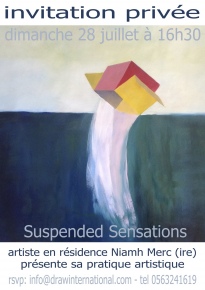
NIAMH MERC - Atelier Ouvert/Présentation En tant qu'artiste, j’utilise toujours le dessin comme une réaction expressive à ce que je vois et ce que je ressens. Mon intention pendant cette résidence est la confrontation avec la sincérité/ honnêteté au sein de ma propre pratique artistique en travaillant seule dans le studio et aussi étant artiste en résidence, qui repose également sur une discussion objective avec d'autres artistes. Avec cette pratique du dessin comme un outil émotif, il y a une lutte continuelle pour tenter de formuler et de ressentir les sentiments abstraits que nous partageons tous lorsque nous pensons et rêvons de nous-mêmes et des autres. L'ouverture d'un espace public peut aider à donner un sens à des pensées et des sentiments qui ne sont pas réalisés, cachés, niés, mal compris ou pas abordés d'une manière objective. Niamh Merc
|
 |
|||
|
Juillet/Août 2013
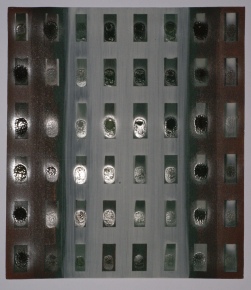
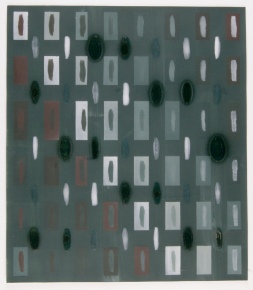
ARTISTE EN RESIDENCE - ALISON GRAHAM (UK) 'DRAWING and CLAY' In July/August 2013 ceramic artist Alison Graham (UK) will be exhibiting her PhD research work and more recent experiments at DRAW international’s gallery and studios. She said in a recent correspondence: I was searching through the artist residency sites and came across yours and it brought back the most wonderful memories of my time in Caylus in October 2005 with the MA Ceramics from CSAD. It was truly a life-changing experience for me, as it sparked off an overwhelming enthusiasm for drawing and mark-making that has developed in my ceramic work over the past 8 years, through the MA and PhD. I just wanted to say thank you for your enthusiasm, encouragement, support and understanding. Alison's studio will be open to the public to give insight into her ideas and working processes, which clearly integrates drawing as a vital component to her overall creative practice. DRAWinternational are happy to introduce this funded residency opportunity which is the first of an annual award to an artist whose work promotes drawing in a contemporary context. http://www.aligrahamceramics.moonfruit.com/
|
  |
|||
|
15 juillet 2013
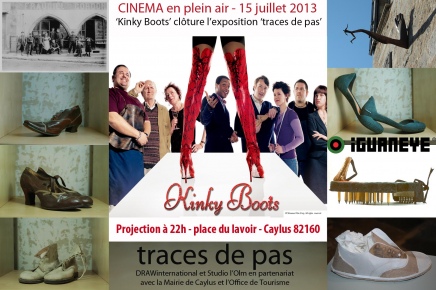
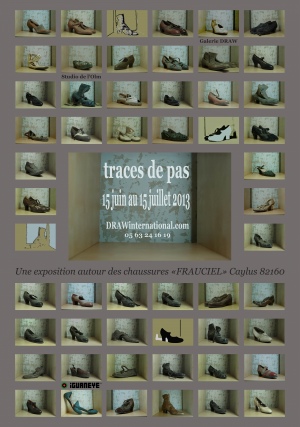
Cinema en Plein Air - Caylus L’exposition ‘traces de pas’ clôture lundi 15 juillet avec le film ‘Kinky Boots’. Quand une exposition célébre le passé et le présent à travers “la chaussure”. La découverte d’une collection de chaussures du magasin ‘Frauciel’ de Caylus, était l’inspiration de cette exposition où l’on explore l’artisanat et l’art - la tradition et le contemporain. Cette exposition est comme une oeuvre en mouvement, porteuse de souvenirs, d’histoires et d’échanges. Nous remercions tous qui ont participé à cette oeuvre, objets, anecdotes et expériences... Le film comédie "Kinky Boots" américano-britannique (d'après une histoire réelle) aborde le monde de la chaussure, de la mode et de l’extravagance.
|
 |
|||
|
Juillet 2013
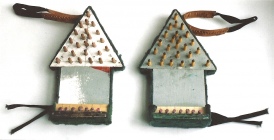
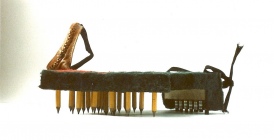
ARTISTE EN RESIDENCE - NIAMH MERC (IRLANDE) I am so pleased to have artist and teacher Niamh Merc as a resident artist next year. She was one of my MA students at Cardiff during 1996/7. I have included an excerpt from her thesis The Importance of Drawing as a Mathematical Expression, 1997 which I still find pertinent and two images of her finely made drawing shoes which formed part of her MA exhibition. 'Niamh Cooney's Pencil Shoes were used to record an action of movement with the feet which were pushed and dragged along the ground in an intentional movement "to think of form in terms of definite measurements" and to reduce "all proportions . . . to forms such as triangle, square, circle" (Klee, 1956, p.22-23). This intent is "a thought in act: it is in this sense that I am certain of myself" (Merleau-Ponty, 1964, p.22). The thoughts within the pencil performances make use of a tactile motion rather than seeing themselves.' Klee, Paul (1956), Klee. Volume I. The Thinking Eye, edited by Spiller, Jurg, Lund Humphries, London and Bradford Merleau-Ponty, Maurice (1964), The Primacy of Perception, Northwestern University Press
|
  |
|||
|
Juin/Juillet 2013
Exposition 'traces de pas' A travers une collection de chaussures datant de début 1900, l'exposition 'traces de pas' va célébrer l'art et l'artisanat - traditionnelle et contemporaine. Dans le village médiéval de Caylus, les organisateurs John et Grete McNorton de 'DRAWinternational' avec la participation d'Eleonoor Klinkert et Steven Van Den Berg de 'Studio de l'Olm vous invite à retourner dans le passé et découvrir objets, images, souvenirs d'autrefois ainsi que l'art et design contemporain. Deux lieux d'exposition et deux vitrines vont nous montrer un regard sur le monde des chaussures par des artisans, des artistes et un jeune designer. Pourquoi les chaussures nous passionnent : Les chaussures du magasin Frauciel sont témoins de notre patrimoine, de notre savoir faire et de la mode. Caylus était un village important pour le commerce en 1900. Les chaussures pour des dessins qui promènent : DRAWinternational - Centre de recherche sur la pratique du dessin contemporain. Artiste en résidence Niamh Merc a crée les chaussures comme outil pour dessiner. La rencontre avec un jeune créateur locale Olivier Taco qui a crée les chaussures "Iguaneye" une chaussure ultra-moderne et ultra-minimale. John est fils d'une ouvrière à l'usine de chaussures "Clarks" à Plymouth en Grande Bretagne. Grete a travaillé dans le magasin de chaussures 'Saxones' les samedi, à l'âge de 15 ans et depuis elle est fan des chaussures. et en plus Les françaises sont les championnes européennes en achat de chaussures (6 paires par an) !!! L'exposition "Traces de pas " commencera le 15 juin à 19h et sera clôturé le 15 juillet avec un séance de cinéma en plein air - le film comédie "Kinky Boots" américano-britannique (d'après une histoire réelle) aborde le monde de la chaussure, de la mode et de l’extravagance. Pour plus de renseignements: tel 0563241619
|
 Plus d'images >> |
|||
|
Avril 2013
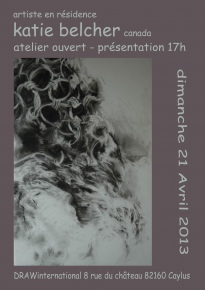
KATIE BELCHER -Atelier ouvert/présentation Mon travail à DRAWinternational est centrée sur l'expérience de la plumaison d'un oiseau pour la première fois, c'était un faisan. La maladresse avec laquelle j'ai réalisé cette tâche, autrefois une tâche habituelle, est devenue l'inspiration d'un nouveau projet de dessin. J'ai documenté le processus, et catégorisés et documenté sa trace - les plumes. Je cherche à décrire le faisan lui-même, ainsi que l'action de la plumaison.
|
 |
|||
|
Avril /Mai 2013
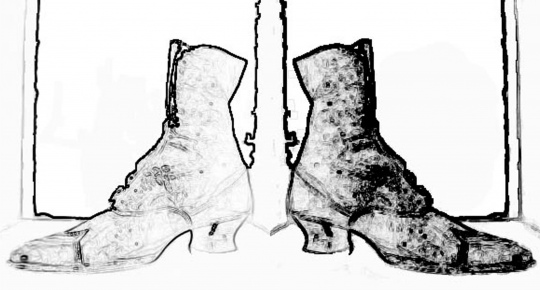
ARTISTE EN RESIDENCE - OPPORTUNITE FILL THESE SHOES? Cette annonce est très tardive à cause d'une annulation au dernière minute pour le mois d'Avril/Mai 2013. Après avoir reorganisé notre planning, nous avons une disponibilité pour Mai/Juin 2013, si vous êtes intéressé contactez nous Info@drawinternational.com pour saisir cette opportunité.
|
 |
|||
|
Mars 2013
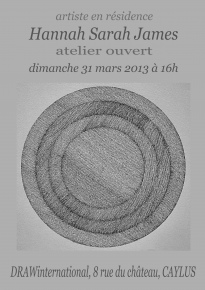
HANNAH SARAH JAMES - Atelier ouvert Ma pratique embrasse l'action gestuelle d'une ligne tracée, typiquement à travers des dessins "in situ" utilisant des milliers de lignes droites.
|
 |
|||
|
Mars 2013
HANNAH SARAH JAMES - (UK) Is your drawing practice primarily concerned with ideas of abstraction ? We are interested in an artist who has an experimental approach to drawing as abstraction, notation, repetition and/or geometry. We are pleased to announce that Hannah Sarah James has been selected to be our partially funded artist in residence for March 2013. ‘The mark-making potential of line has long been taken for granted and little consideration given to the mystery inherent in a simple line’ - Ziba Ardalan. ‘To the eye of the viewer the drawing objects, with their torn surfaces and empty spaces, crossed by lines and threads, are traces of a journey that point to the possibility of the existence of other planes. They suggest the existence of fullness in the empty.’ - Anna Maria Maiolino. My works explore the idea of obsession through mark making and the process of repetition through drawing. My research is predominantly process driven. I think through the making. A process of mark making that is made up of the repetitive building of lines and the continual reflection of this. This relates to the often site specific nature of my work. Space is essential within my practice; much of my work is developed through response to space, time and surface. Through drawing I have been able to develop a process that enables the viewer to feel emerged in the obsessive nature of the work and appreciate the time and the labour process. Exploring the physicality of the space the nuance and subtleties of that wall/ surface. Drawing attention to something that is largely overlooked and therefore the building itself becomes integral to the piece of work. The marks made are non-representational; they are an exploration of surface, a marking of time spent with a site and a demonstration of labour. This is also an attempt to slow the viewer down to appreciate the time spent to make this. This is my way of highlighting that this futile gesture does mean something, something slow and process based. The process of making acts, as a form of meditation, there is a sense of hypnosis involved in the repetition of the mark making and it is this meditative nature of the work that I want to translate to the viewer. Hannah Sarah James
|
-2) |
|||
|
Février/Mars/Avril 2013
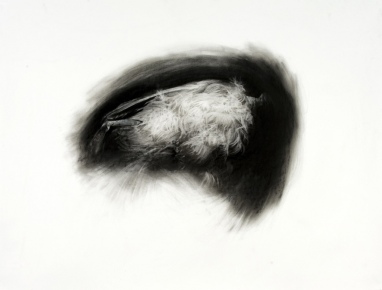
ARTISTE EN RESIDENCE - KATIE BELCHER (CANADA) Through my artistic practice I have been exploring the ways in which humans process experience and build memory. I find drawing to be an effective medium through which to make these explorations. It is intuitive and evokes experience without defining it. My drawings are centrally composed, densely modelled and make significant use of erasure. Animated by the tonal variations and marks beyond their outer contours, the previously static subjects appear to be emerging from or dissolving into the white ground. Using my own experience, found objects and museum archives as a starting point, I exploit the image’s function as a mnemonic resource for myself and other viewers. My drawings examine experiences, how we record and remember them, and what we lose with time and progress. katiebelcher.com
|
 |
|||
|
Janvier/Février 2013
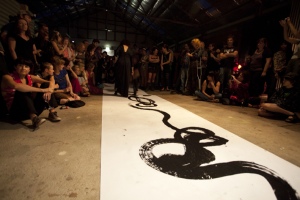
ARTISTE EN RESIDENCE - KELLIE O'DEMPSEY (AUSTRALIA) DRAWinternational is an innovative and supportive location for contemporary arts practice. It is in this experimental and critical thinking environment I want to incubate my current performance drawing investigations. Exploring expanded drawing as documentation I aim to investigate notions of inhabitation and inclusivity via a site-specific performance practice. Kellie O'Dempsey Recipient Australia Council Artstart Grant
|
 |
|||
|
Octobre 2012
ARTISTE EN RESIDENCE - JULIE PAYNE (AUSTRALIA) My initial training in the field of sculpture and architecture pushes this desired three dimensional approach to drawing as an object. Apart from producing a body of work that I would use in upcoming exhibitions in Australia, I would greatly enjoy the liaison with other artists to share ideas and techniques. www.juliepayne.com.au
|
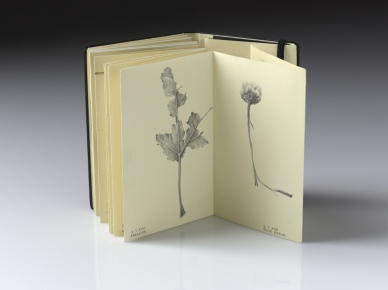 |
|||
|
Septembre/Octobre 2012
ARTISTE EN RESIDENCE - ANNA HAYES (UK) Highlighted in my oil paintings are the inaccuracies within Google Street View, exemplifying how our own perception of the world is so unlike that of a photographed image. What is at all is barely there, and in appearance what is; is beauty. My watercolour paintings in appearance have a documentary nature, but are conceived as a form of mapping a place or home, a combination of juxtaposed figurative element, which are then softened by imposing a careful simplification approach to the development of the work. Through this silencing process, disparate narrative images connect or stand alone, creating a subtle, calm, partially abstracted whole. Through the use of carefully selected figurative imagery I am exploring the function of the home, having a sense of place and belonging, together with ideas of remembering, perception and nostalgia .I have developed a calculated system of constructing an image that mirrors my thought process. The technique I employ allows me to reiterate the melding of identities into a unified whole. I build the paintings up using thin layers of dilute colour. By editing imagery I can draw attention to the peaceful moments that can perhaps go unnoticed. A duality exists both visually and conceptually within my work. Physically, it can be perceived as flat and decorative, yet a strong sense of serenity and composure also occurs created by the light tonal palette and the lack of detail. It is to allude to a sense of comfort, peace and sanctuary.
|
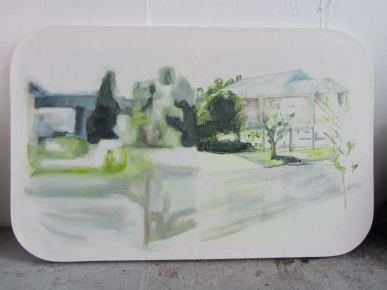 |
|||
|
Septembre/Octobre 2012
ARTISTE EN RESIDENCE - EVAN BROENS (CANADA) The theories presented by Goethe and his topic of intuitive consciousness as a way of understanding has become central to my working methodology. Drawing has operated as a grounding moment in my creative process and there are aspects of my practice and my work which includes drawing. Yet this way of working has not fully become a secure element in my portfolio. The DRAWinternational residency is an important opportunity to initiate drawing as its own entity in my practice, rather than being supplementary; bridging practice and theory and, as the website indicates, to locate a contextual framework. Evan Broens
|
 |
|||
|
Septembre 2012
ARTIST EN RESIDENCE - NONI BOYLE (CANADA) Since drawing is central to my practice, I was very excited to find a residency opportunity that seems to celebrate the act of drawing to the extent that DRAWinternational does. One of the reasons that I wish to do a residency in France has to do with the exploration of place, identity and belonging. My maternal family history has its roots in France (many generations past). I have not spent more than a few weeks in France prior to this, and would welcome the opportunity to stay long enough to absorb a sense of place and develop some work in response. Noni Boyle
|
 |
|||
|
Juin 2012
ARTISTE EN RESIDENCE - JULIA HITCHCOCK (USA) Objective Projects for me have always been the generative force that begs the next “what if?” “Next question, next inquiry, next body of work,” all manifest themselves in the active moments of working, coupled with the need to satisfy a visual conceptual puzzle. DRAWinternational has the structure and environment that will enable me to realize my next project: “the deconstruction and disintegration of the human form within its environment.” Visually describing the event of a human body actively chasing after its’ own basic cellular structures and acknowledging human existence as a non linear progression of events much like the firing of synaptic connections of nerve endings, the subtle act of a last breath or the jolting, violent surge of the last ounce of blood pressing against the interior lining of an exposed vein. These types of events ultimately lead to states of physical and spiritual transitions from one chemical or cellular state to another. It is this transition, interspace and state of being that I wish to elucidate in the large drawings. www.juliahitchcock.com
|
 |
|||
|
Juin/ Juillet 2012
ARTISTE EN RESIDENCE - MIO HANAOKA (JAPON) One of the biggest subjects of my works is how to grip relationships in durational time. I want spectators to feel that everything changes all the time, even now. All objects, including myself, are transforming in order to adjust ourselves to every present moment. We tend to look for a place to stay to make us comfortable, but there is nowhere to stay same. So, I’d like to show the variable present which contains a trace of past and also a smell of future. Mio Hanaoka
|
 |
|||
|
Mai/Juin 2012
ARTISTE EN RESIDENCE - ANDREA POR (CANADA) The underlying theme of my work is informed by the human condition, i.e., the will to power and its subsequent effects of fear, doubt, anxiety and isolation. I am interested in these emotions and how they contend and relate to the enormity of the world and the ephemerality of life itself. What happens to my achievements and will to power after I die? Who will remember me? To what purpose does my individual will to meaning serve on a grand scale? Andrea Por
|
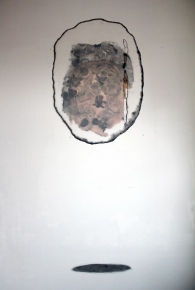 |
|||
|
18 mars 2012
ARTISTE EN RESIDENCE- ANOOK CLEONNE (HOLLANDE) Atelier ouvert - exposition d'oeuvres réalisé pendant sa résidence.
|
  |
|||
|
Avril/Mai 2012 (rescheduled)
ARTISTE EN RESIDENCE - DAVID NECHAK (USA) David Nechak has taught for many years and exhibited extensively in the United States of America. He has also exhibited his quirky and humerous ideas in Canada, Ireland and Scotland. He continues to explore these ideas through installation and sculpture with continuing wit and integrity.
|
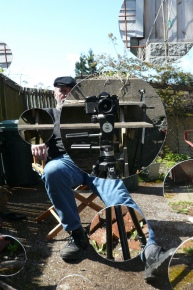  |
|||
|
Septembre 2011-2012
Open Call - A Social Science and Art and Design Collaboration with Prof. Graham Button and Dr John McNorton Human beings think in the concepts of language, but how they express what they know transcends talking or writing. People perform actions and interact together in language but action and interaction is not confined to language. Therefore if we want to explore what and how people know things, the world we live in, and peoples' relationships to it and to each other we need to do this in modes of communication other than the conventional written form. Movement, colour, form are other ways to those of text and talk through which people can communicate with one another, or can be used in conjunction with one another to express what someone knows or wishes to convey. Consequently they can all be used to explore our world. This means that the traditional academic boundaries that separate art, human sciences and the natural sciences can hinder our understanding of our world and how we communicate that. We thus see that the meeting of minds from different disciplines is an open and dialectic opportunity for progress in the way we reflect upon and make reflective decisions about our world and how life actually might be at any particular time. Drawing for instance, is an activity which now is considered as an art form in its own right, yet can actually offer many variables in first order observation, which is, again traditionally thought of as the provenance of the human sciences, and in how one might convey these related reflective outcomes. Through breaking down the barriers between traditional disciplinary perspectives and through other creative opportunities, ideas can collide and may motivate fresh, energetic and rigorous exploration. John McNorton is an artist and educator who considers mind and body issues through the everyday and more conscious creative action. This world is not one encountered by the eye alone, but through the whole human interactive corporeal sensorium through which we are inexorably a part. This is a body for others, as it exists in its habitual state and focusses on how creative intervention can foster change in ones gesture to possibly result in new form. Graham Button is a sociologist whose interest in ordinary practical action and interaction is grounded in the relationship between mind and language. He has investigated how people reason about their world and display and use that reasoning in their interactional performances with one another in a diverse range of social settings. For the past few years he has focused upon how people reason about the work they do, and how that can be traded into the design of computer systems. These two seemingly disparate approaches have come together in reflections that have revealed mutual concerns and interests and provide opportunities to push the boundaries of traditional expression. Both John and Graham are committed in making some difference in how things are and towards how they might possibly be. It is the intention to research the content and methodology of a selected number of artists at DRAWinternational during their residency. Artist, therefore, who are willing to have their work and processes carefully scrutinised and discussed in preparation for publication can apply stating this in their application. A small selection of artists will be chosen during the 2012 according to the type of work produced and the availability of each person involved to mutually agreed dates.
|
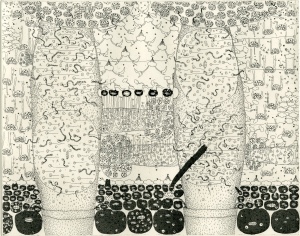 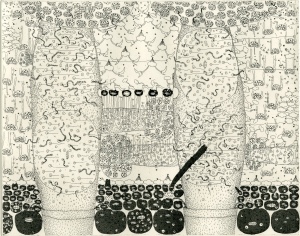 |
|||
|
Septembre/Octobre 2011
ARTISTE EN RESIDENCE - KAZUKI NAKAHARA (JAPAN) I am interested in 'Line'. I learnt Japanese calligraphy from my father who works as a professional Calligrapher in Japan. I learnt the strict rule of handwriting and expression from the different forms of Japanese characters. Sometimes I practised the same line all day long. This experience has influenced my interest to draw on paper. The drawings are made by adding repetitive strokes with a coloured pencil on paper. I form one or many circles which mostly symbolises the Woman with Pigtails. It is not only the humorous form which interests me, but also the long meditative process of drawing. Stroke by stroke, I try to repeat the line with the same quality with a consciousness in the act of drawing itself. I am also interested in making rules with simple mathematics in drawing. Some round forms stand in a straight line, some make a group with others or make a triangle and some go around regularly. So I amuse myself with the arrangement of motifs and try to express rhythms on paper. www.kazukinakahara.com
|
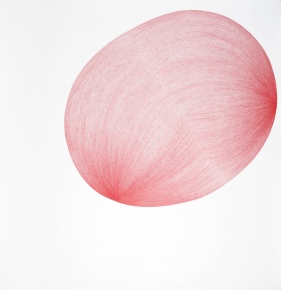 |
|||
|
Juillet 2011
ARTISTE EN RESIDENCE - CHERIE BENNER DAVIS (USA) I propose to make works by chopping up and rearranging maps and world globes. These will be collected, some prior to arrival and others while in France (both in Paris and possibly also in the local villages near the residency site, if available). These works will reconsider relationships of the individual to place, space and current geopolitical events through a conflation of the physical and psychological systems used to map our world, lives and movement. The pieces will be reconfigured to become three-dimensional forms that mimic things like natural phenomena (ex. the shapes of hurricanes in motion), and the globes will be altered in various ways such as a rearrangement of the countries and continents and in ways that distort/destroy their usually round form. Source materials that are France-specific like Paris metro maps for instance, might be reconfigured to relate specifically to the approaches to map-making, and concepts of locus, space, and movement there. Cherie Benner Davis
|
 Plus d'images >> |
|||
|
5 Juin 2011
Atelier ouvert / Bâtir des murs sur papier - SARA SCHNECKLOTH (USA) Partie à la découverte du paysage local Sara n'a pas pu manquer d'être attiré par le nombre de constructions en pierre qu'elle a rencontré sur les chemins ruraux. En particulier les murs en pierre sèche qui dessinent eux même les routes etles chemins. Inspirée par la similarité qu'elle a reconnu entre sa façon de créer un dessin et la composition d'un mur en pierre sèche elle s'est décidée de participer à un chantier de restauration. Cette expérience donne naissance à de nombreux dessins. "Les murs en pierre sèche comportent la notion de la structure, la superposition, la stabilité et de la grâce, toutes ces qualités qui je le crois peuvent se traduire entre trois et deux dimensions, et vice-versa. Dans l' effort de comprendre le travail et la tradition de la construction des murs en pierre sèche j'ai participé au chantier organisé par l'association APICQ. Nous avons passé deux jours à reconstruire une longueur du mur dans le hameau de Jonty. Qu'on travaille avec une grosse pierre pour trouver un ajustement le plus satisfaisant, ou qu'on collecte des cailloux pour remplir et fortifier, j'ai trouvé que les préoccupations de la paroi se traduisent directement par l'activité de dessin. Qu'on utilise la pierre, l'encre ou du charbon de bois, le caractère des matériaux suggère la technique. Le processus de trouver et placer intuitivement pierre après pierre reflête la façon dont un dessin se construit, marque par marque, la structure évolue par le temps et par un travail de patience. Travailler entre le site du chantier et mon atelier a également donné un aperçu sur des idées de la collaboration et de la propriété, le travail de chaque individu est devenu une partie de la grande structure, un accumulation d'efforts, d'intentions, et de techniques. Lorsque je me suis mis à construire des murs sur papier, en utilisant du matériel pour dessiner au lieu de la pierre, j'ai trouvé que les mêmes préoccupations sont essentielles à la construction. De quoi les murs ont ils besoin pour devenir stable? Quelle marque pour fortifier l'ensemble? Comment construire couche après couche dans l'espace, en n'utilisant que l'intuition et la touche? Le rôle du mur dessiné est diffèrent de ce qui sépare les pâturages ou qui définit la propriété, le dessin fonctionne comme un dossier de travail et d'expérience, une énigme sur la structure et l'équilibre, et une poursuite prometteuse de l'intégrité". Sara Schneckloth
|
  |
|||
|
Mai/Juin 2011
ARTISTE EN RESIDENCE - SARA SCHNECKLOTH (USA) How do we hold memory? How do memories hold us? I pose these questions as the starting point for my work, as I strive to embody moments of remembering, and consider the relationship between the body’s physical performance of memory and inscriptive practice. My work deals primarily with imagined microbiological systems rendered on a macro- scale. I envision and create cells, organs, fluids, and tissues, and seek to assemble the elements into new systems of organic relationship and connection. I work in a variety of mediums and look for ways to take drawing beyond its traditional definition of “mark on paper.” I believe that the act of drawing is a way of residing in multiple states of awareness – of present, past, future – of what one is, has been, and hopes to become – of the physical, the mental, and the formal. I draw as a way to see more deeply, both inside and out, and to elevate the act of seeing to a process that is fully engaging of both body and mind. In the gesture of a drawing, there abides the question of how human beings hold memory. I care about how the body holds its history, and how that recollected history can be performed through the act of making embodied signs. Sara Schneckloth teaches drawing and critical practice at the University of South Carolina in Columbia. www.saraschneckloth.com
|
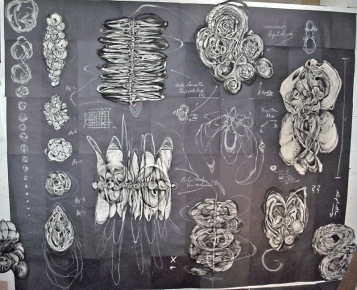 |
|||
|
16 avril au 21 mai, 2011
Exposition - Digital Dialogues JASON DAVIES/DARREN WILLIAMS (WALES) The origin of this collaboration was borne out of the desire to be more creative with electronic communicative technology, whereby the process of production is central to the project. Given our socially and personally shared limitations and imposed parameters regarding time, space and finance, we wished to develop a collaborative art form in which issues of geographical distance, finance, leisure time and working space, could be traversed by the mediation of commonplace technology- the home computer suite. We are currently engaged in a long distanced collaborative project utilizing the generic email system and creative packages within the home computer suite. Drawing occupies a central role in the work, often being both the initial drawn component scanned into the PC, and an integral part of the images development as it zips back and forth between collaborators in file format. The mark making is directed using either a drawing tablet or the mouse itself, and drawings are instigated by either collaborator. Although this form of pictorial communication is itself the primary subject matter, each individual dialogue is representative of concerns, expressions and incidents based on our own particular experiences and personal histories. We literally draw out the threads of our daily lives, ritually recording the most pertinent in sketch form. These ‘diaristic’ sketches are then worked upon and expanded until each subsequent e-drawing reaches completion. The sleeping partner in all of this is the machine, or program itself, for as expansive as the possibilities within each program may be, our choices are still confined within its parameters. A recent development has seen the project website develop beyond a mere depository for the dialogues into an arena where live works can be instantly uploaded, providing a visual blog. This has coincided with the utilization of photographic imagery collected with the ubiquitous mobile phone. digitaldialogues.co.uk
|
 Plus d'images >> |
|||
|
Mars/Avril 2011
ARTISTE EN RESIDENCE - BEN SHEPPARD (AUSTRALIA) IDEA OBJECTS – Lineal sculpted forms that appear as if drawn into space. These can also be ‘traditionally’ drawn onto photographic images in a larger scale to appear as if in real space. Halfway between the idea and the realised object, these forms present a proposition of a potential form imagined by the viewer. My process often involves the production of 3D drawings or ‘Idea Objects.’ These objects operate as drawings whereby the concept that ‘the thinking happens in the making’ is at the core of their creation. Lines are edited during manufacture in a way similar to those made and erased with charcoal or graphite and an eraser. The lineal aesthetic affects a feeling of an artefact that operates somewhere between the idea of something and the object that it represents. Ben Sheppard
|
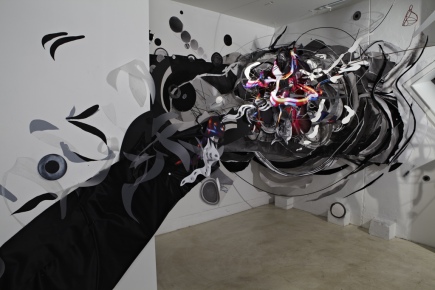 |
|||
|
Decembre 2010
Exposition - YANN LESTRAT - Current works (FRANCE) Artiste émergent Yann Lestrat présente ses dernières œuvres. Il réalise des formes invariablement simples, qui prétendent à une perfection absolue pourtant inatteignable : sphère en acier poli, peintures monochromes laquées, plaque de plexiglas transparente… Le choix de Yann Lestrat de recourir aux techniques et compétences issues de l'univers de la production industrielle participe à cet intérêt pour la finition de l'œuvre, mais aussi paradoxalement à son détachement du réel. Sa démarche créative investit souvent des paysages, des espaces publics ou des objets domestiques familiers, dans lesquels il introduit des perturbations inattendues qui troublent leur usage commun et l'ordre établi. 9 photographies Il s'agit d'un travail photographique qui s'attache depuis plusieurs années à produire des images d'éclairages domestiques (lampes, plafonniers, lustres), au hasard des visites et déplacements. Ces images sont ensuite sélectionnées et retravaillées, afin de faire ressortir pour chacune d'elles l'étrangeté que peuvent parfois receler ces équipements communs, auxquels on ne prête pas forcément attention. Ces éléments de confort ainsi appréhendés revêtent alors l'apparence de créatures bioluminescentes des abysses, ou de vaisseaux spatiaux tout droit sortis de la science-fiction. Il est d'ailleurs question dans ces deux cas d'abîmes, qu'ils soient marins ou inter-stellaires, évoqués avec humour au vu de la modestie de l'origine de ces images, porteuses de poésie et d'imaginaire. Nevroz Un objet condensant et exacerbant avec cruauté le principe des tableaux à niveaux : « Nevroz » est un niveau en bakélite créé par l’artiste . De forme sphérique, l’outil de précision est en perpétuel déséquilibre, objet de mesure impossible et surréaliste, entre objet usuel et sculpture. Oeuvre co-produite par La Criée, centre d'art contemporain, Rennes, avec le soutien du Sepa / Bon Accueil, Rennes La boule niveau « Nevroz » Réédition améliorée et illimitée en 2010, en partenariat avec Tamawa (Bruxelles) « Et in arcadia ego/Islande » Il s'agit d'un projet mené par l'artiste depuis 2003, visant à installer et à photographier dans des paysages naturels une bonde d'évacuation en acier inoxydable de 100 cm de diamètre. Le voyage en Islande, entrepris en septembre 2007, est la première concrétisation de ce projet à l'étranger. Ce livre, sans texte ni commentaire, présente trois séries de photographies montrant l'installation de la bonde dans les paysages islandais, les à-côtés du voyage, et un ensemble de polaroïds pris après l'extraction de la bonde. Un DVD en insert présente deux films documentaires de Nicolas Touzalin. 2009 : publication du livre «Et in Arcadia ego, Islande», accompagné d’un dvd, chez Zédélé Editions (Brest) COLLECTIONS PUBLIQUES
|
  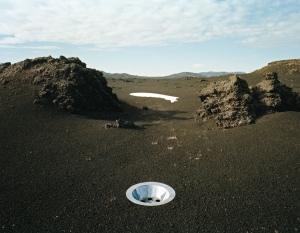 Plus d'images >> |
|||
|
Octobre/Novembre 2010
ARTISTE EN RESIDENCE - BRITT SALT (AUSTRALIA) My current practice exercises a multitude of ephemeral lines and the transparency of mesh to create works that reposition the way we know and experience space.
|
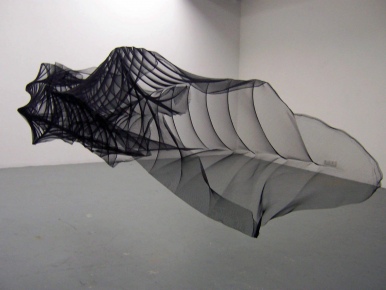 |
|||