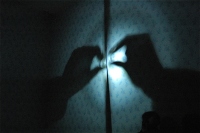
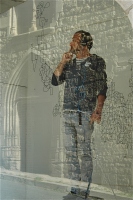
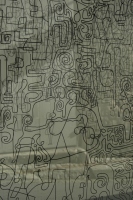
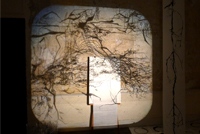
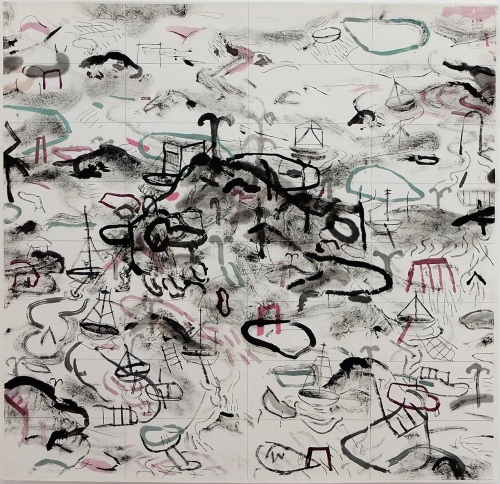
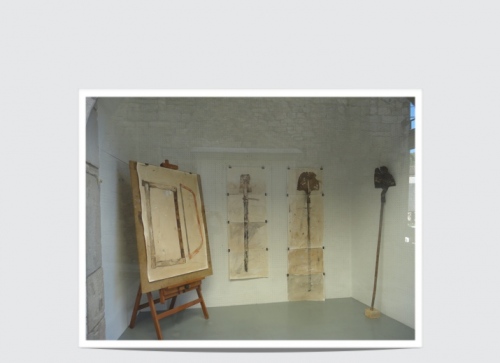
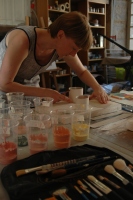
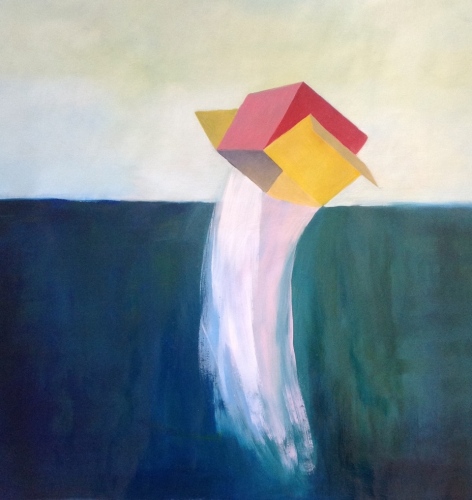
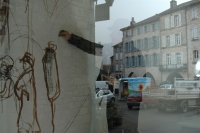
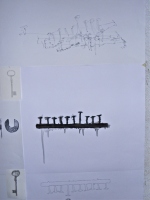
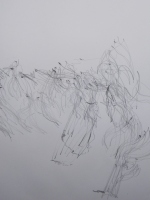
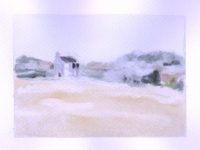
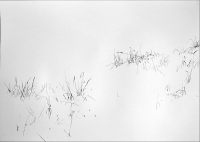
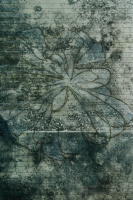
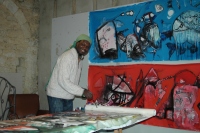
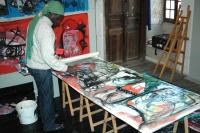
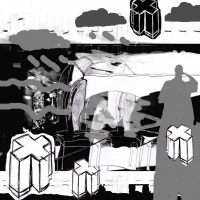
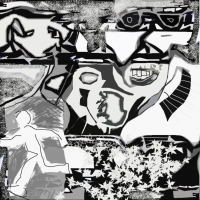
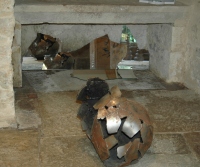
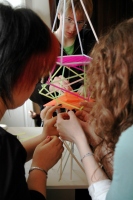
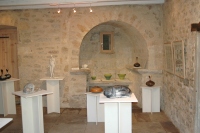
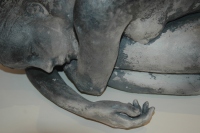
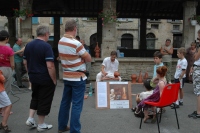
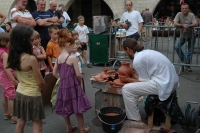
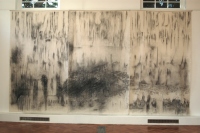
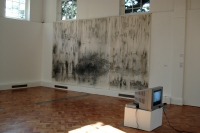
ARTISTE EN RESIDENCE - ILONA SKLADZIEN (PL/UK)
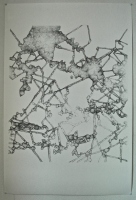
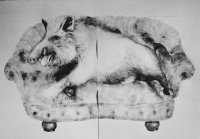
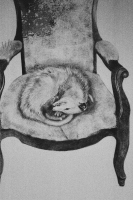
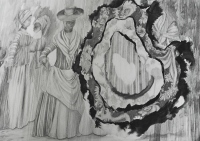
The Same Other
|
|
Plus d'images >>
|
|
‘Not I’, Alone
Hiroshi Asaba, Dado, Jean-Louis Bentajou, Sophie Boursat, Equipo Cronica, Marc Fourquet, Victor Gray, Emmanuel Lagarrigue, Françoise Maisongrande, Françoise Quardon, François Rouan, Georges Rousse, Bernar Venet
L’atelier de l’artiste est un lieu souvent considéré comme sacro-saint, on n'est jamais complètement seule. Nos pensées et nos actions son imprégnées d’histoire, de langage, et de comportements culturels habituels, choses qui, dans ce monde de diversité toujours en mouvement, nous relient tous. C’est ce focus qui est intéressant mais aussi préoccupant et éprouvant aujourd’hui.
La vie est en train d'accélérer vers encore et toujours plus des mêmes choses ; ce qui est reflété d'autant plus par les réseaux sociaux, venant ajouter le feu aux problèmes inhérents que la société produit. Il me semble qu’il y a une obligation morale pour une ralentissement et une réflexion sérieuse de la façon dont nous devons procéder.
Il est temps de rehausser notre sensibilité à ce qui se développe autour de nous et de passer à l’action créative et généreuse.
Nous partageons bien plus que nous pouvons l’imaginer et c’est le moment de nous distancer du ‘je’ et de localiser ‘l’autre’, partir d’un soliloque et aller au-delà.
|
|
Plus d'images >>
|
|
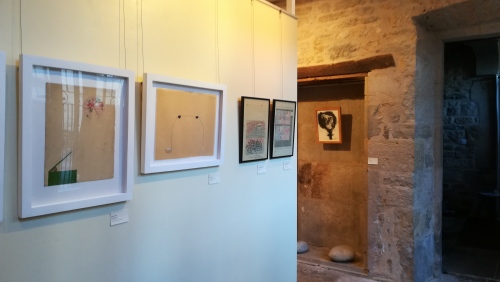
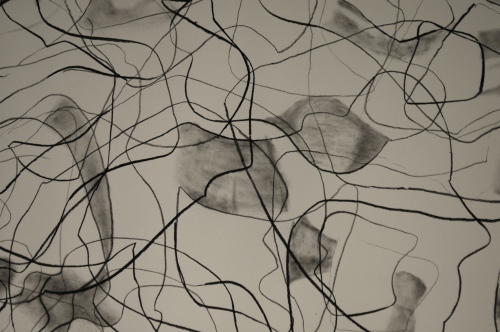
Exposition : Dessin - liberté d'errer
La notion étendue du dessin est passionnante et ses méthodes et matériaux continuent d'intriguer et de stimuler l'action créatrice dans le monde postmoderne.
DRAWinternational présente une exposition célébrant le dessin, le début d’une collaboration passionnante et continue avec Les Abattoirs, Musée - Frac Occitanie Toulouse et le Château de Caylus.
Guy de Cointet, Daniel Coulet, Daniel Dezeuze, Rolino Gaspari, Jason Glasser, Ramon Guillén- Balmes, Olivier Roi, André Marfaing, Takesada Matsutani, Titi Parant, Jean-luc Parant, Marianne Plo.
Les œuvres choisies nous révèlent une diversité et un attrait, comme une indication de la graine d'une idée; certaines exécutées avec rapidité et profondeur, tandis que d'autres, pièces aussi bien enracinées, examinent et célèbrent la joie de l'acte du dessin, son processus et sa signification.
Le dessin est un moyen d'observer et de situer la signification matérielle dans le monde physique et visible comme un fait, mais c'est aussi un moyen d'explorer ce qui est invisible à travers l'imagination, l'intuition et l'expérimentation. Les idées issues d'une telle recherche entrent en collision dans un processus chaotique ou parfois structurel d'ouverture d'esprit. Nous dessinons pour penser et pour chercher une nouvelle forme afin de donner un sens aux horreurs que nous voyons et entendons, ainsi qu’à la beauté et à l'humanité que nous expérimentons. Le dessin en tant que discipline offre peu d'obstacles et ne tient pas aux méthodes, mais à son appropriation.
Un petit gribouillage sur le dos d'une enveloppe peut s'avérer aussi digne dans sa sensibilité et sa communication qu'un acte de dessin bien focalisé et prolongé sur une surface précieuse. Mais bien sûr, les œuvres sur papier ou surface semblable ne sont pas la seule réponse, aussi précieux que puisse être le contenu.
Wittgenstein (1975) a déclaré dans son livre Remarques Philosophiques «Nous ne commençons pas par certains mots, mais par certaines occasions ou activités» (p.82), car les mots ne font référence qu'au monde.
|
|
Plus d'images >>
|
|
ARTISTE EN RESIDENCE - LUCY SIYAO LIU (CAN)
Those rules of old, discover’d, not devised,
Are Nature still, but Nature methodized...
- Alexander Pope
Pendant ma résidence à DRAWinternational, j'ai créé une collection de dessins qui prend son envol depuis la question rhétorique de Gaston Bachelard dans "Air and Dreams". L'étude d'objets fugaces, peut-il être un sujet « Je prends la parole pour répondre à Bachelard prenant considération la question de Nuage. Toujours changeant et toujours en mouvement, les nuages incarnent nos désirs contemporains de se disperser, de distribuer et finalement, de se fondre dans l'air. En développant la question posée par Bachelard, je demande, comment pouvons-nous donner forme à des choses que nous n'avons pas vu ? Comment pouvons-nous redonner forme à des choses que nous ne pouvons pas retenir ?
Mon processus repose sur une imagination matérielle pour fusionner la technologie, la technique et les outils avec l'essence de la matière à travers le dessin. En même temps, mon expérience dans la conception architecturale me motive à explorer les techniques de dessins qui ne respectent pas les catégorisations prescrites de la représentation du design. La synesthésie nous éprouvons dans l'ordre spatial ne peut que nous faire apprendre davantage sur les capacités alternés possibles au sein de nos technologies de représentation.
|
|
Plus d'images >>
|
|
ARTISTE IN RESIDENCE - DARCY JOHNSON (CAN)
Pour chacun de nous, nos mémoires contiennent les restes d'une trajectoire unique à travers la vie. L'expérience récente est organisée et ensuite superposée sur les restes en décomposition du passé; un peu comme l'histoire humaine elle-même. La mémoire est sélectionnée et limitée par la structure de l'esprit, ainsi que les attitudes et les préoccupations que chacun de nous apporte à notre vision du monde sensorielle individuelle. En fin de compte, nous sommes nos souvenirs.
Travaillant à partir d'une formation en biologie et les sciences cognitives, j'explore les processus mentaux qui dirigent le processus de ma pratique du dessin. Je suppose que la mémoire de percevoir et d'agir tout au long de ma vie se culmine dans les lignes et les formes qui émergent dans mes dessins abstraits. Je suis intéressé par la façon dont le dessin reflète l'expérience unique de l'artiste conservé à travers les motifs de la mémoire et aussi par la façon dont la mémoire change au fil du temps grâce à la décomposition, la reconstruction, l'intégration et la modification. Dans mes oeuvres, j'explore l'idée que la mémoire cumulative de percevoir et de faire se termine à ce moment, par un style particulier de geste, de trace, de ligne et de forme. Ce langage visuel est rendu plus apparent pour moi par l'imagerie abstraite.
Les thèmes de l'individu sont informés par la mémoire et la mémoire est la forme abstraite ultime pour moi. La mémoire est consolidée dans les concepts qui ne sont que des représentations approximatives au monde. Le langage verbal et visuel est un ensemble complexe de symboles détenus dans la mémoire. Ce sont des catégories abstraites hautement ordonnée que sont équipés soit avec de nouvelles informations ou sont brisés et sont reconstruit comme les nouvelles expériences l’exigent.
Mon objectif en venant à DRAWinternational, Caylus était d'observer l'impact de cette nouvelle « information» sensorielle, le paysage, la langue, l'environnement bâti et l'histoire à ma pratique du dessin. Je travaille à partir de l'hypothèse que la marque individuelle est le reflet de l'esprit et des diverses préoccupations qu'un artiste apporte au processus créatif. J'ai toujours porté une attention particulière au geste ou trace comme une expression cumulative de l'expérience individuelle. Il est également fascinant d'observer le processus de création et les intentions des autres artistes en résidence ; pour discuter de leurs idées et profiter de la richesse de l'expérience qu'ils expriment dans leur dessin.
La création d'une oeuvre d'art est aussi un désir de communiquer notre expérience d'un moment à l'autre ; un désir d'exprimer nos impressions sensorielles intenses du monde et les idées qu'ils inspirent. En créant une œuvre, je sens que je suis en train de capturer le moment et de retenir le progrès du temps et dégradation.
|
|
Plus d'images >>
|
|
ARTISTE EN RESIDENCE - CARLA STETSON (USA)
Mon travail peut être caractérisé par une sensibilité inventive de couper - coller où les éléments disparates se combinent en entités nouvelles et hybrides. Je crée des oeuvres très diverses qui vont de collages/dessins en matières mixtes à des sculptures publiques monumentales. Consistant à travers mon travail est le désir d'inviter le spectateur à explorer plus profondément en cherchant à ressentir l'expérience humaine d'une manière différente, plus large, et moins conventionnelle.
Récemment, j’ai été préoccupée par la découverte ou le dévoilement de liens entre l'expérience humaine et le «corps» de la terre. Beaucoup de ces travaux se rapportent à des vues aériennes qui exposent des motifs sous-jacents tels que les formations géologiques et les structures dynamiques et fluides. Je cherche à créer un sentiment de résonance de diverses formes et structures, qu'elles soient des petits phénomènes biologiques, ou des vastes cartographies de l'espace.
J’espère que l’expérience vécue en regardant mon travail est semblable à une promenade en nature; nous voyons la configuration du terrain, les connections importantes; puis couché pour étudier le sol de près, on découvre un petit monde occupé par des insectes, des racines et de la terre humide. Dans ce microcosme, un autre univers existe.
J'espère créer un sentiment d’élargissement de soi, une extension spatiale de soi, dans lequel les systèmes humains comprennent les artères, les veines, les rivières, les océans et les courants d'air. L'interpénétration entre soi et le «corps» de la terre est un élément essentiel de la conscience humaine, qui manque souvent dans l'expérience contemporaine, car nous nous isolons du monde naturel et de ses forces.
Née à Chicago, Illinois, je vis maintenant dans l'État de New York, où je suis professeur agrégée d’Art à Ithaca College. J’ai restauré une grange en maison/atelier, où mon partenaire et moi gardons un rucher. Je suis surtout connue pour mes trois sculptures publiques, dont le Clayton Jackson McGhie Memorial, le premier grand monument pour les victimes d'un lynchage aux Etats-Unis, situé à Duluth, Minnesota.
Carla Stetson
|
|
Plus d'images >>
|
|
ARTISTE EN RESIDENCE - ALEXIS CALLENDER (USA)
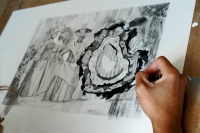
Dans ces dessins j'emploie différents designs du "Delaware" pour représenter à la fois l'histoire coloniale et la migration des surfaces décoratives, qui se rapporte à l'assimilation et le contrôle des paysages coloniaux à travers la richesse matérielle et le travail. Dans ces travaux, les images du 'delftware' les tissus et les papiers peints semblent être en train de fondre ou dissoudre sur les paysages et figures, en intervenant et en interrompant la façon dont on aurait pu voir naturellement les personnages narratifs et la relation entre eux.
Je suis particulièrement intéressée par le rôle des femmes dans cette période historique et comment dans ces circonstances d'imagerie coloniale les femmes sont classées par leur relation avec les produits de luxe et de l'identité raciale. Ici, j'ai pris le travail d'Auguste Brunias, il a peint surtout des femmes dans l'espace sociaux du quotidien de la vie au Caraïbes et ce pour un public principalement européens. Je suis en train de reconstruire et d'interrompre ses travaux pour explorer les représentations des femmes et des hiérarchies entre les sexes dans l'élaboration d'images dessiné et aussi l'utilisation culturelle des arts décoratifs à la médiation de ces relations pour le spectateur.
|
|
Plus d'images >>
|
|
ARTISTE EN RESIDENCE - KIM ANDERSON (AUS)
Le dessin d'observation de très près a toujours été au cœur de mon travail que je tente de capturer par, non seulement les caractéristiques physiques d'un sujet, mais aussi par les aspects émotionnels plus intangibles. Avec une tendance consistante à l'égard des détails complexes, je cherche à comprendre ce que je vois et ce que je sens autour de moi à travers mon dessin - même le plus petit détail peut contenir la plus grande importance. J'intègre souvent des matériaux translucides et des modes non conventionnels de visualisation afin d'explorer les transformations de la lumière et de l'échelle sur les techniques de dessin traditionnelles.
A DRAWinternational, mon objectif principal a été de remettre en question ma pratique actuelle et de parvenir à une plus grande complexité dans mon travail, tant dans le concept que dans la technique. Au cours de mes trois mois d'investigation, je me suis efforcée de rompre avec mes habitudes de travail, qui étaient purement littérales, représentatives et raffinées. Mon objectif a été d'amener plus de spontanéité et d’intuition dans mon processus.
Depuis le mois d’Avril, j'entreprends un voyage qui me secoue hors de l'inertie que je ressentais avant de venir ici. Un énorme changement s’est produit dans la façon dont je considère ma pratique, et dans la façon dont je pense à propos de l'essence du dessin. J'apprends à me faire confiance pour faire le bon geste, pour trouver le bon langage, pour chercher le bon trait, et pour me permettre de prendre le temps qu'il faudra pour le trouver.
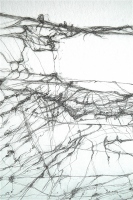
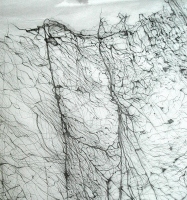
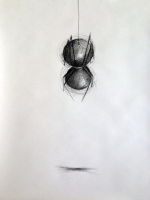
Bien que les sujets de ces travaux semblent être disparates, ils sont liés par l'idée de l’existence d’un espace entre les choses: l'espace entre la vie et la mort, entre l'amour et la perte, entre le rêve et le réveil, et entre la folie et la lucidité. Les araignées habitent les espaces entre. Même cette résidence elle-même a été un espace entre.
Les araignées, ou plus précisément leurs toiles, ont attiré mon intérêt ici à Caylus. Presque par accident, je suis tombée sur ces formes remarquables que je n'avais jamais rencontrées auparavant chez moi en Australie. De façon inattendue, sans même essayer, simplement en étant, l'araignée a ouvert une nouvelle dimension dans ma pratique - une dimension que je vais continuer à explorer dans les mois, voir des années à venir, quand je rentre chez moi. L'araignée et sa toile m'ont appris un certain nombre de leçons sur le processus du dessin. On commence avec certains paramètres et certaines compétences, mais le processus est ouvert à l'évolution et à l'adaptation au fur à mesure. Les fondations d'appui solides sont essentiels au départ, mais si un fil ou une ligne partent de travers, ils deviennent une partie de la conception. Il n'y a pas de point d'arrivée prédéterminé, mais il est nécessaire d'être réceptif à l'environnement, d'observer ce qui doit être fait, et - tout aussi important - ce qui n'a pas besoin d'être fait. J'ai appris quelques leçons importantes sur la réceptivité et la spontanéité qui ont ouvert ma perception et qui m'ont conduit sur un chemin auquel je ne m'attendais pas.
|
|
Plus d'images >>
|
|
ARTISTE EN RESIDENCE - ANASTASIJA KOMARNYCKYJ (AUS)
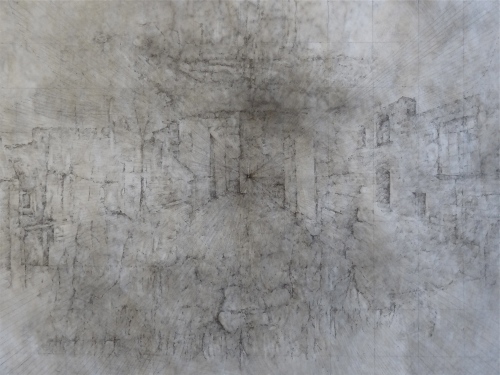
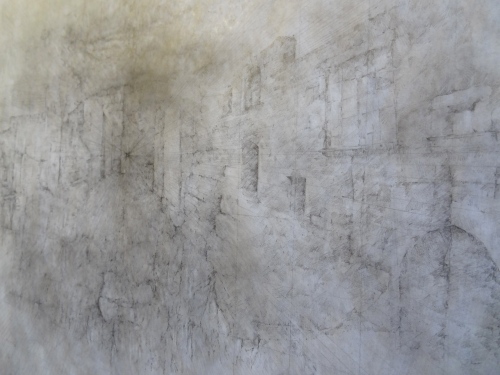
En plus d'être très attirée par le cadre pittoresque du village, dès mon arrivée à Caylus depuis l’Australie, j’ai été frappé par l'histoire si évidente ; cette palette ancienne avec des bords escarpés ramollis, gravés par le temps, couche après couche.
Au cours de cette résidence, j’ai choisi d'aborder ce palimpseste passage des générations et des événements au village, et d'explorer leurs contributions dans le contexte actuel.
Cet ensemble de travail examine les aspects de la structure physique du village et de sa fragmentation et, le silence et la beauté du paysage environnant: les partenaires nécessaires à la réalisation de l'ensemble.
La représentation de ce passé se reflète dans l'utilisation des matériaux et des techniques sélectionnées pour la création de mon travail. Fragmentation et oblitération juxtaposés avec les activités de la vie quotidienne se réunissent en quelque sorte avec douceur et harmonie, liant le passé et le présent avec grâce.
Anastasija Komarnyckyj
|
|
Plus d'images >>
|
|
ARTISTE EN RESIDENCE - CAROL SMITH (UK)
Inner Journey
En Septembre et Octobre 2015, j'ai fait 800 km le long du 'Camino de Santiago' en Espagne.
Ceci est un ancien chemin de pèlerinage. Ces six semaines de marche m’ont fourni suffisamment de temps pour un voyage intérieur.
Pendant cette résidence, j'ai exploré les différentes façons d'exprimer le plus profond de mes expériences émotionnelles qui ont surgies au cours de ce voyage épique. Le travail que j'ai commencé ici se poursuivra quand je rentre chez moi.
Le processus que j'ai développé pendant mon séjour à Caylus comprend:
Des exercices pour enquêter sur les matériaux et les marques qui expriment le mieux une émotion donnée.
L'utilisation de la musique pour aider a évoquer les sentiments, en utilisant un trait, un geste 'très rapproché' pour découvrir le vocabulaire visuel pertinent.
Travailler sur plusieurs grands dessins à la fois, pour révéler l'imagerie et le sens du toucher qui expriment le mieux mon sentiment.
Au cours de ce processus de répétition et d'évolution, mes dessins ont transcrit diverses facettes des émotions complexes que j'ai vécues.
J'ai commencé à explorer deux expériences émotionnelles: la peur de marcher seule dans le noir, et la libération en laissant partir mes fardeaux émotionnels. Je travaille encore...
Carol Smith
|
|
Plus d'images >>
|
|
ARTISTE EN RESIDENCE - OLIVIA LENNON (AUS)
Diagrammes de toutes sortes de choses (Tortues jusqu’en bas)
"Un scientifique bien connu (certains disent que c’était Bertrand Russell), a donné une fois une conférence publique sur l'astronomie.
Il a décrit comment la Terre orbite autour du soleil, et la façon dont le soleil, à son tour, orbite autour du centre d'une vaste collection d'étoiles appelée notre galaxie. À la fin de la conférence, une vieille dame au fond de la salle se leva et dit : “Ce que vous nous avez dit est faux, le monde est en fait une assiette plate prise en charge sur le dos d'une tortue géante." le scientifique souria de façon hautaine avant de lui répondre :
“La tortue se tient debout sur quoi?"
"Une autre tortue!"
"Et celle-là se tient sur quoi?"
"Vous êtes très intelligent, jeune homme, très intelligent", dit la vieille dame. "Mais c’est des tortues jusqu’en bas"
‘Une brève histoire du temps de Stephen Hawking’ 1988
Mes dessins explorent les théories actuelles, historiques et poétiques de la forme et de la nature de l’univers. Ces théories ont été formées par la motivation humaine inexplicable et parfois absurde pour comprendre à la fois ce qui est infiniment complexe et lointain. Les théories astronomiques contemporaines comprennent de nombreuses théories contradictoires - l'univers est-il infini ou petit? en forme de selle ou de beignet? de couleur beige ou de couleur verte? Cette argumentation sur la nature incompréhensible de la réalité a été commencée par deux philosophes grecs pré-Socratiques.
Héraclite (c.535-475 BC) écrit dans ses «fragments» que les changements dans l'univers sont la seule constante, alors, seule la perception humaine est responsable de l'apparition de l'ordre.
Parménide (c.515-460 BC) argumente dans ses écrits que l'ordre règne omniprésent dans l'univers; que le changement et le chaos sont des erreurs - le résultat de nos limites perceptives.
Cet argument a toujours été balancé d’avant en arrière. De la même manière, j’ai adopté un procédé similaire à ce dialogue. Chaque dessin de la série, tente de construire du sens dans sa réponse à un autre (qui, dans le processus crée une nouvelle question); empilés les uns sur les autres:
«c'est les tortues jusqu'en bas ».
Olivia Lennon, Septembre 2015
www.olivia-lennon.com
|
|
Plus d'images >>
|
|
ARTISTE EN RESIDENCE - ANGELA ARROCHA (MEX/CAN)
J'ai commencé à faire des illustrations et des dessins inspirés par "La Mélancolie de la Résistance” de Laszlo Krasznahorkai.
Dans un village hongrois, le chaos imminent et le malheur sont marqués par l'arrivée d'un “cirque deux hommes" emportant avec eux le corps en peluche de la plus grande baleine au monde. Chaque citoyen a ses propres interprétations et réactions à la décroissance de la ville, et recherche toute forme d'ordre, de la cosmologie jusqu'au fascisme. De la même manière, j’utilise ce livre pour m'aider à comprendre nos temps apocalyptiques.
Deuxièmement, j'ai créé mon propre cirque surréaliste: un casting de personnages attachés à leurs chaises de "cages de champagne". Comme le danseur flamant battant, chancelant sur le bord de son tabouret - entre l’envol et la chute - chaque membre de ce défilé est à la fois pathétique et magique.
Angela Arrocha
|
|
Plus d'images >>
|
|
ARTIST IN RESIDENCE - JENINE SHEREOS (USA)
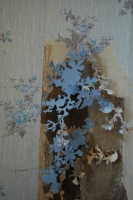
En utilisant le langage des textiles, mon travail explore des thèmes de souvenirs personnels et collectifs. Dans mon travail à Drawinternational, je suis particulièrement intéressée par l’investigation de ce thème qui se révèle à travers les couches de papier peint et de débris présents dans les vieux studios. En lisant le papier peint comme on lirait un texte, je l’ai disséqué et rassemblé dans une série d’installations et d’interventions subtiles pour explorer l’espace psychologique de l’intérieur domestique en l’intersectant avec le monde naturel.
Jenine Shereos, Août 2015
www.jenineshereos.com
|
|
Plus d'images >>
|
|
ARTISTE EN RESIDENCE - CLARA McClenon (USA)
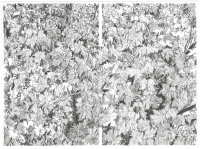
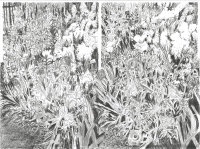
Nous sommes bénis avec le miracle de la vue. Debout dans un champ, nos deux yeux prennent des clichés des rayons de lumière dans l'environnement. Par miracle notre cerveau construit tous ces petits instantanés en une seule image cohérente. Le champ ressemble à un champ, pas une collection de confusion d'ombres et d'angles. Nous le percevons dans son ensemble.
Et pourtant, ce 'tout' n'est qu'une fraction de la réalité. Il y a une quantité insondable d'information visuelle que nous ne pouvons tout simplement pas saisir. Comparés à un faucon, nous sommes incroyablement myopes. Comparés à une abeille, nous sommes essentiellement daltoniens. Je ne peux pas regarder à gauche et à droite en même temps. Je ne peux pas inspecter un caillou pendant que je contemple les nuages.
Ce paradoxe de la vision - son exhaustivité et ses inadequaties - est au cœur de ma pratique en tant qu'artiste. Les dessins créés à DRAWinternational sont inspirés par ma visite aux jardins de Claude Monet à Giverny. Pour moi, ces dessins, à la recherche des différentes façons de voir, sont une façon de considérer à la fois la beauté et le mystère du monde.
Clara McClenon Juin 2015
www.claramcclenon.com
|
|
Plus d'images >>
|
|
ARTIST EN RESIDENCE - ROBERT LUZAR (SLOVENIE/CANADA)
Il n'y a rien de tel qu'un point, disent certains, le point n'est ni une chose, une essence ou une idée, ni une figure. Cela perturbe toute position intellectuelle ou philosophique. Et en termes de dessin le point est obscur; comme il est si souvent perçu dans l'art d'aujourd'hui, toutes les types de marques, même un point [•], est présumé être la ligne - la figure plus «propre».
Nous devons alors demander : pourquoi j'ai décidé d'explorer «le point»? pendant ma résidence à DRAWinternational. En effet, c'est multiple, visuellement comme ceci [•], ou comme d'autres taches et des points que nous rencontrons tous les jours. C'est également un point de pression, un point de gravité qu'on peut ressentir. C'est une sorte de trace sans traces, qui n'est pas caché ni concevable dans un autre espace au-delà.
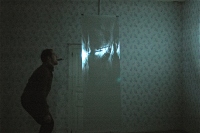
Comme une notion, «le point» est resté très important dans mon travail et dans mes écrits. Depuis 2008, j’ai créé et exposé des œuvres engageant le dessin, l’art de la performance, et la vidéo. Les œuvres que j’ai créés ici à DRAWinternational, à Caylus, continuent d'explorer cette notion. Cette fois, de deux manières: l'action physique et l'espace.
Les nouveaux ateliers à DRAWinternational sont devenus, pour moi, des espaces de décision. Autrement dit, les lieux pour choisir et retracer les actions que j'ai fait dans et autour de Caylus - par exemple, en passant par les vinels et les chemins de randonnée, ou travailler avec des ombres créer à partir de mon corps, de jour ou de nuit sous les lumières de la rue. Concrètement, je ai décidé d'utiliser des matériaux qui me semblait être léger et familier: papier-calque, surligneurs, blancos, élastiques, aimants, et lumières électriques.
|
|
Plus d'images >>
|
|
ARTISTE EN RESIDENCE - NISSIM BEN ADERET (ISRAEL)
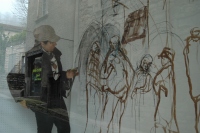
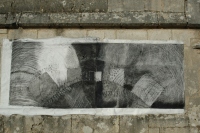
Nissim's public performance drawing carried out in the vitrine of Drawing international, which is situated in the village square, Place de la Mairie and took place on Tuesday 28th October from 10am to 2pm.
The almost continuous line drawing carried out on canvas placed at the back of the vitrine was further explore on the window inside.
Hence photographs record the further complexities of of reflectivs of activities outside and inside. This piece was accompanied by a sound track made by Nissim of Caylus sounds and played back through his headphones and a speaker placed outside facing towards the market square.
|
|
Plus d'images >>
|
|
ARTISTE EN RESIDENCE - JESICA LEWIT (ARG)
Je trouve l'inspiration pour mon travail, simplement en me promenant dans Caylus. Une grande partie de mon travail est inspiré par la nature. Je vois essentiellement un trait, qui crées d'autres traits et encore des traits entre ces traits.
J'explore la ligne et la physicalité de cette marque, capturant l'espace intérieur, extérieur, et entre les deux.
Mon travail est également influencé par le paysage, mais pas nécessairement pour le représenter comme il semble l'être, mais de suggérer l'essence. Je suis intéressée par la façon dont la nature se développe, se propage.
Ma principale source d'inspiration provient de branches, pierres, plantes, moss. Je ne peux pas me penser un être séparé de l'environnement.
Marcher aussi me fais penser à des chemins différents, et les chemins que j'ai pris tout en marchant et en dessinant. Les choses que je retiens de l'environnement et que je lui redonne en retour. J'explore la route d'une manière similaire dont j'explore la ligne. Je considère la direction, la vitesse, le poids et le changement sur la surface.
Les matériaux que j'utilise sont l'eau et l'encre sur papier. Je suis curieuse de voir comment l'eau sculpte la surface du papier, et la façon dont l'encre le contamine. Je laisse de l'espace pour que le dessin puisse émerger. Avec des mouvements subtils je dessine avec de l'eau puis j'attends de voir comment elle s'évapore en laissant la trace de l'encre sur le papier.
Le fait que je fasse partie de ce programme a joué un rôle important pour le développement de mon travail. La résidence à DRAWinternational m'a permis de repenser les concepts d'une nouvelle manière, et à explorer de nouvelles possibilités. Je suis reconnaissante à John qui a contesté mon point de vue, a suggèré des nouvelles façons de faire les choses, et a suivi mon processus en me donnant des conseils de façon honnête. Je remercie aussi Grete qui m'a encouragée à explorer l'impression, et c'est quelque chose que j'ai l'intention de développer davantage quand je serai de retour à Londres.
JESICA LEWIT
|
|
Plus d'images >>
|
|
ARTISTE EN RESIDENCE - CHLOE BENSAHEL (FR)
Dans le monde des textiles le dessin n'apparaît que suite à une sélection des fils. L'apparence du dessin dépend de la matière - sa texture, sa couleur, son opacité et son motif.
Dans la région de Caylus, il fut une époque où tout un train de vie dépendait de la matière. Avant la Révolution Industrielle, le filage et le tissage étaient des secteurs prolifiques qui employaient plus de 5000 personnes. À St Antonin, des femmes passaient leurs journées à faire du fil de chanvre alors qu'à Montauban certaines manufactures de soie et de laine étaient connues à travers le monde.
À la base, le fil est un trait, qui peut produire une surface.
Je m'intéresse à ce fil et à son rapport au trait dessiné à la main. Il s'agit, plus encore, du lien entre la matière et l'humain, entre le naturel et le traité.
C'est dans cette démarche que je recherche une matière pure et peu traitée afin que mon intervention fasse partie de l'acte de dessiner qui commence bien avant de poser le pigment sur la feuille. J'utilise donc des pigments naturels de Roussillon, du papier artisanal d'Arles et de la fibre naturelle. J'espère ainsi pouvoir mieux ressentir ce avec quoi je travaille pour que le dessin naisse non de mon interprétation mais de ma capacité à être à l'écoute de la matière. Le résultat est une collection de surfaces et 'textiles' qui présentent le fil et sa nature expressive.
Chloe Bensahel
|
|
Plus d'images >>
|
|
ARTISTE EN RESIDENCE - BRUNO PATYN (BELGIQUE)
Souvent, un dessin ou une œuvre d'art est considéré comme un moyen de communication entre l'artiste et le spectateur, mais mes dessins ne sont pas conçus de cette façon. Quand je peins, j'ai une conversation avec moi-même à travers la peinture et quand le moment vient ou je ne peux pas pousser la conversation plus loin, le travail est fait.
Mon processus de peinture est donc une façon non verbale de penser, placé dans un cadre visuel. La peinture m'aide à structurer le travail que je fais à l'intérieur de moi-même, comme un travail d'intégration. J’amène certains aspects de moi-même à la surface et je les intégre pleinement dans mon être.
Mes dessins ne cherchent pas à livrer un message, toucher le monde, ou exprimer mes émotions les plus profondes à un spectateur anonyme. Je ne fais que penser à haute voix. Cela ne veut pas dire qu’une autre personne ne peut pas avoir une conversation avec la même peinture, mais ce n’est pas, tout simplement, une conversation avec moi. Le résultat final du dessin n'est pas le dessin, mais tous les possibilités infinies de la pensée et de la conversation qui pourrait survenir à travers le dessin, et aussi l'excuse de se réunir ici et rassembler les gens.
La plupart des dessins que j'ai réalisé à Caylus sont des paysages. Il n'y a pas de vrais lieux en cause, mais les conventions de ce genre sont un excellent environnement pour mes fins. ils permettent à l'œil de déambuler tranquillement dans les limites de la toile et à fixer brièvement sur des anecdotes et des objets, mais en même temps de ramasser tous les détails le long du chemin. Ça me permet aussi de déambuler sur la toile avec le pinceau et de découvrir le paysage pour moi-même, me surprendre. Toutes les formes, les couleurs et les objets sont des symboles - pas pour des concepts, des mots ou des idées, mais pour les processus, les transformations et les émotions. Je suis intéressé par une symbologie de vibrations et d'énergie.
Cette résidence a été coupée en deux par un changement imprévu d’atelier : D’une atelier acceuillant et lumineux en face du 'Lagardère’ à un atelier plus isolé et intime ‘la salle Ossip Zadkine’. Je fais toujours de mon mieux pour être le plus ouvert et sensible possible à l'environnement physique dans lequel je travaille, alors je n'étais pas surpris de trouver que mon travail à changer considérablement d'un endroit à l'autre. Dans la première partie de la résidence, j'e me sentais beaucoup comme l’atelier lui-même: ouvert, chaleureux et convivial. Je me sentais connecté à l'énergie de la ville, l'environnement et l'histoire de la ville, et de cette connexion il s’est produit une trentaine de dessins de paysages en seulement quelques semaines. Cette productivité a été tirée par une simple joie de créer et l'enthousiasme de développer un langage visuel d'une manière cohérente.
À la salle Ossip Zadkine je ne pouvais pas poursuivre la même enquête et j’ai découvert un autre Caylus. J'ai été confronté à des structures sociales et des questions communautaires. La série de dessins qui sortait du nouveau atelier était des scènes de personnes dans des situations sociales copié à partir d'un livre que j'ai trouvé dans la bibliothèque locale, peinte dans des tons très clairs de rose et de rouge. Ces dessins n'auraient pas pu être plus contrastée avec mon travail précédent. J’ai pensé plus et j’ai fait moins, j’ai re-exaniné les oeuvres que j'ai fait auparavant, J’ai inventé des titres, J’ai lu et j’ai écrit.
Il y a des visiteurs qui sont venus et ils m'ont demandé: «quel est l'intérêt, qu'est-ce que cela signifie?" Heureusement, je n'ai pas de réponse définitive à cette question. Un pigeon laissant des empreintes dans la neige est quelque chose dont nous pouvons tous profiter sans se méfier du message qu'il a pour nous, et je vise pour le même effet avec mon travail. La différence entre moi et le pigeon, c'est que je suis conscient de mon dessin, et que je suis un être un peu plus complexe, mais je fais de mon mieux pour garder ma spontanéité malgré ces handicaps.
Bruno Patyn
|
|
Plus d'images >>
|
|
ARTISTE EN RESIDENCE - MONICA RIZZOLLI (BRAZIL)
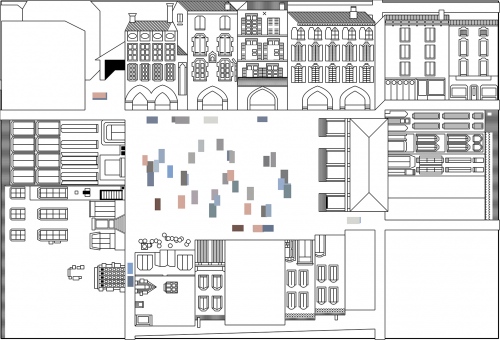
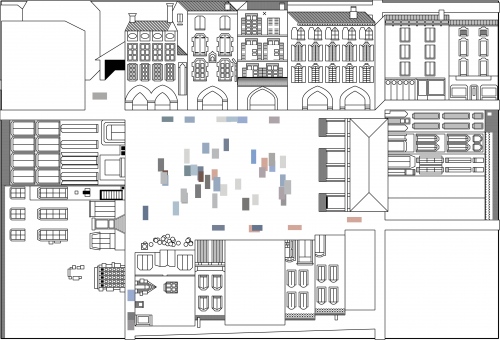
Je développe une série de dessins créés à l'aide d'un traitement de langage informatique et exécuté sur la plate-forme Java. Le language de traitement permet l'insertion de variables aléatoires sur le code, qui rend les dessins légèrement différent chaque fois que le programme est excuté. Chaque dessin représente une coordonnée géographique particulière et une heure spécifique, basée sur mon expérience personnelle du lieu. En ajoutant des données objectives et subjectives, des informations historiques, un récit textuel, le mouvement et le code lui-même, j'ai l'intention de créer une approximation entre le carte que je dessine et le territoire que je perçois. Ce travail poursuit ma recherche précédente, qui enquête sur les liens entre trois concepts: l'espace social et physique; la perception individuelle de l'espace, ainsi que la représentation de cet espace.
À DRAWinternational je développe une oeuvre intitulée Caylus, où je représente "La place de la Mairie". J'ai décidé de dessiner la place à cause de sa situation centrale et de sa fonction en tant que lieu de rencontre de la ville. J'ai aussi beaucoup apprécié travailler tous les jours dans le café de la place, la vue depuis le café est devenu mon intérêt principal. Mon oeuvre est donc constuite à partir de ce point de vue particulier.
Les maisons sur le plan ont été classé en fonction des informations fournies par "Le service Inventaire du Patrimoine du Pays Midi-Quercy", où en particulier Sandrine Pradier m'a aidée à la recherche historique et patrimoniale. Les couleurs dans la composition ont été choisi parmi les couleurs des bâtiments et des portes sur la place. J'ai photographié toutes les portes et utilisé une méthode statistique pour transformer chaque image en une couleur. J'ai trouvé deux grandes catégories de couleurs: les marrons et les gris bleutés. Cette recherche m'a menée à comprendre que ces couleurs sont historiquement liées aux matériaux géologiques du site.
Monica Rizzolli
|
|
Plus d'images >>
|
|
ARTISTE EN RESIDENCE - ANGELA GOOLIAFF (CANADA)
My Path & Progress
DRAWinternational 100% met my goals. The purpose for attending was to expand my already-in-progress investigations: paralleling ant communal behaviour with the human need for connection and conformity. Amusingly, I discovered that Caylus, France, was the “Walt Disney World” of the microcosm. So many brightly coloured animated insects! Every colour of the rainbow was represented — one fly species even had all the shades on its body… in neon.
A popular insect species among the locals is “Le Gendarme”, firebug in English. They are frequently observed to form aggregations, especially as immature forms, from tens to hundreds of individuals. Upon learning of these species, I began drawing them and am continuing my exploration now that I have returned to Canada. It is my first time working with a different aggregating species other than ants.
The residency due to John’s generous teachings developed my mark-making skills. Prior to my leaving for DRAWinternational, I recognized and was frustrated by my “drawing block”. By the conclusion of my time in France, I developed the confidence for play and explore mark making intelligently again. The residency, as well as the road trips to study other European artists’ works, challenged my art practice leaving me with a demanding sensation for continuing this dialogue with the international art community. I am eager to make more work uninhibited.
Angela Gooliaff
|
|
Plus d'images >>
|
|
ARTISTE EN RESIDENCE - DANIELLA TURBIN (UK)
Mon travail est une investigation sensible " in situ ", une synthèse de la perception physique et psychique du monde à travers l'activité du dessin.
Je passe beaucoup de temps dans des environnements différents et je réponds aux différents stimuli sensoriels à travers le trait du crayon à papier et les techniques de l'estampe, à la découverte de la nature tactile qui m'entoure.
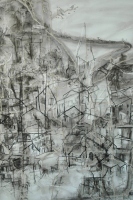
Mes dessins enquêtent le seuil de l'architecture abstraite et physique afin d'inclure le raccordement de l'espace, comme caractérisé par exemple par des escaliers, des voies de passage et des routes qui à leur tour se combinent pour former des espaces entrelacés, impossibles et paradoxaux.
Ces espaces structurels sont des métaphores de la psyché humaine qui appellent le spectateur à remettre en question leur tendance de se rapprocher ou de s'échapper du centre.
Mon travail examine la géométrie de la lumière à travers la forme sculpturale avec la lumière agissant comme intermédiaire entre l'intérieur et l'extérieur. La lumière dans ce cas, est le passage entre ces deux états, en unissant le corps physique et l'esprit abstrait.
Daniella Turbin.
daniellaturbin.wordpress.com
|
|
Plus d'images >>
|
|
ARTISTE EN RESIDENCE - JACK CANDLISH (USA)
Mes dessins reflètent une exploration de la nature, la relation entre l’individu et l’environnement.
La vie contemporaine est caractérisée essentiellement par le changement constant et rapide qui s’appuie sur les avancées précédentes pour créer du nouveau.
Les sociétés actuelles exercent le pouvoir de façonner et contrôler l’environnement physique et l’interprétation de notre place dans l’environnement devient de plus en plus complexe. Face à une réalité qui change constamment nous pouvons chacun voir un changement dans nos attitudes et nos comportements. C’est une mentalité qui n’est pas nécessairement fixe, mais qui est capable de faire face à ce flux rapide pour créer de nouvelles réponses partagées qui sont dynamiques et représentatives.
L’Humanité remodèle l’environnement physique qu’elle occupe, l’environnement physique influence la manière dont nous pensons. Le monde bouge et change, comme le font également nos interprétations et nos interactions.
Le sentiment de soi d’un individu est déterminé par la perception de sa relation avec le monde.
Jack Candlish
|
|
Plus d'images >>
|
|
ARTISTE EN RESIDENCE - DIANE RICHEY WARD (USA)
Recent Works
|
|
Plus d'images >>
|
|
ARTISTE EN RESIDENCE - SUSAN WALSH (USA)
Photographic details of my site-specific art installation at DRAWinternational Art Residency in Caylus, France, during October 2013.
My studio was situated in a 12th century medieval building, once a school for boys in the 1920s. The daily view from my studio was hazy, over medieval tiled rooftops. Time seemed to expand and contract. The expressive walls were made of the original plaster with marks made by students, workers and former inhabitants of the property. My thread drawings on vellum were a collaboration with these walls and their evocation of time and mark making.
|
|
Plus d'images >>
|
|
ATELIER INTENSIF DE DESSIN - CELIA EID (BRAZIL)
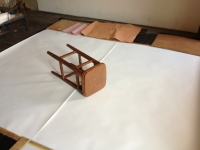
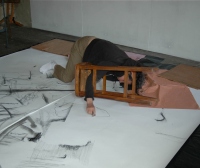
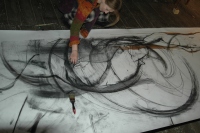
The Stool Workshop
C’est une petite photo qui a allumé une étincelle dans mon âme :
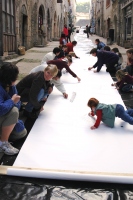
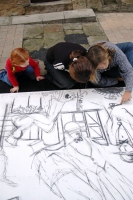
Un enfant, allongé sur le dos, dessine sur un grand papier blanc posé par terre. Son visage est caché entre les pieds d’un tabouret en bois renversé sur le sol. Ses bras sont derrière sa tête. Il vient de dessiner un grand trait rond. Il en a fait plusieurs. Il en fera bien d’autres. Il semble qu’il ne voit pas ce qu’il dessine. Lui et un compagnon remplissent de graphismes la surface démesurée du papier. Ils ont le visage du bonheur.
J’ai envoyé un email à DRAWinternational dès que j’ai vu cette image sur leur page net. Moi aussi, je veux apprendre à dessiner sous un tabouret : C’est ceci, mon projet.
J'ai voulu démarrer par le degré zéro du dessin: et c'est chose faite!
J'ai appris à tenir le crayon, le fusain et manier la gomme. J'ai appris à faire du trait une trace chorégraphique où on dévoile la main levé et la main tombé, sa force, sa délicatesse. J'ai appris dessiner avec le corps, les corps, ses limites sans limites.
Le dernier jour, après des jours d'un travaille acharné, j'était prête. J'avais acquis les connaissances nécessaires pour dessiner sous le tabouret.
Hélas, je suis bien rentré. J'espère y revenir bientôt cette fois-ci pour dessiner sous la table, et une autre fois encore sous le escabeau, et encore une autre coup sous le tapis ..... de nouveau sous les nuages jusqu'à ce qu'un jour je dessine avec le monde sur ma tête et là j'en suis sûre j'aurais arrivé au NIRVANA.
Un grand merci à John et toute son equipe: d'une part, Grete qui assure avec maîtrise et générosité, entre autres choses, les dîners avec des mets exquis, et, d'autre part, Aloïse la belle de Harry Potter, gardienne du château du dessin de Caylus.
Celia Eid - Août 2013
|
|
Plus d'images >>
|
|
ARTISTE EN RESIDENCE - BARBIE KJAR (AUSTRALIE)
PORTRAITS
"Pendant ma résidence à DRAWinternational, Caylus, France, je me suis concentré sur l'élaboration de portraits de sept personnes qui vivent à Caylus et sept outils artisanales. Dans certains cas, je dessinais le portrait de la personne en train de travailler, donc impliqué avec les différents outils de leur métier.
J'ai dessiné Nathalie Céré dans son atelier et aussi dans mon studio.
Les croquis réalisé dans son atelier ont porté sur le travail du tapissier.
Il semble être un métier très physique qui implique une relation quasi sensuelle avec le fauteuil. Elle tient et embrasse le fauteuil dans sa quête pour réformer l'apparence de cette antiquité dans son état brut.
Elle tire le fauteuil près de sa poitrine, en caressant le tissu, elle tape avec le marteau et elle enfonce avec des clous, elle tourne le fauteuil elle tourne le fauteuil et elle travaille sur l'autre face, le dos. C'est comme une danse et une lutte au même temps, et une métaphore des relations humaines - l'effet 'push / pull'.
Nathalie est artistique dans son métier, elle est totalement absorbée avec le fauteuil. Ce fauteuil est «rococo» dans sa conception, ses pieds repliées, un dossier haut, le tissu bleu turquoise.
Tout le processus de dessin est une performance à la fois pour moi l'artiste, et Nathalie, le tapissier.
J'ai aussi dessiné des portraits de l'artiste Colin Castell dans son atelier.
Cela a été une expérience unique parce que ce processus impliqué Colin Castell dessinant mon portrait, au même temps que moi, je lui dessinais.
Nous avons mis en place des chevalets face à face, et nous avons convenu du temps pour faire une pause, regarder, et puis dessiner. Le rythme de chaque activité était étonnamment similaire.
Ce processus était comme une danse, depuis nos chevalets, Colin et moi, nous faisions des pas en avant et en arrière, scrutant et évoquant des images de l'un et l'autre sur le papier.
J'ai dessiné la mosaïste Alice Popelin, le peintre Jacques Hue, la céramiste Alison Graham, le sculpteur Thomas Lefort et Aloïse McNorton.
L'art du portrait est un acte de foi et une recherche. Alex Miller dans son livre «The Sitters» évoque l'idée que pour faire un vrai portrait, l'artiste doit observer et attendre que la bête timide se manifeste de sa cachette .... que l'art du portrait est de voir au-delà du visage, et qu'il ne faut pas être piégé par la ressemblance .... c'est une quête, la beauté ou la bête.
L'art du portrait est un état social étrange car il n'y a pas d'autre moment où il est socialement acceptable de regarder une personne si intensément dès fois jusqu'à deux heures ou plus.
Les outils que je dessine comprennent, une pelle, des outils d'ameublement, des scies, un râteau et une faux qui en sont à divers stades de décomposition.
Les outils, initialement nouvelles, sont définies par l'usage et le temps, leurs forme changent et sont moulés et parfois ils perdent leur fonction complètement. Ce qui reste est une forme dénudé, modifié, parfois délicates (comme la pelle) et belle, tout cela, à travers le processus de vieillissement combinée à l'abrasion, les intempéries et la rouille.
Ces outils deviennent une métaphore de la condition humaine. Ils sont des portraits de la vie, et tout comme les portraits de personnes, révèlent des histoires de leur passé."
Barbie Kjar - Août 2013
|
|
Plus d'images >>
|
|
ARTIST IN RESIDENCE - ALISON GRAHAM (UK)
Aven le soutien de DRAWinternational et Wales Arts International, j'ai eu l'opportunité de me plonger dans un environnement incroyablement inspirant et inconnu.
Je travaille avec des techniques de mono-type et de la porcelaine mélangé avec du papier 'paper clay'. Mon travail est essentiellement deux dimensionnel.
J'ai découvert la technique de mono-type pour mes oeuvres en porcelaine par hasard pendant mes études. Lorsque je recyclais l'argile sur un bloc de plâtre, j'ai laissé tomber un peu de couleur dessus, je me suis aperçue que la couleur se transfèrait sur l'argile et a créée une belle esthétique qui était à la fois très excitant et intriguant.
Ma résidence à Caylus m'a permis d'explorer et de développer une nouvelle palette de couleurs. Cette palette est plus lumineuse, vibrante et méditerranéenne. J'ai aussi commencé à explorer de nouvelles compositions inspirées par des impressions et des motifs de ce beau vieux village, y compris les fenêtres, les volets, les toitures, la forme des maisons, les nombreux papillons, les murs vieillissants, l'esthétique médiévale et aussi les personnages fascinants que j'ai rencontrés durant mon séjour.
Alison Graham - Juillet/Août 2013
|
|
Plus d'images >>
|
|
ARTIST IN RESIDENCE - NIAMH MERC (IRELAND)
‘Suspended Sensations’
En tant qu'artiste, j’utilise toujours le dessin comme une réaction expressive à ce que je vois et ce que je ressens. Mon intention pendant cette résidence est la confrontation avec la sincérité/ honnêteté au sein de ma propre pratique artistique en travaillant seule dans le studio et aussi étant artiste en résidence, qui repose également sur une discussion objective avec d'autres artistes.
Avec cette pratique du dessin comme un outil émotif, il y a une lutte continuelle pour tenter de formuler et de ressentir les sentiments abstraits que nous partageons tous lorsque nous pensons et rêvons de nous-mêmes et des autres. L'ouverture d'un espace public peut aider à donner un sens à des pensées et des sentiments qui ne sont pas réalisés, cachés, niés, mal compris ou pas abordés d'une manière objective.
J'ai apporté des croquis et des images en couleur à Caylus que j'ai créés au cours des deux dernières années. Ce sont des dessins en noir et blanc avec des zones de couleurs expérimentales ou des gestes (marques). Ils ne sont pas nécessairement des peintures. Je veux peindre comme je dessine. J'ai l'intention de recréer mes dessins à travers un processus continu de la peinture. Je veux poser et enlever des images sur une surface afin de construire une sorte de réalité visuelle pour mes expériences. Mes oeuvres sont en train d'évoluer dans des représentations abstraites ou onirique. Les motifs les plus forts qui ont apparus ces dernières semaines ont été des images de boîtes, d'eau et de lumière. Et à présent l'aspect le plus important de ces images est de savoir comment ils peuvent se déplacer, être situés ou traité dans une surface encadrée comme la toile ou le papier. Les bords des formes et des surfaces commencent à informer ma pratique du dessin et de la peinture.
Une action d'être suspendu peut prendre plusieurs formes; les prépositions comme: dessus, dessous, sur, dedans, dehors, immergés, à côté de, entre et autour, ont une signification importante pour moi. Mon travail dans le dessin est d'essayer de comprendre comment une personne peut s'engager avec l'espace immediatement autour d'eux, mais aussi l'espace autour d'eux qu'ils ne peuvent pas atteindre avec leur corps. J'utilise souvent le language des points, des lignes et des surfaces de couleur pour exprimer ces pensées. Le mouvement de l'outil de dessin ou d’un pinceau dans ma main, ou encore attaché à mon corps, me permet de trouver et de montrer mes propres sensations/emotions dans un moment précis.
Quand un corps ne peut pas traiter rapidement l'information à partir de leurs sens, quand il prend un certain temps à comprendre où il est dans l'espace, alors la perception de l'espace autour, à proximité de, ou à l'intérieur de leur corps, est déséquilibrée, déroutant et effrayant.
Le dessin est comme une performance et je me suis mis dans une situation d'être déséquilibré afin de comprendre ce que c'est que d'être aveugle et confus où que je puisse me trouver dans l'espace, quand j'avance, bascule sur le côté, tombe ou me couche. Les directions horizontale, verticale et diagonale sont alors importante, et je peux utiliser la ligne comme une exploration de l'espace. Les caractéristiques des lignes: droites, courbes, interrompues, rapides, lentes, dures, moues, épaises, fines ou mélangés sont importantes pour moi afin d'exprimer honnêtement mes réactions à être mal à l'aise. Cela me force à penser de façon objective.
D'autres techniques sont apparues dans ce processus, comme le dessin de la mémoire ou de la vision périphérique. Quand on ne se concentre pas sur l'image en cours de création, l'espace autour permet de se ressentir plutôt que de voir ce qui se passe en réalité.
La boîte est une forme qui me permet de lier mes dessins linéaires avec mes pensées en couleur. Elle développe et s'engage avec d'autres symboles ou mouvements, créés pendant ce travail de sensations spatiales. La peinture me permet de travailler à un rythme plus lent, plus réfléchi. Je contemple les idées non résolues de mes croquis. Je suis également intéressée par l'idée d'un autre monde, que ce soit un paradis, un paradis suspendu ou une cinquième dimension. (Dans ce monde nous pouvons nous regarder d'un espace différent en dehors de l'ordinaire que nous connaissons). L'eau et la lumière sont les sensations corporelles auquelles je peux m'identifier pour exprimer des pensées abstraites sur un paradis ou une terre.
Niamh Merc - Juillet 2013
|
|
Plus d'images >>
|
|
'trace de pas'
‘traces de pas’
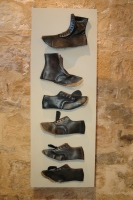
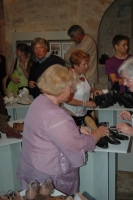
Quand une exposition célébre le passé et le présent à travers “la chaussure”.
La découverte d’une collection de chaussures du magasin ‘Frauciel’ de Caylus, était l’inspiration de cette exposition où l’on explore l’artisanat et l’art -
la tradition et le contemporain.
Cette exposition est comme une oeuvre en mouvement, porteuse de souvenirs, d’histoires et d’échanges.
Nous vous invitons à découvrir et partager.
|
|
Plus d'images >>
|
|
ARTISTE EN RESIDENCE - KATIE BELCHER (CANADA)
Fév, Mars, Avril 2013
Ayant atteint la maturité dans ce qu'on appelle «l'économie de la connaissance" je suis particulièrement intéressée par mon propre manque de compréhension du processus historique, spécifiquement en agricole, culinaire, bâtiment, et la connaissance mécanique et médicale. Mes oeuvres viennent de l'examen de ces espaces inconnus, des objets, des espèces et des processus.
Mes dessins récents examinent l'histoire agricole et la mémoire culturelle. Dans ces dessins à grand échelle au fusain et je fusionne les formes naturels et fabriqués avec le paysage. J'allie sujets tiré de l'observation avec celles effectuées à partir de la mémoire, des espèces d'animaux, du bois, des champs sillonnés et des architectures abandonnées.
Mon travail à DRAWinternational est centrée sur l'expérience de la plumaison d'un oiseau pour la première fois, c'était un faisan.
La maladresse avec laquelle j'ai réalisé cette tâche, autrefois une tâche habituelle, est devenue l'inspiration d'un nouveau projet de dessin. J'ai documenté le processus, et catégorisés et documenté sa trace - les plumes.
Je cherche à décrire le faisan lui-même, ainsi que l'action de la plumaison.
J'ai réalisé des dessins au fusain en imitant la tension ressentie dans mes mains et mes bras, tout en tenant le faisan et en tirant sur ses plumes. S'appuyant principalement, mais pas uniquement sur la motion de la plumaison, je continue à faire évoluer ces dessins en utilisant le fusain, la gomme et le graphite. Mon but est de fusionner le processus de dessiner (faisant) et le sujet (le faisan).
|
|
Plus d'images >>
|
|
ARTISTE EN RESIDENCE - HANNAH SARAH JAMES (UK)
Mars 2013
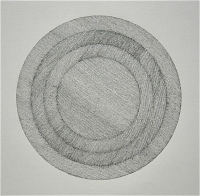
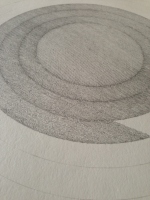
Ma pratique embrasse l'action gestuelle d'une ligne tracée, typiquement à travers des dessins "in situ" utilisant des milliers de lignes droites.
Au cours de la résidence à DRAWinternational j'ai continué à examiner le dessin au trait répétitif, et étudier les moyens de manipuler des lignes simples. J'ai utilisé des cercles concentriques comme lignes directrices pour ce processus.
Mon projet est une interrogation mathématique de l'espace intérieur du cercle. J'ai exploré ce processus en travaillant avec la longueur et la direction de la ligne, la vitesse d'application et les points de changement.
En mettant en place des constructions plus rigides, je maintiens une curiosité en ce qui concerne le résultat de cet acte obsessionnel.
La simplicité d'une ligne répétée met en évidence les variations du geste qui ne seraient pas présents dans un processus mécanique.
|
|
Plus d'images >>
|
|
ARTISTE EN RESIDENCE - KELLIE O'DEMPSEY (AUS)
Jan/Fév 2013
As artist in residence at DRAWinternational I developed a body of work which investigated hand drawn gestural mark making in combination with live digital drawing. I incorporated elements unique to Caylus, a medieval village in the south of France, which resulted in a site-specific installation within a vitrine which overlooked the market square.
I made drawings of the villagers during the day and experimented with digital projections in the evening.
This drawing project focused upon the various interactions between people within the context of this historic setting.
|
|
Plus d'images >>
|
|
ARTISTE EN RESIDENCE - JULIE PAYNE (AUS)
Octobre 2012
Je suis arrivée au studio souhaitant développer davantage mes compétences en dessin, ma compréhension de nouveaux matériaux et une remise en question plus critique de ma pratique.
Pendant mon séjour ici, j'ai choisi à dessiner des objets simples; souvent négligés j'ai fait une série de dessins examinant divers techniques et matières: Des dessins tactiles (aux yeux bandés), avec la lumière inversé et avec le geste rythmiques, utilisant des pastels, les bâtons à l'huile, l'encre, les plumes à dessin, et le graphite.
Je tiens également à remercier tous ceux qui ont prêté leurs objets uniques avec lesquels je pouvais créer des histoires graphiques.
Julie Payne
www.juliepayne.com.au
|
|
Plus d'images >>
|
|
ARTISTE EN RESIDENCE - ANNA HAYES (UK)
Septembre/Octobre 2012
L'art peut être perçu comme un instrument de recherche pour explorer les mystères de la vie et de l'univers. La peinture, en tant que discipline, peut permettre l'expansion de la vision et de toutes ses forces créatrices. Par conséquent, avec cette notion, je sens que je dois produire nombreuses images à partir de la même source qui se sentent unis par une idée commune de la séparation. De cette façon, ce n'est pas l'art pour l'art, mais pour la communication elle-même.
Un sentiment intense de la vie et une sympathie vive pour la douleur et la souffrance humaine est un sujet de préoccupation. La vie vue de première main et par l'intermédiaire des médias peut conduire certains gens à une préoccupation agitée et introspective. Parfois, cela peut se manifester par un pessimisme profond et douloureux créé dans un contexte de crainte Au contraire, cette dynamique, dans toutes les machinations, peut être apprécié comme une force de la nature moins importante mais plus stimulante.
Beaucoup d'entre nous essayons de nous diriger vers une vision plus mature et plus positive de l'existence humaine à travers une contemplation réfléchie et constructive. Comme un acte de foi, chacun d'entre nous doit offrir un élément d'espoir et de la sensibilité à travers notre façon de vivre et ce que nous créons.
|
|
Plus d'images >>
|
|
ARTISTE EN RESIDENCE - EVAN BROENS(CANADA)
Septembre/Octobre,2012.
Réflexions sur un dessin; se servir de ses pensées.
Le dessin - sa chorégraphie, sa réalisation et son expression - c'est apprendre. Un apprentissage de la forme, un apprentissage de la perception, un apprentissage de l'idée et le sens. C'est à travers le dessin que nous apprenons à comprendre la chose qui a fait attirer notre attention.
Il y a une façon dont un trait, une marque, un geste, est fait. Pas de bonne ou de mauvaise façon de faire, plutôt un mouvement, un poids et une relation à la ligne ou au geste. La façon de dessiner ce trait a de nombreuse possibilité et dans cette gamme les démarches évoluent sans cesse. Ce déroulement se passe entre la prise directe et indirecte d'un trait.
La façon dont la ligne est tracée vient finalement du geste corporel, et la façon qu'elle se manifeste également fait positionné le travail par rapport à l'échelle. Il s'agit de trouver comment créer cette ligne, en suivant sa trajectoire et en poussant la gamme des possibilités pour trouver, découvrir, sa propre expression.
Où commence une ligne? Il y a des années; dans l'ombre; avant le crépuscule; dans quelques jours; à partir de maintenant; dans la pause d'une main tenue par la peur et par la caresse; hier...
Cette page n'est ni là où elle commence ni là où elle cherche à finir.
Chasm
separation
right hand move from bottom to crest and roll out, left hand move from bottom to crest and roll out left do this at the same time.
Scale is to the torso from the weight of the shoulders
to the center of the gut below the naval
it’s essence is in the line and the separation of this line, the two parts parting
there are indirect and direct circumstances
clarify and clarifying the situation
the gap between the two lines is a mark, it’s the crux of the content
how is that negative space utilized
the weight and presence of the line is both delicate and heavy
not a polarity or a balance one and the same throughout
Mother Father
the space between is definite and yet unclear
if what cannot be undone there is permanence
the seed needs to be fostered
Feel the seed that is present in the work and keep it throughout – every line, every mark. Explore the drawing, understand the drawing. Each line has a relationship to the other, both distant and close.
a long division at the heart of the matter
Egyptian hieroglyph lock up or contain
fissure divide split, splinter chasm schism discord
Chasm: a profound difference between people, viewpoints, feelings.
Relation
Work. Structure.
four lines – a base, small medium large complicated scale small is palm size, medium is body, large is architecture within the body range
speculate each line as its own purpose
what is the seed of this?
a feeling of grace
a feeling of togetherness
of unity
there are stages there is growth lines attached, lines apart
there are three and a support three graces – charm, beauty, creativity
Detached line is the base, the foundation, the weight, its strength
sense the lines need to be made horizontally, not drawn in a vertical position
the base is hard and rigid – the others be free to their movement.
Stages of growth.
Stages of being.
Stages of life relationships.
Stages of distance.
Script, set of parameters in the movement. Page surface rubbed in repetitive motion.
Third person
a distance of self looking downward
preparation, exaltation
self distance
Technical complete. Find the meaning, bring it out.
Embedded levels different lengths and downward turn detached lines
Comprehension
relationship to others close to touch a gap between
What seems like a trace may be embedded.
What maybe present or left behind.
a thinning minor attention Relation.
Evan Broens 28 Octobre, 2012
|
|
Plus d'images >>
|
|
ARTISTE EN RESIDENCE - NONI BOYLE (CANADA)
Septembre 2012.
Water is water
and clouds billow or stretch out in wisps wherever you are.
Some of the vegetation will be familiar to you - some not
But is all comes together in a way that is unique to that particular place.
And so to travel is to experience the familiar as new - and the new as familiar (since it will always be composed of the same elements)
(Nakamaro's moon is my moon!)
I am finding my way into into this landscape through the medium of water.
Mediating the landscape image through the element of water serves as a metaphor of knowing - the incompleteness of it.
(Through a Glass Darkly)
The landscape is inverted and subject to disruptions or disturbances.
Ripples or waves will distort, fragment, blur, or shatter your sense of the whole.
There are foreground elements, that may be familiar or or elusive, and they serve to further the confound the logic of the image.
Through this process I am also finding the forms, shapes and textures that seem to me to be particular to this place.
The shapes gradually become abstracted into marks or notations with which to compose drawings that reflect my own response to this environment.
|
|
Plus d'images >>
|
|
ARTISTE EN RESIDENCE - SARA SCHNECKLOTH
A sample of recent work and drawings carried out at DRAWinternational and since.
|
|
Plus d'images >>
|
|
ARTISTE EN RESIDENCE - BENJAMIN SHEPPARD (AUS) Mars/Avril 2011
Etre artiste en résidence à DRAWinternational m'a donné une réelle opportunité d'élargir ma pratique dans une espace fantastique avec un soutien magnifique.
Etre à Caylus m'a donné un espace physique et conceptuel pour explorer d'autres aspects de mon travail d'artiste.
J'ai choisi le Coq au départ car il représente la France, mais pendant que je l'ai étudié comme sujet, j'ai été étonné par ses diverses gesticulations et son façon de se lisser les plumes. Ces gestes se reflètent dans les caractéristiques humain en particulier, l'homme.
Masculinité, l'orgueil et l'ego sont à l'évidence quand on regard le Coq. Ce sont des chose qui me viennent à l'esprit quand je regard le monde : politique, locale et aussi les relations personnelles.
Le Coq représente ici tant de choses sur l'humanité et ces oeuvres seront reflètent dans de nombreuses cultures étant donné l'omniprésence de l'animal dans toute sa diversité. En effet dans les pays développés de plus en plus de gens vivant dans les zones urbains élever des poules, comme d'ailleurs je l'ai fait chez moi à Melbourne, en Australie. Le choix de stylo revient vers mes dessins abstrait précèdent. Cependant les gestes complexes et délicates sont nouveaux à ma pratique.
Je vois le dessin comme l'idée en travaux, l'idée se développe en même temps que le dessin.
Je considère l'aspect sculptural de ma pratique comme une sorte de dessin.
Un assemblage de lignes pour exprimer une idée, la forme est vide/creuse mais elle décrit quand même un objet ou un espace.
|
|
Plus d'images >>
|
|
Exposition "COMME" Digitaldialogues.co.uk
A la suite de l'intervention virtuel de Darren Williams ( Hereford College of Art and Design) à l'inauguration de la Cyberbase de Caylus avec John et Grete McNorton de DRAWinternational, Darren revient sur Caylus 'en live', pour inaugurer son propre exposition "Digital Dialogues" avec son collaborateur artistique Jason Davies.
L'origine de cette collaboration est née de la volonté d'être plus créatifs avec la technologie de communication électronique, et dans laquelle le processus de production est au cœur du projet.
"La salle d'informatique à domicile".
Les artistes sont engagés dans un projet longue distance collaboratif, utilisant le système de courriel générique et les logiciels créatifs au sein de la salle informatique à domicile. Le dessin occupe un rôle central dans leur travail, l'original numérisé dans le PC et l'image va-et-vient entre eux.
La prise de marque est réalisée en utilisant soit une palette graphique ou la souris elle-même, et les dessins sont initiés par chaque collaborateur.
Bien que cette forme de transmission d'images soit elle-même le sujet principal, chaque individu s'approprie les préoccupations, des expressions et des incidents en fonction des expériences propres et les histoires personnelles.
"Nous avons littéralement dessiné les fils de nos vies personnelles, et les plus pertinents sont enregistrés rituellement sous forme d’esquisse.
Ces croquis « journal intime » sont ensuite travaillés et étendus jusqu'à ce que chaque dessin numérique ultérieur atteigne sa finalisation".
"Une évolution récente est le développement d'un blog visuel où les œuvres peut être immédiatement transférées. Cela a coïncidé avec l'imagerie photographique recueillie avec le téléphone portable omniprésente."
Jason Davies et Darren Williams de Digitaldialogues.co.uk
|
|
Plus d'images >>
|
|
YANN LESTRAT 9 Photographies Nevroz and Video
Exposition 8-22 Decembre 2010
|
|
Plus d'images >>
|
|
ARTIST IN RESIDENCE - Christine McMillan (AUS)- JULY 2010 continué.
Examples of related ideas and processes carried out at a residency in Bali commencing immediately after the DRAWinternational experience.
|
|
Plus d'images >>
|
|
ARTISTE EN RESIDENCE - BRITT SALT
A sample of recent work
|
|
Plus d'images >>
|
|
ARTIST IN RESIDENCE - POLLYXENIA JOANNOU
A sample of recent work.
|
|
Plus d'images >>
|
|
Barrett Danes - une tradition continue.
Exposition du 31 juillet au 19 septembre 2010
Depuis l’enfance, Alan Barrett Danes s’était bien fait à l’idée de travailler l’argile toute sa vie. Son grand-père, Edward Baker, avait acheté au début des années cinquante l’atelier d’Upchurch Pottery où il avait travaillé pendant quatre décennies pour plusieurs propriétaires.
Les expériences d’Alan et sa formation au milieu du vingtième siècle montrent qu’il était particulièrement bien placé pour jouer un rôle majeur dans le développement de la céramique d’atelier au cours des dernières décennies du siècle. Personne d’autre que lui n’était aussi bien disposé pour profiter de ce moment où la céramique s’est ouverte à son passé et à son futur. Dans sa vie et dans son œuvre, on voit quelqu’un qui était capable de démonter l’histoire de la céramique et de la remonter d’une manière nouvelle et stimulante. Alan BarrettDanes avait senti qu’il était nécessaire de quitter Upchurch et Stoke-on-Trent et de bouger et nombreux sont ceux qui ont des raisons de lui être reconnaissant d’avoir continué à se battre avec leur héritage pour le restant de sa carrière.
Travaillant ensemble et séparément, Alan et Ruth BarrettDanes ont apporté une contribution majeure au développement de la céramique d’atelier en Grande-Bretagne. Pour les BarrettDanes, la céramique a été une tradition couvrant six générations et remontant au début du 19ème siècle. Pendant plusieurs décennies, Alan et Ruth BarrettDanes ont fait passer leur talent et leur enthousiasme à des générations d’étudiants, à un public de mieux en mieux informé et appréciateur et aussi à leur fils Jonathan dont le travail montre des signes de leur influence tout en ayant sa propre orientation.
(Traduction par François Rivière)
Une exposition itnérante de Llantarnam Grange Arts Centre, Pays de Galles.
|
|
Plus d'images >>
|
|
ARTIST IN RESIDENCE - Christine McMillan (AUS)- JUILLET 2010
I walked along a lane, in a country where I was overawed by the age of the built environment with few tools, all from books, for understanding. On that lane I picked up a stone, it could have been a tool. These I knew about, these I have picked up in Australia. Man made, edges chipped off stone to create a tool. This action of a human was a common point in France and Australia. I felt a sense of relief and reassurance in the familiarity of this object and the action of picking up the stone.
My aim in participating in the DRAWinternational program was to learn to draw in a different way, breakaway from old habits, build a new structure or framework of communication and to be challenged. I asked John to lead me on this journey to explore the process of integrating drawing into my arts practice.
Previously, part of my drawing style had been to use many lines to make one line. I also laid materials over each other, white oily crayon over black charcoal, over pastels, over ink and water colour...scratched back... etc. I had developed a style of drawing that was more about the materials than the marks. I was physically pushing the actual materials around and did not use drawing to develop new understanding or a clarity of thought. I was also reliant on pattern making.
The Artist in Residence program at DRAWinternational helped me to develop a drawings that are about an understanding and an intelligence of drawing. Intelligence of drawing being that through drawing conceptual leaps and new ways of exploring ideas are fostered by the act of drawing and by the drawing itself.
With the guidance of John McNorton of the DRAWinternational I was able to do these things and more. I also acknowledge the support of Grete and Aloise McNorton.
The Process
The DRAWinternational work began with the drawing of the figure through touch whilst blindfolded. This helps to engage the mind, marks are created which are ‘fresh and authentic’ (John McNorton).
I didn’t want to look at the drawing before John. I wondered if by his talk I could visualise what the drawing was like. Of course I was totally surprised when I saw the drawing. I had imagined so many more lines and tonal areas.
The next step, look at the drawing you were making, but still touch the object of the drawing. ‘Draw the figure, concentrate on essential (the essence), focus on the centre’. I began to develop techniques for drawing what I couldn’t see. Some lines could be made at the same rate as the feeling of the line. Some had to be created by memory as it was not possible to draw and feel with the same hand at the same time. The challenge was how to transfer the turns, the direction, the length, the plane into a line with qualities that reflected the source. One solution was to create a series of sounds which embodied the quality of the line. The sounds were attached to the length of a section of line through time and rhythm. As I was feeling the object I would create the series of sounds, practice and repeat the series through touch then draw. In future drawings I called upon the concentration I experienced in the blindfolded drawing to help me understand what I was seeing. I would go back to touch, to see. I found that by touch and sight I could draw more effectively than by sight alone.
John commented that my drawings were sculptural and suggested working in clay from the drawings. Create a clay figure of the essential, turned out like a Venus, bit cliché but again I learnt.
Next step is drawing through touch using the clay figure. I aimed to retain the feeling of going around the clay figure or the figure going around, creating solidity. I tried to throw away the unneeded. There was a heightened awareness of the 3d aspect of line and shape. Feel there is a line circling, the challenge is to translate this from a 3d surface to a piece of paper in a fresh and authentic way.
The making of the second, third and fourth clay figures were interspersed with drawings focusing ideas. By using the clay then paper I could make leaps, jumps, find new ground.
A series of drawing using only planes used a key that was drawn on the base of the sculpture like a compass, to keep track of the views. That key transposed onto paper so a layer of line could be drawn on with architects tracing paper. This helped to focus the way I looked at, always including touch, the object.
The large drawings allowed concentration on the creation of a line, a focus on it’s quality, it’s direction, intensity, thickness and broken length. The drawings allowed the line to explore what has been touched. Is there a reason for the line being, fine, dark, thick or broken. I hold my breath while feeling the line, and drawing the line. A sigh and breath as the line is completed. I catch myself in the middle of a line, bring mind back to the line questioning the reason for its quality. Why does a line have the quality of a fly trail across the paper, a dramatic gesture, a fleeting moment, a stop or a circumnavigation? Each line is contemplated. Each line assessed. Each line is a release of the knowledge gathered by the touch.
|
|
Plus d'images >>
|
|
ARTISTE EN RESIDENCE - Margaret Brooks (AUS)- JUILLET 2010
PROCESSUS
|
|
Plus d'images >>
|
|
ARTISTE EN RESIDENCE - Megan Ehrhart (USA) Juillet 2010
The inspiration for this installation unearthed itself when I began spending long months roaming around the French countryside and reflecting on life. Working in remote villages forced me to slow down and adapt, turning inconvenience into an opportunity for innovation and self reflection. Everything is transient. People come and go, emotions and personal attachments whirlwind around in a tornado of intimate international social interaction. “Grounded” is the result of having the chance to be truly removed from the world as I know it and the unshakeable whirling thoughts building strength and haunting my mind for the last thirteen years.
“Grounded” is a growing project, a body of work I am showing in stages, building up to a grand final installation complete with a full interactive sensory environment enhanced by five intertwined chapters of stop-motion media. For each exhibition of Grounded, new elements are added.
Using very tactile natural materials hand picked from the ground, the first execution of the “Grounded” series features the film entitled “Echoes of Abandonment.” In an attempt to feel a sense of belonging, we may imagine an idealized dream of humanity as part of a greater, singular whole. I explore the common desire to make lasting emotional connections, trading individual identity for the power and comfort of belonging to a larger community. Taking advantage of the unreliable perception of time, at a very primal level, the film provokes disillusionment caused by feelings of isolation and abandonment while questioning the audacity of the persistent, seemingly indestructible, “self”.
|
|
Plus d'images >>
|
|
ARTIST IN RESIDENCE - Ruth Trotter June 2010
Artiste en Residence - Ruth Trotter Juin 2010
Ruth Trotter’s works shown in Second Nature: Landscape Variations are from a series she created in 2010 as an “Artist in Residence” at DRAWinternational, a contemporary art center in southern France. While there, she developed a group of drawings and paintings that explored modes of representation rooted in both psychological paradigms and themes of landscape. Her paintings originate as carefully articulated drawings, and are thereafter built up with bold impasto strokes and smears of color. The original drawings that support each painting typically start from the definitive contours of Rorschach inkblots, patterns rooted in abstract expressionism, and iconic references to modern art. For Trotter, the drawings function as an intellectual underpinning for the paintings. She then applies the memory of specific landscapes by working the surface with layers of paint, often obscuring the foundational drawings that lay underneath, in what is an oblique reference to the conscious and subconscious, the rational and irrational, the emotional and logical. Thus, the paintings embody the idea that true perception requires a recognition of cognition and intuition -- as does the creative process itself. For Trotter, the notion of landscape is, at a very fundamental basis, a kind of Rorschach in itself. Indeed, human perceptions of landscape can only be truly understood by extending beyond the tyrannical filter of plein air-type realism or photographic renderings that could otherwise potentially ignore the viewer’s role in what is a complex and subjective interactive dance that is continually played out between the perceived and the participant.
|
|
Plus d'images >>
|
|
ARTISTE EN RESIDENCE - Katherine Boland - Mai/Juin 2010
During my two-month residency at Drawinternational I was inspired to respond to the surrounding environment by using local materials. I discovered 300 year old oak beams, unrefined beeswax from a local honey farm, clay dug from a river bed on the edge of the village, 'brou de noix' - a stain distilled from walnuts - and 'la chaux', a powdered limestone used for centuries in the linen-coloured stone buildings of the region. The delicate balance existing between bees and flora is becoming increasingly tenuous, so the idea of melding these two together in sculpture very much appealed to me.
The body of work I created in France is entitled 'Beyond The Black Stump'. The origin of this Australian expression derives from the use of fire-blackened tree-stumps as markers when giving directions to travellers unfamiliar with the terrain. In it’s evolved usage it describes an imaginary marker in the landscape beyond which the country is considered remote or unknown. It taps into the sense of distance and dislocation one can feel when far from home. I have used fire to char the oak beams whilst scraping the residual charcoal with hand tools to sculpt the desired shape. The charred wood is further blackened and preserved with 'poudre d'asphalte' - the blackness enhancing the sense of age and time. The treatment of the timber respects the natural form and tendencies of the grain as I consciously restrain from imposing my will upon it to any large extent. It seems almost sacrilegious or disrespectful to compete with nature and the artisans who originally fashioned the beams so long ago. The finished surface has a subtle lustre which, when combined with the encaustic medium, is seductively tactile, contrasting with the solidity of the geometric forms. In the process of making these works the pungent smell produced by the burning wood and the melted beeswax reminds me of both my days in the Australian bush and the hushed atmosphere of a French medieval church.
On returning to Australia I intend to develop this work on a much larger scale using Australian hardwood and local bees wax. In keeping with my enduring passion for black and white - which began as a child watching my father, a professional photographer, develop photographs in his darkroom - I will also produce a white series using bleached driftwood.
This residency has allowed me to step outside my normal art practice and take the time to respond to the local environment and explore different creative possibilities. I know I will be influenced by the work I began here for many years to come.
(22 June 2010)
|
|
Plus d'images >>
|
|
'Timescapes' - Paul Beauchamp
Depuis deux ans, Paul Beauchamp travaille sur une série de photographies de carrières et de sites industriels il les présente sous la titre "Timescapes".
Timescape s'oppose à la notion de paysage et remet en cause la signification du visuel.
Les photographies de Paul Beauchamp prennent cette notion de "Timescape" comme point de départ. Bien que les photographies soient magnifiquement composées et rendues, ils sont disposés à poser des questions sur le monde visible, elles sortent d'une enquête sur le site plutôt que d'une simple représentation du lieu. Les carrières sont eux-mêmes des lieux qui sont généralement hors de vue, mais ici elles sont rendues visibles et les connexions sont établies entre la carrière et la société qui les produit. La carrière elle-même appartient à la fois à l'ordre naturel et au monde civilise : ses terrasses sont à la fois parallèles et inégales.
Les photographies de Paul Beauchamp sont une illustration vive de la mesure à laquelle les processus « naturel » et « culturel » sont devenues inextricablement liées.
Les photographies sont le plus souvent présentés comme des triptyques et ce format permet à Paul Beauchamp d'intervenir dans la tradition de la photographie de paysage et de la peinture et de remettre en question certaines de ses conventions.
Paul Beauchamp vis et travaille à Cardiff Pays de Galles.
|
|
Plus d'images >>
|
|
ARTIST EN RESIDENCE ANOOK CLÉONNE (NL)
'Fragments de Paysage'.
Dessins crées par Anook Cléonne (Pays Bas) pendent février 2010.
|
|
Plus d'images >>
|
|
JOHN MCNORTON
“Something about embryonic stem cells” (Quelques choses au sujet de l’effervescence des cellules embryonnaires). 2010
Ces peintures s’inscrivent dans une volonté de maintenir ouvertes des relations avec le monde de la recherché médicale et scientifique. Au-delà de tout dogme, ce n’est pas une position politique ou éthique, mais plutôt des réflexions libres et fluides dans un esprit jubilaire. Ces oeuvres veulent rester en continuel devenir. Certaines responsabilités prioritaire, ont empêché John McNorton de peindre depuis quelques années. L’enseignement du dessin, et ses recherches personnelles lui ont permis d’enrichir ses idées et de rester concentre sur de nouvelles créations.
Maryvonne Constant
|
|
Plus d'images >>
|
|
ARTIST IN RESIDENCE - BAHARADDIN ADAM (SUDAN)
Les oeuvres réalisé pendant la résidence
|
|
Plus d'images >>
|
|
E-DESSINS
An interactive digital drawing collaboration between three artists: Darren William(Wales) Jason Davies(Wales) John McNorton(France).
|
|
Plus d'images >>
|
|
EXPOSITION: "SANS TITRE" LOUIS PERRIN
7 août - 5 septembre 2009
Le titre est en référence avec une exposition que j’avais faite en 2001 à « La lune en parachute », centre d’Art Contemporain à Epinal qui avait le même nom (sans titre), mais aussi parce que les premières œuvres que j’ai pensé installer dans cet espace n’avaient pas de titre.
Les pièces ont été choisies parce qu’elles sont essentiellement en bois ou en métal, elles participent à une sorte de conte que l’on raconte autour de la cheminée, ou plus exactement du poêle en fonte, qui est posé comme une sculpture, en attendant les jours de froid, avant qu’il devienne à nouveau un instrument de chauffage.
Les oeuvres présentées sont de diverses époques, certaines n’ont pas été exposées depuis longtemps : le « microcosme » composé de 20 bûches de bois date de 1982, la grande sculpture en acier à l’extérieur de 1990, les 4 pièces ovoïdes en acier de 2001, le Zep K de 2009...
J’ai voulu éviter un dispositif d’exposition sur des socles, pour occuper le lieu dans sa réalité de pierre, en proposant une installation en résonance avec l’espace.
Le passant est invité à plonger son regard à travers la grille pour assister à cette réunion en spectateur, ou à pousser la porte en bois et à entrer pour y participer...
Louis, août 2009
|
|
Plus d'images >>
|
|
ARTISTE EN RESIDENCE- ALLEGRA DENTON - Juillet/ Août 2009
Before I flew over here, I found this book in an antique store in Minnesota. It’s one book from an American James Bond-type adventure series, which are called “Killmaster Spy Thrillers”, and they all feature this one man, Nick Carter who travels the world completing adventure-filled missions assigned to him by the agency he works for. I decided to use this paperback— which was published in 1964— as the base medium for my project, which has come to be known, appropriately, as Safari for Spies.
I began by making one collage a day, each one corresponding to a chapter in the book. As I was making the collages, I found some images that seemed to lend themselves to the theme of the project, and began keeping them with the collages.
I choose a page based on the narrative— I choose part of the narrative of the chapter that sticks out to me. I then, take pieces of photographs that I’ve taken here in Caylus, and also pieces of images from books and magazines I’ve acquired since I’ve been here, and fit them together to create a sort of abstract narrative within the existing one in the text.
Along with the collages on pages from the book, and the found images from books I got here, I have included some of the photographs I’ve taken while I’ve been in Caylus.
Part of how I am relating to the protagonist in Safari for Spies, is that I am an outside observer in a foreign location. I observe the city and my surroundings within it quietly, taking in as much as I can, and noting my observations, representing them with the combination of image and the narrative that has become somewhat of an alias for my own, that of Nick Carter, in the book.
It makes more sense to me to display them in a non-hierarchical and non-linear way, as together they represent the whole of my experience thus far.
|
|
Plus d'images >>
|
|
ARTIST EN RESIDENCE - WILL ZAJAC - Avril/Mai/Juin 2009
The past 2.5 months have been dedicated toward developing drawings that begin to record Caylus’ unique architectural habitat. I have selected several components, which I believe are essential for a sustainable and ecological co-existence with the environment.
The components [things] that I have studied are all typical of Medieval and Romanesque architecture. The village of Caylus contains both, as well as characteristics of a bastide. My understanding of a bastide is that it is a medieval urban village built as a single unit for the purposes of defense and sustainability. The elements of a bastide include the core: La Place, Halle/Marche, lavoirs, couverts, rues, portals, clocher, fontains, esplanades;…all of these are enveloped by an agricultural landscape of terraces, gardens, pigeonniers, pierre seche, cabanes, etc. These elements are organized around a centralized plan similar to a roman castrum, which has a grid layout of intersecting streets, with wide thoroughfares that divide the town plan into insulae, or blocks, through which public passageways run. The central market square/halle is at the urban center and it usually acts as the module into which the bastide is subdivided. It’s an interesting organizational pattern because it is an efficient model for self-sustainability. A core urban habitat interwoven with essential systems of water, food, vegetation, etc.
What I find interesting about Caylus is how its form is more organic and sympathetic to the landscape than others. It reminds me of a quote by the historian A. Randolph: "The block geometry of some bastides was not always a rigid framework into which a town was squeezed; sometimes it resembles more closely a net, thrown upon the site and adapting to its nuances."
And, therefore, I’ve started a series of drawings that try to communicate these components. The first drawing that I’ll present is based on the central square of Caylus [the heart of the village].
|
|
Plus d'images >>
|
|
Ateliers de dessin avec modèle vivant.
Atelier de dessin 29/04/09
|
|
Plus d'images >>
|
|
ARTISTE EN RERSIDENCE - NADEZDA TSERNOBAI (ESTONIA)
Travail en cours
|
|
Plus d'images >>
|
|
Exposition “PORCELAINE : RITUELS ET PROCESSUS” cinq artistes travaillant la porcelaine avec photographies de Toril Brancher
Cet été le centre 'DRAW' accueille une exposition itinérante de Llantarnam Grange Arts Centre, Pays de Galles,
"Porcelaine : Rituels et Processus"
Cette exposition a pour but de présenter, outre leurs oeuvres, des supports visuels montrant les rituels et les processus qui se déroulent dans les ateliers des cinq artistes:
SAM BAKEWELL, JENNY BEAVAN, MELANIE BROWN,
JOANNA HOWELLS & VICKY SHAW
Nous ouvrirons donc la porte des ateliers et jetterons un coup d’oeil à l’intérieur pour voir ce qui se passe au cours de la création d’une oeuvre. Nous aurons alors un aperçu des rituels et des processus que les artistes mettent en pratique pour créer les objets qui vont éveiller nos sens.
Hywel Pontin/Hannah Kelly 2007
|
|
Plus d'images >>
|
|
Ateliers de dessin et construction, avril 2008 - West Island College, Montréal, Canada.
Neuf étudiants : Gabby, Sydney, Alexandre, Philippe, Nick, Dimitri, Kaelan, Anthony and David, and two staff, V Caldareri and A. Garneau ont suivi un stage de dessin/construction avec des visites culturelles. Quelques étudiants locaux aussi aux activités et ils ont tous passé à la radio, CFM Caylus.
|
|
Plus d'images >>
|
|
CERAMIC FUTURES
du 1er au 31 Août 2007
DRAWinternational - ArtHouseCaylus
Céramistes de Pays de Galles exposent ........
Une selection de céramiques contemporaines créé par 15 artistes de Pays de Galles, Grande Bretagne.
Maggie Andrews, Pete Castle, Natasha Mayo, Graham Williamson,
Duncan Ayscough, Melanie Brown, Caroline Taylor, Pauline Monkom,
Sally Bradborn, Alison Graham, Sara Moorhouse,
Matthew Thompson, Jin Eui Kim,
Claire Curneen, Jake Bodilly
Une initiative entre le centre Drawinternational, Caylus, et le Centre d'Etudes en Céramique à Cardiff.
|
|
Plus d'images >>
|
|
CERAMIC FUTURES
Artiste en Résidence - Jacob Bodilly - du 1er au 31 Août 2007
DRAWinternational, ArtHouseCaylus
Jacob Bodilly, étudiant au centre d'études en céramique à Cardiff, était invité cet été par le GA2C et DRAWinternational en résidence.
|
|
Plus d'images >>
|
|
JOHN MCNORTON 'Le lieu du geste'
Drawing as Vital Practice 19 january - 3 March 2007
THE CENTRAL LINE, PM Gallery, London.
The Central Line comprises two exhibitions focusing on drawing,
at a time of real resurgence of interest in the medium.
At PM Gallery, Drawing as Vital Practice is a vivid look at the work of ten international artists, whilst Petherbridge Alone with Sloane, is a selection of Deanna Petherbridge's drawings.
|
|
Plus d'images >>
|
|
Exposition - Reflective Interventions - John McNorton
7 Octobre - 5 Novembre 2006
Abbaye de Beaulieu en Rouergue
'Reflective Interventions' - alterations and modifications.
CENTRE DES MONUMENTS NATIONAUX
REFLECTIVE INTERVENTIONS
Cette exposition présente le travail réalisé l'année dernière, sous la conduite de John Mc Norton, par le collectif Reflective interventions, avec le soutien de l'Université de Cardiff et du Royal college of art de Londres.
Chaque dessin a été conçu à plusieurs mains, en quelque sorte sans auteur défini, pas plus que ne le furent ces bâtisseurs d'églises ou de cathédrales, pas plus que ne le furent les artisans zélés des ateliers de peinture, le maître ajoutant la touche finale et l'empreinte de sa signature. En somme, nous rejoignons ici une tradition qui exclut toute velléité égotiste.
Cette démarche plurielle, réalisée en lieu et place, intègre l'architecture, dont elle s'inspire de telle sorte que le modèle – s'entend l'abbatiale de Beaulieu – ne se réduit pas à un lieu d'exposition mais devient lui-même lieu d'exposition quand il se trouve de facto mis en abyme. L'effet de réflexion est le résultat dynamique d'une construction et d'une déconstruction : construction si l'objet est pris dans sa globalité, déconstruction dès lors que chaque dessin constitue un fragment inachevé – car c'est aussi le propos. Livré au geste et la toujours possible occurrence que ce geste requiert pour élargir l'espace dont il dispose et ne s'y point enfermer, ce fragment fait écho tant à celui qui le précède qu'à celui qui lui succède.
Passant tour à tour de l'abstrait au figuratif, il s'agit bien d'une variation offerte au regard avec son lot de repentirs, le repentir, précisément, « cette correction qui corrige ce qu'elle n'efface pas ». D'ailleurs comment le repentir n'aurait-il pas sa légitime place au sein d'un édifice d'essence religieuse prêt à l'absoudre, ce qui ne signifie d'aucune manière que le trait soit un péché ?
Jean-Pierre L. Colle
|
|
Plus d'images >>
|
|
'Drawing Inside Out'
March 2006
West Island College, Montreal, Canada
Ateliers de dessin et visites culturelles.
|
|
Plus d'images >>
|
|
Reflective Interventions
11-13 Novembre 2005
Abbaye de Beaulieu en Rouergue
Dessin Performance Installation - avec 10 artistes européens;
Choreographique dessinateur - John McNorton
Artiste accoustique - David Handford
Patrik Brigo
Nathalie Céré
Olivier Gentilin
David Handford
Grete Hayward
John McNorton
Bernard Niemietz
Seth Oliver
Alice Popelin
Heather Reid
|
|
Plus d'images >>
|
|
September 2005
Power Drawing/NSEAD National Drawing Conference
A series of workshops, lectures and key note speeches delivered by John McNorton at Glasgow School of Art and Bath Spa University on the subject, 'The Corporeal Space of Drawing'.
|
|
Plus d'images >>
|
|
Le Nid, l'Abri, la Colonne
Sculpture, Installation, Performance.
15-31 Juillet 2005
Artistes Contemporains créent au Lac de Labarthe à Caylus.
DRAWinternational et ACE (Art-Culture-Education)ont selectionné un groupe d'artistes contemporains internationaux pour leur projet de résidence et exchange culturel.
Ce projet a eu le soutien de la Communauté Européenne dans le cadre du programme Leader+ Midi-Quercy.
|
|
Plus d'images >>
|
|
Ateliers de dessin
Mai 2005
Etudiants en Maitrise arts plastiques de l'université de pays de Galles, UWIC
|
|
Plus d'images >>
|
|
Ateliers de dessin pour étudiants en maitrise.
Ateliers de dessin pour étudiants en maitrise arts plastiques de l'Université de pays de Galles, UWIC.
|
|
Plus d'images >>
|
|
'FACE A FACE'
du 16 au 17 Octobre 2004
rue droite Caylus
100 mètres de dessin au centre du village mediéval en partenariat avec Power Drawing UK.
|
|
Plus d'images >>
|
|
|